


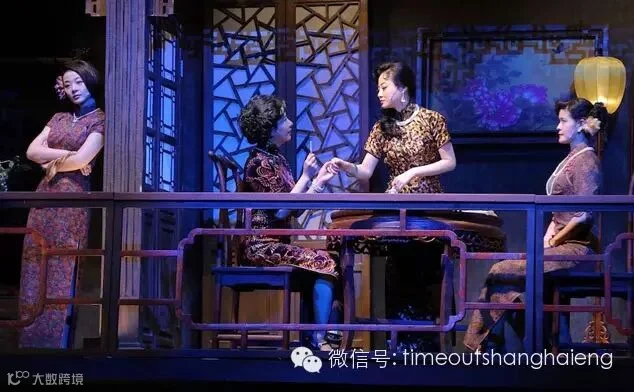
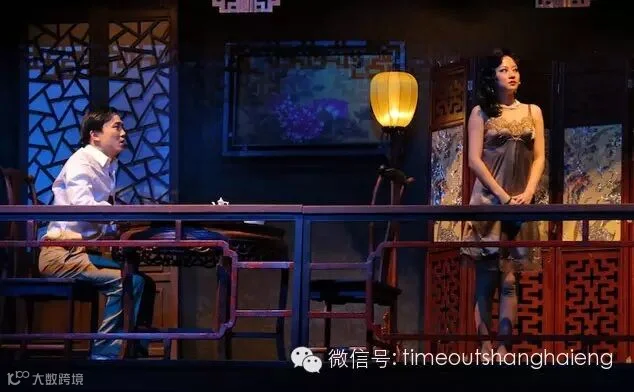
This week, Stan Lai, Asia’s most critically and commercially successful playwright and director, brings what some call his magnum opus to Shanghai. A Dream Like a Dream tells of a young, idealistic doctor who loses four of her five patients on her first day.
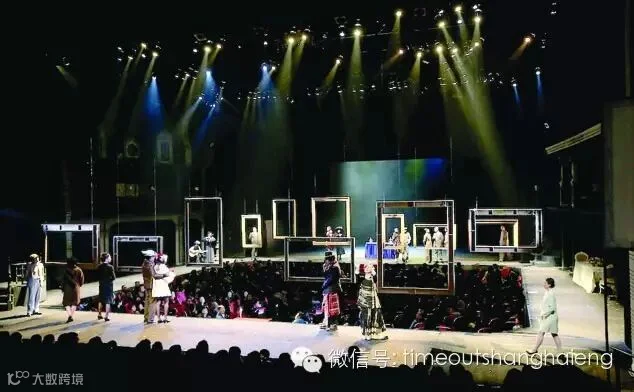
Realising that even doctors lack power over life and death, she decides instead to be a good listener, and hears a series of stories within stories that span time and space. Dreamsets the action around the audience (who are sat on swivel chairs); the play is full of Lai’s famous imagery and dramatic conventions and it’s eight hours long. It’s also a masterpiece.
You’ve said that Taiwan under martial law was ‘a very different place’, and in a different environment, you might have become a musician.
I think I would have been a decent jazz musician because I use improvisation as my major tool for playwriting. But I started very late and was self-taught. I first touched a guitar after high school and I was performing on stage within a few months. We were a group of friends from Taipei’s Fu Jen University running a cafe called Idea House, which was a beacon for Taipei’s cultural scene in the ’70s. Singing in public was not permitted in those days, but we didn’t care. When the cops came we would just stop and someone would ‘negotiate’.
Theatre in Taipei was limited back then. How did you do your PhD in theatre at Berkeley with no experience?
At Fu Jen University, our English department did a play every year, which I participated in, usually as a musician. I never had the urge to be an actor. Berkley was intimidating; my teachers were all authorities in their fields, and the other nine students had prominent theatre or academic resumés. In the end, only three finished, including me. All I could do was work hard.
You’ve said previously that American and British rock music helped get you into Buddhism. Can you explain?
Those were the ’60s. Listen to George Harrison’s ‘Within You, Without You’, John Lennon’s ‘Imagine’ or even the [Burt Bacharach] pop song ‘What the World Needs Now is Love’. It wasn’t just music. It was a whole cultural trend of turning inside to see that the problems of the world were because of selfishness, or in a deeper context, attachment to the self. In a nutshell, that’s what Buddhism is about.
I take it as a philosophy, not a religion, a way of seeing the world that penetrates what controls most lives; of seeing creativity not controlled by conventions and concepts. It’s not pointing the finger at others, but examining yourself and seeing how you can change. Perhaps it is that open element that Buddhism encourages in my work, because I started in a society with no modern theatre traditions.
We not only had to figure out what we wanted to express on stage, but how. Audiences hate being preached at, so I never thought of introducing stories [connected to] Buddhism, but in Dream I introduced a breathing practice called tongleninto the script.
There are various stories about your inspiration for Dream. Which is true?
The Brueghel painting in Rome, the French castle and so on were unrelated images stored in my mind for years, which came together to create Dream. That trigger happened in Bodh Gaya, India, when I was attending a Buddhist seminar. What your mind stores on your life’s journey – you never know when it can pop out and relate to something else to create inspiration.
Why have the stage surround the audience in Dream?
The idea is that to truly understand a person’s life, you have to go through the lives of other people. And so the narrative moves from a doctor to her patient; to his girlfriend; to an old woman in Shanghai; to that same woman when she was young, and her husband, a French diplomat. The inspiration for content and form also came that afternoon in India.
The audience configuration is inverse to the way you watch people circumambulate clockwise around a sacred object like the stupain Bodh Gaya. I thought we should make the audience the sacred object. [As to the length, the breaks make it] quite humane. Many say at the end, ‘Wow, it’s over?’
A Dream Like a Dream is at the Oriental Arts Centre from Thursday 18 - Sunday 21 Feb.