



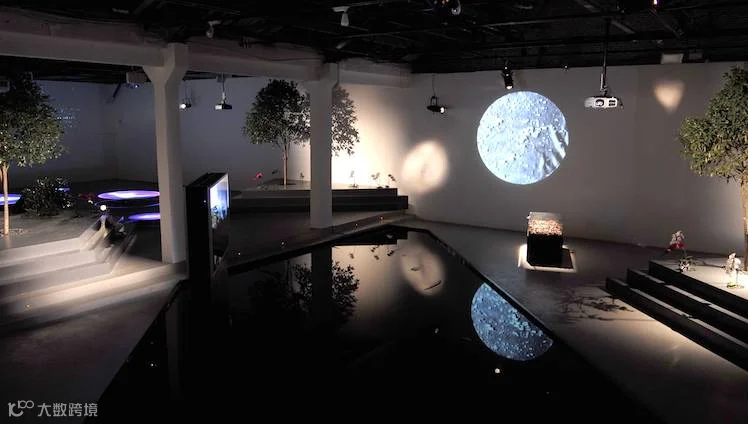
Set in a post-humanist world where humans and non-humans are regarded as equal, Chronus Art Center’s latest show is a large-scale installation consisting of several overlapping works by Finnish visual artist Terike Haapoja.
The work uses soil, plants, light, sound, video and various scientific research media (think carbon and oxygen sensors) to examine different aspects of the human-nature relationship. Together, these works create a fascinating garden in which organic, electronic, human and non-human processes overlap, inviting the viewer to become ‘an inhabitant of the garden, as he or she wanders through the space.’
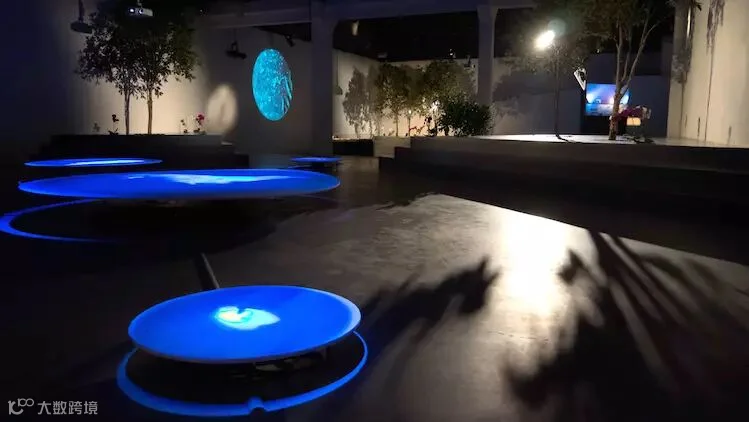
The exhibition has an eerie and dark set-up, and it's hot – the room is set at optimum greenhouse-like temperatures to keep the trees and other living entities (besides the visitors) in prime condition for the duration. But despite the heat, the show is instantly captivating, with a large artificial lake in the centre of the space setting the scene for an impressive and unique new media exhibit.
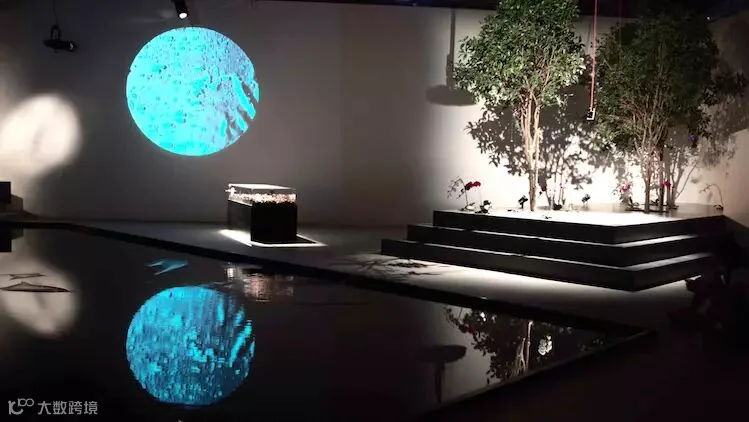
Haapoja uses her art to investigate the concept of ‘othering’ with a particular focus on arising environmental issues in the developed world. Nothing is quite as it seems at the show, so if you think the large screen overlooking the lake is a nice projection of the moon at night, you’d be wrong. It is, in fact, a four-minute video loop showing a grossly impressive nine-day growth of bacteria on the side of the artist’s cheek (soz for the spoiler).
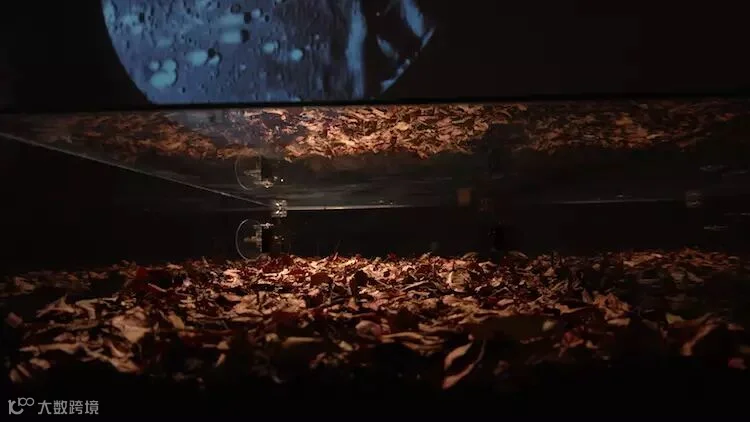
The series of works were first shown in Helsinki in 2008, and have since been exhibited in different variations around the world – most recently at the Venice Biennale in 2013. In the creation of the series, Haapoja worked in collaboration with a team of environmental researchers and professionals from the fields of biology, computer programming and technology. One example of this collaborative approach is 'Inhale Exhale' – a chamber, or ‘coffin’ containing dead soil and leaves – in which the CO2 produced through decomposition of leaves is measured by sensors and then translated via sound waves into audio.
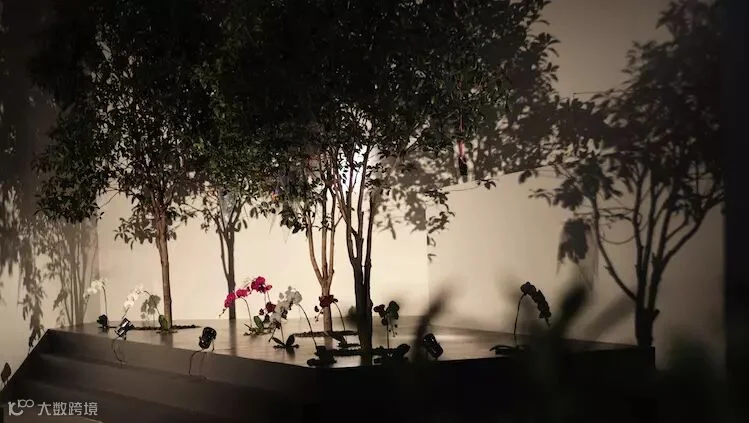
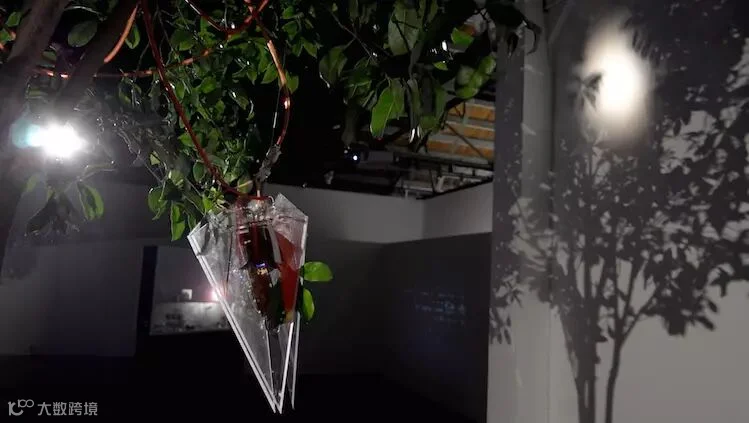
Then there's the remarkable interactive installation 'Dialogue'. It's comprised of a collection of trees planted inside the gallery with a small CO2 sensory device hanging from the centre that picks up visitors' breath. The breath activates a light system and small measuring chambers attached to the branches of the trees. When the CO2 level inside the measuring chamber reduces as a result of photosynthesis, there's a loud whistling sound, and in this way, the artist shows the trees to be in a constant dialogue with the visitor.
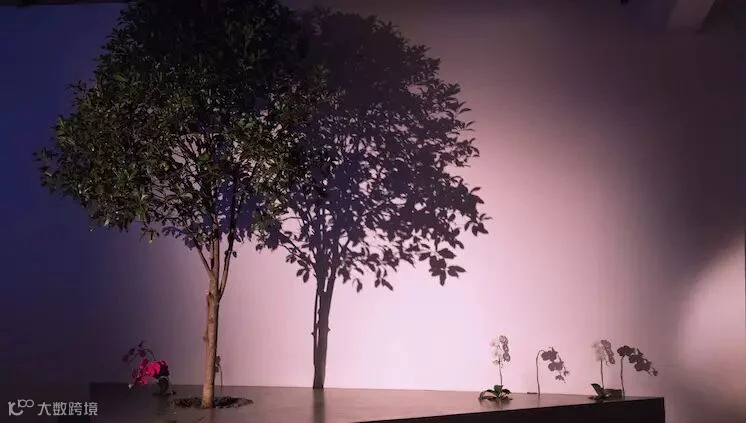
As with all new media exhibitions, it's hard to keep the entire series looking as fresh as it's supposed to, but the staff at Chronus Art Center are determined to give it a good go, replacing the trees and leaves throughout the three month run of the exhibition. It's a fascinating show combining biology, technology and art – and it certainly taught us more about photosynthesis than we ever learned at school.
Closed Circuit - Open Duration Chronus Art Center, Building 18, 50 Moganshan Lu. Until Sep 3 (every day except Monday and Tuesday). 20RMB; 10RMB for students; free on Wednesdays.