

阳光创译吕国博士,2026年1月9日
1127203572@qq.com; 13311203631
Summary of Core Viewpoints
核心观点摘要
** The international mining investment and financing market is currently in a period of high risk. Multiple factors are intertwined, including the rise of resource nationalism, intensifying geopolitical conflicts, and the escalation of project fraud methods, posing unprecedented challenges to investors, project owners, and intermediaries.** Based on in-depth research into six major global mainstream mineral types (gold, copper, lithium, rare earth, lead-zinc, and iron ore) across seven core investment regions (Africa, South America, Australia, Southeast Asia, Central Asia, Russia, and Canada), this report systematically identifies the typical traps faced by various market entities and proposes targeted risk prevention and control strategies.
** 国际矿业投融资市场正处于风险高发期,资源民族主义抬头、地缘政治冲突加剧、项目造假手段升级等多重因素交织,对投资者、项目方、中介机构构成前所未有的挑战。** 本报告基于对全球六大主流矿种(金矿、铜矿、锂矿、稀土矿、铅锌矿、铁矿)在七大核心投资地区(非洲、南美、澳洲、东南亚、中亚、俄罗斯、加拿大)的深入调研,系统识别了各市场主体面临的典型陷阱,并提出了针对性的风险防控策略。
Investment Rating Recommendation: Outperform. Despite heightened risks, the global energy transition and supply chain restructuring have created historic opportunities for mining investment. It is recommended that investors focus on high-quality projects with verified resource reserves, stable political environments, and excellent ESG performance, adopting a strategy of "diversified investment with focused breakthroughs." Project owners should strengthen investor qualification reviews and optimize financing structure design. Intermediaries need to improve their due diligence systems and clarify service boundaries. It is projected that from 2026 to 2028, with the widening supply-demand gap, key minerals such as copper, lithium, and rare earths will enter a golden period for investment.
投资评级建议:强于大市。尽管风险加剧,但全球能源转型和供应链重构为矿业投资创造了历史性机遇。建议投资者重点关注资源储量真实、政治环境稳定、ESG 表现优异的优质项目,采取 "分散投资、重点突破" 的策略。 项目方应强化投资者资质审核,优化融资结构设计。 中介机构需完善尽职调查体系,明确服务边界。 预计 2026-2028 年,随着供需缺口扩大,铜、锂、稀土等关键矿产将迎来投资黄金期。
一、Current Status and Trends in the Global Mining Investment and Financing Market
全球矿业投融资市场现状与趋势
1.1Distribution Patterns of Mineral Resources and Investment Value Assessment
矿种分布格局与投资价值评估
The global distribution of mineral resources is characterized by a high degree of concentration, with the reserves and production of the six major mainstream minerals primarily concentrated in a few countries and regions. According to the latest 2025 data from the United States Geological Survey (USGS), the global distribution pattern of mineral resources is as follows:
全球矿产资源分布呈现高度集中的特征,六大主流矿种的储量和产量主要集中在少数国家和地区。根据美国地质调查局(USGS)2025 年最新数据,全球矿产资源分布格局如下:
Regarding the distribution of gold resources, Russia and Australia each possess approximately 12,000 tons of untapped gold reserves, ranking first globally together and accounting for nearly 40% of the global total. South Africa ranks third with 5,000 tons, while China ranks sixth with 3,100 tons. It is noteworthy that the Jiaodong area in Shandong, China, as the nation's largest production region, produced 186.07 tons of gold in 2024, with cumulative proven reserves exceeding 3,900 tons, accounting for approximately 26% of the country's total reserves.
金矿资源分布方面,俄罗斯和澳大利亚各拥有约 12,000 吨未开采黄金储量,并列全球第一,合计占全球总量的近 40%。 南非以 5,000 吨位居第三,中国以 3,100 吨排名第六。 值得注意的是,中国山东胶东地区作为全国最大产区,2024 年产金 186.07 吨,累计探明储量 3,900 余吨,占全国储量约 26%(2)。
The distribution of copper resources presents an even more concentrated pattern. Chile ranks first with 1.9 billion tons of reserves, accounting for 19.4% of the global total, nearly equivalent to the combined reserves of second-ranked Australia (1 billion tons) and third-ranked Peru (1 billion tons). The Democratic Republic of the Congo and Russia each hold 80 million tons of reserves, tying for fourth place. The top ten countries in global copper reserves account for a combined 77.2%, indicating an extremely high level of concentration.
铜矿资源分布呈现更加集中的格局。智利以 1.9 亿吨储量稳居首位,占全球 19.4%,几乎相当于排名第二和第三的澳大利亚(1 亿吨)和秘鲁(1 亿吨)储量之和。 刚果(金)和俄罗斯各拥有 8,000 万吨储量,并列第四。 全球前十大铜储量国合计占比达 77.2%,显示出极高的集中度(19)。
The distribution of lithium ore resources is highly concentrated in the "Lithium Triangle" region. According to 2025 data from the United States Geological Survey, global proven lithium reserves are approximately 30 million tons of lithium metal (equivalent to 160 million tons of LCE), primarily distributed in Chile (9.3 million tons), Australia (7 million tons), Argentina (4 million tons), and China (3 million tons). These four countries account for over 70% of global reserves. The South American "Lithium Triangle" (Chile, Argentina, Bolivia) controls 56% of the world's lithium resources.
锂矿资源分布高度集中在 "锂三角" 地区。 根据美国地质调查局 2025 年数据,全球已探明锂储量约 3,000 万吨金属锂(折合 1.6 亿吨 LCE),主要分布在智利(930 万吨)、澳大利亚(700 万吨)、阿根廷(400 万吨)、中国(300 万吨),四国占全球储量 70% 以上(29)。南美 "锂三角"(智利、阿根廷、玻利维亚)控制着全球 56% 的锂资源(32)。
In the distribution of rare earth mineral resources, China holds an absolute dominant position with reserves of 44 million tons, accounting for 36.7%-48% of the global total reserves. Brazil and Vietnam each have approximately 21 million tons, and Russia has about 10 million tons. China not only has abundant reserves but also holds an absolute advantage in production, accounting for about 69% of global production in 2024 and 70% of refined capacity.
稀土矿资源分布中,中国以 4,400 万吨储量占据绝对主导地位,占全球总储量的 36.7%-48%(43)。巴西和越南各约 2,100 万吨,俄罗斯约 1,000 万吨(45)。中国不仅储量丰富,而且在产量上占据绝对优势,2024 年产量占全球约 69%,精炼产能占比 70%(43)。
In terms of lead-zinc ore resource distribution, Australia possesses the world's largest reserves of lead and zinc, with lead reserves of 35 million tons (accounting for 39% of the global total) and zinc reserves of 68 million tons (accounting for 34% of the global total). China ranks second in the world for both lead and zinc reserves, accounting for 17% and 16% of the global total, respectively. Peru's lead and zinc reserves account for 8% of the global total, ranking third.
铅锌矿资源分布方面,澳大利亚拥有全球最大的铅锌储量,铅储量 3,500 万吨(占全球 39%),锌储量 6,800 万吨(占全球 34%)(57)。中国铅锌储量均居世界第二,分别占全球 17% 和 16%(57)。秘鲁铅锌储量占全球 8%,位居第三(57)。
The distribution of iron ore resources shows a pattern of "rich in the south, poor in the north". Australia ranks first globally with 58 billion tons of reserves, accounting for approximately 30.5%, and 91% of these reserves are concentrated in the Pilbara region, with an average grade as high as 62%. Brazil ranks second with 34 billion tons, Russia third with 29 billion tons, and China fourth with 21 billion tons of proven reserves.
铁矿资源分布呈现 "南富北贫" 的格局。 澳大利亚以 580 亿吨储量位居全球首位,占比约 30.5%,且 91% 的储量集中于皮尔巴拉地区,平均品位高达 62%(71)。巴西以 340 亿吨位列第二,俄罗斯以 290 亿吨排名第三,中国以 210 亿吨探明储量位居第四(71)。
From the perspective of investment value assessment, different mineral types exhibit differentiated characteristics. Gold mine investments have a short payback period and strong risk resistance; at a high gold price of $4,300 per ounce, the IRR of high-quality projects can exceed 60%. Copper mine investments offer stable returns, with project IRRs generally maintained between 14% and 18% at the current copper price of about $8,500 per ton. However, they require high capital expenditure intensity, and the investment cost per unit of capacity has increased by 40% compared to ten years ago. Lithium mining offers high returns but with significant volatility, with IRR typically ranging between 15%-25%, which is higher than the average for traditional mining projects.
从投资价值评估角度看,各矿种呈现差异化特征。金矿投资回报周期短、抗风险能力强,在金价 4,300 美元 / 盎司的高位时,优质项目 IRR 可突破 60%(104)。铜矿投资回报稳定,在当前铜价约 8,500 美元 / 吨的水平下,项目 IRR 普遍维持在 14%-18%,但资本开支强度高,单位产能投资成本较十年前上升 40%(98)。锂矿投资回报率高但波动大,IRR 通常在 15%-25% 之间,高于传统矿业项目平均水平(99)。
1.2Regional Investment Environment and Risk Assessment
地域投资环境与风险评估
The political stability, legal frameworks, and resource endowments of the world's seven core mining investment regions differ significantly, creating distinct investment environments:
全球七大核心矿业投资地区的政治稳定性、法律框架、资源禀赋存在显著差异,形成了各具特色的投资环境:
The African region is undergoing a profound period of policy transformation. Over the past five years, several African countries (including Mali, Niger, Uganda, Burkina Faso, the Democratic Republic of Congo, Gabon, etc.) have enacted new mining laws, with reform priorities including increasing tax burdens, strengthening state participation rights, and revising contract negotiation frameworks. In 2025, interventionist policies with strong resource nationalism may further expand, increasing risks for investors of expropriation, requisition, and nationalization. For example, the 2025 revision to the DRC's Mining Law requires foreign companies to transfer an additional 5% non-contributing shares upon mining right renewals, with the cumulative total potentially reaching 15%-20%.
非洲地区正经历深刻的政策变革期。过去五年,多个非洲国家(包括马里、尼日尔、乌干达、布基纳法索、刚果金、加蓬等)通过了新矿业法,改革重点包括提高税负、强化国家参与权、修改合同协商框架等(112)。 2025 年,资源民族主义色彩浓厚的干预主义政策可能进一步扩张,投资者面临被没收、征用、国有化的风险增加(120)。例如,刚果金 2025 年《矿业法》修订要求外资企业采矿权续期时额外转让 5% 干股,累计可能达 15%-20%(115)。
The overall political situation in South America is relatively stable, with mature mining policies. Chile has remained stable since 2003, with predictable fiscal policies expected after the 2025 municipal elections, but ESG regulations have increased the difficulty of obtaining permits. Peru's political environment is turbulent, with frequent presidential changes since 2020. The current president's approval rating is only 13%, policy continuity is poor, and administrative approvals take an average of 72 working days. Bolivia possesses the world's largest lithium reserves (23 million tons), but production has not yet been commercialized due to political interference and funding shortages.
南美地区整体政局相对稳定,矿业政策成熟。智利自 2003 年以来保持稳定,2025 年市政选举后财政政策具有可预测性,但 ESG 法规增加了许可申请难度(126)。秘鲁政治环境动荡,2020 年以来总统频繁更换,现任总统民调支持率仅 13%,政策连续性差,行政审批平均需要 72 个工作日(131)。玻利维亚拥有全球最大锂储量(2,300 万吨),但因政治干预和资金短缺,生产尚未商业化(137)。
The investment environment in the Australia region is generally favorable, but regulations are becoming increasingly stringent. Australia boasts a well-established legal and financial system and is renowned for its abundant energy and mineral resources. However, the Critical Minerals Security Act, implemented in 2025, mandates that strategic mineral projects maintain at least 51% local ownership, further constricting the investment space for foreign capital, particularly Chinese investment. Simultaneously, the Mining Environmental Liability Lifelong Responsibility Act stipulates that mining companies must bear ecological restoration responsibilities for at least 30 years after a project's closure.
澳洲地区投资环境总体良好,但监管日趋严格。澳大利亚拥有完善的法律和金融体系,以丰富的能源和矿产资源著称(151)。然而,2025 年实施的《关键矿产安全法案》要求本国战略矿产项目须保有不低于 51% 的本土控制权,进一步压缩了外资特别是中资的投资空间(144)。同时,《矿业环境责任终身制法案》规定矿业公司在项目关闭后仍需承担至少 30 年的生态修复责任(144)。
The investment environment in Southeast Asia shows significant regional divergence. As the largest mineral producer in Southeast Asia, Indonesia's new government has clearly committed to continuing the reform agenda of the Jokowi era, focusing on advancing infrastructure upgrades, investment facilitation, and digital transformation. To break away from the "resource exporter" label, Indonesia has implemented a "downstreaming strategy" since 2020, attracting foreign investment in smelting and deep-processing industrial chains through policies like mineral export bans and tax incentives. In 2023, foreign investment in Indonesia's mineral downstream sectors reached $13.8 billion. Malaysia's political environment is relatively stable, but attention should be paid to political dynamics and ethnic-religious issues ahead of the 2027 general election. Myanmar faces political instability, frequent policy changes, and strict foreign exchange controls, with an expected 1% economic recession in 2025, indicating extremely high investment risks.
东南亚地区投资环境分化明显。印尼作为东南亚最大矿产生产国,新政府明确承诺延续佐科威时代的改革议程,重点推进基础设施升级、投资便利化和数字化转型(153)
(153)。为摆脱 "资源出口国" 定位,印尼自 2020 年起实施 "下游化战略",通过禁矿出口、税收优惠等政策吸引外资布局冶炼及深加工产业链,2023 年外资对印尼矿产下游行业投资达 138 亿美元(166)。马来西亚政治环境相对稳定,但需关注 2027 年大选前的政治动态和族群宗教议题(156)。缅甸政治不稳定、政策频繁变动、外汇管制严格,预计 2025 年将出现 1% 的经济衰退,投资风险极高(154)。
Central Asia is optimizing its investment environment through reforms. Despite issues such as insufficient policy stability and lagging infrastructure, Central Asian countries are improving the business environment by revising the Mineral Resources Law, establishing special mining zones, and simplifying foreign investment approval procedures. Kazakhstan's tax legislation does not distinguish between domestic and foreign investors. A new tax code is planned to be passed by the end of 2025 and implemented in January 2026.
中亚地区正通过改革优化投资环境。尽管存在政策稳定性不足、基础设施滞后等问题,但中亚国家正通过修订《矿产法》、设立矿业特区、简化外资审批流程等措施改善营商环境(168)。哈萨克斯坦税收立法不区分国内外投资者,新税法计划于 2025 年底通过,2026 年 1 月实施(171)。
The investment environment in the Russian region is complex and volatile. Russia possesses abundant mineral resources, a relatively stable political situation, and the government is committed to maintaining political stability. However, its legal system is complex and frequently updated. The ecological tax standard for mineral extraction implemented in 2025 is 220% higher than that of 2022, forcing small and medium-sized mines to accelerate consolidation. Simultaneously, affected by Western sanctions, the reallocation of Russian capital in Central Asia is accelerating, promoting mutual recognition of mineral standards through the framework of the Eurasian Economic Union.
俄罗斯地区投资环境复杂多变。俄罗斯拥有丰富的矿产资源,政局相对稳定,政府致力于维护政治稳定(179)。但法律体系复杂且更新频繁,2025 年实施的矿物开采生态税标准较 2022 年提高 220%,迫使中小型矿山加速整合(175)。同时,受西方制裁影响,俄罗斯资本在中亚的再配置加速,通过欧亚经济联盟框架推动矿产标准互认(173)。
The investment environment in the Canadian region is generally friendly, but regulations are becoming stricter. Canada's political stability, sound legal system, and well-established property rights protection mechanisms provide institutional support for long-term investment. In 2025, Canada extended the 15% tax credit for mineral exploration until 2027 and invested 500 million Canadian dollars in building critical mineral infrastructure. However, the federal Investment Canada Act (ICA) underwent a major overhaul completed in March 2024, with full implementation starting in 2025. It codifies a list of 31 "critical minerals" into regulation, designating six key elements—lithium, graphite, nickel, cobalt, copper, and rare earths—as subject to "automatic enhanced scrutiny." Any transaction involving a "change of control" or exceeding a 10% equity stake must be mandatorily notified.
加拿大地区投资环境总体友好,但监管趋严。加拿大政局稳定、法治健全、产权保护机制完善,为长期投资提供了制度支持(188)。 2025 年,加拿大将矿产勘探 15% 的税收抵免延续至 2027 年,并投入 5 亿加元建设关键矿产基础设施(188)。然而,联邦《投资法》(ICA)2024 年 3 月完成大修,2025 年起全面落地,将 31 种 "关键矿产" 清单写入法规,锂、石墨、镍、钴、铜、稀土 6 大元素列为 "自动重点审查",任何涉及 "控制权变更" 或超过 10% 股权的交易必须强制申报(182)。
1.3Market Supply-Demand Dynamics and Price Trends
市场供需格局与价格趋势
The global mining market in 2026 will exhibit an overall trend of differentiated supply-demand structures and a rising price center.
2026 年全球矿业市场将呈现供需结构分化、价格中枢上移的总体趋势。
The supply-demand gap in the copper market is widening. According to forecasts from multiple institutions, the global copper supply-demand gap in 2026 is expected to be between 330,000 and 1.03 million tons. Goldman Sachs predicts that global copper demand growth will reach 2.6% in 2026, exceeding supply growth (1.4%), leading to a gap of 330,000 tons. CSC Financial predicts that the global refined copper market will experience continuous supply-demand gaps of 160,000 tons, 360,000 tons, and 610,000 tons from 2026 to 2028, with the long-term gap showing an expanding trend. Key constraints on the supply side include: reduced approval of new projects, declining ore grades, tight concentrate markets coupled with a tightening scrap copper market. The demand side benefits from growth in new energy (electric vehicles, photovoltaics) installations, power grid investments, and AI data center construction.
铜市场供需缺口扩大。根据多家机构预测,2026 年全球铜供需缺口预计在 33-103 万吨之间(86)。高盛预测 2026 年全球铜需求增速将达到 2.6%,超过供应增速(1.4%),导致 33 万吨缺口(90)。中信建投预测 2026-2028 年全球精炼铜将持续出现 16 万吨、36 万吨、61 万吨的供需缺口,且远期缺口呈现扩大趋势(97)。供应端受限的主要原因包括:新项目审批减少、矿山品位下降、精矿市场紧缺叠加废铜市场收紧(96)。需求端则受益于新能源(电动车、光伏)装机增长、电网投资和 AI 数据中心建设。
The lithium market enters a tight balance. Global lithium resource supply in 2026 is projected to be 2.089-2.20 million tons LCE, with demand reaching 2.004-2.16 million tons LCE, shifting the supply-demand relationship from surplus to a tight balance. More importantly, the explosion in energy storage demand has become the core driver for the upward revision of lithium demand. Its share of global battery demand is expected to rise from the current 20% to 31% (1.2 TWh), driving global lithium demand to double from 1.6 million tons LCE to 3.1 million tons LCE by 2030.
锂市场进入紧平衡。 2026 年全球锂资源供应量预计为 208.9-220 万吨 LCE,需求量将达到 200.4-216 万吨 LCE,供需关系从过剩转为紧平衡(87)。更重要的是,储能需求的爆发成为锂需求上调的核心驱动力,其占全球电池需求比重将从当前 20% 升至 31%(1.2 太瓦时),带动 2030 年全球锂需求从 160 万吨 LCE 翻倍至 310 万吨 LCE。
Gold prices remain at elevated levels. As a "consensus macro trade" for 2025, gold is expected to maintain its strength into 2026, with gains likely concentrated in the first half of the year. The market momentum will be driven by the continued broadening of demand from both private and official investors. Core supportive logics for allocation demand include macroeconomic uncertainty, geopolitical risks, concerns over fiscal debt sustainability, and debates surrounding the Federal Reserve's independence.
黄金价格维持高位。黄金作为 2025 年的 "共识宏观交易品种",2026 年仍将延续强势,且涨幅大概率集中在上半年(85)。其行情驱动将来自私人及官方投资者需求的持续拓宽,宏观不确定性、地缘风险、财政债务可持续性担忧及美联储独立性争议是支撑配置需求的核心逻辑。
The strategic value of rare earths is becoming increasingly prominent. Amid the West's trend of seeking non-Chinese supply chains, the benchmark price of $110/kg for praseodymium-neodymium set in the contract between the U.S. Department of Defense and MP Materials is expected to influence broader market pricing. China's control measures on rare earth exports (such as the 2024 restrictions on the export of 7 medium and heavy rare earths) are reshaping the global rare earth supply chain.
稀土战略价值凸显。在西方寻求非中供应链的趋势下,美国国防部与 MP 材料签订的 110 美元 / 公斤镨钕基准价有望向更广市场传导。 中国对稀土出口的管制措施(如 2024 年对 7 种中重稀土的出口限制)正在重塑全球稀土供应链(55)。
Iron ore prices are under pressure. The medium-to-long-term bearish outlook remains unchanged. Prices are expected to stay around $100 per ton in the first half of 2026. By 2027, with the release of production capacity from the Simandou iron ore project in Guinea, the market will enter a surplus, potentially driving prices down to around $90 per ton. The Simandou iron ore project boasts JORC-compliant controlled and inferred iron ore reserves of 2.4 billion tons, with an estimated total resource nearing 5 billion tons. Its ore grade of 66%-67% ranks among the highest globally. The project is expected to commence production between late 2025 and early 2026, with a designed annual capacity of 100 million tons.
铁矿石价格承压。中长期看空格局未变,2026 年上半年价格将维持在 100 美元 / 吨附近,2027 年随着几内亚西芒杜铁矿产能释放,市场将进入过剩,价格可能回落至 90 美元 / 吨。 西芒杜铁矿拥有符合 JORC 标准的控制和推断铁矿石储量达 24 亿吨,预计总资源量接近 50 亿吨,矿石品位在 66%-67%,位居世界前列,项目预计 2025 年末至 2026 年初开始投产,设计年产能 1 亿吨(79)。
二、Common Traps Faced by Investors and Coping Strategies
投资者面临的常见陷阱与应对策略
2.1The Trap of Fabricated Resource Reserves and Grades
资源储量与品位造假陷阱
Fabricating resource reserves and grades is one of the most common and destructive traps in international mining investment. The most famous historical case is the 1997 century-old fraud involving Canada's Bre-X company at the Busang gold mine in Indonesia. Through the simple method of adding gold dust to core samples, the company packaged a mine with almost no gold into a giant deposit with claimed reserves of 70 million ounces. Its stock price soared from 1 Canadian dollar to 281 Canadian dollars, reaching a peak market capitalization of 6 billion Canadian dollars. After the scam was exposed, 280,000 investor accounts instantly evaporated, Canadian pension funds lost over $300 million, and global junior mining company financing has declined by 60% for five consecutive years.
资源储量与品位造假是国际矿业投资中最常见也是最具破坏性的陷阱之一。历史上最著名的案例是 1997 年加拿大 Bre-X 公司在印尼布桑金矿的世纪骗局。 该公司通过在岩芯样本中添加金粉的简单手段,将一个几乎没有黄金的矿山包装成储量达 7000 万盎司的巨型金矿,股价从 1 加元飙升至 281 加元,市值最高达到 60 亿加元。 骗局揭露后,28 万投资者账户瞬间蒸发,加拿大养老基金损失超 3 亿美元,全球初级矿企融资额连续五年下滑 60%(199)。
Current resource fraud methods exhibit new characteristics of being technological and concealed. According to the latest case analysis, fraudsters primarily employ the following methods: First, forging exploration reports by using PS technology to synthesize mining licenses and reserve reports. For example, in 2023, Mr. Zhang from Yunnan spent 800,000 yuan to purchase a Myanmar tin mine, only to find on-site that there was only surface waste ore, and the mining license was a PS composite. Second, artificially inflating sample grades during exploration by mixing high-grade ore into the core samples or directly adding metal powder. Third, concealing unfavorable exploration results and selectively disclosing only the data favorable for valuation. Fourth, exploiting complex geological conditions to exaggerate the mineable ore reserves.
当前资源造假手段呈现出技术化、隐蔽化的新特征。根据最新案例分析,造假者主要采用以下手段:一是伪造勘探报告,通过 PS 技术合成矿权证和储量报告,如 2023 年云南张先生花 80 万元购买的缅甸锡矿,现场发现只有表层废矿,矿权证系 PS 合成
(197);二是在勘探过程中人为提高样品品位,通过在岩芯中掺入高品位矿石或直接添加金属粉末;三是隐瞒不利的勘探结果,只选择性披露有利于估值的部分数据;四是利用复杂的地质条件,夸大矿石的可采储量。
Chinese enterprises frequently encounter such traps in overseas investments. In 2021, a Chinese company commissioned a local small exploration company to evaluate a lithium mining right in Africa. The other party reported reserves of 500,000 tons with a grade of 1.5%. The company invested $30 million to purchase the mining right and $60 million to build a production line. After mining began, it was discovered that the actual reserves were less than 100,000 tons with a grade of only 0.8%, resulting in significant losses.
中国企业在海外投资中频繁遭遇此类陷阱。 2021 年,某中国企业委托当地小型勘探公司对非洲一锂矿权进行勘探评价,对方报告储量 50 万吨、品位 1.5%。 企业投入 3000 万美元购矿权、6000 万美元建生产线,开采后发现实际储量不足 10 万吨,品位仅 0.8%,损失惨重(196)。
Response Strategy: Building a Whole-Process Risk Prevention and Control System
应对策略:构建全流程风险防控体系
To counter the traps of falsified resource reserves and ore grades, investors should establish a whole-process prevention and control system encompassing "pre-event prevention, in-process control, and post-event remediation":
针对资源储量与品位造假陷阱,投资者应建立 "事前预防、事中控制、事后救济" 的全流程防控体系:
Pre-event preventive measures include: (1) Strictly screening exploration agencies, prioritizing well-known exploration companies with international certifications (such as JORC, NI 43-101 standards), and avoiding institutions recommended by the project party or those having affiliated relationships with it; (2) Implementing full-process supervision of exploration, dispatching professional geological personnel to the site to oversee the entire process of sampling, sample preparation, and assaying, ensuring the authenticity and representativeness of samples; (3) Requiring third-party independent verification reports, especially for projects with exceptionally large reserve scales or unusually high grades, reports from at least two independent third-party institutions must be required; (4) Gaining an in-depth understanding of the project's history, investigating whether the mining area has historical mining records, abandoned mines, environmental remediation liabilities, and other issues.
事前预防措施包括:(1)严格筛选勘探机构,优先选择具有国际资质认证(如 JORC、NI 43-101 标准)的知名勘探公司,避免使用项目方推荐或与项目方存在关联关系的机构;(2)实施勘探过程全程监督,派遣专业地质人员现场监督采样、制样、化验全过程,确保样品的真实性和代表性;(3)要求提供第三方独立验证报告,特别是对于储量规模巨大或品位异常高的项目,必须要求提供至少两家独立第三方机构的验证报告;(4)深入了解项目历史,调查该矿区是否存在历史开采记录、废弃矿井、环境修复责任等问题。
In-process control measures include: (1) Establishing an independent technical evaluation team equipped with professionals in geology, mining, mineral processing, etc., to cross-verify exploration data; (2) Employing multiple exploration methods to corroborate each other, comprehensively utilizing methods such as geological mapping, geophysical prospecting, geochemical prospecting, and drilling to avoid the limitations of a single exploration method; (3) Focusing on the reasonableness of exploration data, such as whether the ore body morphology conforms to geological laws, whether grade distribution is reasonable, and whether the relationship between ore types and surrounding rock is normal; (4) Engaging internationally renowned mining consulting firms to conduct technical due diligence, especially for large-scale projects with investments exceeding USD 100 million.
事中控制措施包括:(1)建立独立的技术评估团队,配备地质、采矿、选矿等专业人员,对勘探数据进行交叉验证;(2)采用多种勘探手段相互印证,综合运用地质填图、物探、化探、钻探等方法,避免单一勘探手段的局限性;(3)重点关注勘探数据的合理性,如矿体形态是否符合地质规律、品位分布是否合理、矿石类型与围岩关系是否正常等;(4)聘请国际知名的矿业咨询公司进行技术尽职调查,特别是对于投资额超过 1 亿美元的大型项目。
Post-event remedial measures include: (1) Including strict liability for breach of contract clauses in investment agreements, clearly defining compensation mechanisms for resource reserves and grades failing to meet expectations; (2) Purchasing professional mining investment insurance covering reserve risks, political risks, etc.; (3) Establishing a rapid response mechanism to immediately initiate legal proceedings and preserve relevant evidence upon detecting signs of fraud; (4) Joining industry rights protection organizations to take joint action with other affected investors, thereby increasing the success rate of rights protection.
事后救济措施包括:(1)在投资协议中设置严格的违约责任条款,明确资源储量与品位不达预期的赔偿机制;(2)购买专业的矿业投资保险,覆盖储量风险、政治风险等;(3)建立快速反应机制,一旦发现造假迹象,立即启动法律程序,保全相关证据;(4)加入行业维权组织,与其他受害投资者联合行动,提高维权成功率。
2.2Geopolitical and Policy Change Traps
地缘政治与政策变动陷阱
Geopolitical risks and policy changes are systemic risks faced by international mining investments, characterized by sudden onset, wide-ranging impact, and significant potential losses. In 2025, the geopolitical environment for global mining investment exhibits unprecedented complexity and uncertainty.
地缘政治风险和政策变动是国际矿业投资面临的系统性风险,具有突发性强、影响面广、损失巨大的特点。 2025 年,全球矿业投资的地缘政治环境呈现出前所未有的复杂性和不确定性。
Resource nationalism is experiencing a comprehensive resurgence. This trend is particularly prominent in Africa, where over the past five years, several countries have enacted new mining laws significantly increasing the government's equity share in mining projects. Botswana raised the government's optional stake from 15% to 24%, mandated in-country mineral processing, and banned the export of raw ores. The Democratic Republic of Congo's 2025 Mining Law revision requires foreign companies to transfer an additional 5% of non-contributing shares upon mining right renewals, potentially accumulating to 15%-20%, and prohibits the dilution of government holdings. These policy changes often have retroactive effect, imposing substantial compliance costs on existing investments.
资源民族主义全面抬头。非洲地区表现尤为突出,过去五年多个国家通过新矿业法,大幅提高政府在采矿项目中的权益比例。博茨瓦纳将政府可选股从 15% 提升到 24%,并强制要求矿产在境内完成加工,禁止原矿出口(114)。刚果金 2025 年《矿业法》修订要求外资企业采矿权续期时额外转让 5% 干股,累计可能达 15%-20%,且禁止稀释政府持股(115)。这些政策变化往往具有追溯效力,给已投资项目带来巨大的合规成本。
Geopolitical conflicts are intensifying investment risks. The ongoing Russia-Ukraine conflict has had a profound impact on the global mining supply chain. As a major global supplier of mineral resources, Russia's exports of strategic metals such as copper, nickel, and palladium have been affected by sanctions. Simultaneously, Russia's mining investment layout in Central Asia is also facing restructuring pressure due to sanctions. The U.S.-led "small yard, high fence" strategy has further intensified geopolitical competition over critical minerals, with countries like Canada and Australia introducing policies to restrict foreign investment, particularly from China.
地缘政治冲突加剧投资风险。俄乌冲突的持续对全球矿业供应链产生深远影响。俄罗斯作为全球重要的矿产供应国,其铜、镍、钯等战略金属的出口受到制裁影响。同时,俄罗斯在中亚地区的矿业投资布局也因制裁而面临重组压力。美国主导的 "小院高墙" 策略进一步加剧了关键矿产的地缘政治博弈,加拿大、澳大利亚等国纷纷出台限制外资特别是中资的政策。
Increasingly stringent environmental requirements are bringing compliance risks. In 2025, global environmental regulation in the mining industry entered a new phase. Australia implemented the "Mining Environmental Liability for Life Act," requiring mining companies to bear ecological restoration responsibilities for at least 30 years after project closure. Companies must pre-deposit restoration funds based on the scale of extraction, and the total fund has now exceeded 120 billion Australian dollars. Russia's ecological tax standard for mineral extraction implemented in 2025 increased by 220% compared to 2022, forcing small and medium-sized mines to accelerate consolidation. These heightened environmental requirements not only increase the direct costs of projects but also extend approval cycles and raise the risk of project failure.
环保要求日趋严格带来合规风险。 2025 年,全球矿业环保监管进入新阶段。 澳大利亚实施《矿业环境责任终身制法案》,要求矿业公司在项目关闭后承担至少 30 年的生态修复责任,企业需按开采规模预存修复资金,目前该基金总额已超过 120 亿澳元(144)。俄罗斯 2025 年实施的矿物开采生态税标准较 2022 年提高 220%,迫使中小型矿山加速整合(175)。这些环保要求的提高不仅增加了项目的直接成本,也延长了审批周期,提高了项目失败的风险。
Infrastructure and Community Relations Risks. Weak infrastructure in some investment regions increases project development costs and operational risks. For example, a Chinese enterprise developing an 800-meter-deep copper mine in Zambia initially used shaft mining technology without fully assessing groundwater issues. During construction, groundwater continuously gushed out. Pumping for three months failed to control it, triggering a mine collapse that caused worker casualties and halted the project for four months. Simultaneously, improper handling of community relations can lead to social license risks. For instance, in the Peruvian Amazon rainforest, illegal gold mining damaged 93% of the ecosystem, and 89% of residents across 37 indigenous communities had blood mercury levels exceeding safe thresholds, sparking intense community protests.
基础设施和社区关系风险。部分投资地区基础设施薄弱,增加了项目开发成本和运营风险。例如,某中资企业在赞比亚开发地下 800 米铜矿,初期采用竖井开采技术,未充分评估地下水问题。 施工中地下水持续涌出,抽排 3 个月未控制,引发矿井塌方致工人伤亡,项目停工 4 个月(196)。同时,社区关系处理不当可能引发社会许可风险,如秘鲁亚马逊雨林地区,非法金矿开采导致 93% 的生态系统受损,37 个原住民社区中 89% 的居民血液汞含量超过安全阈值,引发了激烈的社区抗议(132)。
Coping Strategies: Diversified Layout and Risk Hedging
应对策略:多元化布局与风险对冲
In response to the risks of geopolitical and policy changes, investors should adopt a strategy of "diversifying risks and responding flexibly":
针对地缘政治与政策变动风险,投资者应采取 "分散风险、灵活应对" 的策略:
Geographically Diversified Investment. Avoid excessive concentration in a single country or region. It is recommended to spread investments across 3-5 countries with different political stabilities to mitigate the impact of policy changes in any single area. Focus on countries with political stability and sound legal systems, such as Australia and Canada, while appropriately allocating to resource-rich countries with higher risks and potential returns.
地域分散化投资。避免过度集中在单一国家或地区,建议将投资分散在 3-5 个政治稳定性不同的国家,降低单一地区政策变动的冲击。 重点关注政治稳定、法治健全的国家,如澳大利亚、加拿大等,同时适度配置高风险高收益的资源国。
Diversified Investment Structure. Combine various methods such as equity investment, debt investment, and concession investment to reduce the political risks associated with direct investment. For high-risk regions, consider indirect participation through means like purchasing bonds of mining companies or participating in project financing. Simultaneously, actively seek cooperation with local governments or enterprises to disperse risks through joint ventures, partnerships, and other methods.
投资结构多元化。采用股权投资、债权投资、特许权投资等多种方式相结合,降低直接投资的政治风险。对于高风险地区,可考虑通过购买矿业公司债券、参与项目融资等方式间接参与。同时,积极寻求与当地政府或企业合作,通过合资、联营等方式分散风险。
Policy risk hedging instruments. Fully utilize political risk insurance products offered by institutions such as the Multilateral Investment Guarantee Agency (MIGA) and national export credit insurance companies to cover risks like expropriation, war, and currency inconvertibility. Meanwhile, incorporate stabilization clauses in investment agreements to lock in fiscal, tax, and regulatory environments, guarding against adverse changes.
政策风险对冲工具。充分利用多边投资担保机构(MIGA)、各国出口信用保险公司等提供的政治风险保险产品,覆盖征收、战争、货币不可兑换等风险。 同时,在投资协议中设置稳定条款(Stabilization Clause),锁定财税与监管环境,抵御不利变更(117)。
Establish early warning and emergency response mechanisms. Closely monitor information such as political dynamics, policy changes, and public sentiment in the investment destination, and establish a risk early warning system. Maintain good relationships with local governments, chambers of commerce, and industry associations to obtain policy information promptly. Develop detailed emergency plans, clearly defining response measures for various risk scenarios.
建立预警和应急机制。密切关注投资目的地的政治动态、政策变化、社会舆情等信息,建立风险预警系统。与当地政府、商会、行业协会保持良好关系,及时获取政策信息。制定详细的应急预案,明确各种风险情景下的应对措施。
2.3Financial and Valuation Pitfalls
财务与估值陷阱
Financial fraud and inflated valuations are common financial traps in mining investments, often accompanying falsified resource reserves, leading to significant losses for investors.
财务造假和估值虚高是矿业投资中常见的财务陷阱,往往与资源储量造假相伴而生,给投资者造成巨大损失。
Concealment of cost structures and inflation of revenue. Project proponents often conceal or underestimate the true costs of a project, including environmental remediation costs, community compensation costs, and infrastructure construction costs. Simultaneously, they inflate expected revenue by overstating product selling prices and exaggerating sales volumes. For example, an African gold mining project forecasted a gold price of $2,000 per ounce in its feasibility study report, 20% above the market average, while underestimating ore processing costs by 30%, resulting in an inflated project IRR.
成本结构隐瞒与虚增收入。项目方通常会隐瞒或低估项目的真实成本,包括环境修复成本、社区补偿成本、基础设施建设成本等。同时,通过虚增产品售价、夸大销售量等方式提高预期收入。例如,某非洲金矿项目在可行性研究报告中预测金价为 2,000 美元 / 盎司,高于市场均价 20%,同时低估了矿石加工成本 30%,导致项目 IRR 虚高。
Overly optimistic cash flow forecasts. Cash flow forecasts for mining projects often carry significant uncertainty, but some project proponents use overly optimistic assumptions to attract investment. Such as assuming ore grades improve year by year, mining costs decrease annually, and product prices continue to rise. A lithium mining project forecasted an average annual price increase of 15% for lithium carbonate over the next five years, while in reality, lithium carbonate prices had already fallen sharply by 2025.
现金流预测过于乐观。矿业项目的现金流预测往往存在较大不确定性,但部分项目方为了吸引投资,会采用过于乐观的假设条件。如假设矿石品位逐年提高、开采成本逐年下降、产品价格持续上涨等。某锂矿项目预测未来 5 年碳酸锂价格年均上涨 15%,而实际上 2025 年碳酸锂价格已经大幅下跌。
Traps in Financing Structure Design. Some project sponsors set up complex clauses in the financing structure to conceal the true debt level and financing costs. For example, they may increase hidden liabilities through related-party borrowings, shareholder loans, etc., or include terms unfavorable to investors in financing agreements, such as unfavorable priority repayment sequences or buyback clauses.
融资结构设计陷阱。部分项目方在融资结构中设置复杂的条款,隐藏真实的债务水平和融资成本。例如,通过关联方借款、股东贷款等方式增加隐性负债,或在融资协议中设置对投资者不利的优先清偿顺序、回购条款等。
Countermeasure: Strengthen Financial Due Diligence
应对策略:强化财务尽职调查
To address financial and valuation traps, investors should establish a rigorous financial due diligence system:
针对财务与估值陷阱,投资者应建立严格的财务尽调体系:
Independent Financial Due Diligence. Engage internationally renowned accounting firms to conduct financial due diligence, focusing on the authenticity, completeness, and compliance of financial statements. Pay special attention to key financial matters such as revenue recognition policies, cost accounting methods, asset impairment provisions, and contingent liabilities.
独立财务尽职调查。聘请国际知名的会计师事务所进行财务尽职调查,重点审查财务报表的真实性、完整性和合规性。特别关注收入确认政策、成本核算方法、资产减值准备、或有负债等关键财务事项。
Cash Flow Sensitivity Analysis. Require the project sponsor to provide cash flow forecasts under multiple scenarios, including optimistic, neutral, and pessimistic ones, and perform sensitivity analysis on key parameters. Focus on the impact of commodity price fluctuations such as gold, copper, and lithium on project returns, as well as the impact of rising costs on project profitability.
现金流敏感性分析。要求项目方提供多种情景下的现金流预测,包括乐观、中性、悲观三种情景,并对关键参数进行敏感性分析。重点关注金价、铜价、锂价等商品价格波动对项目收益的影响,以及成本上升对项目盈利能力的冲击。
Assessment of the reasonableness of the financing structure. Carefully review the project's financing structure to identify hidden liabilities and contingent liabilities. Require the project party to provide a detailed list of debts, including loan amounts, interest rates, terms, guarantee conditions, etc. Evaluate the project's debt repayment capacity to ensure that the cash flow generated by the project can cover debt principal and interest.
融资结构合理性评估。仔细审查项目的融资结构,识别隐性负债和或有负债。要求项目方提供详细的债务清单,包括借款金额、利率、期限、担保条件等。评估项目的偿债能力,确保项目产生的现金流能够覆盖债务本息。
Diversified validation of valuation methods. Use multiple valuation methods to cross-verify, including the DCF method, comparable company analysis, and asset-based approach. Pay special attention to the reasonableness of valuation assumptions, such as the choice of discount rate and the setting of the perpetual growth rate. For projects with valuations significantly higher than the industry average, conduct an in-depth analysis of their reasonableness.
估值方法多元化验证。采用多种估值方法相互验证,包括 DCF 法、可比公司法、资产基础法等。 特别关注估值假设的合理性,如折现率的选择、永续增长率的设定等。 对于估值明显高于行业平均水平的项目,要深入分析其合理性。
2.4Technology and Operational Risk Traps
技术与运营风险陷阱
Technical and operational risks are types of risks in mining investments that are often overlooked but have significant impacts, primarily including errors in technology route selection, improper equipment selection, and poor operational management.
技术风险和运营风险是矿业投资中容易被忽视但影响巨大的风险类型,主要包括技术路线选择错误、设备选型不当、运营管理不善等。
Risk of technology route selection. Different ore types and geological conditions require different mining and beneficiation technologies. A copper mining project invested by a Chinese enterprise in Africa, due to misjudgment of the local ore properties, selected the wrong beneficiation process, resulting in a copper recovery rate of only 60% of the design value, severely affecting the project's profitability.
技术路线选择风险。不同的矿石类型和地质条件需要采用不同的开采和选矿技术。某中资企业在非洲投资的铜矿项目,由于对当地矿石性质判断失误,选择了错误的选矿工艺,导致铜回收率仅为设计值的 60%,严重影响了项目收益。
Equipment selection and supply chain risks. Mining equipment requires substantial investment, and equipment selection directly affects the production efficiency and costs of a project. Some projects, in order to reduce initial investment, chose technologically outdated or lower-quality equipment, leading to high maintenance costs and high failure rates in the later stages. Meanwhile, in some remote areas, the supply of equipment spare parts and maintenance services is difficult to guarantee, affecting normal production.
设备选型与供应链风险。矿业设备投资巨大,设备选型直接影响项目的生产效率和成本。部分项目为了降低初期投资,选择了技术落后或质量较差的设备,导致后期维修成本高、故障率高。同时,在一些偏远地区,设备零部件的供应和维修服务难以保障,影响正常生产。
Safety and environmental accident risks. Mining production is characterized by high risks; safety accidents and environmental pollution incidents can lead to project shutdowns, substantial compensation, or even permanent closure. A gold mining project was ordered by the local government to suspend production for rectification due to severe environmental pollution caused by a tailings pond leak, resulting in project losses exceeding $100 million.
安全环保事故风险。矿业生产具有高风险特征,安全事故和环境污染事件可能导致项目停产、巨额赔偿甚至永久关闭。某金矿项目因尾矿库泄漏造成严重环境污染,被当地政府责令停产整顿,项目损失超过 1 亿美元。
Human resource management risks. In some developing countries, there is a shortage of skilled technical workers, low labor productivity, and significant management challenges. Additionally, factors such as cultural differences and language barriers increase management costs and communication risks.
人力资源管理风险。在一些发展中国家,熟练技术工人短缺,劳动生产率低,管理难度大。同时,文化差异、语言障碍等因素也增加了管理成本和沟通风险。
Response Strategy: Technological Innovation and Refined Management
应对策略:技术创新与精细化管理
To address technological and operational risks, investors should adopt a strategy of "technological leadership and refined management":
针对技术与运营风险,投资者应采取 "技术领先、管理精细" 的策略:
Comparison and optimization of technical solutions. During the early stages of project development, organize a professional team to compare and select from multiple technical solutions, comprehensively considering factors such as technical feasibility, economic viability, and environmental friendliness. For projects with high technical difficulty, consider collaborating with internationally renowned mining technology companies to introduce advanced technology and management experience.
技术方案比选与优化。在项目开发前期,组织专业团队对多种技术方案进行比选,综合考虑技术可行性、经济性、环保性等因素。对于技术难度大的项目,可考虑与国际知名的矿业技术公司合作,引进先进技术和管理经验。
Equipment procurement and supply chain management. Establish strict equipment procurement standards and processes, prioritizing well-known brand equipment with mature technology and comprehensive after-sales service. Establish an inventory of equipment spare parts and sign long-term service agreements with suppliers to ensure normal equipment operation. In remote areas, consider establishing regional equipment maintenance centers.
设备采购与供应链管理。建立严格的设备采购标准和流程,优先选择技术成熟、售后服务完善的知名品牌设备。建立设备备件库存,与供应商签订长期服务协议,确保设备正常运行。在偏远地区,可考虑建立区域设备维修中心。
Safety and environmental protection system construction. Establish a comprehensive safety and environmental management system, strictly complying with local laws, regulations, and international standards. Strengthen employee safety training to enhance safety awareness. Purchase adequate liability insurance to cover risks of safety incidents and environmental pollution. Establish an emergency response mechanism and develop detailed contingency plans.
安全环保体系建设。建立完善的安全环保管理体系,严格遵守当地法律法规和国际标准。加强员工安全培训,提高安全意识。购买充足的责任保险,覆盖安全事故和环境污染风险。建立应急响应机制,制定详细的应急预案。
Talent development and cultural integration. Emphasize the cultivation of local talent, establish a comprehensive training system, and improve employee skill levels. Strengthen cultural development to promote communication and integration between Chinese and foreign employees. Establish a competitive compensation system and incentive mechanisms to attract and retain outstanding talent.
人才培养与文化融合。重视当地人才培养,建立完善的培训体系,提高员工技能水平。加强文化建设,促进中外员工的交流与融合。建立有竞争力的薪酬体系和激励机制,吸引和留住优秀人才。
三、Common Pitfalls Faced by Project Parties and Coping Strategies
项目方面临的常见陷阱与应对策略
3.1Pitfalls of Forged Investor Qualifications and Financial Strength
投资者资质与资金实力造假陷阱
In the process of seeking financing, project parties often face pitfalls involving forged investor qualifications and financial strength. These types of pitfalls are typically characterized by strong concealment and high difficulty in identification.
项目方在寻求融资过程中,经常面临投资者资质和资金实力造假的陷阱,这类陷阱往往具有隐蔽性强、识别难度大的特点。
False Investor Identity. Some investors forge their identity backgrounds, fabricating affiliations with central state-owned enterprises, state-owned enterprises, or well-known companies. In 2025, a mining company in western China was found to have completely fabricated its central SOE background. Through forging equity relationships and renting office spaces, it deceived multiple projects into cooperation opportunities. Even more egregious, some package themselves as well-funded investment institutions by purchasing shell companies and forging business registration information.
虚假投资者身份。部分投资者伪造身份背景,虚构央企、国企或知名企业的关联关系。 2025 年,西部某矿业公司被发现其央企背景纯属造假,通过伪造股权关系、租用办公场地等手段,骗取多个项目的合作机会(210)。更有甚者,通过购买空壳公司、伪造工商登记信息等方式,包装成实力雄厚的投资机构。
Exaggeration of Financial Strength and False Proof. Some investors exaggerate their financial strength by forging bank deposit certificates, asset certificates, and other means. In one case, a person named Wang fabricated a 36 million yuan deposit. By registering two mobile phone numbers and disguising one as a bank customer service number to send false deposit information, he fraudulently obtained a cooperative opportunity for a mining project. Other investors, while having some funds, temporarily assemble large sums through leveraged financing, bridge loans, etc., only to withdraw the funds immediately after completing the investment, creating a risk of capital chain rupture for the project party.
资金实力夸大与虚假证明。一些投资者通过伪造银行存款证明、资产证明等方式夸大资金实力。某案例中,王某虚构 3600 万元存款,通过注册两个手机号,将其中一个伪装成银行客服号发送虚假存款信息,骗取矿山项目合作机会(213)。还有的投资者虽然有一定资金,但通过杠杆融资、过桥资金等方式临时拼凑大额资金,在完成投资后立即抽回,给项目方造成资金链断裂风险。
Non-genuine Investment Intent. Some investors use investment as a pretext, with the actual aim of obtaining project information, technical data, or trade secrets. During the due diligence process, they will request the project party to provide detailed technical materials, financial information, etc., then refuse to invest for various reasons. Subsequently, they use the acquired information to seek other cooperative opportunities or independently develop similar projects.
投资意向不真实。部分投资者以投资为名,实际目的是获取项目信息、技术资料或商业机密。他们会在尽职调查过程中要求项目方提供详细的技术资料、财务信息等,然后以各种理由拒绝投资,转而利用获取的信息寻找其他合作机会或自行开发类似项目。
Harsh investment terms and additional conditions. Some investors, despite having genuine financial strength, set harsh conditions in investment terms, such as demanding excessively high equity ratios, priority liquidation rights, and veto powers, which severely harm the interests of project parties. Other investors attach unreasonable performance-based clauses, such as requiring the project to achieve unrealistic production or profit targets within a short period, or else demanding equity buybacks or compensation for losses.
投资条款苛刻与附加条件。一些投资者虽然资金实力真实,但在投资条款上设置苛刻条件,如要求过高的股权比例、优先清算权、一票否决权等,严重损害项目方利益。还有的投资者附加不合理的业绩对赌条款,如要求项目在短期内实现不切实际的产量或利润目标,否则要求回购股权或赔偿损失。
Response Strategy: Strict Qualification Review of Investors
应对策略:投资者资质严格审核
To address the traps of falsified investor qualifications and financial strength, project parties should establish a prevention and control system based on "comprehensive investigation and multi-party verification":
针对投资者资质与资金实力造假陷阱,项目方应建立 "全面调查、多方验证" 的防控体系:
Investor background investigation. Establish a strict investor qualification review process, requiring investors to provide complete documentation such as identity verification, corporate qualifications, equity structure, and main business operations. Verify the investor's true identity and background through methods such as business registration inquiries, credit reports, and industry research. Particular attention should be paid to the investor's historical investment records, successful cases, and industry reputation.
投资者背景调查。建立严格的投资者资质审查流程,要求投资者提供完整的身份证明、企业资质、股权结构、主营业务等资料。通过工商查询、征信报告、行业调研等方式,核实投资者的真实身份和背景。特别要关注投资者的历史投资记录、成功案例、行业声誉等信息。
Verification of financial strength. Require investors to provide authentic proof of funds, including bank deposit certificates, balance sheets, audit reports, etc. For large investments, investors may be required to deposit funds into an escrow account or provide a bank guarantee. Simultaneously, verify the source of funds through third-party institutions such as banks and accounting firms to ensure the funds are legal and compliant.
资金实力验证。要求投资者提供真实的资金证明,包括银行存款证明、资产负债表、审计报告等。对于大额投资,可要求投资者将资金存入共管账户或提供银行保函。同时,通过银行、会计师事务所等第三方机构对资金来源进行核查,确保资金合法合规。
Investment motivation assessment. Gain an in-depth understanding of the investor's investment motivation and strategic intent, assessing their alignment with the project's development goals. Maintain vigilance towards investors with unclear investment motives or whose intentions do not align with the project's development direction. Observe the investor's genuine attitude and sincerity through multiple rounds of negotiations, on-site visits, and other methods.
投资动机评估。深入了解投资者的投资动机和战略意图,评估其与项目发展目标的匹配度。对于投资动机不明或与项目发展方向不符的投资者,要保持警惕。可以通过多轮谈判、实地考察等方式,观察投资者的真实态度和诚意。
Investment term negotiation techniques. During investment term negotiations, adhere to the principle of equality and mutual benefit, avoiding acceptance of overly harsh conditions. Conduct thorough analysis and risk assessment for key terms such as equity ratio, board seats, profit distribution, and exit mechanisms. Professional lawyers and financial advisors can be hired to assist in negotiations and the design of terms.
投资条款谈判技巧。在投资条款谈判中,要坚持平等互利原则,避免接受过于苛刻的条件。对于关键条款如股权比例、董事会席位、利润分配、退出机制等,要进行充分论证和风险评估。可以聘请专业的律师和财务顾问,协助谈判和条款设计。
3.2Harsh Financing Terms and the Trap of Default Risk
融资条款苛刻与违约风险陷阱
During the financing process, project parties often face dual pressures of harsh financing terms and default risks. These traps may lead to the project party losing control or bearing substantial default liabilities.
项目方在融资过程中,经常面临融资条款苛刻和违约风险的双重压力,这些陷阱可能导致项目方失去控制权或承担巨额违约责任。
High-interest Loans and Complex Financial Instruments. In some cases, project parties accept high-interest loans or complex financial instruments due to urgent funding needs. Interest rates on loans provided by certain "shadow banks" or private lending institutions can be as high as 20%-30%, with complex interest calculation methods. Others use complex financial instruments such as convertible bonds and preferred shares, which may convert into equity under unfavorable market conditions, diluting the interests of original shareholders.
高息贷款与复杂金融工具。在一些情况下,项目方因急需资金而接受高息贷款或复杂的金融工具。某些 "影子银行" 或民间借贷机构提供的贷款利率高达 20%-30%,且设置复杂的利息计算方式。 还有的使用可转债、优先股等复杂金融工具,在市场不利时可能转换为股权,稀释原股东权益。
The Trap of Valuation Adjustment Mechanisms (VAMs). VAMs appear to be incentive mechanisms on the surface but can actually become tools for investors to control the project. A mining project, for failing to meet VAM performance targets, was forced to sell a large amount of equity to investors at an extremely low price, resulting in the original shareholders losing control. Performance targets set in valuation adjustment mechanisms are often excessively high and do not take into account external factors such as market fluctuations and policy changes.
对赌协议陷阱。对赌协议表面上是激励机制,实际上可能成为投资方控制项目的工具。某矿业项目因未完成对赌业绩,被迫以极低价格向投资方出售大量股权,原股东失去控制权。对赌条款通常设置的业绩目标过高,且不考虑市场波动、政策变化等外部因素。
Early repayment and cross-default clauses. Some financing agreements include strict early repayment clauses, requiring the project party to repay in advance under specific circumstances and pay high penalties. Cross-default clauses stipulate that a default on other debts by the project party will trigger the early maturity of this debt, creating a chain reaction.
提前还款与交叉违约条款。一些融资协议设置了严格的提前还款条款,要求项目方在特定情况下必须提前还款,且需要支付高额的违约金。交叉违约条款则规定,项目方在其他债务上的违约将触发本笔债务的提前到期,形成连锁反应。
Excessive restrictive clauses. To protect their own interests, financiers often include numerous restrictive clauses in agreements, such as limiting the project party's operational decisions, investment activities, asset disposal, and dividend distribution. These clauses may severely impact the normal operation and development of the project.
限制性条款过多。融资方为保护自身利益,往往在协议中设置大量限制性条款,如限制项目方的经营决策、投资活动、资产处置、分红分配等。这些条款可能严重影响项目的正常运营和发展。
Response strategy: Optimization of financing structure and risk control.
应对策略:融资结构优化与风险控制
To address harsh financing terms and default risks, the project party should adopt a strategy of "reasonable financing and controllable risks":
针对融资条款苛刻与违约风险,项目方应采取 "合理融资、风险可控" 的策略:
Diversification of financing channels. Do not overly rely on a single financing channel; actively explore various financing methods such as bank loans, bond issuances, equity financing, and government funding. When selecting financing channels, comprehensively consider factors such as cost, term, and risk to choose the financing method that best suits the project's characteristics.
多元化融资渠道。不要过度依赖单一融资渠道,应积极开拓银行贷款、债券发行、股权融资、政府资助等多种融资方式。在选择融资渠道时,要综合考虑成本、期限、风险等因素,选择最适合项目特点的融资方式。
Conduct a prudent assessment of financing terms. Before signing a financing agreement, organize a professional team to conduct in-depth analysis and evaluation of all terms. Pay special attention to core elements such as interest rates, terms, repayment methods, collateral requirements, and default clauses. For terms that are unclear or contentious, communicate promptly with the financing party and, if necessary, request modifications or deletions.
融资条款审慎评估。在签署融资协议前,要组织专业团队对所有条款进行深入分析和评估。特别要关注利率、期限、还款方式、担保要求、违约条款等核心内容。对于不理解或有争议的条款,要及时与融资方沟通,必要时可以要求修改或删除。
Risk control in valuation adjustment mechanisms (VAMs). Exercise caution when signing VAM agreements; ensure that the performance targets are reasonable and feasible, fully accounting for various uncertainties. Consider setting up adjustment mechanisms, such as modifying performance targets based on changes in the market environment. At the same time, retain a certain degree of autonomy to avoid losing control of the project due to failure to meet VAM targets.
对赌协议风险控制。在签署对赌协议时要谨慎,对赌目标要合理可行,充分考虑各种不确定因素。可以设置对赌调整机制,如根据市场环境变化调整业绩目标。同时,要保留一定的自主权,避免因对赌失败而失去项目控制权。
Establish a risk early warning mechanism. Establish a comprehensive financial monitoring system to promptly grasp the project's financial status and debt repayment capacity. Set up risk early warning indicators, such as the asset-liability ratio, current ratio, and interest coverage ratio. Take timely measures when these indicators approach warning thresholds. Simultaneously, maintain sufficient cash flow to ensure the ability to meet unexpected funding needs.
建立风险预警机制。建立完善的财务监控体系,及时掌握项目的财务状况和偿债能力。设置风险预警指标,如资产负债率、流动比率、利息保障倍数等,当指标接近警戒线时及时采取措施。同时,要保持充足的现金流,确保能够应对突发的资金需求。
3.3Intermediary Agency Negligence and Moral Hazard Traps
中介机构失职与道德风险陷阱
When project parties hire intermediary agencies for services, they may face traps such as agency negligence and moral hazard. These issues can lead to flawed project decisions, increased costs, or legal risks.
项目方在聘请中介机构提供服务时,可能面临中介机构失职、道德风险等陷阱,这些问题可能导致项目决策失误、成本增加或法律风险。
Falsification of intermediary agency qualifications. Some intermediary agencies forge qualification certificates and exaggerate their capabilities to undertake projects beyond their professional expertise. A mining project hired an exploration company claiming to have international qualifications, but the company actually lacked the appropriate credentials. This led to the exploration report not being recognized by regulatory authorities, causing delays in project approval.
中介机构资质造假。部分中介机构伪造资质证书、夸大业务能力,承接超出其专业能力范围的项目。某矿业项目聘请了一家自称具有国际资质的勘探公司,但该公司实际上没有相应资质,导致勘探报告不被监管部门认可,项目审批延误。
Conflicts of interest and related-party transactions. Some intermediary institutions have affiliations with potential investors and may favor investor interests when providing services, thereby harming the rights and interests of project parties. For example, financial advisors who also serve investors may tend to lower project valuations in valuation and transaction structure design.
利益冲突与关联交易。一些中介机构与潜在投资者存在关联关系,在提供服务时可能偏向投资者利益,损害项目方权益。例如,财务顾问同时为投资者提供服务,在估值和交易结构设计上可能倾向于压低项目估值。
Service quality fails to meet standards. To reduce costs, some intermediary institutions assign inexperienced personnel or reduce service inputs, resulting in substandard service quality. In one project, the legal advisor failed to identify significant legal risks in the transaction structure due to insufficient professional competence, leading to disputes in the later stages of the project.
服务质量不达标。部分中介机构为降低成本,派出经验不足的人员或减少服务投入,导致服务质量不达标。某项目的法律顾问因专业能力不足,未能发现交易结构中的重大法律风险,导致项目后期出现纠纷。
Risk of information leakage. During the project financing process, intermediary institutions may gain access to the project's core commercial secrets. If intermediary institutions lack confidentiality awareness or implement inadequate confidentiality measures, it may lead to the leakage of commercial secrets, causing losses to the project party.
信息泄露风险。在项目融资过程中,中介机构可能接触到项目的核心商业机密。如果中介机构缺乏保密意识或保密措施不当,可能导致商业机密泄露,给项目方造成损失。
Response Strategy: Management and Supervision of Intermediary Institutions
应对策略:中介机构管理与监督
To address dereliction of duty and moral hazards among intermediary institutions, project parties should adopt a strategy of "strict screening and full-process supervision":
针对中介机构失职与道德风险,项目方应采取 "严格筛选、全程监督" 的策略:
Intermediary Institution Qualification Review. Establish strict selection criteria for intermediary institutions, requiring them to provide business licenses, qualification certificates, professional personnel qualification certificates, and other relevant documents. Understand the reputation and performance of intermediary institutions through industry associations, peer evaluations, and other methods. For major projects, well-known intermediary institutions with extensive experience and a good reputation should be selected.
中介机构资质审查。建立严格的中介机构选择标准,要求提供营业执照、资质证书、专业人员资格证书等资料。通过行业协会、同行评价等方式了解中介机构的信誉和业绩。对于重大项目,应选择具有丰富经验和良好声誉的知名中介机构。
Service Contract Terms Design. Clearly define terms such as service content, quality standards, work progress, and liability for breach of contract in the service agreement. Implement a service quality deposit system to impose penalties for services that fail to meet standards. Simultaneously, clearly define confidentiality obligations and intellectual property ownership to protect the project party's commercial secrets.
服务合同条款设计。在服务合同中明确服务内容、质量标准、工作进度、违约责任等条款。设置服务质量保证金制度,对服务不达标的情况进行扣罚。同时,要明确保密义务和知识产权归属,保护项目方的商业机密。
Conflict of Interest Prevention. Require intermediary institutions to disclose their relationships with other relevant parties to prevent institutions with conflicts of interest from participating in the project. For situations where potential conflicts of interest may exist, independent oversight mechanisms should be established or other intermediary agencies should be engaged for review.
利益冲突防范。要求中介机构披露与其他相关方的关联关系,避免存在利益冲突的中介机构参与项目。对于可能存在利益冲突的情况,应设置独立的监督机制或聘请其他中介机构进行复核。
Oversight mechanisms and performance evaluation. Establish a work supervision mechanism for intermediary agencies to regularly assess service quality and work progress. Set acceptance criteria for key milestones and review important work deliverables. Establish a performance evaluation system for intermediary agencies, scoring their service quality as a reference for future cooperation.
监督机制与绩效评价。建立中介机构工作监督机制,定期评估服务质量和工作进度。设置关键节点的验收标准,对重要工作成果进行审核。建立中介机构绩效评价体系,对服务质量进行打分,作为后续合作的参考。
四、Common Pitfalls Faced by Intermediary Agencies and Coping Strategies
中介机构面临的常见陷阱与应对策略
4.1The Trap of Client Information Falsification and Misrepresentation
委托方信息造假与误导陷阱
When providing services for mining investment and financing projects, intermediary agencies often face the trap of clients providing false or misleading information, which may lead to legal liability and reputational risks for the agencies.
中介机构在为矿业投融资项目提供服务时,经常面临委托方提供虚假信息或误导性信息的陷阱,这些陷阱可能导致中介机构承担法律责任和声誉风险。
Exploration data falsification. Clients may manipulate exploration data by altering sample data, fabricating exploration reports, and other means to exaggerate resource reserves and grades. In 2014, an exploration company had its qualification revoked for issuing a false exploration report. The reserve certifications it provided for multiple mining projects were all deemed invalid, involving investment amounts exceeding 1 billion yuan.
勘探数据造假。委托方可能在勘探数据上做手脚,通过修改样品数据、伪造勘探报告等方式夸大资源储量和品位。 2014 年,某勘探公司因出具虚假勘探报告被吊销资质,其为多个矿业项目提供的储量证明均被认定无效,涉及投资金额超过 10 亿元。
Concealment of financial information. The client may conceal or falsify financial data, such as inflating revenue, hiding liabilities, or understating costs. During its IPO process, a mining company inflated revenue by 200 million yuan through related-party transactions. The auditing firm it hired, having failed to detect the financial fraud, was ruled to bear joint liability for compensation.
财务信息隐瞒。委托方可能隐瞒或篡改财务数据,如虚增收入、隐瞒负债、少计成本等。某矿业公司在上市过程中,通过关联交易虚增收入 2 亿元,其聘请的审计机构因未能发现财务造假,被判承担连带赔偿责任。
Concealment of legal risks. The client may conceal significant legal risks, such as mining rights disputes, environmental penalties, or labor disputes. An intermediary agency providing M&A services for a mining project failed to identify a major mining rights dispute associated with the project. This led to the buyer being embroiled in prolonged litigation after the transaction's completion, and the intermediary was required to compensate for the losses.
法律风险隐瞒。委托方可能隐瞒重大法律风险,如矿权纠纷、环保处罚、劳动争议等。某中介机构为一矿业项目提供并购服务,因未发现该项目存在重大矿权纠纷,导致交易完成后买方陷入长期诉讼,中介机构被要求赔偿损失。
Exaggeration of project prospects. Clients often exaggerate a project's profitability and development prospects, providing overly optimistic forecast data. During the financing process for a lithium mining project, it was forecasted that lithium carbonate prices would rise by an average of 20% annually over the next five years. In reality, prices fell sharply, causing significant investor losses. The intermediary agency was held liable for failing to provide risk warnings.
项目前景夸大。委托方往往会夸大项目的盈利能力和发展前景,提供过于乐观的预测数据。某锂矿项目在融资过程中,预测未来 5 年碳酸锂价格年均上涨 20%,而实际上价格大幅下跌,导致投资者损失惨重,中介机构因未进行风险提示而承担责任。
Response Strategy: Information Verification and Risk Disclosure
应对策略:信息验证与风险提示
To address the pitfalls of client information falsification and misleading practices, intermediary institutions should establish a prevention and control system based on "independent verification and full disclosure":
针对委托方信息造假与误导陷阱,中介机构应建立 "独立验证、充分披露" 的防控体系:
Information Cross-Verification Mechanism. Establish rigorous information collection and verification procedures, obtaining information through multiple channels for mutual confirmation. Require clients to provide original documents and supporting evidence, such as original exploration records, primary financial documents, original legal files, etc. For critical information, independent verification should be conducted through third-party institutions.
信息交叉验证机制。建立严格的信息收集和验证流程,通过多个渠道获取信息并相互印证。要求委托方提供原始凭证和证明文件,如勘探原始记录、财务原始凭证、法律文件原件等。对于关键信息,应通过第三方机构进行独立验证。
Risk Assessment and Disclosure Obligation. Conduct comprehensive risk assessments for projects, identify potential risk points, and provide adequate disclosure to relevant parties. Clearly specify in reports which information is provided by the client and which represents the professional judgment of the intermediary institution to avoid assuming unnecessary liability.
风险评估与提示义务。对项目进行全面的风险评估,识别可能存在的风险点,并向相关方进行充分提示。在报告中明确指出哪些信息来源于委托方提供,哪些是中介机构的专业判断,避免承担不必要的责任。
Standardization of Due Diligence. Establish standardized due diligence procedures and checklists to ensure that important information is not overlooked. For mining projects, key issues such as resource reserves, mineral rights ownership, environmental impact, safety production, and financial status should be the focus. Any abnormalities discovered should be thoroughly investigated, and the client should be required to provide a reasonable explanation.
尽职调查标准化。建立标准化的尽职调查程序和清单,确保不遗漏重要信息。对于矿业项目,应重点关注资源储量、矿权权属、环境影响、安全生产、财务状况等关键事项。对于发现的异常情况,应深入调查并要求委托方作出合理解释。
Definition of legal liability. Clearly define the scope of the intermediary's responsibilities in the service agreement, stating that the intermediary does not guarantee the authenticity of the information provided by the client. At the same time, require the client to issue a commitment letter, guaranteeing the authenticity and completeness of the information provided and assuming corresponding legal liabilities.
法律责任界定。在服务协议中明确界定中介机构的责任范围,声明对委托方提供信息的真实性不承担保证责任。同时,要求委托方出具承诺书,保证所提供信息的真实性和完整性,并承担相应的法律责任。
4.2Ambiguous Service Liability Definition Trap
服务责任界定模糊陷阱
Intermediaries in mining investment and financing services often face the issue of ambiguous service liability definition, which may lead to intermediaries assuming responsibilities beyond their capabilities.
中介机构在矿业投融资服务中,经常面临服务责任界定模糊的问题,这种模糊性可能导致中介机构承担超出其能力范围的责任。
Unclear definition of service scope. In some service contracts, the description of the service scope is too broad or vague, leading to disputes during actual service provision. For example, the phrase "providing project financing services" may be understood to include multiple steps such as finding investors, assisting in negotiations, and completing transactions, but there may be differences in how each party interprets the specific content.
服务范围界定不清。在一些服务合同中,对服务范围的描述过于宽泛或模糊,导致实际服务中出现争议。例如,"提供项目融资服务" 这一表述可能被理解为包括寻找投资者、协助谈判、完成交易等多个环节,但各方对具体内容的理解可能存在差异。
Professional Standards and Boundaries of Responsibility. Different types of intermediary agencies have varying professional standards and boundaries of responsibility, but in practice, these boundaries are often blurred. For instance, geological experts may be asked to provide opinions on the economic feasibility of a project, which falls outside their professional scope.
专业标准与责任边界。不同类型的中介机构有不同的专业标准和责任边界,但在实际操作中,这些边界往往被模糊化。例如,地质专家可能被要求对项目的经济可行性发表意见,而这超出了其专业范围。
Risk of Joint and Several Liability. In some complex transaction structures, intermediary agencies may be deemed to share fault with the commissioning party and thus bear joint and several liability. In the 2021 second-instance retrial of the "Huaze Cobalt Nickel Case," the involved investment bank and auditing firm were both changed to bear 100% joint and several liability for compensation, whereas the first-instance judgments were 40% and 60%, respectively.
连带责任风险。在一些复杂的交易结构中,中介机构可能被认定为与委托方存在共同过错,需要承担连带责任。 2021 年 "华泽钴镍案" 二审改判中,涉事投行和审计机构均被改判承担 100% 的连带赔偿责任,而一审判决分别为 40% 和 60%(219)
(219)。
Determination of Liability for Cross-Border Services. In international mining investments, intermediaries may need to provide services across multiple jurisdictions. The legal standards for determining intermediary liability can vary among different countries, increasing the complexity of liability definition.
跨境服务责任认定。在国际矿业投资中,中介机构可能需要在多个司法管辖区提供服务,不同国家的法律对中介机构责任的认定标准可能存在差异,增加了责任界定的复杂性。
Response Strategy: Refinement of Service Agreements and Limitation of Liability
应对策略:服务协议完善与责任限制
To address the trap of ambiguous service liability definition, intermediaries should adopt a strategy of "clarifying boundaries and limiting liability":
针对服务责任界定模糊陷阱,中介机构应采取 "明确边界、限制责任" 的策略:
Detailed Design of Service Agreements. Service agreements should explicitly detail the scope of services, working methods, deliverables, etc., avoiding vague expressions. Clauses that may cause ambiguity should be explained and clarified in detail. Furthermore, limitations such as the timeframe, geographical scope, and target scope of the services should be clearly defined.
服务协议精细化设计。在服务协议中详细列明服务内容、工作方法、交付成果等,避免使用模糊表述。对于可能产生歧义的条款,应进行详细解释和说明。同时,要明确服务的时间范围、地域范围、对象范围等限制条件。
Professional Liability Statements. Clearly state the intermediary's professional qualifications and service scope within service agreements and reports. Matters beyond the professional scope should be explicitly declined, or the engagement of other specialized institutions should be required. For matters requiring comprehensive opinions, the underlying assumptions and limiting factors should be explicitly stated.
专业责任声明。在服务协议和报告中明确声明中介机构的专业资格和服务范围,超出专业范围的事项应明确拒绝或要求聘请其他专业机构。对于需要发表综合性意见的事项,应明确说明所依据的假设条件和限制因素。
Limitation of Liability Clauses. Within the scope permitted by law, establish reasonable limitation of liability clauses, such as capping compensation amounts and excluding indirect losses. However, it is important to note that limitation of liability clauses must be fair and reasonable and cannot exclude liability arising from intentional misconduct or gross negligence.
责任限制条款。在法律允许的范围内,设置合理的责任限制条款,如限制赔偿金额、排除间接损失等。但要注意,责任限制条款必须公平合理,不能排除因故意或重大过失造成的责任。
Professional Liability Insurance. Purchase adequate professional liability insurance to cover losses caused by work errors or negligence. The insurance amount should be determined based on the scale of operations and risk level, generally not less than the maximum potential liability that may be assumed.
职业责任保险。购买充足的职业责任保险,覆盖因工作失误或疏忽造成的损失。保险金额应根据业务规模和风险水平确定,一般不低于可能承担的最大赔偿责任。
4.3Conflict of Interest and Compliance Risk Traps
利益冲突与合规风险陷阱
Intermediary agencies often face conflicts of interest and compliance risks while providing services, which can undermine their independence and professionalism.
中介机构在提供服务过程中,经常面临利益冲突和合规风险,这些风险可能损害中介机构的独立性和专业性。
Multiple Representation Conflicts. An intermediary agency may provide services to both or multiple parties in a transaction simultaneously, making it difficult to maintain genuine neutrality in such situations. For example, a consulting firm that provides financing advisory services to mining companies while also offering due diligence services to potential investors may face conflicts of interest.
多重委托冲突。中介机构可能同时为交易双方或多方提供服务,这种情况下很难保持真正的中立性。例如,一家咨询公司既为矿业公司提供融资顾问服务,又为潜在投资者提供尽职调查服务,可能面临角色冲突。
Concealment of related-party relationships. Employees or affiliates of an intermediary may have interest relationships with project stakeholders, such as holding shares in the project party or having business dealings with investors. Failure to disclose these related-party relationships in a timely manner may be deemed a violation of professional ethics.
关联关系隐瞒。中介机构的员工或关联方可能与项目相关方存在利益关系,如持有项目方股份、与投资者有业务往来等。如果未能及时披露这些关联关系,可能被认定为违反职业道德。
Improper transfer of benefits. In some projects, intermediaries may obtain improper benefits by arranging transactions or providing conveniences. For example, recommending specific financial products to earn commissions or trading based on insider information.
不当利益输送。在一些项目中,中介机构可能通过安排交易、提供便利等方式获取不当利益。例如,推荐特定的金融产品获取佣金,或利用内幕信息进行交易等。
Regulatory compliance risks. Intermediaries face different regulatory requirements in various countries and regions. For instance, in Canada, mining project disclosures must comply with the NI 43-101 standard; in the United States, services related to listed companies must adhere to regulations such as the Sarbanes-Oxley Act. Failure to understand or comply with local regulatory requirements may result in severe penalties.
监管合规风险。在不同国家和地区,中介机构面临不同的监管要求。例如,在加拿大,矿业项目披露必须符合 NI 43-101 标准;在美国,上市公司相关服务必须遵守 SOX 法案等。 不了解或违反当地监管要求可能面临严厉处罚。
Coping Strategy: Maintaining Independence and Compliance Management
应对策略:独立性维护与合规管理
To address conflicts of interest and compliance risks, intermediaries should adopt a strategy of "independence, impartiality, and compliant operations":
针对利益冲突与合规风险,中介机构应采取 "独立公正、合规经营" 的策略:
Identification and Management of Conflicts of Interest. Establish a comprehensive mechanism for identifying conflicts of interest, regularly investigating relationships between employees, related parties, and project stakeholders. Disclose any identified conflicts of interest promptly and take measures to avoid them. If necessary, decline to undertake related business or withdraw from already accepted engagements.
利益冲突识别与管理。建立完善的利益冲突识别机制,定期调查员工和关联方与项目相关方的关系。对于发现的利益冲突,应及时披露并采取措施避免。必要时,可以拒绝承接相关业务或退出已承接的业务。
Information Barrier Mechanisms. Establish strict information barrier systems to prevent improper information flow between different business departments. For businesses with potential conflicts of interest, assign different teams to handle them and implement physical and technical barriers.
信息隔离机制。建立严格的信息隔离制度,防止不同业务部门之间的信息不当流动。对于存在利益冲突的业务,应指派不同的团队负责,并设置物理和技术屏障。
Professional Ethics Development. Strengthen employee professional ethics education and enhance compliance awareness. Establish codes of conduct and reward-punishment systems, and rigorously address behaviors that violate professional ethics. Conduct regular compliance training to update employees' legal knowledge.
职业道德建设。加强员工职业道德教育,提高合规意识。建立行为准则和奖惩制度,对违反职业道德的行为进行严肃处理。定期进行合规培训,更新员工的法律知识。
Compliance Management System. Establish a comprehensive compliance management system with clear compliance policies and procedures. Appoint compliance officers responsible for supervising the compliance of business activities. Conduct regular compliance reviews and promptly rectify any issues identified. Maintain good communication with regulatory authorities to stay updated on changes in regulatory requirements.
合规管理体系。建立完善的合规管理体系,明确合规政策和程序。设置合规专员,负责监督业务活动的合规性。定期进行合规审查,发现问题及时整改。与监管机构保持良好沟通,及时了解监管要求的变化。
人物介绍
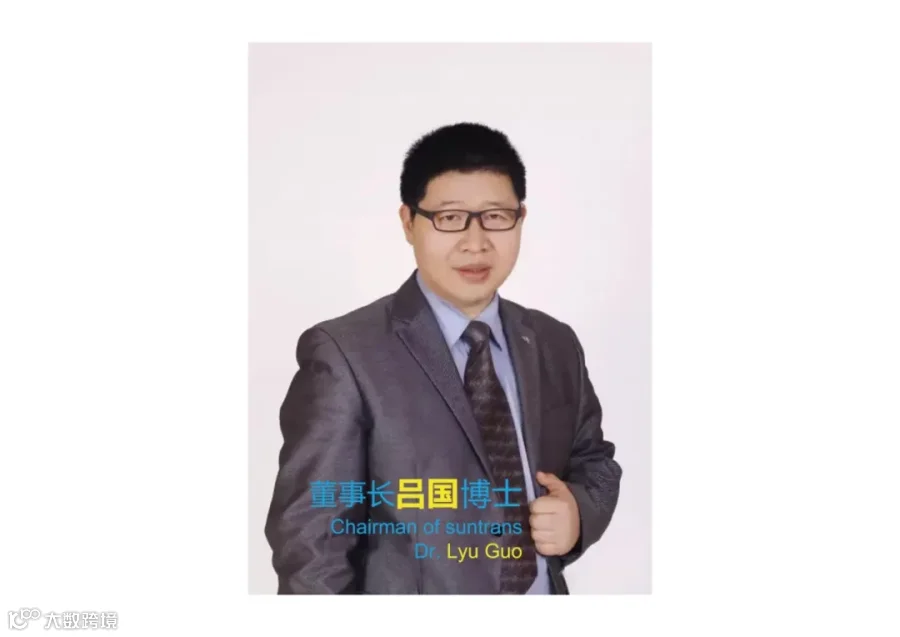
北京阳光创译吕国博士
1.北京阳光创译翻译公司董事长
2.美国Suntrans Consulting LLC首席执行官(CEO )
3.资深矿业同传翻译与谈判专家,曾为多国总统级、部级政要提供服务
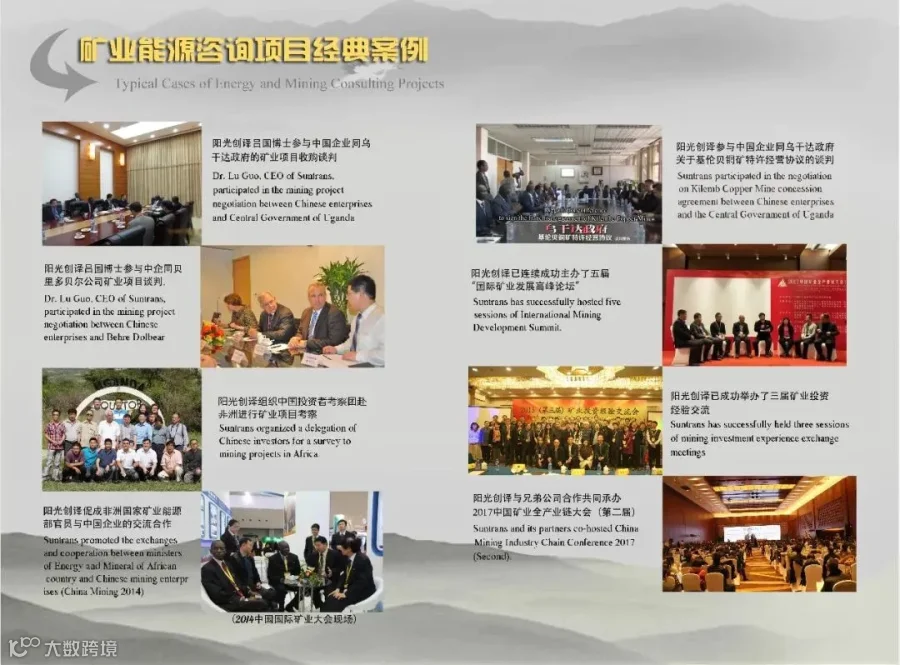
4.国际矿业咨询专家,参与的矿业投资并购项目覆盖全球30多个国家
5.中国矿业大学(北京)翻译硕士(MTI)校外硕导
6.曾任职于全球最大国际矿业公司——必和必拓(BHP Billiton)
7.曾在中国地质调查局境外矿产战略研究室工作
8.中国地质大学(北京)、美国迈阿密大学以及中国科学院联合培养博士
9.北京大学地质学博士后
10.组织并主持系列“中国国际矿业发展高峰论坛”与“中国国际翻译高峰论坛”
1.Chairman of Beijing Suntrans Language Translation Co., Ltd.
2.CEO of Suntrans Consulting LLC (USA)
3.Senior simultaneous interpreter and negotiation expert in the mining industry, having provided services for presidential and ministerial-level dignitaries from multiple countries
4.International mining consulting expert, with mining investment and M&A projects covering more than 30 countries worldwide
5.Off-campus Master’s Supervisor for Master of Translation and Interpreting (MTI) at China University of Mining and Technology (Beijing)
6.Former employee of BHP Billiton—the world's largest international mining company
7.Former staff member at the Overseas Mineral Strategy Research Office of the China Geological Survey (CGS)
8.PhD jointly cultivated by China University of Geosciences (Beijing), University of Miami (USA), and the Chinese Academy of Sciences
9.Postdoctoral Fellow in Geology at Peking University
10.Organizer and host of a series of “China International Mining Development Summits”and “China International Translation Summits”
阳光创译介绍
如果您对我们的矿业咨询服务感兴趣或有任何疑问,欢迎随时与我们联系。我们将竭诚为您提供帮助和解答。让我们携手合作,共同开创矿业领域的新篇章
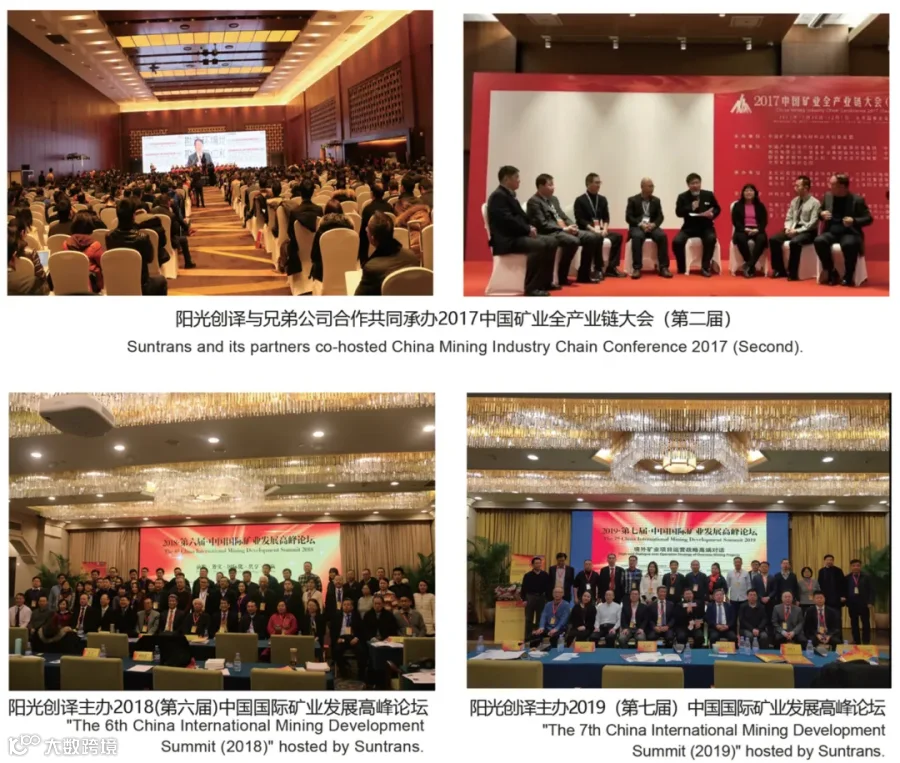
阳光创译的核心定位已经由最初的“阳光创译=矿业翻译”——中国地质矿业翻译领军品牌逐渐延伸扩展成“阳光创译=中国国际矿业服务大平台”,涵盖矿业翻译、矿业会展、矿业咨询、矿业猎头、“一带一路”矿业商会、矿业媒体等国际矿业服务板。
热文推荐:
● 西芒杜铁矿项目迎重大突破:2025 年 7 月钢轨落位,全球铁矿格局加速重塑
相关业务需求即可致电下方相关责任人
| 吕国博士 | 董事长 | 1127203572@qq.com |
| 电话:13401184506 | 微信:suntrans-mining | |
| 孙玉梅 | 总经理 | 853495100@qq.com |
| 电话:010-82865216 | 微信:853495100 | |
| Gary | 矿业外语猎头 | 582934973@qq.com |
| 电话:13311203631 | 微信:suntrans222 | |
| Bruce | 英语翻译 | 1935014417@qq.com |
| 电话:13693672413 | 微信:13693672413 | |
| 刘鑫 | 论文翻译 | 1749173384@qq.com |
| 电话:13683660873 | 微信:lvy_09260312 | |
| 苗菁 | 地矿报告翻译 | 2534271235@qq.com |
| 电话:13683661813 | 微信:zyy-suntrans | |
| Jerry | 口译 | 2268356581@qq.com |
| 电话:13681439112 | 微信:miningtranslation | |
| 范瑞瑞 | 媒体合作 | 1985130191@qq.com |
| 电话:17310253590 | 微信:suntrans2014 | |
| 张逸远 | 总经理助理 | 347562171@qq.com |
| 电话:15210897852 | 微信:15210897852 | |
| 赵宏 | 矿业咨询部主任 | 1583289628@qq.com |
| 电话:13683660097 | 微信:suntrans_1543 | |
| 程波 | 矿业咨询部副主任 | 490148863@qq.com |
| 电话:13683660397 | 微信:13683660397 | |
| Mary | 矿产贸易总监 | 1529169438@qq.com |
| 电话:17310657953 | 微信:ha15313128283 | |
| 吕彦锦 | 翻译 | 3602237436@qq.com |
| 电话:15701297623 | 微信:suntrans_6787 |
|
打造中国地质矿业翻译领军品牌
阳光创译的核心定位已经由最初的“阳光创译=矿业翻译”——中国地质矿业翻译领军品牌逐渐延伸扩展成“阳光创译=中国国际矿业服务大平台”,涵盖矿业翻译、矿业会展、矿业咨询、矿业猎头、“一带一路”矿业商会、矿业媒体等国际矿业服务板块。