

典型案例深度剖析
5.1The Bre-X Gold Mining Scam: A Warning from the Century's Fraud
Bre-X 金矿诈骗案:世纪骗局的警示
The Bre-X gold mining scam is one of the most notorious frauds in mining history. It not only caused enormous losses for investors but also profoundly altered the regulatory environment for global mining investments.
Bre-X 金矿诈骗案是矿业史上最著名的诈骗案之一,该案不仅给投资者造成了巨大损失,也深刻改变了全球矿业投资的监管环境。
Case Review. In 1988, Canadian businessman David Walsh founded Bre-X Minerals Ltd. In 1993, on the advice of his business partner John Felderhof, the company began gold exploration in the Busang area of Kalimantan, Indonesia. Through a series of falsified exploration reports, the company continuously revised upward its reserve estimates for the Busang gold deposit, from an initial 30 million ounces to 70 million ounces by 1997.
案情回顾。 1988 年,加拿大商人 David Walsh 创立 Bre-X 公司。 1993 年,在其商业伙伴 John Felderhof 的建议下,公司开始在印尼加里曼丹岛的布桑(Busang)地区进行金矿勘探。 通过一系列虚假的勘探报告,公司不断上调布桑金矿的储量预估,从最初的 3000 万盎司逐步增加到 1997 年的 7000 万盎司。
The company's stock price soared from about CAD $1 in 1993 to a peak of CAD $281 in May 1996, with a market capitalization exceeding CAD $6 billion. In March 1997, during a due diligence process, Freeport-McMoRan discovered that the Busang site contained very little actual gold. Almost simultaneously, the company's geologist, Michael de Guzman, fell to his death from a helicopter under circumstances that remain unclear to this day. Following the news, Bre-X's stock price plummeted 83% and eventually became worthless, causing significant losses for 280,000 investors.
公司股价从 1993 年的约 1 加元飙升至 1996 年 5 月的峰值 281 加元,市值超过 60 亿加元。 1997 年 3 月,Freeport-McMoran 公司在进行尽职调查时发现布桑金矿实际含金量极少。 几乎同时,公司地质学家 Michael de Guzman 从直升机上坠落身亡,死因至今未明。 消息传出后,Bre-X 股价暴跌 83%,最终归零,28 万投资者损失惨重(199)。
Analysis of Fraudulent Methods. Bre-X's fraudulent method was actually relatively simple: adding gold dust to core samples to make ordinary rock appear rich in gold. Investigations found that the so-called "natural gold grains" had edges that were too regular and contained bubble structures characteristic of modern smelting. Although this "salting" technique was simple, it was difficult to detect under the technological conditions of the time.
诈骗手段分析。 Bre-X 的诈骗手段其实相对简单:在岩芯样本中添加金粉,使普通岩石看起来富含黄金。 调查发现,所谓的 "天然金粒" 边缘过于规整,内部出现现代冶炼特有的气泡结构(201)。这种 "加盐"(salting)手法虽然简单,但在当时的技术条件下很难被发现。
Loss Assessment. The Bre-X scam caused direct economic losses exceeding $3 billion. Canadian pension funds were the primary victims, with the Ontario Municipal Employees Retirement Board losing $45 million, the Quebec Public Sector Pension Fund losing $70 million, and the Ontario Teachers' Pension Plan losing $100 million. More seriously, this scam triggered a global crisis of trust in mining investments, with financing for junior mining companies declining by 60% for five consecutive years.
损失评估。 Bre-X 骗局造成的直接经济损失超过 30 亿美元。 加拿大养老基金是主要受害者,其中安大略省市政雇员退休委员会损失 4500 万美元,魁北克公共部门养老基金损失 7000 万美元,安大略省教师养老计划损失 1 亿美元。 更严重的是,这起骗局引发了全球矿业投资的信任危机,初级矿企融资额连续五年下滑 60%(199)。
Impact of Regulatory Reforms. The Bre-X scandal directly prompted significant reforms to Canada's mining regulatory system. In 1999, the Canadian Securities Administrators introduced the National Instrument 43-101 (NI 43-101) standard, requiring mining companies to have their mineral resources assessed by a Qualified Person and to disclose information according to uniform standards. This standard was later adopted by multiple countries, becoming a crucial norm for global mining project disclosure.
监管改革影响。 Bre-X 骗局直接推动了加拿大矿业监管体系的重大改革。 1999 年,加拿大证券管理机构推出了 National Instrument 43-101(NI 43-101)标准,要求矿业公司必须由合格人员(Qualified Person)对矿产资源进行评估,并按照统一标准进行披露。 这一标准后来被多个国家采纳,成为全球矿业项目披露的重要规范。
Case Insights. The Bre-X case provided profound lessons for the mining investment market: first, investors must remain rational and be wary of projects promising exceptionally high returns; second, it is essential to value independent third-party verification and not rely solely on information provided by the company itself; third, regulatory systems need continuous improvement to keep pace with market developments; fourth, the due diligence conducted by intermediaries is critical, requiring both professional competence and ethical conduct.
案例启示。 Bre-X 案例给矿业投资市场带来了深刻教训:一是投资者必须保持理性,对超高回报的项目保持警惕;二是要重视独立的第三方验证,不能完全依赖公司自己提供的信息;三是监管体系需要不断完善,跟上市场发展的步伐;四是中介机构的尽职调查至关重要,必须具备专业能力和职业操守。
5.2Case Studies of Chinese Enterprises' Overseas Mining Investment Failures
中国企业海外矿业投资失败案例分析
In recent years, Chinese enterprises have encountered multiple failure cases in overseas mining investments. These cases reflect the unique challenges Chinese companies face in international operations.
近年来,中国企业在海外矿业投资中遭遇了多起失败案例,这些案例反映了中国企业在国际化经营中面临的特殊挑战。
Case One: African Lithium Mine Reserve Fraud Case. In 2021, a Chinese enterprise invested in a lithium mine project in Africa. According to a report provided by a local small-scale exploration company, the mine had reserves of 500,000 tons with a grade of 1.5%. The company invested $90 million ($30 million for mining rights and $60 million for production line construction). However, after mining began, it was discovered that the actual reserves were less than 100,000 tons with a grade of only 0.8%, resulting in actual losses exceeding $80 million.
案例一:非洲锂矿储量造假案。 2021 年,某中国企业在非洲投资一锂矿项目,根据当地小型勘探公司提供的报告,该矿储量 50 万吨、品位 1.5%。 企业投入 9000 万美元(3000 万美元购矿权、6000 万美元建设生产线),但开采后发现实际储量不足 10 万吨,品位仅 0.8%,实际损失超过 8000 万美元(196)。
Case Two: Zambia Copper Mine Safety Accident Case. A Chinese-funded enterprise was developing an 800-meter-deep underground copper mine in Zambia. Initially, it employed shaft mining technology without fully assessing groundwater issues. During construction, groundwater continuously gushed out. Pumping and drainage efforts for three months failed to control it, leading to a mine collapse that caused worker casualties. The project was suspended for four months, resulting in economic losses exceeding $50 million.
案例二:赞比亚铜矿安全事故案。某中资企业在赞比亚开发地下 800 米铜矿,初期采用竖井开采技术,未充分评估地下水问题。 施工中地下水持续涌出,抽排 3 个月未控制,引发矿井塌方致工人伤亡,项目停工 4 个月,经济损失超过 5000 万美元(196)。
Case Three: The Myanmar Tin Mine Fraud Case. In 2023, Mr. Zhang from Yunnan purchased a tin mine in Myanmar through an intermediary. After paying 800,000 yuan, he discovered the mining rights certificate was a PS composite, and the site contained only surface-level waste ore. More seriously, the ore was hijacked during transport, resulting in a total loss of his investment. According to statistics, in mining investment fraud cases in northern Myanmar, 98% of investors lose their entire investment, and the success rate of recovery is close to zero.
案例三:缅甸锡矿诈骗案。 2023 年,云南张先生通过中介购买缅甸一锡矿,支付 80 万元后发现矿权证系 PS 合成,现场只有表层废矿。 更严重的是,矿石运输途中遭劫,最终血本无归(197)。据统计,缅北地区矿业投资诈骗案中,98% 的投资者血本无归,追偿成功率接近零(197)。
Analysis of Failure Causes:
失败原因分析:
1.Insufficient technical capabilities. Chinese enterprises often lack a deep understanding of local geological conditions and ore properties in overseas mining investments, leading to project failures due to technical misjudgments.
技术能力不足。中国企业在海外矿业投资中,往往缺乏对当地地质条件、矿石性质的深入了解,技术判断失误导致项目失败。
2.Lack of risk assessment. Some companies are eager for quick success and fail to conduct adequate due diligence and risk assessments, resulting in insufficient awareness of political, legal, and environmental risks.
风险评估缺失。部分企业急于求成,没有进行充分的尽职调查和风险评估,对政治风险、法律风险、环境风险认识不足。
3.Poor handling of cultural differences. In some developing countries, factors such as cultural differences, language barriers, and disparities in legal systems increase management difficulties, and improper handling may trigger community conflicts.
文化差异处理不当。在一些发展中国家,文化差异、语言障碍、法律体系差异等因素增加了管理难度,处理不当可能引发社区冲突。
4.Inappropriate selection of intermediaries. To reduce costs, some companies choose local intermediaries with incomplete qualifications and poor reputations, creating opportunities for fraudsters.
中介机构选择不当。一些企业为降低成本,选择资质不全、信誉不佳的当地中介机构,给诈骗分子可乘之机。
5.Weak compliance awareness. Some enterprises lack sufficient understanding of local laws and regulations, leading to violations in areas such as environmental protection, labor, and taxation, which result in project delays or penalties.
合规意识薄弱。部分企业对当地法律法规了解不足,在环保、劳工、税务等方面违规,导致项目受阻或被处罚。
Lessons Learned:
经验教训:
1.It is essential to establish a comprehensive overseas investment risk prevention and control system and strengthen preliminary due diligence.
必须建立完善的海外投资风险防控体系,加强前期尽职调查。
2.Emphasize the development of technical capabilities and cultivate a team of internationalized professionals.
重视技术能力建设,培养国际化的专业人才队伍。
3.Select reputable intermediary agencies and, when necessary, engage internationally renowned institutions.
选择信誉良好的中介机构,必要时聘请国际知名机构。
4.Enhance communication with local governments and communities to build good public relations.
加强与当地政府、社区的沟通,建立良好的公共关系。
5.Strictly comply with local laws and regulations and proactively undertake social responsibilities.
严格遵守当地法律法规,主动承担社会责任。
5.3Case of Intermediary Negligence: Examining Joint Liability Risks from the Huaze Cobalt Nickel Case
中介机构失职案例:从华泽钴镍案看连带责任风险
The second-instance retrial of the "Huaze Cobalt Nickel Case" in 2021 has drawn significant attention from intermediary agencies regarding joint liability risks, profoundly impacting the entire intermediary services industry.
2021 年 "华泽钴镍案" 二审改判引发了中介机构对连带责任风险的高度关注,该案对整个中介服务行业产生了深远影响。
Case Review. Huaze Cobalt Nickel Company inflated profits through financial fraud during the period 2013-2015, causing significant losses to investors. Guoxin Securities, as the sponsor and lead underwriter, and Ruihua Certified Public Accountants, as the auditing firm, were initially ordered to bear 40% and 60% joint and several liability respectively in the first-instance judgment. However, in the second-instance judgment, both intermediary institutions were changed to bear 100% joint and several liability for compensation.
案情回顾。华泽钴镍公司在 2013-2015 年期间通过财务造假虚增利润,导致投资者损失惨重。 国信证券作为保荐机构和主承销商,瑞华会计师事务所作为审计机构,在一审判决中分别被判令承担 40%、60% 的连带责任。 但在二审判决中,两家中介机构均被改判承担 100% 的连带赔偿责任(219)。
Analysis of Changes in Liability Determination. The first-instance court held that the degree of fault of the intermediary institutions differed, and they should bear liability proportionally. However, the second-instance court held that there was a direct causal relationship between the wrongful acts of the intermediary institutions and the investors' losses, and it was impossible to distinguish the extent of their respective liabilities; therefore, they should bear joint and several liability. This change in the judgment logic significantly increases the liability risks for intermediary institutions.
责任认定变化分析。一审法院认为,中介机构的过错程度不同,应按比例承担责任。但二审法院认为,中介机构的过错行为与投资者损失之间存在直接因果关系,且无法区分各自责任大小,因此应承担连带责任。这一判决逻辑的变化,大大增加了中介机构的责任风险。
Impact on the Industry:
对行业的影响:
1.The liability risk has significantly increased. Intermediary institutions have shifted from proportional liability to joint and several liability, meaning that even if they are only partially at fault, they may be required to bear the full compensation responsibility.
责任风险显著增加。中介机构从按比例承担责任变为承担连带责任,意味着即使只承担部分过错,也可能需要承担全部赔偿责任。
2.The requirements for professional standards have been raised. Intermediary institutions must implement professional standards more strictly, strengthen quality control, and avoid any negligence.
执业标准要求提高。中介机构必须更加严格地执行执业标准,加强质量控制,避免出现任何过失。
3.The demand for insurance has increased. Facing higher liability risks, intermediary institutions must purchase professional liability insurance with higher coverage limits.
保险需求增加。面对更高的责任风险,中介机构必须购买更高保额的职业责任保险。
4.Service pricing adjustments. Intermediary institutions may raise service fees to cover the increased risk costs.
服务定价调整。中介机构可能会提高服务收费,以覆盖增加的风险成本。
Risk prevention and control recommendations:
风险防控建议:
1.Establish a more stringent quality control system to ensure the implementation of professional standards.
建立更加严格的质量控制体系,确保执业标准的执行。
2.Strengthen personnel training to enhance professional capabilities and risk awareness.
加强人员培训,提高专业能力和风险意识。
3.Purchase adequate professional liability insurance to transfer risks.
购买充足的职业责任保险,转移风险。
4.Clearly define the scope of responsibilities and exemption clauses in service agreements.
在服务协议中明确责任范围和免责条款。
5.For high-risk projects, consider purchasing additional insurance or increasing fees.
对于高风险项目,考虑购买额外的保险或提高收费。
二、Risk Assessment Framework and Response Strategy System
风险评估框架与应对策略体系
6.1 Multi-dimensional Risk Assessment Model Construction
多维度风险评估模型构建
Based on in-depth research into the international mining investment and financing market, we have constructed a comprehensive risk assessment model covering four dimensions: mineral type risk, geographical risk, time risk, and transaction structure risk.
基于对国际矿业投融资市场的深入研究,我们构建了一个涵盖矿种风险、地域风险、时间风险、交易结构风险四个维度的综合风险评估模型。
Mineral Type Risk Assessment Dimension. Different mineral types possess distinct geological characteristics, market attributes, and investment risks. According to our analysis, six major mineral types can be categorized into three classes based on risk level: high-risk minerals (lithium ore, rare earth ore), medium-risk minerals (gold ore, copper ore), and low-risk minerals (lead-zinc ore, iron ore). High-risk mineral types are characterized by significant price volatility, high technical requirements, and strong policy sensitivity. Medium-risk mineral types have relatively stable prices and sustained market demand. Low-risk mineral types, while offering lower profits, have mature markets and controllable risks.
矿种风险评估维度。不同矿种具有不同的地质特征、市场属性和投资风险。根据我们的分析,可将六大矿种按风险等级分为三类:高风险矿种(锂矿、稀土矿),中等风险矿种(金矿、铜矿),低风险矿种(铅锌矿、铁矿)。高风险矿种的特点是价格波动大、技术要求高、政策敏感性强。中等风险矿种价格相对稳定,市场需求持续。低风险矿种虽然利润较低,但市场成熟、风险可控。
Geographic risk assessment dimensions. Based on factors such as political stability, legal system completeness, and resource endowment, we categorize the seven major investment regions into three types: low-risk regions (Australia, Canada), medium-risk regions (parts of South America and Southeast Asia), and high-risk regions (Africa, Central Asia, Russia). Low-risk regions have political stability and sound legal systems, but high investment barriers. Medium-risk regions are rich in resources and have significant growth potential, but there is a certain degree of policy uncertainty. High-risk regions are extremely rich in resources and offer high investment returns, but they carry significant political and legal risks.
地域风险评估维度。基于政治稳定性、法律完善程度、资源禀赋等因素,我们将七大投资地区分为三类:低风险地区(澳洲、加拿大),中等风险地区(南美、东南亚部分国家),高风险地区(非洲、中亚、俄罗斯)。低风险地区政治稳定、法治健全,但投资门槛高。中等风险地区资源丰富、增长潜力大,但存在一定的政策不确定性。高风险地区资源极其丰富、投资回报高,但政治、法律风险大。
Temporal risk assessment dimensions. Mining investments are characterized by long cycles, with different types and degrees of risks faced at various stages. The primary risk during the exploration phase is the uncertainty of resource reserves; the main risks during the development phase are construction cost overruns and project delays; during the production phase, the key risks are market price fluctuations and rising operational costs; the main risks in the exit phase are difficulties in asset disposal and environmental remediation liabilities. It is recommended that investors adopt corresponding risk control measures based on the project's current stage.
时间风险评估维度。矿业投资具有长周期特征,不同阶段面临的风险类型和程度不同。勘探期主要风险是资源储量不确定性;开发期主要风险是建设成本超支、工期延误;生产期主要风险是市场价格波动、运营成本上升;退出期主要风险是资产处置困难、环境修复责任。建议投资者根据项目所处阶段,采取相应的风险控制措施。
Transaction structure risk assessment dimensions. Different transaction structures bring different risks and returns. Equity investment carries high risk but offers high return potential; debt investment has relatively lower risk but limited returns; hybrid investment structures are complex but can balance risk and return. It is recommended to choose a suitable transaction structure based on one's own risk tolerance and investment objectives.
交易结构风险评估维度。不同的交易结构带来不同的风险和收益。股权投资风险高但收益潜力大;债权投资风险相对较低但收益有限;混合投资结构复杂但可以平衡风险和收益。建议根据自身风险承受能力和投资目标,选择合适的交易结构。
Comprehensive risk scoring system. Based on the four dimensions mentioned above, we have established a 1-10 risk scoring system, where 1-3 points indicate low risk, 4-6 points indicate medium risk, and 7-10 points indicate high risk. Investors can select projects with corresponding risk levels based on their own risk preferences. Simultaneously, it is recommended to adopt a risk diversification strategy by allocating investments across different risk levels.
综合风险评分体系。基于上述四个维度,我们建立了 1-10 分的风险评分体系,其中 1-3 分为低风险,4-6 分为中等风险,7-10 分为高风险。 投资者可以根据自身风险偏好,选择相应风险等级的项目。 同时,建议采用风险分散策略,在不同风险等级中进行配置。
6.2 Differentiated Risk Prevention and Control Strategies
差异化风险防控策略
For different types of market entities and risk scenarios, we have proposed differentiated risk prevention and control strategies.
针对不同类型的市场主体和风险场景,我们提出了差异化的风险防控策略。
Investor Risk Prevention and Control Strategies:
投资者风险防控策略:
1.Standardization of Due Diligence. Establish a standardized due diligence process covering all aspects such as technology, law, finance, and environment. For resource reserves, it is mandatory to require assessment reports that comply with international standards such as JORC and NI 43-101. For financial conditions, audited financial statements must be provided, and independent financial analysis should be conducted.
尽职调查标准化。建立标准化的尽职调查流程,涵盖技术、法律、财务、环境等各个方面。对于资源储量,必须要求提供符合 JORC、NI 43-101 等国际标准的评估报告。 对于财务状况,要求提供经审计的财务报表,并进行独立的财务分析。
2.Risk Diversification in Investment. Do not put all your eggs in one basket. It is recommended to diversify investments across projects with different minerals, in different regions, and at different stages. Simultaneously, control the investment proportion in a single project to avoid excessive concentration.
风险分散化投资。不要把所有鸡蛋放在一个篮子里,建议在不同矿种、不同地区、不同阶段的项目中进行分散投资。同时,要控制单一项目的投资比例,避免过度集中。
3.Professional Team Building. Establish a professional investment team, including specialists in geology, mining, mineral processing, finance, law, and other fields. For complex projects, external experts can be hired to provide support.
专业团队建设。建立专业的投资团队,包括地质、采矿、选矿、财务、法律等专业人才。对于复杂项目,可以聘请外部专家提供支持。
4.Utilization of Insurance Tools. Fully utilize various insurance tools, including political risk insurance, property insurance, liability insurance, etc. Especially for investments in high-risk regions, political risk insurance is a necessary risk transfer tool.
保险工具运用。充分利用各种保险工具,包括政治风险保险、财产保险、责任保险等。特别是对于高风险地区的投资,政治风险保险是必要的风险转移工具。
5.Contract Clause Design. Incorporate comprehensive protective clauses in investment agreements, including representations and warranties, closing conditions, liability for breach of contract, exit mechanisms, etc. Particular attention should be paid to setting protective clauses such as valuation adjustment mechanisms and buyback clauses.
合同条款设计。在投资协议中设置完善的保护条款,包括陈述与保证、交割条件、违约责任、退出机制等。特别要注意设置对赌条款、回购条款等保护性条款。
Project Party's Risk Prevention and Control Strategies:
项目方风险防控策略:
1.Investor Screening Mechanism. Establish strict investor screening criteria, focusing on evaluating investors' financial strength, investment experience, and strategic alignment. Maintain vigilance against investors with unclear identities or sources of funds.
投资者筛选机制。建立严格的投资者筛选标准,重点考察投资者的资金实力、投资经验、战略匹配度等。对于身份不明、资金来源不清的投资者要保持警惕。
2.Financing Structure Optimization. In designing the financing structure, balance the proportion of equity financing and debt financing to avoid excessive dilution of equity or taking on excessive debt burden. Simultaneously, reasonably set valuation adjustment mechanism terms to avoid loss of control.
融资结构优化。在融资结构设计上,要平衡股权融资和债权融资的比例,避免过度稀释股权或承担过高的债务负担。同时,要合理设置对赌条款,避免失去控制权。
3.Intermediary Management. Select reputable intermediaries with strong professional capabilities and establish effective supervision mechanisms. Clearly define the rights and obligations of all parties in service contracts to avoid ambiguity of responsibilities.
中介机构管理。选择信誉良好、专业能力强的中介机构,并建立有效的监督机制。在服务合同中明确各方的权利义务,避免责任不清。
4.Compliance System Construction. Establish a comprehensive compliance management system to ensure that project development complies with local laws and regulations. Particularly in areas such as environmental protection, safety, and labor, it is essential to proactively assume social responsibilities and avoid project failure due to non-compliance.
合规体系建设。建立完善的合规管理体系,确保项目开发符合当地法律法规。特别是在环保、安全、劳工等方面,要主动承担社会责任,避免因违规行为导致项目失败。
5.Disclose information transparently. In communications with investors and intermediaries, maintain the authenticity and transparency of information. Concealing important information may lead to legal liabilities and reputational damage.
信息披露透明。在与投资者和中介机构的沟通中,要保持信息的真实性和透明度。隐瞒重要信息可能导致法律责任和信誉损失。
Risk Prevention and Control Strategies for Intermediary Institutions:
中介机构风险防控策略:
1.Maintain independence. Always uphold independence and objectivity, avoiding conflicts of interest with any party. For situations where conflicts of interest may arise, disclose them promptly and take measures to prevent them.
独立性维护。始终保持独立性和客观性,避免与任何一方存在利益冲突。对于可能存在利益冲突的情况,要及时披露并采取措施避免。
2.Enhance professional capabilities. Continuously enhance professional capabilities to keep pace with industry development. Especially in terms of new technologies and regulations, it is essential to learn and master them promptly.
专业能力提升。不断提升专业能力,跟上行业发展的步伐。特别是在新技术、新法规方面,要及时学习和掌握。
3.Quality Control System. Establish a strict quality control system to ensure service quality. For important projects, conduct multi-level reviews to avoid errors.
质量控制体系。建立严格的质量控制体系,确保服务质量。对于重要项目,要进行多级审核,避免出现失误。
4.Risk Assessment and Disclosure. When providing services, fully assess project risks and disclose them to clients. For matters beyond professional scope, clearly state limitations or decline to provide opinions.
风险评估与提示。在提供服务时,要充分评估项目风险,并向客户进行提示。对于超出专业范围的事项,要明确说明或拒绝提供意见。
5.Professional Liability Insurance. Purchase adequate professional liability insurance to transfer practice risks. At the same time, regularly assess insurance coverage to ensure it can address potential risks.
职业责任保险。购买充足的职业责任保险,转移执业风险。同时,要定期评估保险覆盖范围,确保能够应对可能的风险。
6.3 Industry Best Practices and Compliance Standards
行业最佳实践与合规标准
Based on research into the international mining investment and financing market, we have summarized industry best practices and compliance standards to provide reference for market participants.
基于对国际矿业投融资市场的研究,我们总结了行业最佳实践和合规标准,为市场主体提供参考。
International Standard Systems:
国际标准体系:
1.Resource Assessment Standards. The JORC (Australasian Joint Ore Reserves Committee) Code and NI 43-101 (Canadian National Standard) are the most widely used international standards for mineral resource assessment. Investors should require project proponents to provide resource assessment reports that comply with these standards.
资源评估标准。 JORC(澳大利亚联合矿石储量委员会)标准和 NI 43-101(加拿大国家标准)是国际上最广泛使用的矿产资源评估标准。 投资者应要求项目方提供符合这些标准的资源评估报告。
2.Environmental and Social Responsibility Standards. Internationally recognized management system standards include the ISO 14001 Environmental Management System, OHSAS 18001 Occupational Health and Safety Management System, and SA 8000 Social Accountability Standard. Project proponents should establish and implement these management systems.
环境与社会责任标准。 ISO 14001 环境管理体系、OHSAS 18001 职业健康安全管理体系、SA 8000 社会责任标准等,是国际认可的管理体系标准。 项目方应建立并实施这些管理体系。
3.Anti-Corruption Compliance Standards. Comply with international anti-corruption regulations such as the United Nations Convention against Corruption, the U.S. Foreign Corrupt Practices Act (FCPA), and the UK Bribery Act, and establish an anti-money laundering and anti-corruption compliance system.
反腐败合规标准。遵守《联合国反腐败公约》、美国《反海外腐败法》(FCPA)、英国《反贿赂法》等国际反腐败法规,建立反洗钱和反腐败合规体系。
Best Practices for Risk Prevention and Control:
风险防控最佳实践:
1.Pre-Project Assessment. Conduct comprehensive due diligence before project investment, including technical feasibility, economic rationality, legal compliance, environmental impact, etc. It is recommended to hire internationally renowned consulting firms for independent evaluation.
项目前期评估。在项目投资前,进行全面的尽职调查,包括技术可行性、经济合理性、法律合规性、环境影响等。建议聘请国际知名的咨询机构进行独立评估。
2.Contractual Terms Design. Incorporate comprehensive protective clauses in investment agreements, including but not limited to: (1) Representations and Warranties clauses, requiring all parties to truthfully disclose relevant information; (2) Conditions Precedent to Closing clauses, setting clear preconditions for closing; (3) Liability for Breach of Contract clauses, defining breach scenarios and compensation mechanisms; (4) Exit Mechanism clauses, stipulating exit methods and pricing under different circumstances.
合同条款设计。在投资协议中设置完善的保护条款,包括但不限于:(1)陈述与保证条款,要求各方如实披露相关信息;(2)交割条件条款,设置明确的交割前提条件;(3)违约责任条款,明确违约情形和赔偿机制;(4)退出机制条款,规定不同情形下的退出方式和价格。
3.Risk Monitoring Mechanism. Establish a continuous risk monitoring mechanism to regularly assess project progress and changes in risks. Focus on risk factors such as changes in resource reserves, market price fluctuations, and shifts in the policy environment.
风险监控机制。建立持续的风险监控机制,定期评估项目进展和风险变化。重点关注资源储量变化、市场价格波动、政策环境变化等风险因素。
4.Emergency plan formulation. Develop detailed emergency plans for potential major risks, including risk identification, emergency response, loss control, communication, and coordination.
应急预案制定。针对可能出现的重大风险,制定详细的应急预案,包括风险识别、应急响应、损失控制、沟通协调等内容。
5.Dispute resolution mechanism. Include a clear dispute resolution mechanism in the contract; it is recommended to use international arbitration to resolve disputes, with the arbitration location chosen in a neutral third country.
争议解决机制。在合同中约定明确的争议解决机制,建议采用国际仲裁方式解决争议,仲裁地点选择在中立的第三国。
Compliance management system construction:
合规管理体系建设:
1.Organizational structure. Establish a dedicated compliance management department or designate specific personnel responsible for compliance work to ensure the independence and authority of compliance management.
组织架构。建立专门的合规管理部门或指定专人负责合规工作,确保合规管理的独立性和权威性。
2.Institutional processes. Establish comprehensive compliance management systems and processes covering all stages, including investment decision-making, project execution, and risk management.
制度流程。建立完善的合规管理制度和流程,涵盖投资决策、项目执行、风险管理等各个环节。
3.Training and Education. Conduct regular compliance training to enhance employees' compliance awareness and professional capabilities. Particularly for overseas operations, strengthen training on local laws and regulations.
培训教育。定期开展合规培训,提高员工的合规意识和专业能力。特别是对于海外业务,要加强当地法律法规的培训。
4.Supervision and Inspection. Establish a regular compliance inspection mechanism to promptly identify and correct violations. For issues discovered, develop corrective measures and track their implementation.
监督检查。建立定期的合规检查机制,及时发现和纠正违规行为。对于发现的问题,要制定整改措施并跟踪落实。
5.Continuous Improvement. Establish a continuous improvement mechanism for compliance management, and continuously refine the compliance management system based on changes in laws and regulations and practical experience.
持续改进。建立合规管理的持续改进机制,根据法律法规变化和实践经验,不断完善合规管理体系。
三、Investment Recommendations and Outlook
投资建议与展望
7.1Key Investment Directions and Timing Considerations
重点投资方向与时机把握
Based on an in-depth analysis of the global mining market, we believe the period from 2026 to 2028 will be a crucial window of opportunity for international mining investment. We recommend investors focus on the following investment directions:
基于对全球矿业市场的深入分析,我们认为 2026-2028 年将是国际矿业投资的重要机遇期,建议投资者重点关注以下投资方向:
The investment theme of new energy metals. As the global energy transition accelerates, demand for new energy metals such as lithium, cobalt, nickel, and rare earths will continue to surge. Particularly for lithium mining investment, benefiting from the rapid growth in energy storage demand, global lithium demand is projected to reach 2.16 million tonnes LCE by 2026, with the supply-demand relationship shifting from surplus to a tight balance. It is advisable to focus on lithium extraction projects from salt lakes in the South American "Lithium Triangle" region, as well as spodumene projects in Australia. Simultaneously, rare earths, as a key material for new energy vehicle motors, hold long-term investment value against the backdrop of the West seeking supply chain diversification.
新能源金属投资主线。随着全球能源转型加速,锂、钴、镍、稀土等新能源金属需求将持续爆发。特别是锂矿投资,受益于储能需求的快速增长,预计 2026 年全球锂需求将达到 216 万吨 LCE,供需关系从过剩转为紧平衡(87)。建议重点关注南美 "锂三角" 地区的盐湖提锂项目,以及澳大利亚的锂辉石项目。 同时,稀土作为新能源汽车电机的关键材料,在西方寻求供应链多元化的背景下,具有长期投资价值。
Strategic positioning in copper resources. Copper, as the "grid metal," plays an irreplaceable role in the processes of global electrification and digitalization. The global copper supply-demand gap is projected to be between 330,000 and 1.03 million tons in 2026, and the supply shortage is expected to drive the central price of copper upward. It is recommended to focus on high-quality copper mine projects in traditional copper-rich countries such as Chile and Peru, while also paying attention to high-grade copper-cobalt associated ore projects in countries like the Democratic Republic of the Congo.
铜资源战略布局。铜作为 "电网金属",在全球电气化和数字化进程中扮演着不可替代的角色。 2026 年全球铜供需缺口预计在 33-103 万吨之间(86),供应短缺将推动铜价中枢上移。建议重点关注智利、秘鲁等传统铜资源大国的优质铜矿项目,同时关注刚果(金)等高品位铜钴伴生矿项目。
Gold as a safe-haven asset allocation. Against the backdrop of increasing global economic uncertainty and rising geopolitical risks, gold's safe-haven attributes will become more prominent. It is expected that gold prices will remain at historically high levels in 2026. It is recommended to include gold as an important component of investment portfolios, with a suggested allocation ratio of 5%-10%.
黄金避险配置。在全球经济不确定性增加、地缘政治风险上升的背景下,黄金的避险属性将更加凸显。预计 2026 年黄金价格将维持在历史高位,建议将黄金作为投资组合的重要组成部分,配置比例建议在 5%-10%。
Judgment on investment timing. From the perspective of market cycles, the first half of 2026 presents a favorable opportunity for mining investments. The main reasons include: (1) After the adjustments in 2025, valuations of some high-quality projects have returned to reasonable ranges; (2) The expectation of the Federal Reserve cutting interest rates has strengthened, which is conducive to reducing financing costs; (3) Expectations of global economic recovery will drive demand growth for commodities; (4) Continuous strengthening of new energy industry policies will provide support for demand of related metals.
投资时机判断。从市场周期来看,2026 年上半年是矿业投资的较好时机。 主要理由包括:(1)经过 2025 年的调整,部分优质项目估值已回到合理区间;(2)美联储降息预期增强,有利于降低融资成本;(3)全球经济复苏预期,将带动大宗商品需求增长;(4)新能源产业政策持续加码,为相关金属需求提供支撑。
7.2Portfolio Allocation Recommendations
投资组合配置建议
Based on the principle of risk diversification, we recommend investors construct a diversified mining investment portfolio:
基于风险分散原则,我们建议投资者构建多元化的矿业投资组合:
Geographic Allocation Strategy. It is recommended to adopt a "Core - Satellite" allocation strategy, allocating 60% of capital to politically stable, legally sound core regions (Australia, Canada), 30% to resource-rich but riskier satellite regions (South America, Africa), and 10% to high-risk, high-reward regions (Central Asia, Russia). This allocation allows for both stable returns and the capture of high-growth opportunities.
地域配置策略。建议采用 "核心 - 卫星" 配置策略,将 60% 的资金配置在政治稳定、法治健全的核心地区(澳洲、加拿大),30% 配置在资源丰富但存在一定风险的卫星地区(南美、非洲),10% 配置在高风险高收益地区(中亚、俄罗斯)。 这种配置既能享受稳定收益,又能捕捉高成长机会。
Mineral Type Allocation Strategy. It is recommended to allocate based on the characteristics of different minerals: (1) Core Allocation (40%): Choose traditional metals with stable demand like copper and iron; (2) Growth Allocation (35%): Choose new energy metals like lithium and rare earths; (3) Defensive Allocation (15%): Allocate to precious metals like gold; (4) Opportunistic Allocation (10%): Flexibly allocate to other minerals based on market opportunities.
矿种配置策略。建议根据不同矿种的特性进行配置:(1)基础配置(40%):选择铜、铁等需求稳定的传统金属;(2)成长配置(35%):选择锂、稀土等新能源金属;(3)避险配置(15%):配置黄金等贵金属;(4)机会配置(10%):根据市场机会灵活配置其他矿种。
Project Stage Allocation Strategy. Projects at different development stages have varying risk-return profiles: (1) Exploration Stage Projects (10%): High risk but low cost, suitable for investors with higher risk tolerance; (2) Development Stage Projects (30%): Moderate risk, requiring significant capital investment, suitable for investors with certain capabilities; (3) Production Stage Projects (50%): Stable cash flow, lower risk, forming the core of the portfolio; (4) Merger & Acquisition/Restructuring Projects (10%): Require professional judgment, with potential for above-average returns.
项目阶段配置策略。不同开发阶段的项目风险收益特征不同:(1)勘探期项目(10%):风险高但成本低,适合风险偏好较高的投资者;(2)开发期项目(30%):风险适中,需要大量资金投入,适合有一定实力的投资者;(3)生产期项目(50%):现金流稳定,风险较低,是投资组合的核心;(4)并购重组项目(10%):需要专业判断,可能获得超额收益。
Investment Method Allocation Strategy. It is recommended to adopt a combination of various investment methods: (1) Direct equity investment (40%): Gain project control with high profit potential; (2) Debt investment (30%): Lower risk with stable returns; (3) Fund investment (20%): Indirect investment through professional funds to diversify risk; (4) Derivative investment (10%): Used for hedging price risks or obtaining leveraged returns.
投资方式配置策略。建议采用多种投资方式相结合:(1)直接股权投资(40%):获得项目控制权,收益潜力大;(2)债权投资(30%):风险较低,收益稳定;(3)基金投资(20%):通过专业基金间接投资,分散风险;(4)衍生品投资(10%):用于对冲价格风险或获取杠杆收益。
7.3Outlook on Industry Development Trends
行业发展趋势展望
Looking ahead to the next 3-5 years, the international mining investment and financing market will exhibit the following development trends:
展望未来 3-5 年,国际矿业投融资市场将呈现以下发展趋势:
Technological innovation drives industrial upgrading. The application of new technologies such as artificial intelligence, big data, and the Internet of Things in the mining sector will significantly enhance production efficiency and reduce costs. It is projected that by 2028, smart mines will become mainstream, with technologies like automated mining, intelligent mineral processing, and digital twins being widely adopted. Investors should focus on mining enterprises with technological innovation capabilities.
技术创新驱动产业升级。人工智能、大数据、物联网等新技术在矿业领域的应用将大幅提升生产效率,降低成本。预计到 2028 年,智能化矿山将成为主流,自动化开采、智能选矿、数字孪生等技术将广泛应用。 投资者应重点关注具有技术创新能力的矿业企业。
ESG requirements are becoming increasingly stringent. Environmental protection and social responsibility will become mandatory constraints for mining investments. Governments will introduce stricter environmental regulations, and community participation and benefit-sharing mechanisms will be further improved. When evaluating projects, investors must incorporate ESG factors into their considerations, and projects with excellent ESG performance will receive valuation premiums.
ESG 要求日益严格。环境保护和社会责任将成为矿业投资的硬性约束条件。各国政府将出台更加严格的环保法规,社区参与和利益分享机制将更加完善。投资者在项目评估时,必须将 ESG 因素纳入考量,ESG 表现优秀的项目将获得估值溢价。
Supply chain regionalization and restructuring. Under the influence of geopolitics, the global mining supply chain will exhibit trends of regionalization and localization. Countries will place greater emphasis on the supply security of critical minerals, promoting the localization of industrial chains through policy guidance, financial support, and other means. This creates new opportunities for regional mining investments.
供应链区域化重构。在地缘政治影响下,全球矿业供应链将呈现区域化、本土化趋势。各国将更加重视关键矿产的供应安全,通过政策引导、资金支持等方式,推动产业链本土化。这为区域性矿业投资创造了新机遇。
Innovation and development of investment models. The traditional single equity investment model will evolve toward diversification, including innovative financial instruments such as project financing, green bonds, and carbon credit trading, which will be more widely applied. Meanwhile, investment tools such as mining asset securitization, mining funds, and mining trusts will continue to diversify, providing investors with more options.
投资模式创新发展。传统的单一股权投资模式将向多元化发展,包括项目融资、绿色债券、碳信用交易等创新金融工具将得到更广泛应用。同时,矿业资产证券化、矿业基金、矿业信托等投资工具将不断丰富,为投资者提供更多选择。
Continuous improvement of the regulatory environment. Governments will strengthen the regulation of mining investments, particularly in areas such as antitrust, national security, and environmental protection. Investors need to closely monitor changes in regulatory policies to ensure investment compliance. Meanwhile, international cooperation will be strengthened, and multilateral investment protection mechanisms will become more robust.
监管环境持续完善。各国政府将加强对矿业投资的监管,特别是在反垄断、国家安全、环境保护等方面。投资者需要密切关注监管政策变化,确保投资合规。同时,国际合作将加强,多边投资保护机制将更加完善。
Overall, despite facing numerous challenges, the long-term prospects of the international mining investment and financing market remain positive. The demand for mineral resources driven by global economic development and technological advancement will continue to grow, and the new energy revolution has created historic opportunities for mining investment. The key lies in investors enhancing risk awareness, mastering professional knowledge, selecting appropriate investment strategies, seizing opportunities in a changing market, and achieving sustainable development.
总体而言,尽管面临诸多挑战,但国际矿业投融资市场的长期前景依然向好。全球经济发展和技术进步对矿产资源的需求将持续增长,新能源革命为矿业投资创造了历史性机遇。关键在于投资者要提高风险意识,掌握专业知识,选择合适的投资策略,在变化的市场中把握机遇,实现可持续发展。
Conclusion
结语
The international mining investment and financing market is undergoing profound transformation, presenting both opportunities and challenges. Through systematic research on six major global mineral types across seven core regions, we have identified various pitfalls faced by investors, project owners, and intermediaries, and proposed targeted response strategies.
国际矿业投融资市场正处于深刻变革期,机遇与挑战并存。通过对全球六大主流矿种在七大核心地区的系统研究,我们识别了投资者、项目方、中介机构面临的各类陷阱,并提出了针对性的应对策略。
Summary of Key Findings:
核心发现总结:
1.Resource fraud remains the greatest risk. From historical cases, falsification of resource reserves and grades has caused the most severe losses to investors. It is recommended that investors establish a rigorous technical evaluation system and require independent assessment reports that comply with international standards.
资源造假仍是最大风险。从历史案例看,资源储量和品位造假给投资者造成的损失最为惨重。建议投资者建立严格的技术评估体系,要求提供符合国际标准的独立评估报告。
2.Geopolitical risks are intensifying. Since 2025, resource nationalism has been on the rise, with countries revising mining regulations and increasing the proportion of government interests. Investors need to strengthen their assessment and hedging of political risks.
地缘政治风险加剧。 2025 年以来,资源民族主义抬头,各国纷纷修订矿业法规,提高政府权益比例。 投资者需要加强对政治风险的评估和对冲。
3.ESG requirements have become a hard constraint. The increasing demands for environmental protection and social responsibility not only raise project costs but also extend approval cycles. Companies must establish a comprehensive ESG management system.
ESG 要求成为硬约束。环保和社会责任要求的提高,不仅增加了项目成本,也延长了审批周期。企业必须建立完善的 ESG 管理体系。
4.Technological innovation brings new opportunities. The application of intelligent and digital technologies will reshape mining production methods, and companies with technological advantages will gain a competitive edge.
技术创新带来新机遇。智能化、数字化技术的应用将重塑矿业生产方式,具有技术优势的企业将获得竞争优势。
5.The investment model is trending towards diversification. The traditional equity investment model is evolving towards diversification, and the application of innovative financial instruments will bring new vitality to the market.
投资模式趋向多元化。传统的股权投资模式正在向多元化发展,创新金融工具的应用将为市场带来新活力。
Recommendations for market participants:
对市场主体的建议:
For investors: Establish a professional investment team, adopt diversified investment strategies, strengthen due diligence, and fully utilize risk hedging tools such as insurance. Focus on projects with genuine resources, political stability, and excellent ESG performance.
对投资者:建立专业的投资团队,采用分散化投资策略,加强尽职调查,充分利用保险等风险对冲工具。重点关注资源真实、政治稳定、ESG 表现优秀的项目。
For project owners: Enhance risk awareness, establish an investor screening mechanism, optimize the financing structure, and strengthen compliance management. While pursuing development, emphasis must be placed on sustainability.
对项目方:提高风险意识,建立投资者筛选机制,优化融资结构,加强合规管理。在追求发展的同时,要注重可持续性。
For intermediaries: Maintain independence and professionalism, improve service quality, and strengthen risk prevention and control. Under the new regulatory environment, intermediaries face both responsibilities and opportunities.
对中介机构:保持独立性和专业性,提升服务质量,加强风险防控。在新的监管环境下,中介机构的责任和机遇并存。
Looking ahead, the international mining investment and financing market will advance amidst transformation. Seizing the historical opportunity of the new energy revolution and addressing the complex challenges of geopolitics require the joint efforts of all market participants to establish a more standardized, transparent, and sustainable investment ecosystem. Only by adhering to compliant operations, professional management, and controllable risks can we navigate steadily and go far in the tide of international mining investment.
展望未来,国际矿业投融资市场将在变革中前行。把握新能源革命的历史机遇,应对地缘政治的复杂挑战,需要市场各方共同努力,建立更加规范、透明、可持续的投资生态系统。只有坚持合规经营、专业运作、风险可控,才能在国际矿业投资的大潮中行稳致远。
Risk Warning: This report is based on the market environment and policy background of 2025-2026. Investors should pay attention to the latest market changes and policy adjustments when making actual decisions. Mining investment carries high-risk characteristics and may face multiple risks such as resources, technology, market, and policies. Investors should make decisions cautiously based on their own circumstances.
风险提示:本报告基于 2025-2026 年的市场环境和政策背景撰写,投资者在实际决策时应关注最新的市场变化和政策调整。 矿业投资具有高风险特征,可能面临资源、技术、市场、政策等多重风险,投资者应根据自身情况谨慎决策。
人物介绍
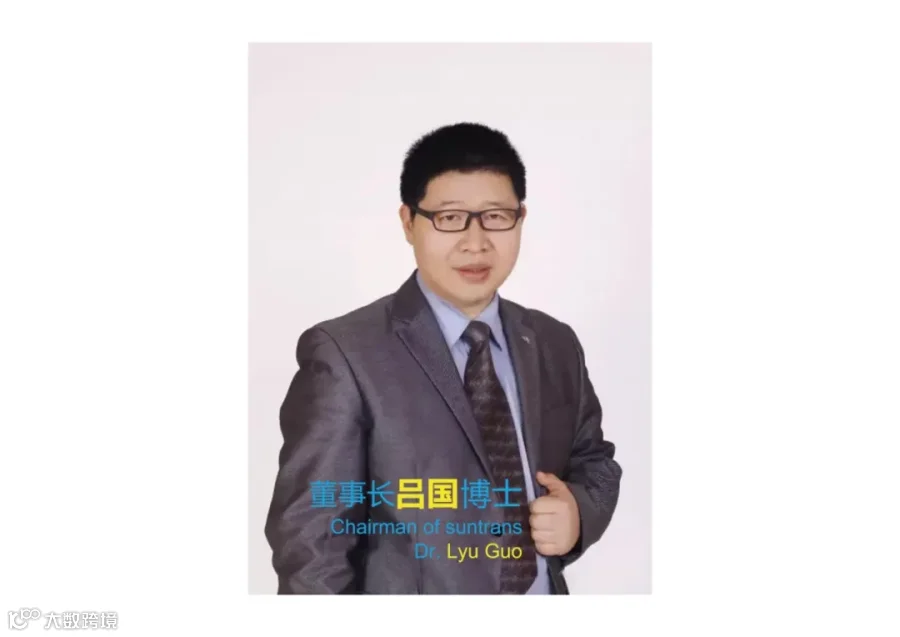
北京阳光创译吕国博士
1.北京阳光创译翻译公司董事长
2.美国Suntrans Consulting LLC首席执行官(CEO )
3.资深矿业同传翻译与谈判专家,曾为多国总统级、部级政要提供服务
4.国际矿业咨询专家,参与的矿业投资并购项目覆盖全球30多个国家
5.中国矿业大学(北京)翻译硕士(MTI)校外硕导
6.曾任职于全球最大国际矿业公司——必和必拓(BHP Billiton)
7.曾在中国地质调查局境外矿产战略研究室工作
8.中国地质大学(北京)、美国迈阿密大学以及中国科学院联合培养博士
9.北京大学地质学博士后
10.组织并主持系列“中国国际矿业发展高峰论坛”与“中国国际翻译高峰论坛”
1.Chairman of Beijing Suntrans Language Translation Co., Ltd.
2.CEO of Suntrans Consulting LLC (USA)
3.Senior simultaneous interpreter and negotiation expert in the mining industry, having provided services for presidential and ministerial-level dignitaries from multiple countries
4.International mining consulting expert, with mining investment and M&A projects covering more than 30 countries worldwide
5.Off-campus Master’s Supervisor for Master of Translation and Interpreting (MTI) at China University of Mining and Technology (Beijing)
6.Former employee of BHP Billiton—the world's largest international mining company
7.Former staff member at the Overseas Mineral Strategy Research Office of the China Geological Survey (CGS)
8.PhD jointly cultivated by China University of Geosciences (Beijing), University of Miami (USA), and the Chinese Academy of Sciences
9.Postdoctoral Fellow in Geology at Peking University
10.Organizer and host of a series of “China International Mining Development Summits”and “China International Translation Summits”
阳光创译介绍
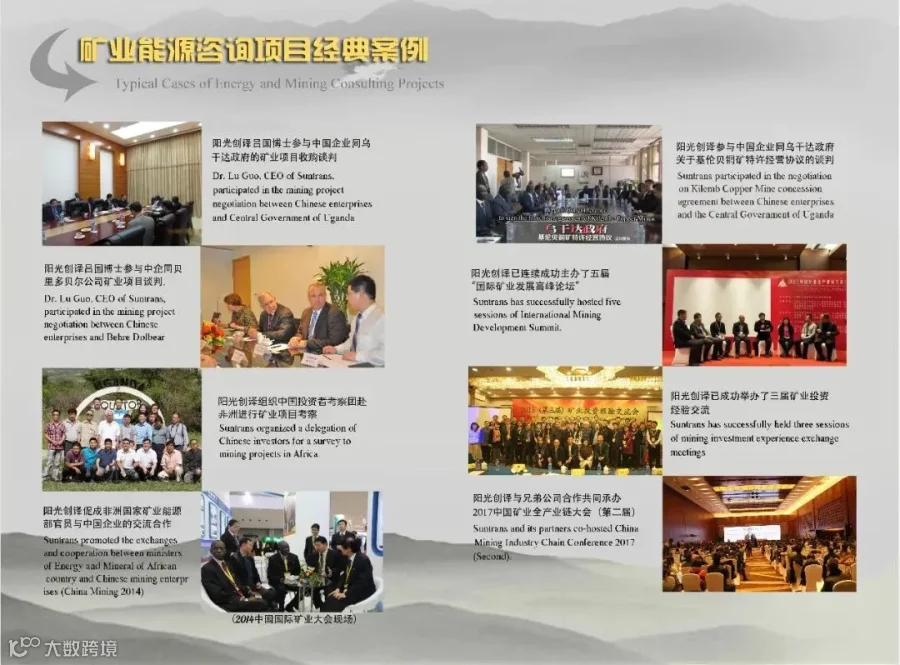
如果您对我们的矿业咨询服务感兴趣或有任何疑问,欢迎随时与我们联系。我们将竭诚为您提供帮助和解答。让我们携手合作,共同开创矿业领域的新篇章
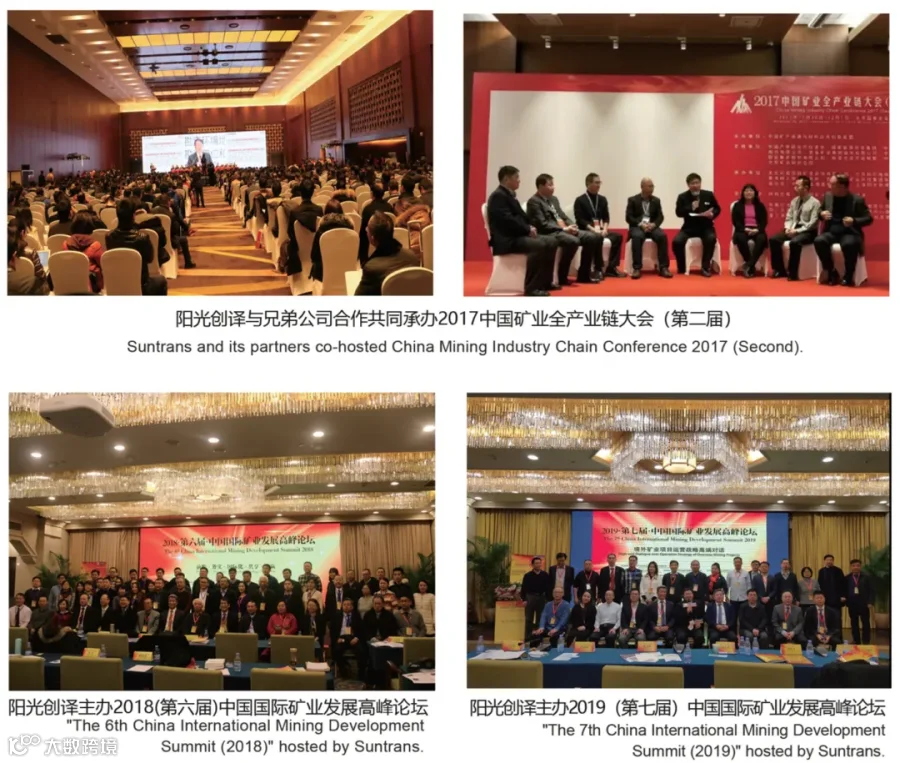
阳光创译的核心定位已经由最初的“阳光创译=矿业翻译”——中国地质矿业翻译领军品牌逐渐延伸扩展成“阳光创译=中国国际矿业服务大平台”,涵盖矿业翻译、矿业会展、矿业咨询、矿业猎头、“一带一路”矿业商会、矿业媒体等国际矿业服务板。
热文推荐:
● 西芒杜铁矿项目迎重大突破:2025 年 7 月钢轨落位,全球铁矿格局加速重塑
相关业务需求即可致电下方相关责任人
| 吕国博士 | 董事长 | 1127203572@qq.com |
| 电话:13401184506 | 微信:suntrans-mining | |
| 孙玉梅 | 总经理 | 853495100@qq.com |
| 电话:010-82865216 | 微信:853495100 | |
| Gary | 矿业外语猎头 | 582934973@qq.com |
| 电话:13311203631 | 微信:suntrans222 | |
| Bruce | 英语翻译 | 1935014417@qq.com |
| 电话:13693672413 | 微信:13693672413 | |
| 刘鑫 | 论文翻译 | 1749173384@qq.com |
| 电话:13683660873 | 微信:lvy_09260312 | |
| 苗菁 | 地矿报告翻译 | 2534271235@qq.com |
| 电话:13683661813 | 微信:zyy-suntrans | |
| Jerry | 口译 | 2268356581@qq.com |
| 电话:13681439112 | 微信:miningtranslation | |
| 范瑞瑞 | 媒体合作 | 1985130191@qq.com |
| 电话:17310253590 | 微信:suntrans2014 | |
| 张逸远 | 总经理助理 | 347562171@qq.com |
| 电话:15210897852 | 微信:15210897852 | |
| 赵宏 | 矿业咨询部主任 | 1583289628@qq.com |
| 电话:13683660097 | 微信:suntrans_1543 | |
| 程波 | 矿业咨询部副主任 | 490148863@qq.com |
| 电话:13683660397 | 微信:13683660397 | |
| Mary | 矿产贸易总监 | 1529169438@qq.com |
| 电话:17310657953 | 微信:ha15313128283 | |
| 吕彦锦 | 翻译 | 3602237436@qq.com |
| 电话:15701297623 | 微信:suntrans_6787 |
|
打造中国地质矿业翻译领军品牌
阳光创译的核心定位已经由最初的“阳光创译=矿业翻译”——中国地质矿业翻译领军品牌逐渐延伸扩展成“阳光创译=中国国际矿业服务大平台”,涵盖矿业翻译、矿业会展、矿业咨询、矿业猎头、“一带一路”矿业商会、矿业媒体等国际矿业服务板块。