

本文为菲律宾电影委员会主席、文化艺术委员会前主席Teddy O Co参加广州国际纪录片节与真实影像联合主办的“源于真实”主题论坛并接受特约对话嘉宾梁广寒的采访,原文如下:
Interview on Commissioner Teddy O Co
Dr. Cynthia Liang(梁广寒):
Good afternoon ladies and gentlemen, welcome to this forum.
Good afternoon, Sir Teddy. I’m Cynthia Liang from the Confucius Institute at the Ateneo de Manila University and also, I am Associate Professor in Sun Yat-sen University. Today, I am very glad and also very honored to Interview Mr. Teddy Co. Sir Teddy, would you introduce yourself?
Mr. Teddy Co:
Welcome everybody! Greetings from the Philippines. My name is Teddy Co. I’m a film curator and historian of the Philippines. I’ve had over 40 years of experience in [inauble] and attending film festivals. I was the previous TV Commissioner of the Arts at the government cultural agency Called NCCA, which is the National Commission for Culture and the Arts.
Among other things, I’ve seen so many films and also written about them. I just published a book recently called Philippine Cinema of which I was the editor. It was just launched a few days ago, and I’m happy to be [inaudible] about documentary filmmaking.
Dr. Cynthia Liang:
Thank you, Sir Teddy! We are so honored to have you here in this International Film Festival and also the forum. Firstly, I would like to know about your point of view. How do you think the nonfiction features or nonfiction literatures transform into future films? And how do you think about the trends in the Philippines and also in Asia? May we have your point of view Sir Teddy, please?
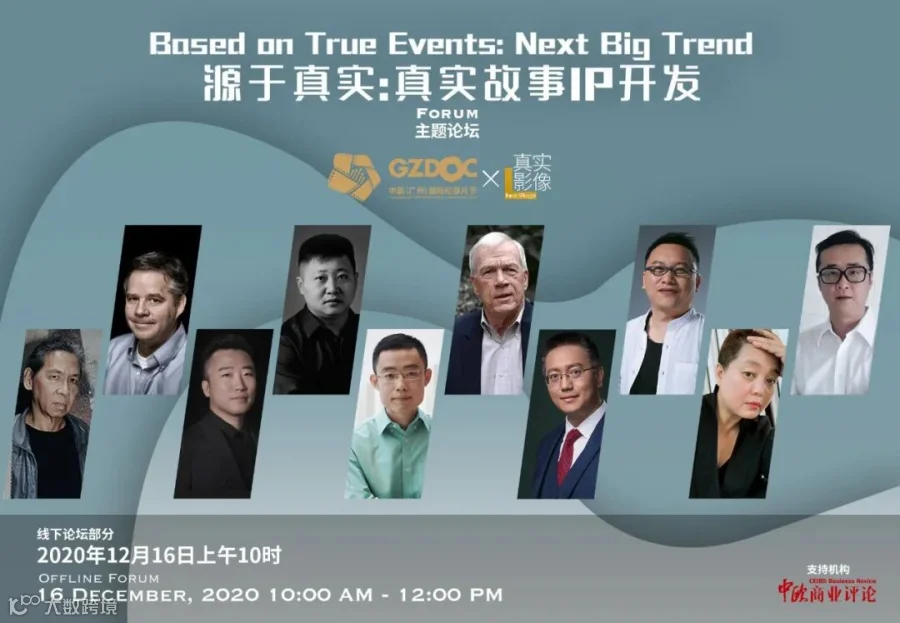
Mr. Teddy Co:
Well, you know. There are two kinds of filmmaking.[One is the] first, a lot of films stem from nonfiction, the reality part. Things that happen as facts, as documents and sometimes they are turned into fictional narratives. But the reverse can also happen. The fictional narratives that are based on literature based on real events, but if [inaudible] can also turn be turned into nonfiction films. And of course, it goes both ways. For example, exemplify Filipino film called Hari sa Hari, Lahi sa Lahi which the Englisn title is King and Emperor, [which tells about] which was made in 1987, is a co-production between the China and the Philippines and it is directed by three directors: Eddie Romero from Philippines, he’s a National Artist; And then Xiao Lang and Chou Lili from China.
This picture was made in 1987 and it was about the friendship between two monarchs. The King of Eastern Sulu, his name was Sultan Paduka Pahala. He visited China with his delegation of over hundred of his people and he stayed on for a number of years there. [And] in fact, he died there.
This story is about the friendship of the Sultan and the Emperor of the Ming dynasty, Zhu De.This happened in the 15th century and this is well documented (story). Now this was turned into a highly fictional film by the three directors back in 1987, and last year, Cynthia Liang, who is the Director of the Confucius Institute at the Ateneo de Manila, turned it into a nonfiction film - a documentary. She actually went to the locations in Sulu and shot footage of the site of where the emperor was born and have lived. And also, there were scenes also in China where the Sultan has visited and met with the Chinese emperor during the Ming Dynasty.
So this interaction between fiction and nonfiction, this film,this [inaudible] exemplifies that. I think there is a very strong bond between the two. You can just see the film in terms of if it is a reality film, as a documentary with factual details, but you can also see it in terms of being a more dramatized version, a fictionalized version which is more literary in approach.
Thank you to the Guangzhou International Documentary Film Festival for creating this forum. In the next year, Dr. Cynthia Liang, who is the Director of the Confucius Institute here at the Ateneo de Manila University in the Philippines and the Film Director, Mr. Qiu Jiaqiu, founder of the Real Image Media in China will be putting up a new emerging country’s film festival, which will be a sidelight of the Guangzhou Documentary Film festival and also some other film festivals. This would also spotlight the new, the many documentaries that are coming from different parts of Asia which will be exhibited also in the various film festivals and China and the Guangzhou Documentary Film Festival. This will highlight the friendship also between the nations, among Asian countries, with China.
The first festival is tentatively scheduled to be held online in May 2021. From there on it can be a [inaudible] festival, can be hosted by other countries aside from the Philippines.
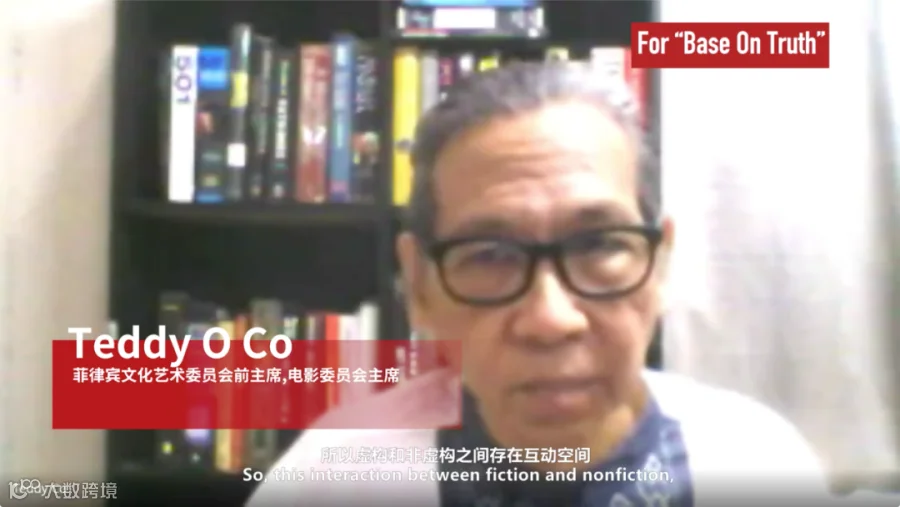
Dr. Cynthia Liang:
Thank you, Teddy. So far, especially in recent years, a lot of film directors are thinking about transforming the nonfiction novels into feature films. So how do you think it is happening right now in the Philippines?
Mr. Teddy Co:
Well, a lot of films have travelled between the two genres, from documentary and fiction filmmaking.It can first be shown in the vicinity documentary and then dramatized later on into a fiction film or vice versa.
It can also start as a fiction film and then it can also later on be transformed into a documentary, because all the stories are based on reality except if it was completely a fantastic kind of film. So we have a
number of examples of these kinds of transformation and transfer between the two genres of filmmaking. More and more, I think they rely on each other. They inspire each other. So, I just mentioned a while ago, the film King and Emperor and it was adapted as a fictionalized story, a literature and then later on, [inaudible] it has turned into a documentary with Director Cynthia Liang. This enriches both forms of filmmaking. You can see the reality, the documentary part of the film. At the same time, you can also, if you wanted to see a more dramatized version that maybe practices literary license then you can also watch it in its fictionalized version.
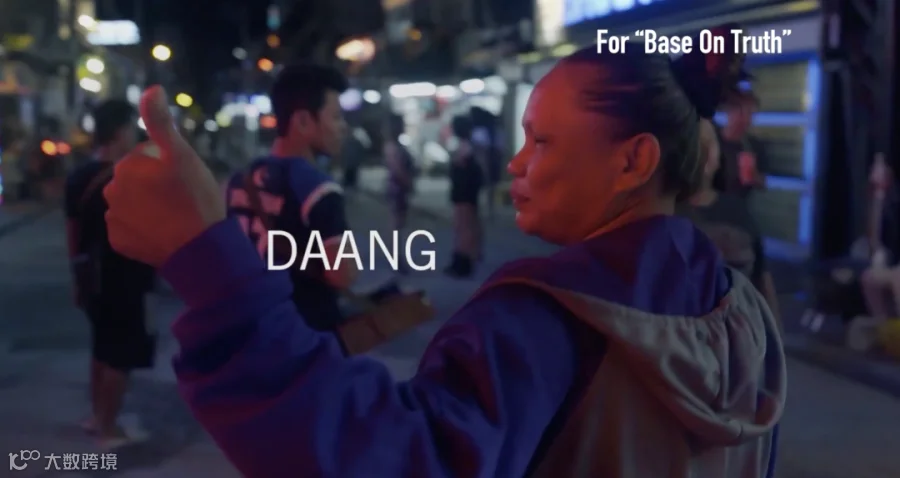
Dr. Cynthia Liang:
How do you think the international market for those kind of nonfiction films?
Mr. Teddy Co:
These nonfiction films will be very profitable and I think with proper notion notion and publicity, I think there’s a big international market. And have you seen we have many documentary channels. Of course here in the Philippines, they are mostly coming from the USA, these channels like National Geographic, like Discovery Channels, nature channels but also there have been a lot of films that feature current events. Example, the Al Jazeera Channel from the Middle East. So, what is interesting is that the points of view expressed in these kinds of channels, in these kinds of Films are very realistic. They are not tell events and documents and people, so this is the truth that these kinds of films show. And I think there is a very large market and influence in this kind of movie.
Mr. Teddy Co:
The documentary cinema is flourishing here in the Philippines, but this has not always been the case. Usually, what we have that pass on to documentaries are news clips, you know they are more current event types of films. But in the last few years, there has evolved a new kind of what we call creative kind of documentary that skillfully and artistically combines reality filmmaking and documentary elements, combining them with fiction elements. Fiction elements can be in the form of animation, can be dramatization. It can be something that is staged to enhance the documentary. So there is this hybrid form of filmmaking now that is quite popular, that combines both the news and current events aspects but at the same time there is a creative aspect to it, in which some of the documentary parts of the film are dramatized, or let’s say even fictionalized to create a bigger impact when the two ideas are combined - the documentary part and the fiction elements.
Dr. Cynthia Liang:
That’s wonderful! I do think your ideas are wonderful. This is also [something] I have been thinking a long time. Like the documentary, news, how can we transform the news event into some feature films. Especially in recent years, I know in Chinese market, more and more feature films are just transformed from the news. And we can see how much the audience like those new kinds of films. So thank you very much, Sir Teddy. We are looking forward in the future, maybe in the Guangzhou International Film Festival and also to welcome you to visit us in our new emerging countries film festival and also the nonfiction film forum cooperated by Guangzhou International Documentary Film Festival and also Real Image Media. Thank you so much, Sir Teddy!
梁广寒
管理学博士;菲律宾亚典耀大学孔子学院院长、传播学系客座教授、全球传播研究所合作院长(筹);中国中山大学传播与设计学院副教授,硕士生导师,中山大学海外传播研究所副所长,国家外文局-中山大学粤港澳大湾区国际传播研究中心研究员;美国麻省理工学院比较媒体系、媒体实验室访问学者(2012-2013),香港城市大学访问学者(2007);英国FCCR-NET(Future City-Community Resilience Net)成员。
More: