原文标题:Behind ‘Oppenheimer,’ a Prizewinning Biography 25 Years in the Making
来源:The New York Times
Martin Sherwin was hardly your classic blocked writer. Outgoing, funny, and athletic, he is described by those who knew him as the opposite of neurotic.
But by the late 1990s, he had to admit he was stuck. Sherwin, a history professor and the author of one previous book, had agreed to write a full-scale biography of J. Robert Oppenheimer two decades earlier. Now he wondered if he would ever finish it. He’d done plenty of research — an extraordinary amount, actually, amassing some 50,000 pages of interviews, transcripts, letters, diaries, declassified documents and F.B.I. dossiers, stored in seemingly endless boxes in his basement, attic and office. But he’d barely written a word.
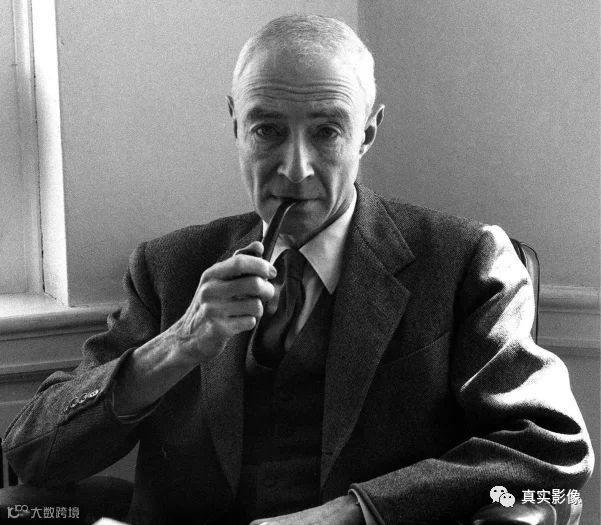
A 1963 portrait of J. Robert Oppenheimer, the subject of the biography “American Prometheus” and a new film based on the book.Credit...Eddie Adams/Associated Press
Sherwin had originally tried to turn the project down, his wife remembered, telling his editor, Angus Cameron, that he didn’t think he was seasoned enough to take on such a consequential subject as Oppenheimer, the so-called father of the atomic bomb. But Cameron, who had published Sherwin’s first book at Knopf — and who, like Oppenheimer, had been a victim of McCarthyism — insisted.
So on March 13, 1980, Sherwin signed a $70,000 contract with Knopf for the project. Paid half to get started, he expected to finish it in five years.
In the end, the book took 25 years to write — and Sherwin didn’t do it alone.
When Christopher Nolan’s film “Oppenheimer” is released on July 21, it will be the first time many younger Americans encounter the story of J. Robert Oppenheimer. But that film stands on the shoulders of the exhaustive and exhilarating 721-page Pulitzer Prize-winning biography called “American Prometheus: The Triumph and Tragedy of J. Robert Oppenheimer,” co-written by Sherwin and Kai Bird.
Knopf published this masterwork in 2005. But it was only thanks to a rare collaboration between two indefatigable writers — and a deep friendship, built around a shared dedication to the art of biography as a life’s work — that “American Prometheus” got done at all.
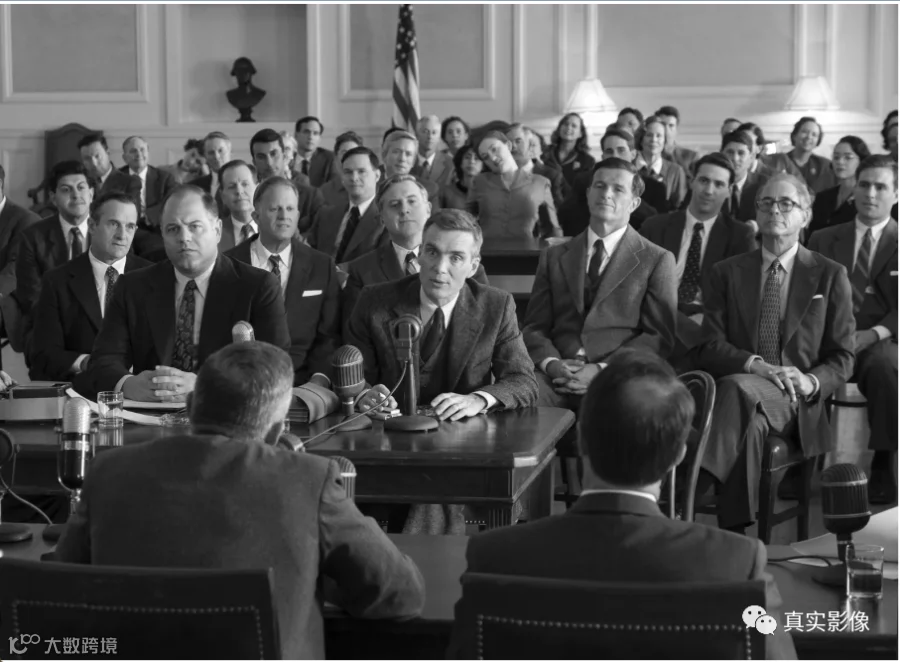
Cillian Murphy, center, as the title character in “Oppenheimer,” which was written and directed by Christopher Nolan.Credit...Melinda Sue Gordon/Universal Pictures, via Associated Press
OPPENHEIMER would have been a daunting subject for any biographer.
A public intellectual with a flair for the dramatic, he directed the top-secret lab at Los Alamos, New Mexico, taking the atomic bomb from theoretical possibility to terrifying reality in an impossibly short timeline. Later he emerged as a kind of philosopher king of the postwar nuclear era, publicly opposing the development of the hydrogen bomb and becoming a symbol both of America’s technological genius and of its conscience.
That stance made Oppenheimer a target in the McCarthy era, spurring his enemies to paint him as a Communist sympathizer. He was stripped of his security clearance during a 1954 hearing convened by the Atomic Energy Commission. He lived the rest of his life diminished, and died at 62 in 1967, in Princeton, New Jersey.
When Sherwin began interviewing people there who had known him, he was taken aback by the intensity of their feelings. Physicists, and the widows of physicists, were still angry for the casual neglect Oppenheimer had shown to his family.
Yet after Sherwin moved his own family to Boston for a job at Tufts University, he and his wife Susan met Massachusetts Institute of Technology scientists, who admitted with embarrassment that their years working under Oppenheimer on the bomb were some of the happiest of their lives.
Among the scores of people Sherwin also interviewed were Haakon Chevalier, Oppenheimer’s onetime best friend whose Communist ties in part formed the basis of the inquisition against him, and Edward Teller, whose testimony at the 1954 hearing helped end his career.
Oppenheimer’s son Peter refused a formal interview, so Sherwin brought his family to the Pecos Wilderness near Santa Fe, saddled up a horse and rode to the Oppenheimers’ rustic cabin, wrangling a chance to talk to the scientist’s son as the two men built a fence. “Marty never thought he was a great interviewer,” said Susan Sherwin, who accompanied him on many research trips, and survives him. But he had a knack for connecting with people.
Sherwin’s deadline came and went. His editor retired, and he did his best to avoid his new one. There was always another person to interview, or another document to read.
The unfinished book became a running joke in the Sherwin household.
“We had this New Yorker cartoon on our refrigerator my entire childhood,” his son Alex remembered. “It’s a guy at a typewriter, and he’s surrounded by stacks of papers. His wife is in the distance, in the threshold of the door to his office. And he says, ‘Finish it? Why would I want to finish it?’”
KAI BIRD, A FORMER associate editor at The Nation, needed a job. It was 1999, and while Bird had written a couple of modestly successful biographies, as a 48-year-old historian without a Ph.D. he was underqualified for a tenure-track university position and overqualified for nearly everything else. His wife, Susan Goldmark, who held a lucrative job at the World Bank, was getting tired of being the main breadwinner.
Bird was unsuccessfully applying for jobs at newspapers when he heard from an old friend. Sherwin took Bird out to dinner, and suggested they join forces on Oppenheimer.
They had known each other for years, and their friendship had solidified in the mid-1990s, when Bird included Sherwin’s essays in a volume about the controversy surrounding a planned Smithsonian exhibit of the Enola Gay, the plane that dropped the first atomic bomb.
But there was one complication. “My first book started out as a collaboration with my best friend,” the writer Max Holland, Bird said, “and eight years later ended in divorce.” Things broke down, in part, over disagreements about how much research was enough.
The episode had been painful. Never again, his wife reminded him.
“I told Marty, ‘No, I can’t. I like you too much,’ ” Bird said.
So began a yearlong charm campaign to convince Bird, but especially Goldmark, that this time would be different. “I was watching very carefully, looking at them interacting and finishing each other’s sentences the way couples sometimes do,” she recalled. “They were both so cute.”
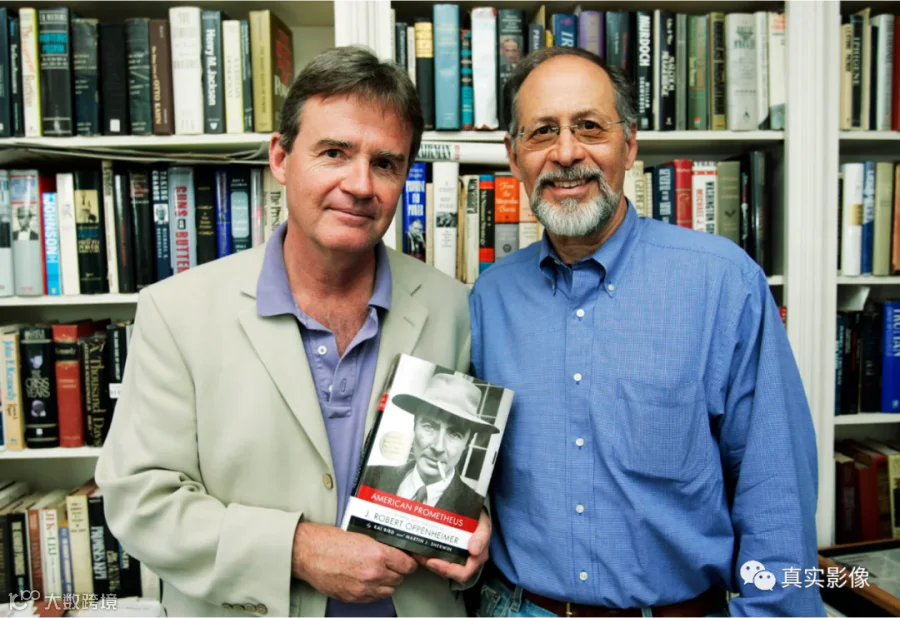
Kai Bird, left, and Martin J. Sherwin in 2006, showing off a copy of their long-in-the-making book “American Prometheus.”Credit...Manuel Balce Ceneta/Associated Press
Finally, with everyone on board, Gail Ross, Bird’s agent, negotiated a new contract with Knopf, which agreed to pay the pair an additional $290,000 to finish the book.
Sherwin cautioned Bird that there were gaps in his research. But soon “untold numbers of boxes” started showing up at Bird’s home, according to his wife. As Bird began to sift through everything, he recognized how painstakingly detailed and dizzyingly broad Sherwin’s research was. “There were no gaps,” Bird remembered.
It was time to write. Bird started at the beginning.
“I wrote a draft of the early childhood years,” he said, “and Marty took it and rewrote it.” Sherwin sent the revision back to Bird, who was impressed. “He knew exactly what was missing in the anecdotes,” Bird said.
Sherwin always knew that the hearing that stripped Oppenheimer of his clearance would be the “epicenter” of the biography, Bird said. They argued about what the evidence might suggest, but never about style, process, or the shape of the book itself. “It became,” Susan Sherwin said, “almost a magical thing.”
By fall 2004, nearly 25 years after Knopf committed to the project, the manuscript was almost ready. Bird and Sherwin’s editor Ann Close vetoed “Oppie,” the pair’s working title. A scramble ensued, until something came to Goldmark late at night: “Prometheus … fire … the bomb is this fire. And you could put ‘American’ there.’ ”
Bird dismissed “American Prometheus” as too obscure, until Sherwin called the next morning to tell him that a friend, the biographer Ronald Steel, had suggested the same title over dinner the night before. “I’m in big trouble,” said Bird. His wife felt vindicated.
On April 5, 2005, Kai Bird and Martin Sherwin’s “American Prometheus: The Triumph and Tragedy of J. Robert Oppenheimer” was published to enormous acclaim. The Boston Globe raved that it “stands as an Everest among the mountains of books on the bomb project and Oppenheimer, and is an achievement not likely to be surpassed or equaled.”
Among its numerous accolades was the Pulitzer Prize for Biography. Bird always thought the book had an outside shot at the prize, but Sherwin had been skeptical. “He always thought I was an incorrigible optimist. So he was genuinely astonished,” Bird would later say. “He was, in fact, sweetly elated.”
BY THE TIME the collaborators learned in September 2021 that Christopher Nolan planned to turn “American Prometheus” into a film, Marty Sherwin was dying of cancer.
The pair had read several unmade scripts based on their book over the years, so Sherwin was doubtful of its chances in Hollywood. He was too sick to join, but Bird and Goldmark met Nolan at a boutique hotel in Greenwich Village. Bird reported to Sherwin in person afterward that, with Nolan as writer and director, their work was in good hands.
“Oppenheimer’s story is one of the most dramatic and complex that I’ve ever encountered,” Nolan said recently. “I don’t think I ever would have taken this on without Kai and Martin’s book.” (Anticipation for the movie has put the biography on the New York Times best-seller list for nonfiction paperbacks.)
On Oct. 6, 2021, Bird received word that his friend had died at the age of 84.
Sherwin “would have been deeply pleased,” by the film’s accuracy, Bird said after seeing the film for the first time. “I think he would have appreciated what an artistic achievement it is.”
He recalled the day he and his wife spent a few hours on the film’s set in Los Alamos. The crew was filming in Oppenheimer’s original cabin, now painstakingly restored. Bird watched Cillian Murphy do take after take as Oppenheimer, astonished at the actor’s resemblance to the subject he’d spent years studying.
Finally, there was a break in filming, and Murphy walked over to introduce himself. As the actor approached — dressed in Oppenheimer’s brown, baggy 1940s-era suit and wide tie — Bird couldn’t help himself.
“Dr. Oppenheimer!” he shouted. “I’ve been waiting decades to meet you!”
Bird said Murphy just laughed. “We’ve all been reading your book,” the actor told him. “It’s mandatory reading around here.”
马丁·舍温(Martin Sherwin)绝非传统意义上的内向作家。他性格外向、幽默风趣、运动能力出色,他的朋友们都形容他完全不像神经质的人。然而,到了1990年代末,他开始承认自己陷入了困境。舍温是一名历史学教授,之前曾出版过一本书,二十年前,他答应要写J.罗伯特·奥本海默的一部完整传记。而现在,他开始怀疑自己是否能够完成这个壮举。他已经进行了大量的研究,实际上已经收集了约五万页的采访、记录、信件、日记、解密文件和联邦调查局档案,这些文件堆放在他的地下室、阁楼和办公室里,数目似乎是无穷无尽的。然而,他几乎只写了几个字。
舍温的妻子回忆说,他最初试图拒绝这个项目,他告诉他的编辑安格斯·卡梅伦,他认为自己还不够有经验,不能承担如此重要的主题,毕竟奥本海默可是被誉为原子弹之父。然而,卡梅伦,曾经在诺普出版过舍温的第一本书,并且像奥本海默一样遭受麦卡锡主义的冲击,坚持要求他接下这个项目。
于是,在1980年3月13日,舍温与诺普签署了一份七万美元的合同,承诺完成这个项目。当初预计会在五年内完成。结果,这本书花了整整二十五年才写完,而且舍温并不是独自完成的。
当克里斯托弗·诺兰(Christopher Nolan)的电影《奥本海默》于2023年7月21日上映时,许多年轻的美国人将第一次了解J.罗伯特·奥本海默的故事。但这部电影是基于舍温和凯·伯德(Kai Bird)合著的耗时25年、获得普利策奖的巨著传记《美国的普罗米修斯:J.罗伯特·奥本海默的胜利与悲剧》而制作的。诺普于2005年出版了这部杰作。然而,要完成《美国的普罗米修斯》是因为两位不屈不挠的作家之间的罕见合作,并建立在对传记艺术的共同热爱之上。
奥本海默对任何传记作者来说都是一个令人望而生畏的主题。作为一位公共知识分子,他风采犹存,指导了洛斯阿拉莫斯的顶秘实验室,将原子弹从理论可能变成令人恐惧的现实,而且时间紧迫。后来,他成为战后核时代的一位哲学之王,公开反对氢弹的研发,成为美国技术天才和道德良心的象征。这样的立场使得奥本海默成为麦卡锡时代的一个目标,敌人将他描绘成一个共产党同情者。1954年,在原子能委员会召开的听证会上,他被剥夺了安全许可证。他的余生都备受打击,在1967年去世时,他已经62岁,身处新泽西州普林斯顿。
当舍温开始采访曾与奥本海默相识的人时,他被他们对这位科学家的感情强烈程度所震惊。物理学家和物理学家的遗孀们对奥本海默对家人的漠不关心仍然感到愤怒。
然而,当舍温将家人搬到波士顿去担任塔夫茨大学的教职后,他和妻子苏珊遇到了麻省理工学院的科学家们,他们不好意思地承认在奥本海默手下参与研发原子弹的那几年是他们一生中最幸福的时光。
舍温采访了许多人,其中包括奥本海默曾经的最好朋友哈康·谢瓦利尔,他与共产党有联系,这在某种程度上成为了对奥本海默的审判基础,以及爱德华·特勒,他在1954年的听证会上作证导致了奥本海默的职业生涯终结。奥本海默的儿子彼得拒绝了正式采访,所以舍温带着家人前往圣塔菲附近的佩科斯荒野,在两人修篱笆的同时,谈话的机会终于出现。“苏珊·舍温说:“马丁从来不认为自己是个伟大的采访者。”
然而,舍温的最后期限已经过去了。他的编辑退休了,他尽力回避新编辑。总是有另一个人需要采访,或者还有其他文件需要阅读。这本未完成的书在舍温家成了一个笑话。“我们家冰箱上一直贴着这幅《纽约客》漫画,”他的儿子亚历克斯回忆说。“漫画上是一个坐在打字机前的人,他周围堆满了文件。他的妻子站在远处,站在他办公室的门口。他说,‘完成它?为什么我要完成它?’”
1999年,当时48岁的历史学家凯·伯德急需一份工作。虽然伯德已经写了几本不起眼但还算成功的传记,但由于没有博士学位,他对终身教职的大学职位资历不够,而对其他几乎所有工作都过于有资历。而他的妻子苏珊·戈德马克在世界银行有一份薪水丰厚的工作,但对成为家里的主要经济支持者有些厌倦。
伯德申请了报纸的工作,但没有成功。直到有一天,他得到了一位老朋友的消息。舍温请伯德一起共进晚餐,并建议他们共同合作写奥本海默的传记。
他们彼此认识已久,友谊在20世纪90年代中期加深,当时伯德在关于计划中的史密森尼学会“恩奥拉盖伊”的展览争议的一本专著中收录了舍温的文章。
但是有个问题。伯德说:“我的第一本书最初是与我最好的朋友合作写的,”写手麦克斯·霍兰德(Max Holland)说,“但8年后最后以离婚收场。”事情崩溃了,部分原因是对于多少研究是足够的问题产生了分歧。这段经历很痛苦。他的妻子提醒他:“我告诉马丁,‘不,我做不到。我太喜欢你了,’”伯德说。因此,开始了为期一年的魅力攻势,说服伯德,尤其是戈德马克,这一次会有所不同。“我仔细观察,看着他们的互动,他们说话时总是可以互相接话,”她回忆说。“他们都太可爱了。”
最终,在每个人都同意合作后,伯德的代理人盖尔·罗斯(Gail Ross)与诺普谈判了一份新合同,同意额外支付两人29万美元来完成这本书。
舍温告诫伯德他的研究有所空白。但不久之后,根据伯德的妻子所说,她家里开始出现了“数不清的箱子”。伯德开始筛选这些资料时,他意识到舍温的研究是多么仔细详尽而广泛。伯德记得说:“没有空白。” 他是时候开始写了。伯德从一开始就开始写。“我写了一个关于早年童年的草稿,”他说,“然后舍温拿走了,重写了它。”舍温将修改后的草稿发还给伯德,后者对此印象深刻。“他知道每个插曲中缺少的东西。”伯德说。
舍温一直知道,剥夺奥本海默安全许可证的听证会将是这本传记的“中心”,伯德说。他们争论的是证据可能暗示什么,但从不涉及风格、流程或书本本身的形状。“这几乎成了一种魔法。”苏珊·舍温说。
到2004年秋季,几乎在诺普承诺这个项目的25年后,手稿几乎完成了。伯德和舍温的编辑安·克洛斯否决了他们的工作标题“Oppie”。然后发生了一场争夺,直到晚上,戈德马克突然想到了“普罗米修斯……火……原子弹就是这个火。你可以加上‘美国’。”伯德对“美国的普罗米修斯”不以为然,直到第二天早上舍温打电话告诉他,他的一位朋友,传记作家罗纳德·斯蒂尔(Ronald Steel),在前一天晚上的晚餐上也建议了同样的标题。
2005年4月5日,凯·伯德和马丁·舍温的《美国的普罗米修斯:J.罗伯特·奥本海默的胜利与悲剧》出版,获得了巨大的赞誉。《波士顿环球报》称其为“原子弹计划和奥本海默相关图书中的珠峰,是一个不太可能被超越或比肩的成就。”
这本书获得了许多荣誉,其中包括传记类的普利策奖。伯德一直认为这本书有可能获得该奖,但舍温一直持怀疑态度。伯德后来说:“他总是认为我是一个顽固的乐观主义者。所以他真的很惊讶。”“他是,实际上,甜蜜地高兴。”
截至2021年9月,当合作者得知克里斯托弗·诺兰计划将《美国的普罗米修斯》拍成电影时,马丁·舍温已经因癌症去世。
多年来,他们读过几份以他们的书为基础的未拍摄剧本,所以舍温对它在好莱坞的机会持怀疑态度。他病得太重了,无法参加,但伯德和戈德马克在格林尼治村的一家精品酒店会见了诺兰。之后,伯德亲自向舍温报告,说在诺兰作为编剧和导演的情况下,他们的作品得到了妥善处理。“奥本海默的故事是我遇到过的最戏剧性和复杂的故事之一。”诺兰最近说。“如果没有凯和马丁的书,我不认为我会接手这个项目。”(对电影的期待使得这本传记成为《纽约时报》畅销非虚构平装书榜的一部分。)
2021年10月6日,伯德得知他的朋友在84岁时去世。
舍温“会因电影的准确性而感到非常高兴。”伯德说,在首次看到电影后。“我认为他会欣赏这是一项艺术上的成就。”
他回忆起自己和妻子在洛斯阿拉莫斯的电影现场度过的几个小时。剧组正在奥本海默的原始小屋里拍摄,现在已经经过精心修复。伯德看着西里安·墨菲(Cillian Murphy)化身奥本海默,一遍又一遍地拍摄,他对演员与多年研究的对象奥本海默如此相似感到惊讶。
最后,拍摄中有一个休息时间,墨菲走过来介绍自己。当演员穿着奥本海默1940年代的棕色宽松西装和宽领带走近时,伯德忍不住说:“奥本海默博士!我等了几十年才见到你!”伯德说,墨菲只是笑了。“我们都读过你的书,”演员告诉他。“在这里必须读的。”