

Our hands connect us with the world. We work with our hands and communicate with our hands. The wear and tear from all that use can sometimes cause painful conditions, and women are particularly prone to develop two of these: de Quervain's (pronounced deh-KWER-vins) tenosynovitis and stenosing tenosynovitis (or trigger finger). Both de Quervain's tenosynovitis and trigger finger involve the tendons of the hand.
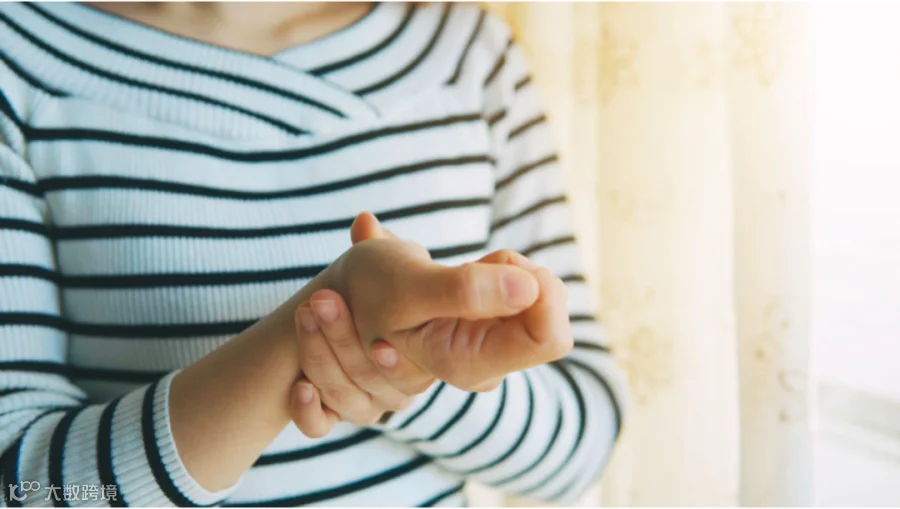
In the hand, tendons connect the muscles of the forearm and wrist to the bones of the fingers and thumb, allowing us to bend our wrists and hand joints and move our fingers and thumbs. The tendons are held in place by tube-like fibrous membranes, or sheaths, and coated with a slippery tissue called the synovial membrane, which helps them slide smoothly through the sheaths. As a result of overuse, or a medical condition such as rheumatoid arthritis or diabetes, or sometimes for no clear reason, tendons and tendon sheaths can become inflamed, swollen, and thickened, causing pain that can limit movement. This condition is called tenosynovitis.
De Quervain's tenosynovitis
De Quervain's tenosynovitis is a painful inflammation of the tendons in the wrist that move the thumb away from the hand — and the fibrous band, or sheath, that surrounds them.
What are the symptoms? The main symptom of De Quervain's tenosynovitis is pain at the base of the thumb, sometimes extending up the forearm, especially during movements — for example, grasping — that use the thumb and wrist.
There may also be swelling along the thumb side of the wrist, and sometimes a fluid-filled cyst. Even simple actions such as lifting a coffee mug or peeling vegetables may become impossible.
What causes De Quervain's tenosynovitis ? Overuse of the wrist and hand is one of the chief culprits. Two major tendons — the extensor pollicis brevis and abductor pollicis longus tendons — connect the thumb to the forearm, passing through the fibrous sheath at the wrist (see the illustration).

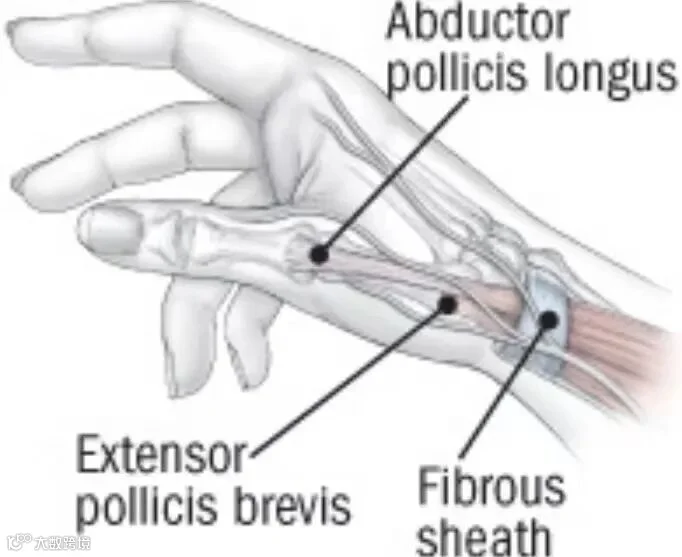
The tendons involved in de Quervain's tenosynovitis stretch from the forearm to the thumb. At the wrist, they pass through a fibrous sheath.
If you repeatedly extend the thumb, or repeatedly pinch or twist something with the thumb while turning the wrist, you may inflame the tendons and narrow the sheath, limiting the motion of the tendons. Left untreated, the inflammation and progressive narrowing (stenosis) can cause scarring that further limits thumb movement.
De Quervain's tenosynovitis is sometimes called "baby wrist" or "mother's thumb" because it often develops in new mothers, possibly because of the repetitive movements needed to care for an infant. It can also be caused by an injury to the thumb or by an inflammatory condition such as rheumatoid arthritis. Often, the source of the problem is unknown.
How is it diagnosed and treated? The clinician will check for pain at the base of the thumb while you perform various hand and thumb movements. The most common test is called the Finkelstein maneuver. Your clinician will have you make a fist with your fingers closed over the thumb, then quickly bend your wrist down toward your little finger (see the illustration), pulling the tendon through the narrowed sheath. This movement is quite painful in people who have de Quervain's tenosynovitis
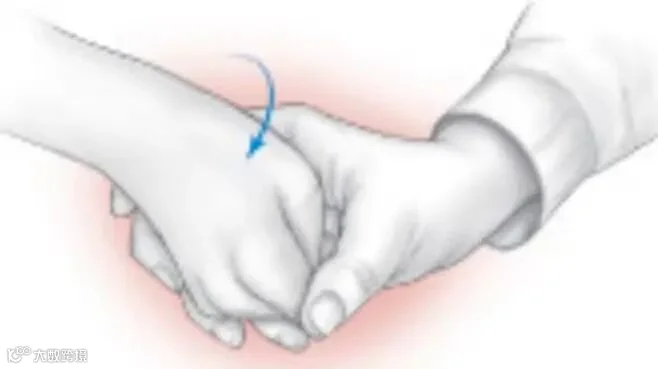
In the Finkelstein maneuver, the clinician bends the patient's closed hand toward the little finger. Pain on the thumb side of the wrist suggests de Quervain's tenosynovitis.
The standard treatment is rest, ice, and anti-inflammatory medication, such as ibuprofen or naproxen. Rest is particularly important, because continued use of the thumb will continue to stimulate inflammation. One way to rest the thumb and wrist is to use a splint that extends over the thumb and wrist (see the photograph). Clinicians don't agree about the best use of the splint; some think it should be worn continually for four to six weeks; others recommend wearing it only as needed for pain.
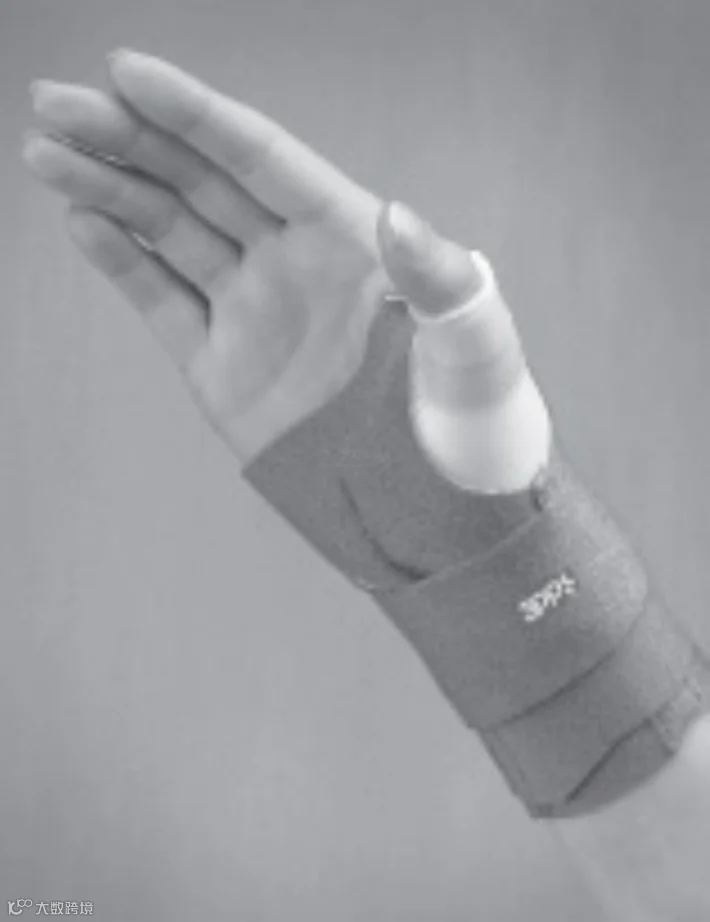
A splint that immobilizes the thumb and wrist may be recommended for de Quervain's tenosynovitis.
Photo courtesy of 3-Point Products, Inc., Stevensville, MD
For the pain, apply an ice pack to your wrist for 15 minutes every four to six hours and take a nonsteroidal anti-inflammatory drug (NSAID) such as ibuprofen or naproxen (ask your doctor about the dose and how often you should take it). If your pain hasn't subsided after three weeks with these therapies, your clinician may recommend a steroid injection into the tendon sheath. If all of these measures fail, the next step may be surgery to open the sheath and make more room for the tendons.
Once the pain and swelling have calmed down, simple stretching exercises such as the one shown below can help you restore normal movement in your thumb and wrist. Massage the base of the thumb and palm of the hand before you start stretching.


JK-Clive Pain Clinic specializes in management of acute and chronic pain caused by various "sports injuries" and "degenerative diseases",we are located in Beijing Sanfine International Hospital and our services can be paid directly by most of the international insurance.


Jingbin Zhou, MD, PhD, Professor.
Board member of Chinese Society of Sports Medicine(CSSM)
Vice Secretary-general of Chinese Association of Sports Medicine(CASM)
Vice Chairman of Youth Committee of Chinese Society of Sports Medicine
Committee member of Asian Athletic Association
Committee member of Chinese Football Association (CFA)
2009 Impuls Rehabilitation Center and Krankenhaus Sports Medicine Hospital, Germany
2010-2011 Orthopedic Department of University of Pittsburgh of Medicine
Center (UPMC) 2011 Hospital for Special Surgery (HSS), USA
Clive Chen
Attending neurosurgeon of Taichung Veterans General Hospital
Neurosurgeon Board and Pain Physician Board
Graduate of Medical School of National Taiwan University
Research Scholar specializing in neuromodulation and pain management, UCLA
Taiwan Pain Society Distinguished Service Award 2015
Feng Lei
Attending physician of JK-Clive Pain Clinic
Graduated from the Department of Medicine, Peking University, MD
Attending physician of Beijing Ji shui tan hospital pain management department
Xu Hao
Orthopaedic specialist, sports specialist
Committee member of Physical Therapy Group of Physical Rehabilitation,
Physical Therapy Special Committee of Chinese Medical Association of Rehabilitation
Visiting scholar, University of Southern California, USA
Visiting scholar, Georgia State University, USA
Member of the National Team of Figure Skating and Freestyle Skiing Aerials Rehabilitation Support Expert Group
Member of National Team Doctor Training Class Lecturer Group


Past recommendations


Light up sharing, like, watching
Look who's watching with you