

Hunchback or Hunched back is a condition where there is exaggerated forward rounding of the upper back. Hunchback can occur at any age; however, it commonly affects older women, where this deformity is termed as a dowager’s hump. Patients having osteoporosis develop age-related hunchback. There are some types of Hunchback which affect the infants or teens. Mild hunchback may not cause any problems, but severe hunchback can be very detrimental where it affects the lungs, nerves, tissues, and organs resulting in other medical problems. Treatment depends on age, cause and the effects of the Hunchback.
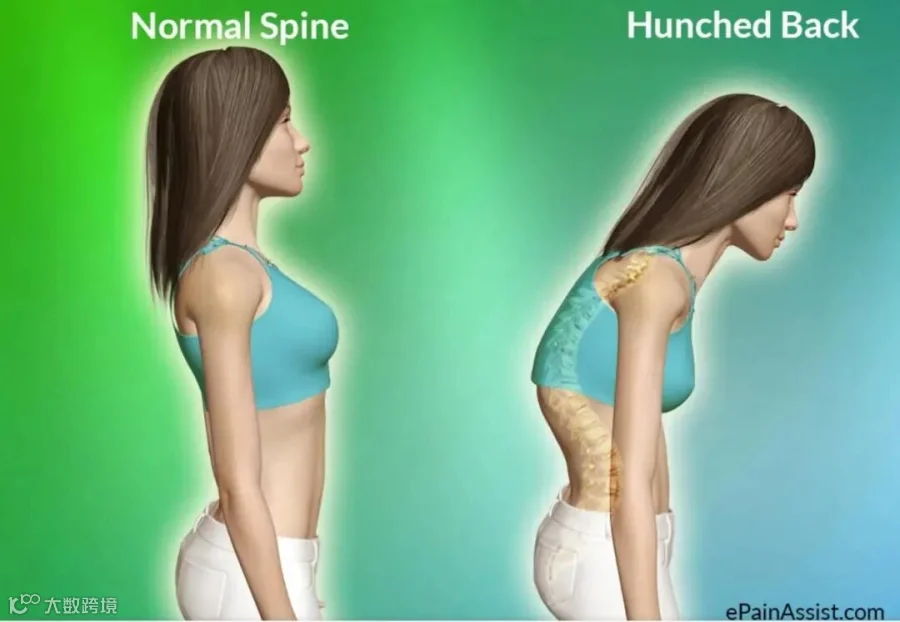
Causes and Risk Factors of Hunchback
Hunchback results when the vertebrae in the upper back become increasingly wedge-shaped and the cause for this can be various problems such as:
Osteoporosis.
Disc degeneration.
Cancer and treatment for cancer.
Scheuermann’s disease.
Congenital/birth defects.
Risk Factors: There are certain groups of people who are at increased risk for developing hunchback such as:
Adolescent girls who have a poor posture.
Boys aged between 10 and 15 are at increased risk of developing Scheuermann’s kyphosis.
Older patients suffering from osteoporosis are at a higher risk for spinal fractures which can contribute to Hunchback.
Patients having connective tissue disorders (Marfan syndrome) are more prone to developing Hunchback.
Signs and Symptoms of Hunchback
Patient may not have any signs or symptoms if the Hunchback is mild.
Abnormally curved spine.
Stiffness in the back.
Pain in the back.
Investigations for Hunchback
Physical exam.
Neurological exam to check reflexes and muscle strength.
X-rays to determine the degree of curvature and to detect deformities of the vertebrae.
Computerized tomography (CT scan) for more detailed images.
Magnetic resonance imaging (MRI) to rule out tumor or infection.
Nerve tests are done if the patient is experiencing any muscle weakness or numbness to check the nerve impulses.
Lung function tests are done for severe hunchback to check if the curve is affecting the patient’s ability to breathe.

Treatment for Hunchback
Treatment depends on the cause of the condition and the symptoms of the patient.
OTC pain relievers such as acetaminophen (Tylenol), ibuprofen (Advil, Motrin) or naproxen (Aleve) can be given. If these are not effective then stronger pain medications are prescribed by the doctor.
If the patient has osteoporosis, then drugs for osteoporosis such as bone-strengthening drugs are given to prevent fractures of the spine which may worsen the hunchback. In many patients, Hunchback is the first indication that they have osteoporosis.
Other Therapies Which Are Beneficial for Hunchback Are:
Exercises such as stretching exercises are help in improving the flexibility of the spine. Exercises which help in strengthening the abdominal muscles also help in improving the posture.
Bracing can also be used especially in children suffering from Scheuermann’s disease to help halt the progression of hunchback. These children can wear a body brace to prevent the hunchback from getting worse while their bones are still growing.
Good Posture for Hunchback: How to Fix Your Posture
Good posture is very essential to maintain a healthy mind and body. It helps in aligning the spine with itself. Having a good posture also helps in alleviating common problems like back or neck pain, headaches and fatigue. Other than improving your health, a good posture also boosts your self-confidence and your carriage. The steps to develop a good posture are:
Identifying a good posture: The first step is identifying a good posture i.e., a straight back, squared shoulders, chin up, chest out, stomach in. In a good posture, you should be able to draw a straight line from your earlobe through your shoulder, hip, knee, to the middle of your ankle. With the help of a mirror, align your ears, shoulders, and hips. These points should make a straight line; however, spine curves naturally in a slight ‘S’ shape. If you are experiencing pain, then look at your side view to see if you’re forcing your spine into an unnatural position. The two natural curves in the spine need to be maintained. These are known as the ‘double C’ or ‘S’ curves and are found from the base of the head to the shoulders and the curve from the upper back to the base of the spine. Make sure that your weight is evenly distributed on your feet when standing upright.
Training or exercising your muscles: The next step in improving your posture is to do exercises which will help in strengthening the muscles across the upper back and shoulders so that you naturally and unconsciously maintain a correct posture all the times without feeling any fatigue.
Pretend to be a penguin by placing your elbows at your sides and touching your shoulders with your hands. Keep your hands on your shoulders with your ears aligned. Raise both the elbows and lower them back again.
Practicing yoga is extremely beneficial in developing a good posture. Yoga also helps in improving balance; strengthening the core muscles and helping you maintain a proper body alignment.
Standing Posture: A proper standing posture can be achieved by finding your center. A proper standing posture also gives you an air of confidence.
Keep your feet shoulder width apart and stand up straight. This is the key to a good standing posture and should be repeated till you develop good posture habits such that it becomes a second nature for you.
Place your weight on the balls of your feet. When you are resting on your heels, you will tend to slouch; however, stand up and try to stand on the balls of your feet. Observe the way your rest of the body follows suit. Now tilt back so that your weight shifts to your heels and observe how your entire body shifts into a “slouchy” posture again.
Always keep your shoulders squared and stand up straight. Initially it may feel unnatural especially if you do not have good posture habits, but keep practicing till it becomes second nature to you.
Pull your head backwards and upwards such that you are reaching for the ceiling and keep your head square on top of your neck and spine while doing this. This technique will not only improve your posture, but will also make you look taller and leaner.
Teach your body how a good posture feels like by standing with your back against a door or wall such that the back of your head, shoulders, and your butt are lightly touching the wall. Continue practicing this for a good posture.
Walking Posture: A good walking posture can be achieved by a good standing posture, as walking with a good posture is simply an extension of standing with a good posture. While walking, always keep your head straight up, shoulders back, chest out, and eyes looking straight ahead and always avoid pushing your head forward.
Sitting Posture: For a developing a good sitting posture always, sit up straight. Following are some basic guidelines for developing a good sitting posture especially if you are working at a desk all day long.
Always use a chair that’s ergonomically designed for giving proper support and is according to your height and weight. You can also use a small pillow for lumbar support.
Keep your back aligned with the back of the office chair, as this will help in avoiding slouching or leaning forward.
When sitting, always keep your shoulders straight and squared, your head upright, and your neck, back, and heels should be in alignment.
Always keep both feet on the ground. You can use a footrest if your legs don’t reach the ground.
Your chair should be adjusted such that your arms are flexed and not straight out.
Always take standing breaks in between even if you have a good sitting posture. Stand up in between, walk around and stretch a little for a few minutes.
Driving Posture: A good driving posture is achieved by developing a good sitting posture.
Rest your back against the seat and the head rest.
Adjust your seat such that there is an appropriate distance from the pedals and steering wheel. The following are the indications that you’re too far away: If you’re leaning forward, reaching for the wheel or pointing your toes. The following are the indications that you’re too close: If you are sitting huddled up with your chin on top of the steering wheel.
Adjust the head rest so that the center of your head rests against it. You can adjust the head rest as required. There should be a distance four inches/10 cm (and not more) between the back of your head and the head rest.
Sleeping Posture: It is difficult to maintain a specific posture when sleeping; however, the way you sleep has a bearing on your posture when you wake up.
A firm mattress helps in giving a good back support.
Sleeping on the back helps in keeping the shoulders straight and is more comfortable than sleeping on the stomach.
When sleeping on your side, keep a small, flat pillow between the knees. This helps in keeping the spine straight and aligned.
3. A good pillow should be used to provide the required support and alignment for the head and shoulders. Don’t use too many pillows, as your head will be bent in unnatural position resulting in a bad posture with you feeling stiff, sore and groggy upon waking up.
This article is excerpted from:
https://www.epainassist.com/back-pain/upper-back-pain/hunchback
The copyright belongs to the creator

JK-Clive Pain Clinic specializes in management of acute and chronic pain caused by various "sports injuries" and "degenerative diseases",we are located in Beijing Sanfine International Hospital and our services can be paid directly by most of the international insurance.

JK will always care about your health!
Practical medical science will be shared constantly!
If you have any questions about muscles and joint pain.

Past recommendations
1.Injured Your Back? Dos and Don’ts for a Quick Recovery


Light up sharing, like, watching
Look who's watching with you