

Chondromalacia patellae is abnormal softening of the cartilage of the underside the kneecap (patella). It is a cause of pain in the front of the knee (anterior knee pain). Chondromalacia patellae is one of the most common causes of chronic knee pain.
Chondromalacia patellae results from degeneration of cartilage due to poor alignment of the kneecap (patella) as it slides over the lower end of the thighbone (femur). This process is sometimes referred to as patellofemoral syndrome.
Chondromalacia is often seen as an overuse injury in sports, and sometimes taking a few days off from training can produce good results. In other cases, improper knee alignment is the cause and simply resting doesn’t provide relief. The symptoms of runner’s knee are knee pain and grinding sensations, but many people who have it never seek medical treatment.
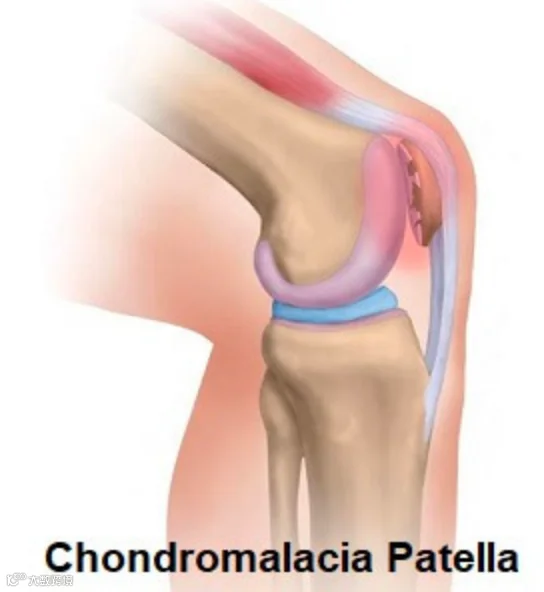
Causes of Chondromalacia Patellae
Your kneecap normally resides over the front of your knee joint. When you bend your knee, the backside of your kneecap glides over the cartilage of your femur, or thigh bone, at the knee.
Tendons and ligaments attach your kneecap to your shinbone and thigh muscle. When any of these components fails to move properly, it can cause your kneecap to rub up against your thigh bone. This abnormal rubbing can lead to deterioration in the patella, resulting in chondromalacia patellae, or runner’s knee.
Improper kneecap movement may result from:
· poor alignment due to a congenital condition;
· weak hamstrings and quadriceps (the muscles in the back and front of your thighs, respectively);
· muscle imbalance between the adductors and abductors (the muscles on the outside and inside of your thighs);
· repeated stress to your knee joints, such as from running, skiing, or jumping; or
· a direct blow or trauma to your kneecap.
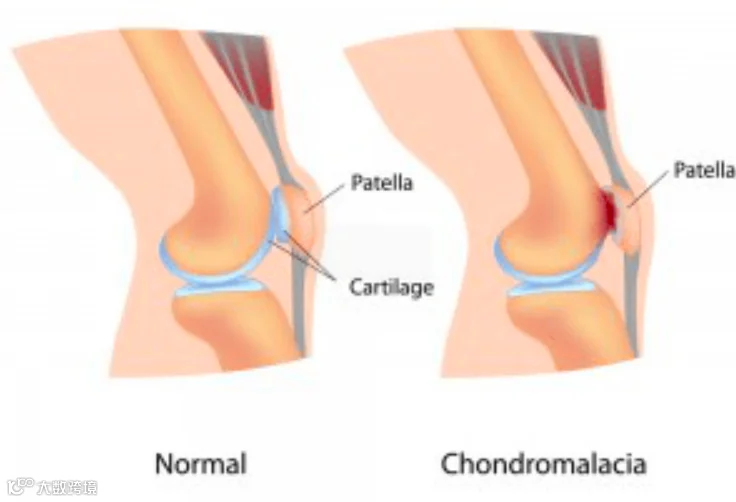
Symptoms of Chondromalacia Patellae
Chondromalacia patellae will typically present as pain in the knee region, known as patellofemoral pain. You may feel grinding or cracking when bending or extending your knee. The most common symptom is knee pain that worsens when walking up or down stairs. Kneeling, squatting or sitting cross-legged may also hurt.
Who is at risk for Chondromalacia Patellae?
There are a variety of factors that may increase your risk for developing chondromalacia patellae.
Age: Adolescents and young adults are at high risk for this condition. During growth spurts, the muscles and bones develop rapidly, which may contribute to short-term muscle imbalances.
Gender: Females are at greater risk than males to develop runner’s knee, as they typically possess less muscle mass than males. This can cause abnormal knee positioning, as well as more lateral (side) pressure on the kneecap.
Flat feet: Having flat feet may place more stress on the knee joints than having higher arches would.
Previous injury: A prior injury to the kneecap, such as a dislocation, can increase your risk of developing runner’s knee.
High levels of activity: If you have a high activity level or engage in frequent exercises that place pressure on your knee joints, this can increase the risk for knee problems.
Arthritis: Runner’s knee can also be a symptom of arthritis, a condition causing inflammation to the joint and tissue.
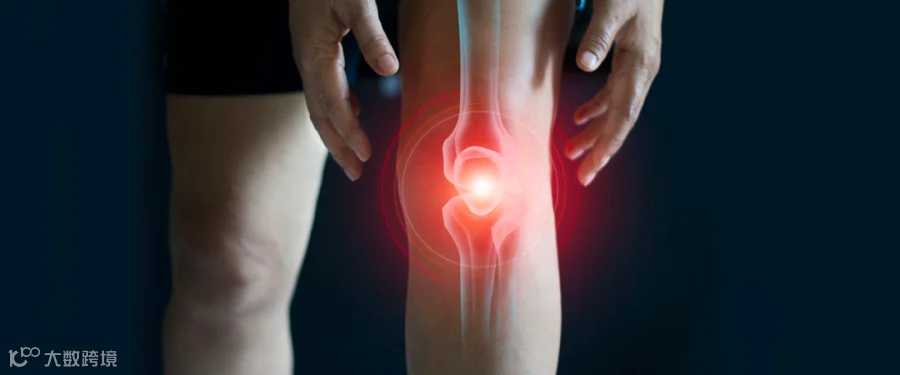
 Diagnosis of Chondromalacia Patellae
Your Podiatrist will look for areas of swelling or tenderness in your knee. They may also look at how your kneecap aligns with your thigh bone. A misalignment can be an indicator of chondromalacia patellae. Your Podiatrist may also apply resistive pressure to your extended kneecap to determine the tenderness and severity.
Afterward, your Podiatrist may request any of the following tests to aid in diagnosis and grading:
· X-rays to show bone damage or signs of misalignment or arthritis
· Magnetic Resonance Imaging (MRI) to view cartilage wear and tear
· Arthroscopic exam, a minimally invasive procedure to visualize the inside of the knee that involves inserting an endoscope and camera into the knee joint
This article is excerpted from:The Foot and Ankle Clinic.
https://www.thefootandankleclinic.com.au/condition/chondromalacia-patellae/



JK-Clive Pain Clinic specializes in management of acute and chronic pain caused by various "sports injuries" and "degenerative diseases",we are located in Beijing Sanfine International Hospital and our services can be paid directly by most of the international insurance.


Jingbin Zhou, MD, PhD, Professor.
Board member of Chinese Society of Sports Medicine(CSSM)
Vice Secretary-general of Chinese Association of Sports Medicine(CASM)
Vice Chairman of Youth Committee of Chinese Society of Sports Medicine
Committee member of Asian Athletic Association
Committee member of Chinese Football Association (CFA)
2009 Impuls Rehabilitation Center and Krankenhaus Sports Medicine Hospital, Germany
2010-2011 Orthopedic Department of University of Pittsburgh of Medicine
Center (UPMC) 2011 Hospital for Special Surgery (HSS), USA
Clive Chen
Attending neurosurgeon of Taichung Veterans General Hospital
Neurosurgeon Board and Pain Physician Board
Graduate of Medical School of National Taiwan University
Research Scholar specializing in neuromodulation and pain management, UCLA
Taiwan Pain Society Distinguished Service Award 2015
Feng Lei
Attending physician of JK-Clive Pain Clinic
Graduated from the Department of Medicine, Peking University, MD
Attending physician of Beijing Ji shui tan hospital pain management department
Xu Hao
Orthopaedic specialist, sports specialist
Committee member of Physical Therapy Group of Physical Rehabilitation,
Physical Therapy Special Committee of Chinese Medical Association of Rehabilitation
Visiting scholar, University of Southern California, USA
Visiting scholar, Georgia State University, USA
Member of the National Team of Figure Skating and Freestyle Skiing Aerials Rehabilitation Support Expert Group
Member of National Team Doctor Training Class Lecturer Group


Past recommendations
1.Tendon trouble in the hands:tenosynovitis and trigger finger


Light up sharing, like, watching
Look who's watching with you