
Exercise for Life
Regular exercise is vital to keep us fit and healthy. Sometimes our jobs give us all the exercise we need, but for others, the daily routines do not provide the regular workout our bodies need to stay healthy. Exercise is important to recover from injury and stay healthy. A regular workout should include some flexibility, strength and stamina work into a variety of different positions, stretching and strengthening through range!
Injury prevention
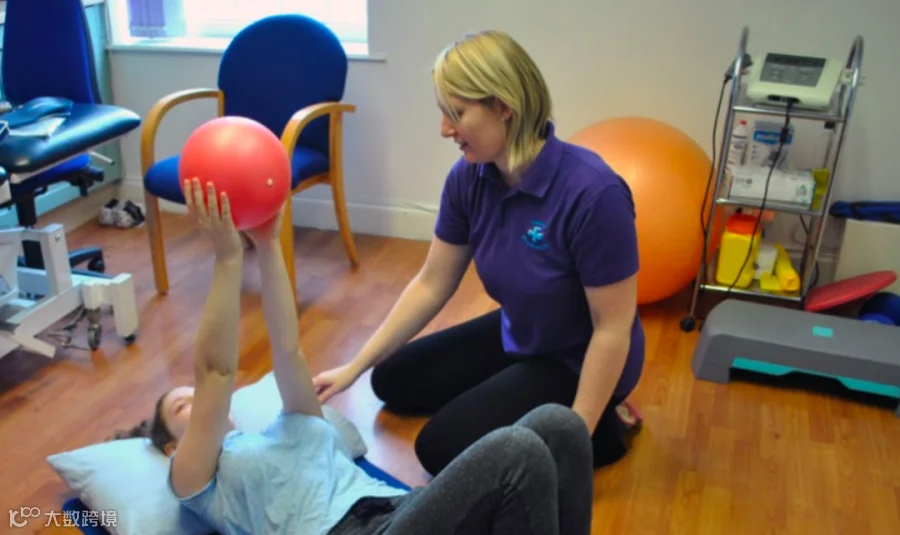
At Abbey Physiotherapy we are keen to promote the prevention of injury as well as treating injuries and preventing re-occurrence. We work closely with a number of local sports clubs in Nuneaton and the surrounding areas of Bedworth, Coventry and Atherstone providing physical education. A regular sports massage and review of exercises can help reduce the risk of injury. Sports injuries are commonly caused by overuse, direct impact, or the application of force that is greater than the body part can structurally withstand resulting in a period of exercise rehabilitation. There are two kinds of sports injuries: acute and chronic. An injury that occurs suddenly, such as a sprained ankle caused by an awkward landing, is known as an acute injury. Guidance from professional practice can reduce the injury time and get you playing again based upon their knowledge and skills.
Chronic injuries are caused by repeated overuse of muscle groups or joints. Poor technique and structural abnormalities can also contribute to the development of chronic injuries. Medical investigation of any sports injury is important, because you may be hurt more severely than you think. For example, what seems like an ankle sprain may actually be a bone fracture and we wouldn't want to be conducting a session of sport and exercise rehabilitation unaware of a bone fracture.
We Practice What We Preach!!!
One of our Directors Alison is often found taking part in some sporting challenge, often for charity. This has included sports and exercise for triathlons and long-distance open water swimming! In addition, we have personal involvement in a number of local clubs. Come and talk to us if you need help putting together a dedicated exercise for a sport rehabilitation program specific to your club or sport. We can cover the basics in preparation for sporting activity, ensuring that the body has enough flexibility and strength to take part in your chosen activity without suffering injury and maximising performance.
Exercise Prescription
Your Physiotherapist will be able to assess your current fitness levels and devise a progressive exercise plan to make the steps from where you are now to where you want to be with classic sport therapy techniques. This will be a bespoke programme broken down into stages of rehabilitation personalised for the individual. They will also be able to give you some guidance on a timetable for recovery so you can plan for that important event, which may be the London Marathon or walking your child to school!!!!
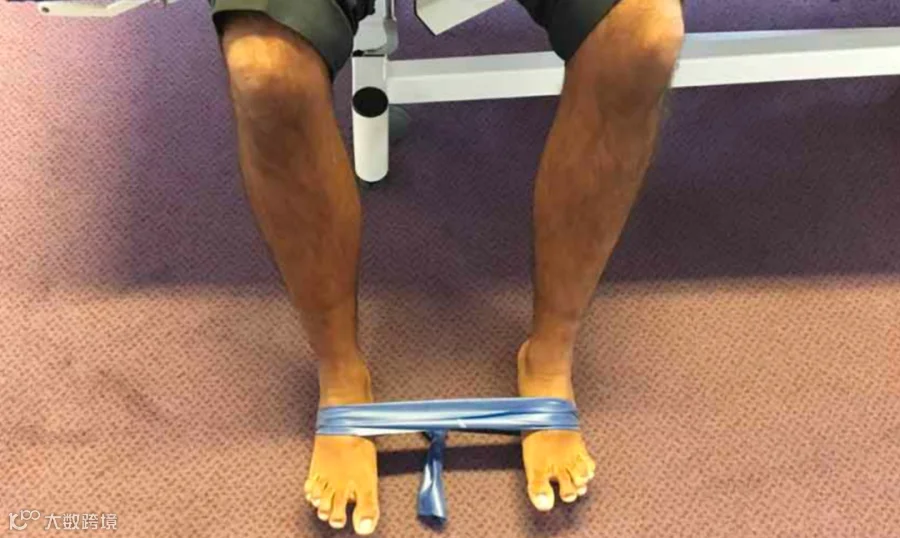
Your programme can be adapted to be undertaken at home, in the gym, pool or park, using whatever equipment you have at your disposal! Regular reviews of your progress will result in your Physiotherapist correcting your technique where necessary and adapting the intensity to stay focussed on achieving the end goal!
If you are not very confident to start an exercise programme, we are able to refer you to a local service called 'Fitter Futures' who can offer support for new starters to exercise.
What Is Sports Injury Rehabilitation?
Sports injury rehabilitation is a safe, therapeutic approach that helps athletes effectively treat pain and achieve optimal performance with Targeted exercises to help you regain pre-injury function. Reduced susceptibility to further sport-related injuries. Depending on the type of injury you have sustained, your programme will include four stages of rehabilitation which will probably include strengthening exercises, mobilising, pain relief techniques and functional skills.
Four Phases of Rehabilitation
Control pain and swelling.
Phase 1 - The body’s first reaction to injury is inflammation and pain in the injured area. At this stage the treatment is all about protecting the injured part of the body, controlling the pain and managing the inflammation. Treatment during this phase will likely include appropriate rest and may include using ice or cold packs, depending on the injury there may be a requirement for a protective cast, sling or tape to protecting the body to minimise the impact of the injury.
Recover Your Range of Motion.
Phase 2 - When the body has been injured it is the strength of the pain or the amount of inflammation which prevent the movement of the body to the same extent as prior to the injury. This is where careful soft tissue and joint mobilisation training as prescribed by your physiotherapist is an important part of your rehabilitation to recover early-stage range of motion. Your Physiotherapist will recommend specific flexibility training appropriate to your injury, this is to assist you to get your range of motion back, avoid the lasting effect that decreased range of motion can have on your body’s function. You may be ready to resume light cardiovascular training depending upon the injury location.
Recover Your Bodies Strength.
Phase 3 - Restore Range Of Motion, improve strength and endurance, proprioception such as Balancing on one leg, continue cardiovascular training Exercises like brisk walking, stationary cycling, pool exercises or gentle exercise may be recommended. You may be able to introduce additional CV exercises such as a stepper, treadmill, rower, or cross-trainer. These exercises will target rebuilding strength and conditioning the body.
Recover Your Bodies Function.
Phase 4 - Restore strength, add sport-specific movements with the progressive increase in velocity of these movement patterns moving towards game speed. This phase of injury rehabilitation can include restoring coordination and balance, improving speed, agility, and sport-specific skills progressing from simple to complex to achieve a return to your sport.

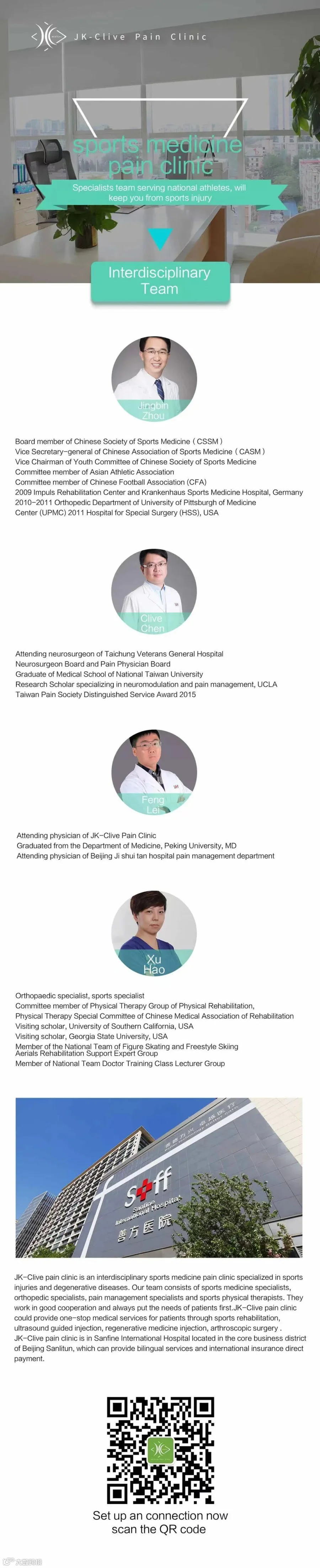
JK-Clive Pain Clinic specializes in management of acute and chronic pain caused by various "sports injuries" and "degenerative diseases",we are located in Beijing Sanfine International Hospital and our services can be paid directly by most of the international insurance.
JK will always care about your health!
Practical medical science will be shared constantly!
If you have any questions about muscles and joint pain.

Past recommendations
1.10 Exercises to Bulletproof Your Joints and Prevent Injury
2.Exercise helps ease arthritis pain and stiffness
3.Joint Stability Exercises for Injury Rehab


Light up sharing, like, watching
Look who's watching with you