

What is a shoulder nerve injury?
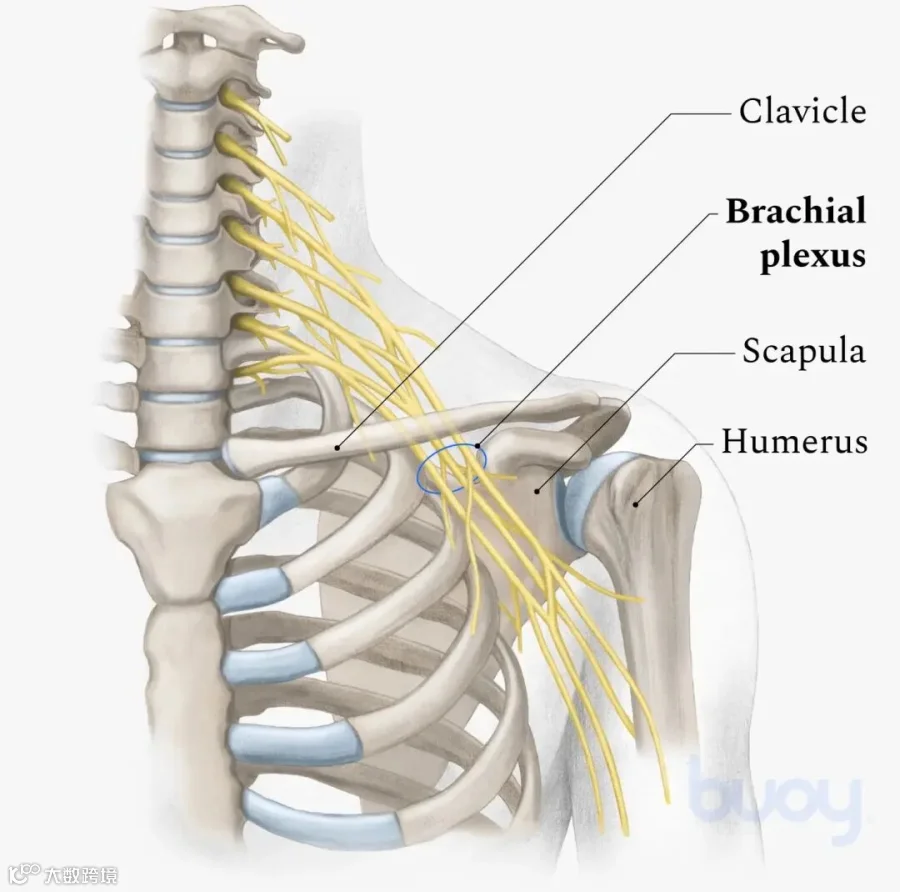
A shoulder nerve injury is when damage occurs to a network of nerves in the front of the shoulder known as the brachial plexus. The injury is also called brachial plexopathy.
It can cause pain, numbness, pins and needles, and/or weakness in the arm. The most common cause is a traumatic injury, from a motorcycle crash or car accident. The nerves can also be injured in a bad fall or contact sports like football. Or from carrying a poorly fitting heavy backpack.
In newborns, the nerves may also be stretched or torn during birth as the infant’s arms are stretched while coming out of the birth canal.
Mild injuries to brachial plexus nerves may heal without treatment. More severe injuries may require surgery.
The outcome of brachial plexopathy depends on its cause, and ranges from permanent changes to full recovery.
▲This picture comes from the Internet and the copyright belongs to the creator
What are symptoms of brachial plexus injury?
Pro Tip
Brachial plexopathy is uncommon. When there is weakness, numbness, or pain anywhere in the arm, it is typically related to a pinched nerve somewhere else. Talking with your doctor and letting them perform an exam is usually the best way to narrow down the diagnosis. —Dr. Brian Walcott
Pain in the shoulder or upper arm is common, although sometimes the condition is painless. You may also feel numbness or weakness in the shoulder, upper arm, or hand.
If the injury happened during a contact sport, such as football, you’ll probably feel immediate but temporary numbness and pain, with possible weakness in the shoulder, arm, or hand (known in football as a “burner/stinger”). Also, if the nerve injury is from wearing a heavy backpack, the main symptoms will be numbness and/or weakness without pain.
Main symptoms
Sharp, shooting pain in shoulder, arm, and/or hand.
Numbness, anywhere along the shoulder or arm but most commonly in the outer, rounded part of shoulder.
Weakness in shoulder or upper arm (i.e., you can’t move your arm).
Other possible symptoms
Temporary burning pain that radiates down the arm in athletes who have trauma to shoulder, such as helmet-to-shoulder contact (known as “burner/stinger”).
Risk factors
Participating in contact sports—especially football.
Wearing a poorly fitted, heavy backpack also increases your risk.
Riding a motorcycle.
If you have cancer (especially breast or lung cancer) that travels to the shoulder area, this can create a shoulder nerve injury.
Having surgery in or around the shoulder area.
Next steps
Unless you were in an accident, a brachial plexopathy is usually not a medical emergency. However, go to the emergency room if you have these symptoms:
A sagging eyelid on the same side as shoulder injury.
Severe spine tenderness or pain.
A weak pulse in your wrist or arm.
Changes to the color of your shoulder, arm, or hand.
Your arm is cool to the touch.
Ask your doctor about what you can do to speed your own recovery. Oftentimes, physical therapy can help even while you are waiting for tests. It is also important to ask your doctor for realistic expectations for recovery. Sometimes with severe injuries, recovery is only partial and can take over a year. —Dr. Walcott

▲This picture comes from the Internet and the copyright belongs to the creator
What causes brachial plexus injury?
A shoulder nerve injury is when damage occurs to the brachial plexus. These nerves start in the spinal cord in your neck, then travel over the first rib and into the armpit where they connect the muscles and skin of the shoulder, arm, and hand.
A brachial plexopathy can be caused by a trauma that compresses or over-extends the nerves.
Non-traumatic injuries happen because of medical conditions. A viral infection can create inflammation that damages the nerves, for example.
Sometimes people get radiation when they are diagnosed with cancer, and the radiation may injure the nerves at the shoulder as well.
Another cause of brachial plexopathy is a rare autoimmune disease called Parsonage Turner Syndrome.
Pro Tip
A nerve conduction study involves transmitting an electric current through stickers on your skin. It’s an electric sensation similar to when you rub your feet on carpet and then cause a “spark” by touching something metal. Nobody loves it, but after a few times, people feel like “Ok, I’m used to this.” —Dr. Walcott
How to treat a shoulder nerve injury
Brachial plexopathy is often a challenging diagnosis to make as it can often be confused with other conditions that affect the nerves of the arm, shoulder, or hand. If you have minor symptoms, you may be monitored by your orthopedist over time. If you still have symptoms after about 6 weeks, further testing may be required.
If your symptoms are severe, you may need to have imaging tests and nerve tests to diagnose the brachial plexus. These include magnetic resonance imaging (MRI), ultrasound, a nerve conduction study or a test called an electromyography that helps differentiate between nerve injury at the shoulder and a different location. During an EMG, your doctor will stick a thin needle into different muscles and ask you to contract your muscles.
Once you’re diagnosed with a shoulder nerve injury, your doctor may recommend a splint or brace to help stabilize your shoulder and let the nerves rest. You can take nonsteroidal anti-inflammatory drugs (NSAIDS) like ibuprofen to help reduce the pain and inflammation.
Physical therapy is usually recommended to help restore movement and range of motion in your shoulder. In very select cases, surgery may be helpful in restoring function if the nerves are completely torn.
Prevention
Trauma is the most common preventable cause of shoulder nerve/ brachial plexus injuries. To reduce your chances of injury:
Drive safely (in a car or motorcycle).
Follow best practices and protective equipment when playing contact sports.
Wear a properly fitted backpack that is not overweight.
This article is excerpted from:
https://www.buoyhealth.com/learn/shoulder-nerve-injury

JK-Clive Pain Clinic specializes in management of acute and chronic pain caused by various "sports injuries" and "degenerative diseases",we are located in Beijing Sanfine International Hospital and our services can be paid directly by most of the international insurance.

JK will always care about your health!
Practical medical science will be shared constantly!
If you have any questions about muscles and joint pain.
Past recommendations
1.How to Prevent Injuries While Jumping Rope
2.What is a fascia gun What is the role of fascia gun


Light up sharing, like, watching
Look who's watching with you