No matter you are a child or an adult, most of us could have a painful experience that a fishbone stuck in the throat.
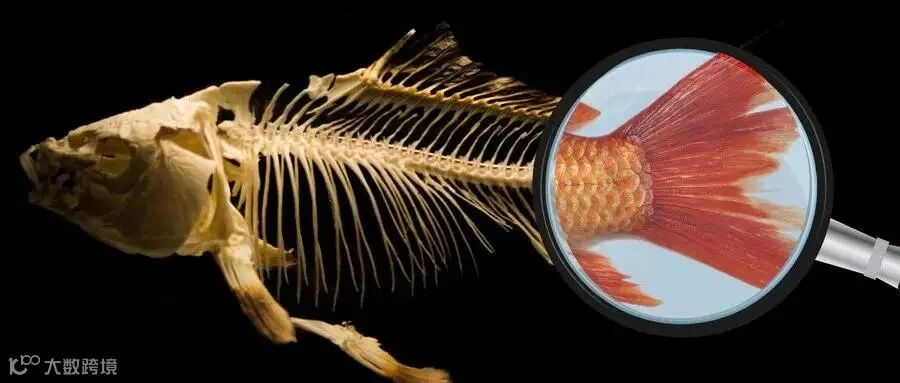
If the remaining fishbone is not completely removed, everyone may run into the fishbone, large or small. Not to mention that fish taste may be affected, people may even be stabbed by the fishbone. A foreign netizen who was eating a fillet hamburger by some famous brand should get so many fish bones in the burger.
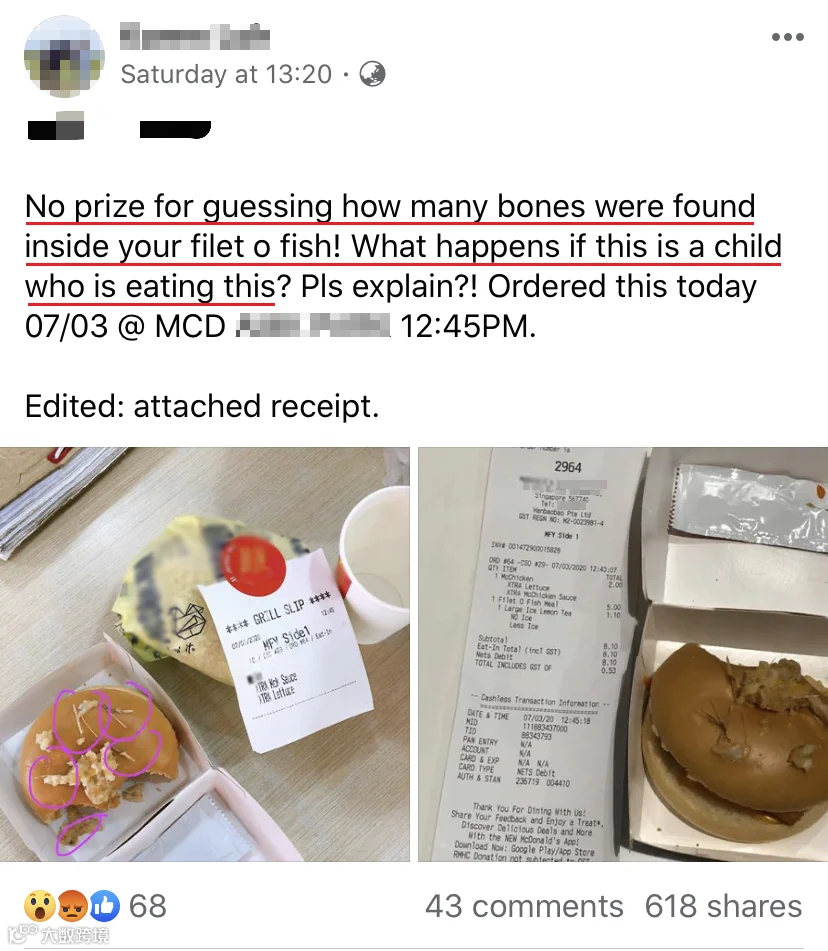
He was lucky not to be stung by the fishbone, but the following guy was not so lucky.
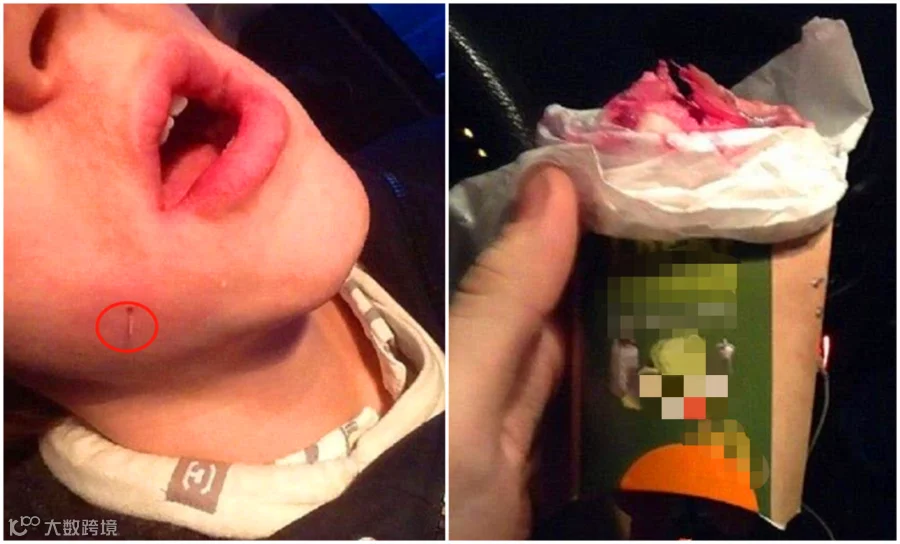
After taking a few bites of the fish burrito, the netizen felt a sharp pain in his mouth. He thought he bite his cheek by mistake, but when looking into the mirror, he realized it was a sharp fish bone that had pierced his cheek. That's really horrible.
So how to avoid such food safety accidents again?
Select saltwater fish with fewer bones
KFC and McDonald's choose fresh pollack fish, a kind of high-quality marine fish, as food materials. Pollack has only one main bone. There are few remaining bones after removing the main bone, which is not as numerous and irregular as those of freshwater fish.
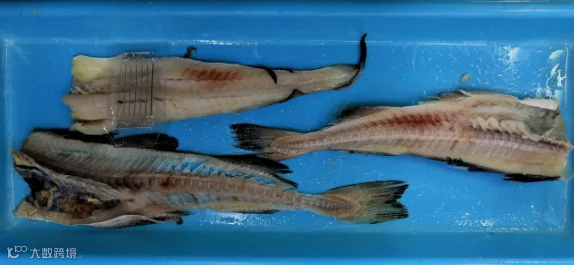
Double bone removal
Caught by fishermen, fresh pollack will be sent to the processing plant. After removing the head, tail, viscera, fins, scales, bones and cleaning, we can the raw fillet. The fillet is not safe to be supplied because there may be leftovers of fish bones and other foreign matters. X-ray inspection machines are needed to detect the remains.
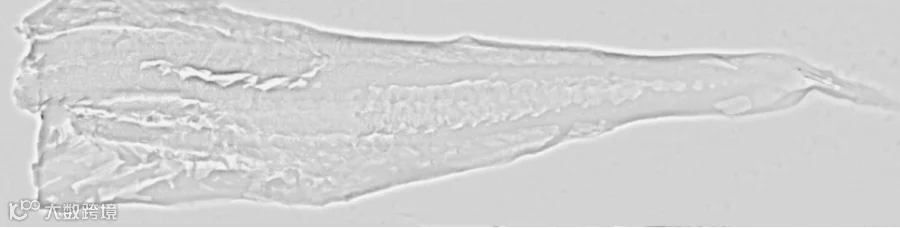
When the gray scale of the fishbone in the detection image is uniform and there are no other abnormal deep gray images, it can ensure that there is no residue of fishbone in the fillet.
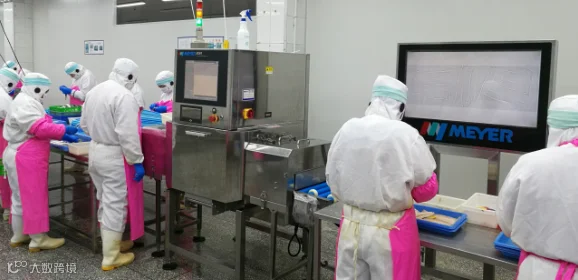
After X-ray inspecting, boneless fish will be laminated and sliced into a square fish cake, which will be stored quickly and transported in a cold chain. Finally, it will be sent to the restaurant and become a fresh fish burger without bones for customers to enjoy.

X-ray detection equipment has become the standard for fishbone detection in the industry
At present, most aquatic product processing enterprises mainly rely on manual finger touch and visual judgment to detect fishbone.
This traditional labor-intensive operation mode with low work efficiency is difficult to adapt to the market environment with rising labor costs in the long term. Therefore, innovative fishbone detection methods with higher efficiency and smarter intelligence are bound to come.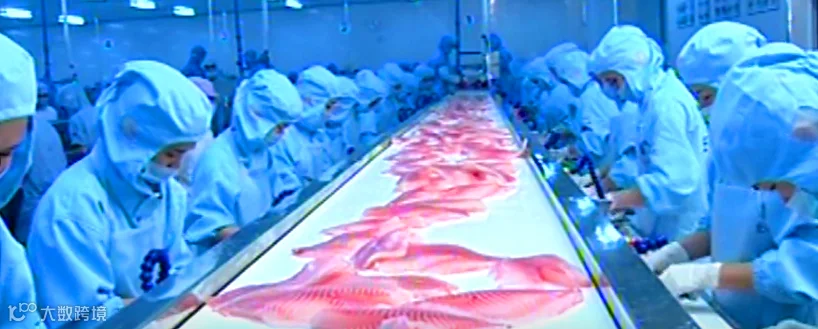
In recent years, with the increasing unique advantages of X-ray imaging technology in the detection of fish bones, X-ray detection equipment has become a standard for enterprises to detect residual fish bones in fish fillets.
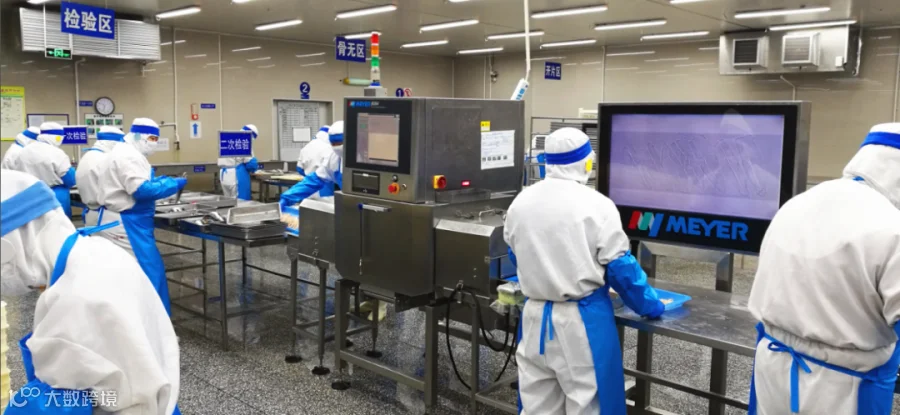
As a professional intelligent equipment provider in China, Meyer has developed X-ray imaging technology to meet customers' needs. Meyer X-ray detection machine for fishbone has excellent detection performance after years of technological iterative updating.
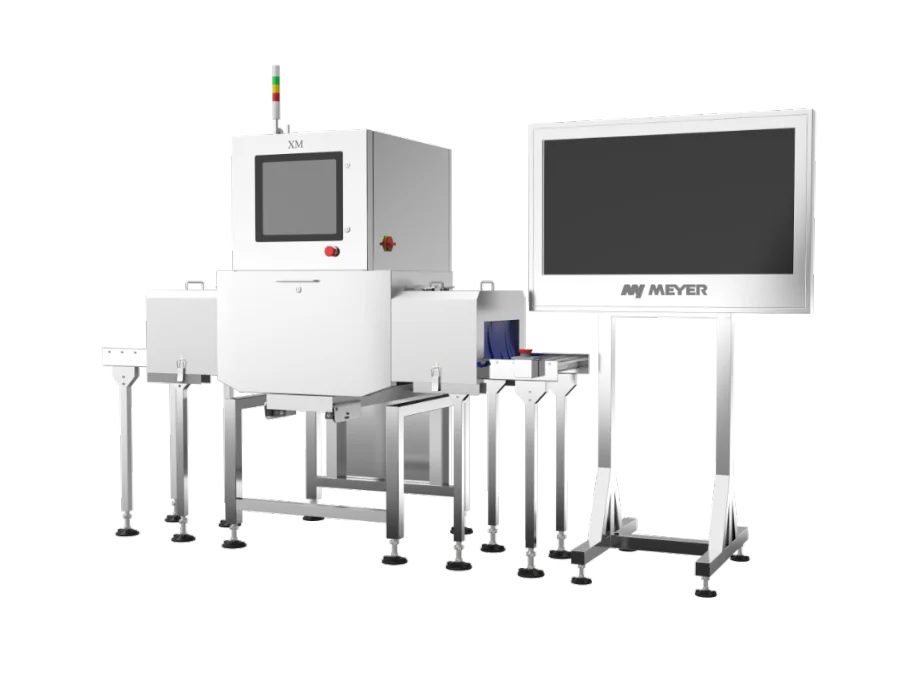
△Ultra HD X-ray Inspection Machine
Meyer X-ray inspection machine of fishbone is equipped with ultra-high-resolution sensor, enhanced ultra-high-resolution algorithm, and 4K HD screen. It adopts the sectional protective cover transmission channel, avoiding polluting tested products caused by the protective curtain. With first-class waterproof, anti-corrosion, anti-bacteria ability, and stable performance, Meyer X-ray inspection machine of fishbone brings great economic benefits for food processing enterprises.
Brave the waves and forge ahead
In the future, Meyer adheres to the application and expansion of X-ray inspection technology and is committed to providing aquatic seafood processing enterprises with a safer and more intelligent one-stop detection solution.