2018

The official national holiday schedule for 2018 has been released recently. As always, China has seven legal holidays in a year, including New Year's Day, Chinese New Year (Spring Festival), Qingming Festival, May Day, Dragon Boat Festival, Mid-Autumn Day and National Day but features two major week-long holidays: the Spring Festival (also known as Chinese New Year) and National Day. In 2018, the Spring Festival falls between 15th and 21st Feb and the National Day holiday between 1st and 7th Oct.
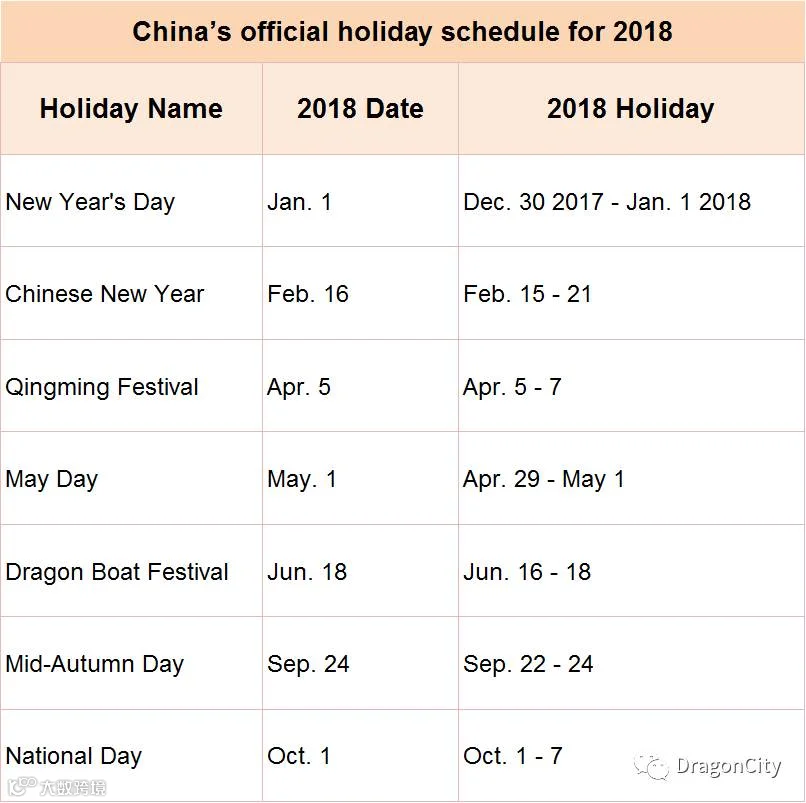
Everyone especially those who have been in China only for a very short time should know that China’s holiday schedule often includes additional official work days that fall on Saturdays and Sundays to compensate for long holidays. For example, Sunday, February 11 and Saturday, February 24 are official work days designed to partially offset the seven days off in between for the Spring Festival. You can refer to below info:
New Year
December 30 – January 1 (3 days in total including the weekend)
Spring Festival
February 15 – 21 (7 days in total)
February 11 (Sunday) and February 24 (Saturday) are official working days
Tomb Sweeping Day
April 5 – 7 (3 days in total including the Saturday)
April 8 (Sunday) is an official working day
Labor Day
April 29 – May 1 (3 days in total including the Sunday)
April 28 (Saturday) is an official working day
Dragon Boat Festival
June 16 – 18 (3 days in total including the weekend)
Mid-Autumn Festival
September 22 – 24 (3 days in total including the weekend)
National Day
October 1 – 7 (7 days in total)
September 29 (Saturday) and September 30 (Sunday) are official working days
It is important to note that these dates are the official holidays, but private companies also have the right to determine their own schedules with additional days off as long as the official holidays are maintained.
In addition to the above seven festivals, Chinese people celebrate four others on which some people have a half day off - Women's Day, Youth Day, Children's Day and Army Day. Many other galas and anniversaries are celebrated even without days off, such as Arbor Day and Teachers' Day.
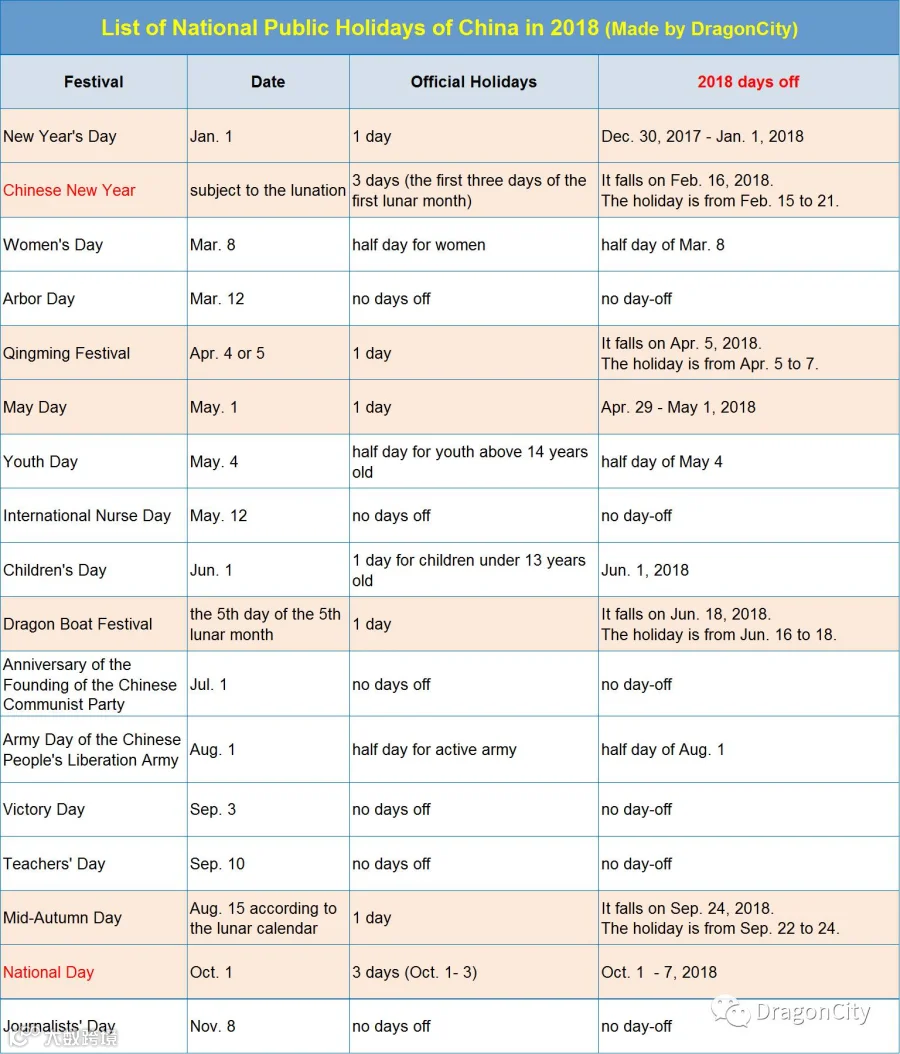
Except all above, China still has many other most celebrated festivals without days off. These festivals are different by different areas, such as:
Laba
8th day in 12th lunar month, usually in Jan.
It has been over one thousand years that the Chinese people eat Laba Congee on Laba Festival day.

Lantern Festival
15th day in 1st lunar month, usually in Feb.
Watch lanterns, eat glutinous rice dumplings, guess lantern riddles.
Double Seventh
7th day in 7th lunar month, usually in Aug.
China’s Valentine’s Day
Chongyang
9th day in 9th lunar month, usually in Oct.
Climbing Mountain, a custom of Chongyang Festival
Winter Solstice
Dec. 21st, 22nd, or 23rd
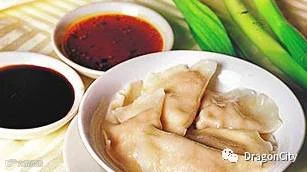
Dumpling is the typical food for the day.
Hope all info above can help you make a good tour plan in 2018.
Feel free to add "Ask DragonCity" if you have any questions.

Since you're here
Do you want to share a good news story? Let us know if you want to tell a story or share some news with us.
 Is there any Chinese food you like or hate?
 100+ differences between British and American English
 Lanxess is to invest EUR 20 million in Changzhou
 Individual Income Tax Guide for Expats in China
 which major Chinese cities you can fly to/from Changzhou?
 22 Policies to Further Opening-up in China
 12 World Natural Heritage sites in China
 How Do Foreigners Work Legally in China?
 14 Useful Apps For Living In China Conveniently
 Study in China ? a brief introduction to international student