Ensuring Safety, Quality, Authenticity
It was a food industry nightmare. Melamine contamination in Chinese milk products had gone on undetected, missed by screening procedures that tested only selected, known contaminants. Similar adulteration was later found in eggs and animal feed, despite bans. Food contamination and fraud can strike worldwide, as illustrated in the 2013 discoveries of pork and horse meet in European beef products.
Prevention calls for nontargeted screening methods as part of routine quality assurance. Balancing the high stakes against time and resource constraints requires a cost-efficient and informative approach. Nuclear magnetic resonance (NMR) spectroscopy can combine detection, identification, and quantification of key known ingredients as well as unanticipated contaminants and adulterants – all within the same set of scans.
How NMR Can Help

Discover rapid screening and high-confidence results in these examples of targeted and untargeted foodscreening with NMR.
Profile product quality and nutrient content.
An extensive database of NMR spectra enhances screening for product authenticity, purity or false labeling. See High Throughput Push-button NMR in Fruit Juice Quality Control.
1H NMR spectra provide a reproducible product fingerprint in Quality Validation of Food Analysis using non-targeted NMR screening.
NMR provides rapid assessment for even trace levels of lactose in dairy alternatives. See No Substitute: NMR Reveals the Lactose Content of Milk Alternatives.
Detect fraud, adulteration, and contamination.
NMR techniques distinguish genuine products from imitations. See Detecting Food Fraud with NMR.
A single NMR method detects deviations of all kinds, known and unknown, for example, see Targeted and Non-Targeted Wine Screening, Winning Back Consumers’ Trust
Monitor shelf life.
Food researchers monitor product moisture content as part of Using Time-domain NMR to Determine Shelf Life.
Analyze fats and oils.
A benchtop time-domain NMR system provides Easy, Robust and Reproducible Solid Fat Content Analysis.
Why NMR Is Advantageous
NMR provides direct, nondestructive insights into sample makeup and component concentrations, with certainty and efficiency.
Low cost per sample
Minimal sample preparation needed
Simultaneous compound identification and quantification
Combination of targeted and non-targeted analyses to ensure the presence of expected ingredients and the absence of contaminants or adulterants
Standardized and validated procedures to ensure consistency and compliance across operators and labs
Advanced statistical models to evaluate origin authenticity, species purity, false labeling, production process control, sample similarity, and more
How NMR Works: Easier, Smaller, Faster
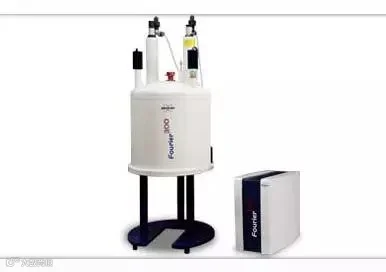
Recent developments in software and hardware streamline operation and reduce the system footprint. Fully automated, push-button NMR-based food screeners and validated methods streamline routine food and beverage testing and ensure reliable, reproducible results.
High-throughput, push-button methods make NMR spectroscopy a resource-efficient solution for quality control of:
Juice
Honey
Wine
and more.
Automated data collection, analysis, and reporting for routine analyses save time and effort.

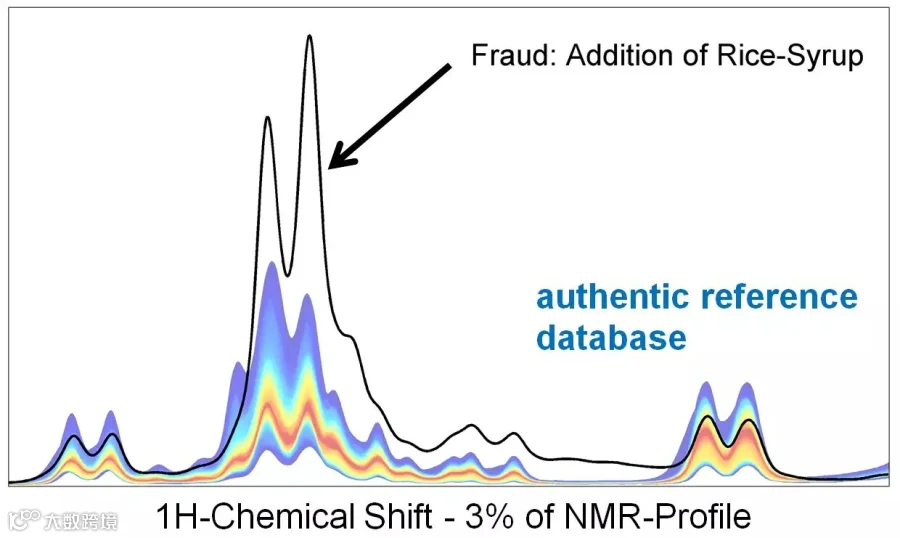
NMR catches both expected and unexpected food components. This 1H NMR example shows adulteration of honey with rice syrup. Learn more in the Blog post: Ensuring Your Honey Is Pure.