


Most compounds used in NMR spectroscopy are dissolved in deuterated solvents. The reason is that 1H NMR spectra of substances acquired in non-deuterated solvents usually feature large solvent-signals that tend to dominate spectra and make interpretation difficult or even impossible. Since usually the same samples are used for detection of other nuclei, even hetero NMR spectra are acquired in deuterated solvents. A further benefit for using deuterated solvents is that solvent signals in deuterium spectra can be used to lock the field and therefore stabilize it and also enable shimming on the lock signal.
On a modern NMR spectrometer locking is performed automatically, so the user simply needs to click on a “Lock” button and choose the solvent from a menu. In automation there is a similar menu from which the user needs to choose a solvent for each sample.
There are several reasons why it is desirable that users do not have to specify which solvent is used in their samples:
In a high throughput environment having to specify hundreds of solvents becomes an inconvenience to even experienced users and leads to user errors.
In case spectra of unknown samples are acquired pre-runs are required to determine solvents. Especially in automation, e.g. during a run that cannot be interrupted, this is difficult to achieve.
Automatic solvent detection is an important step on the ladder to achieving a fully automated analysis of NMR spectra with minimal user intervention.
System administrators might like to minimize user interaction to avoid spectrometer downtime.
In response to these obstacles, Bruker has introduced “Solvent-Detect”, a new module (AU program) within TopSpin designed to allow the spectrometer to detect and subsequently lock on the solvent. This simple automated tool streamlines your workflow and is able to detect most common solvents by default:
Acetic Acetic acid-d4
Acetone Acetone-d6
CD3CN Acetonitrile-d3
C6D6 Benzene-d6
CDCl3 Chloroform-d
D2O Deuteriumoxide
DEE Diethylether-d10
DMF Dimethylformamide-d7
DMSO Dimethylsulfoxide-d6
Dioxane Dioxane-d8
EtOD Ethanol-d6
MeOD Methanol-d4
CD2Cl2 Methylenechloride-d2
Pyr Pyridine-d5
THF Tetrahydrofurane-d8
Tol Toluene-d8
TFA Trifluoroacetic acid-d
C2Cl4D2 Tetrachloroethane
H2O+D2O Water + Deuteriumoxide
(Please note that solvents not included above can be added.)
Here’s how Solvent-Detect is set up in automation:
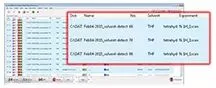
Solvent-Detect can used in automation by changing the lock and shim settings in the IconNMR configuration to call the solvent-detect AU program. This will result in the solvent selected in the Automation setup window to be ignored. A default solvent can be added to the configuration (THF in this example) to simplify the experiment setup procedure.
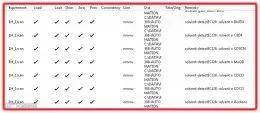
Once the experiments are finished, the solvent identification will be indicated in the IconNMR experiment history Remarks field.
We are planning to update future versions of IconNMR for a more complete integration of Solvent-Detect. Users will be able to select “Unknown” solvent on an experiment-by-experiment basis to control when Solvent-Detect is used or when the system locks on a known solvent. To simplify the setup, “Unknown” can be set as the default solvent in the IconNMR configuration.
TopSpin: simply type “solvent-detect” in the command line. The spectrometer acquires deuterium- and carbon spectra, then displays a simple message such as:
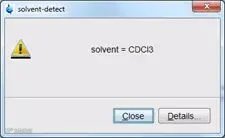
Afterwards the spectrometer tries to lock using the detected solvent. The success will depend to an extent on how well the spectrometer is maintained. (For optimal results keep it well shimmed and update the lock field frequently!)
In tests, Solvent-Detect was able to detect solvents in approximately 40 seconds. D2O or H2O/D2O take slightly longer, but still under one minute! For more information, and to sign on as a beta tester, please contact Olaf Kohlmann at olaf.kohlmann@bruker.com. BTW, there are no costs for Topspin users!