

What can you do for me? Share the benefits of solid-state NMR not the features with collaborators.
When you buy a cell phone, you don’t want to learn about chip manufacturing or coding. You want to know what the phone can do for you. Can you make a call while surfing the web? Will the calendar on both your phone and laptop have the same information?
For scientists who aren’t experts in solid-state NMR, the same concept applies. They want to know what solid-state NMR can do for their research. Yet solid-state NMR experts often talk about the underlying technology or present a spectrum.
In considering the future of solid-state NMR, one researcher identified important factors in ensuring the field will grow and thrive. Of key importance: demonstrating the usefulness of the technology — the benefits not the features — to non-experts. In “Community based barriers to the wider acceptance of solid-state NMR,” author Paul Jonsen delves into impediments to more common use.
In the survey, solid-state NMR experts remarked that the technique is useful in a variety of research areas noting biomedical applications offer some of the greatest potential opportunities. Survey participants thought that solid-state NMR experts often focus on advancing the technique. To do so, they sometimes employ applications but merely to demonstrate technique advancement. Participants suggested that, for the field to expand, experts need to fully develop applications into tools researchers can use with relative ease in their own laboratories. That’s not to say that thinking about the physics and spectra and exploring more advanced methods aren’t important, they are critical to scientific advancement. It simply means that, in addition to those efforts, experts need to demonstrate to potential collaborators how solid-state NMR results can make a meaningful difference in other scientific fields. Using the cell phone analogy: Keep researching better chips and codes and push the technology further. But do so not simply for the sake of advancing the field. Instead, show users how advancements can better support their work.
Another impediment to wider acceptance of solid-state NMR is the expense and expertise necessary to develop and use the advanced and specialized technology, which is sometimes beyond the reach of many labs. Some of those surveyed posited that the future would include more user-friendly and cost-effective application-focused instruments within research labs. More involved research requiring the most advanced expertise and sensitive solid-state NMR instruments would be housed at centers of excellence.
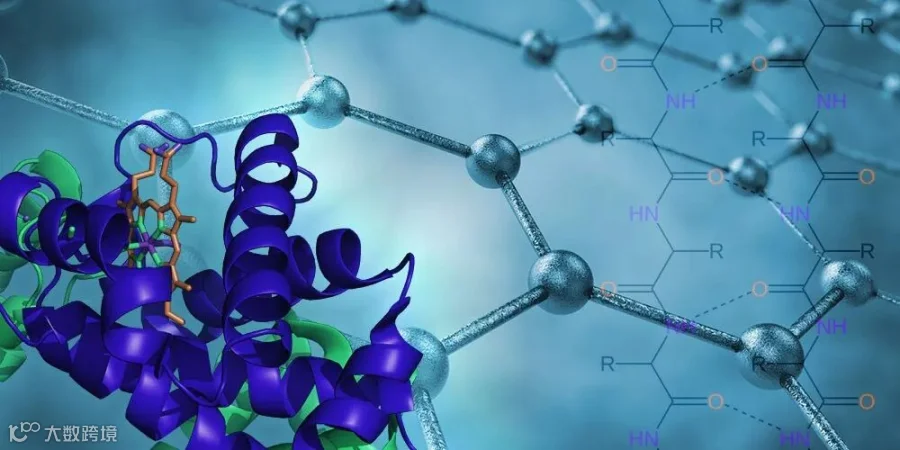
Another roadblock to wider use is that potential collaborators may not be familiar with the types of information solid-state NMR can provide. Experts need to do a better job of educating non-expert researchers in the kinds of questions solid-state NMR is best designed to answer. This again underscores the importance of presenting results in a way that is directly applicable to the core work of non-experts. Instead of showing a spectrum, show non-experts a structure, something that would be more meaningful and useful.
The author suggests this survey is a way to start a conversation about the role of solid-state NMR going forward. While acknowledging the limits of the survey, he notes that it does showcase areas of concern and possibility, which he hopes will spur additional thought and research. He suggests a future survey could look at the limitations of the acceptance of wider spread use of solid-state NMR from the perspective of non-expert researchers.
For More Information
Jonsen, P. (2017), Community based barriers to the wider acceptance of Solid State NMR. Solid State Nucl Magn Reson.2017 Sep; 85-86:19-24. DOI: 10.1016/j.ssnmr.2017.02.001
Ashbrook, S. E., and Sneddon, S. (2014), New Methods and Applications in Solid-State NMR Spectroscopy of Quadrupolar Nuclei. Journal of the American Chemical Society, 136 (44), 15440-15456. DOI: 10.1021/ja504734p
Tishmack, P. A., Bugay, D. E. and Byrn, S. R. (2003), Solid-state nuclear magnetic resonance spectroscopy—pharmaceutical applications. Journal of Pharm. Sci., 92: 441–474. DOI: 10.1002/jps.10307
Brown S.P. (2012), Applications of high-resolution 1H solid-state NMR. Solid State Nuclear Magnetic Resonance, 41, pp. 1-27. DOI: 10.1016/j.ssnmr.2011.11.006
Bauer, M. (Ed.). (1995). Resistance to New Technology: Nuclear Power, Information Technology and Biotechnology. Cambridge: Cambridge University Press. http://eprints.lse.ac.uk/39607/
Watch a free webinar, Solid-State NMR Made Easy.