

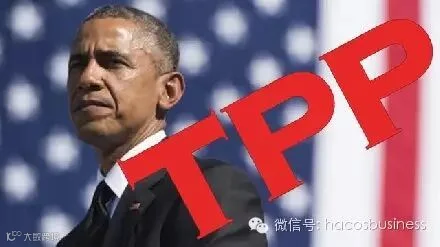
October 5th, after 5 years negotiation, 12 countries including America, Japan and Australia, finally reached the conclusion of the "Trans-Pacific Strategic Economic Partnership Agreement" (TPP) .
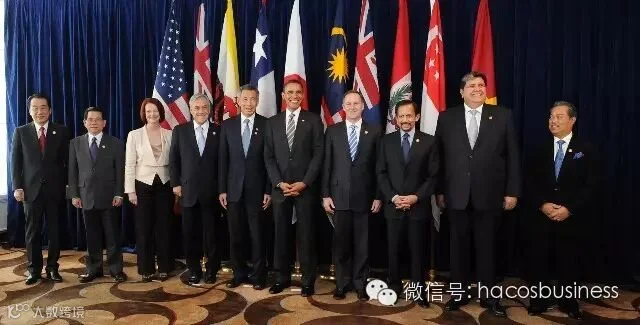
If the TPP could be approved by the congress of those countries, the highest standards trade group which accounts for about 40 percent of the world`s economic output will born.
However, since many rules of the TPP is not so favorable to China at this stage , so China did not choose to join the agreement. As a result, many discussions on China's ability to cope with the challenges of the TPP have come up.
One. What is TPP?
The full name of TPP is: the Trans -Pacific Partnership Agreement , its predecessor is the Trans-PacificStrategic Economic Partnership Agreement.
Now there`re 12 member countries of TPP: America, Japan, Australia, Canada, Singapore, Brunei, Malaysia, Vietnam, New Zealand, Chile, Mexico, Peru.
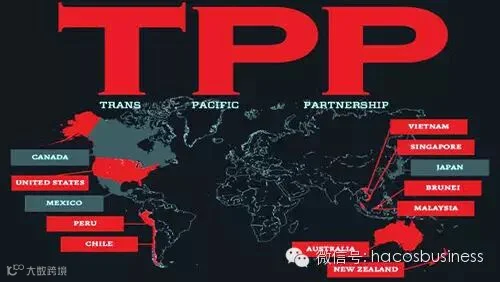
The TPP agreement contains a large number of legal clauses, including 30 chapters about investment, services, electronic business, government procurement, intellectual property, labor and environment. According to the agreement, tariffs between the related countries about 18,000 kinds of goods will be gradually reduced or even completely eliminated in the future.
Standards and rules are the focus of the TPP negotiation, it pursues the goal of "full coverage" and "high standards", aims at reshaping the Asia-Pacific or even the global trade rules. However, some member countries of the TPP are still developing countries, some of the high standard clauses have exceeded their actual situation in fact.
Two. Chinese Strategy in Asian-Pacific Region
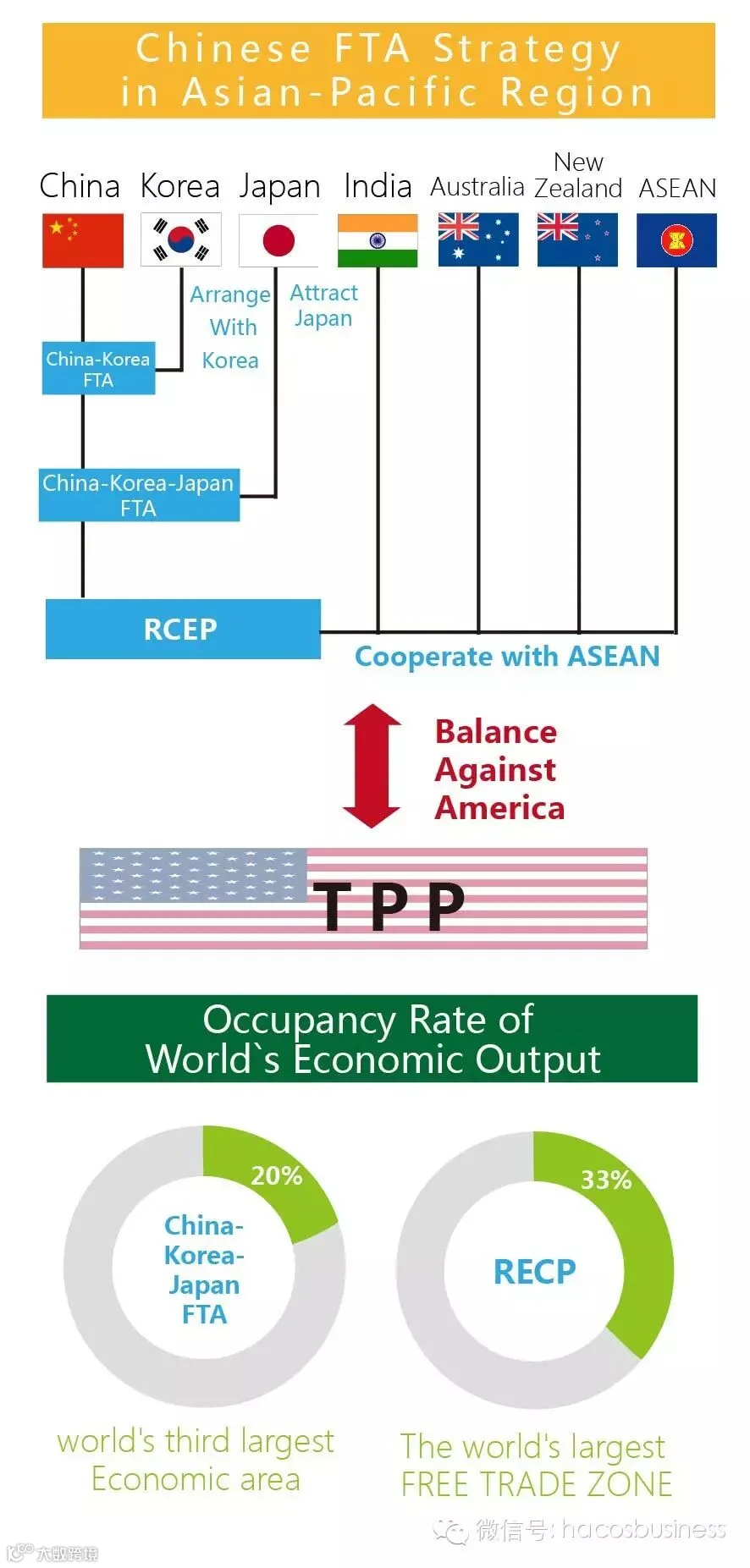
China-Japan-Korea FTA: The free trade agreement between China, Japan and Korea , if the negotiation succeeds, it will become the third largest economic area of the world.
RECP: A free trade agreement which is sponsored by ten ASEAN countries, they invite China, Japan, Korea, Australia, New Zealand, India to jointly participate in, and the agreement is about the establishment of a united market for the 16-nation . If the RCEP negotiation succeeds, it will become the world's largest free trade area , covering 3.5 billion people.
Three. Why China didn`t join the TPP?
1.China has its own development strategy
China actively negotiate with other countries about the "Free Trade Agreement" (FTA), and even some members of the TPP have signed the agreements with China; at the same time, China actively participates in the "Regional Comprehensive Economic Partnership" (RCEP), which is sponsored by the ASEAN.
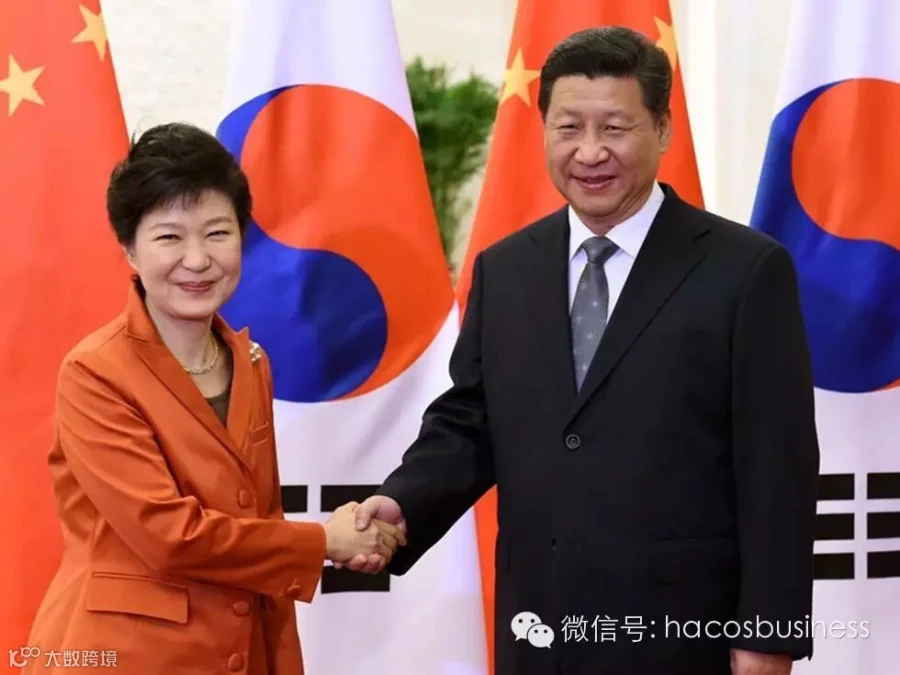
2.America control the rule-making of the TPP, make it more difficult for China.
For example, the TPP advocates the cancellation of policy support, financial subsidies and other benefits for state-owned enterprises, however, Chinese state-owned enterprises are the most important pillar for the national economy, and the scale is very large, so it`s obviously not practical to go along with the TPP agreement.
Four. Conclusion
Chinese GDP is as large as 10 trillion , as the world`s largest Good trading country , the huge market makes it impossible to isolate China.
China holds an open attitude to the TPP, but it`s still unable to accept its requirement so far. So, take the path of gradual reform, and deal with our own things, may be the best solution.
refer to Tecent Finance & China Daily
HACOS is the original author, please inform us before repost
and indicate the resource
HACOS,Business Services Solutions Master