

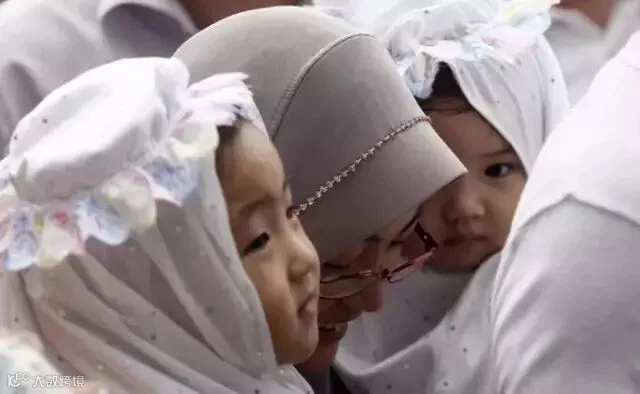
During Ramadan, hundreds of women go to Niujie Women's Mosque - a unique feature of Islam in China - to pray every day. The mosque isn't just for the local Muslim community, but has also become a popular destination for foreign Muslim women visiting China.
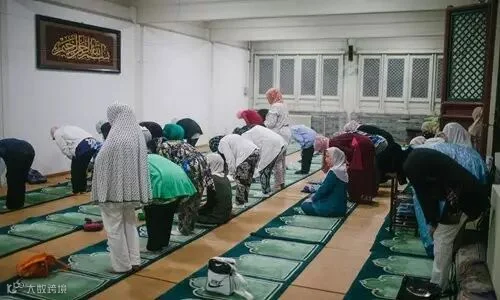
● Muslim women pray at Niujie Women's Mosque during Ramadan in Beijing.
Female-only Mosque
This mosque is located in Beijing's Xicheng district. During the Muslim holy month of Ramadan this year, hundreds of women attend religious services every day at a women-only mosque, just down the road from Beijing's most famous Muslim prayer hall at the Niujie Mosque.
While Muslim women face restrictions in most mosques around the world, either being segregated by sex within the building or in some communities being banned from entering altogether, many Chinese Muslim women pray at institutions dedicated to serving their gender, a unique Chinese tradition.
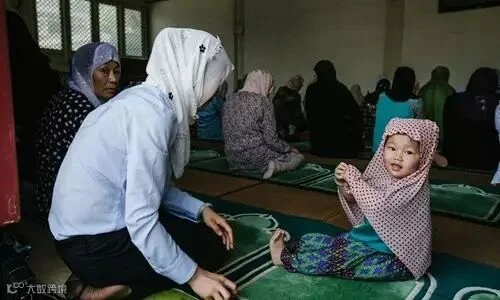
● Ma Yun takes her 2-year-old daughter to the mosque's prayer hall.
Besides serving as a platform for Muslim women to pray and learn about the religion, women-only mosques now also have a new identity - a platform to forge international communication as women from Arab countries like to visit as their countries don't have such mosques.
Chinese Characteristics
There is no official data on the number of women-only mosques in China. The History of Women's Mosques In Chinese Islam that such mosques first proliferated in China's central plains which include parts of Henan, Hebei, Anhui, Shanxi and Shandong provinces.
The emergence of women-only mosques was a result of the intermixture of Chinese and Islamic traditions. Chinese Islam has been influenced by the dominant culture of the nation which has not traditionally barred women from public life.
Tang Dynasty
(618-907) When Muslims first came to China, they were honored guests.
Ming Dynasty
(1368-1644) Chinese Muslims fell out of favor with the authorities and were subject to repression. Under this persecution, the Muslim community had to make the most of its resources to ensure its cultural survival, and hence Muslim women had to help bear the responsibility of transmitting the faith.
Middle of the 17th century
Religious schools especially set up for educating female Muslims emerged.
Late Qing Dynasty
(1644-1911) These schools developed into women-only mosques.
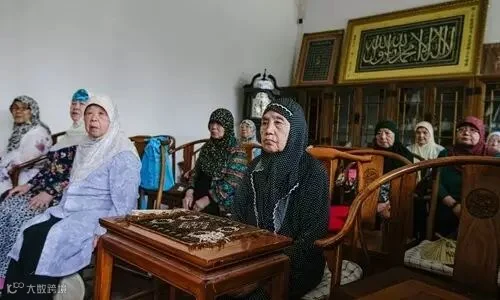
● Elderly women gather at Niujie Women's Mosque.
Her Community
Women-only mosques aren't only places for female Muslims to learn about their religion, but also an important resource for illiterate women, especially seniors, to learn basic knowledge. Also, they have many chances of making friends with other Muslim women and they regularly organize study classes.
In rural areas, some women often learn to read and write in their local mosque under the tutelage of a female imam, another unique feature of Chinese Islam.
Many female Muslims would still prefer to have a female imam. It would be more convenient to learn from, talk with and practice with a female imam, to satisfy their craving for knowledge.
A Renewing Phase
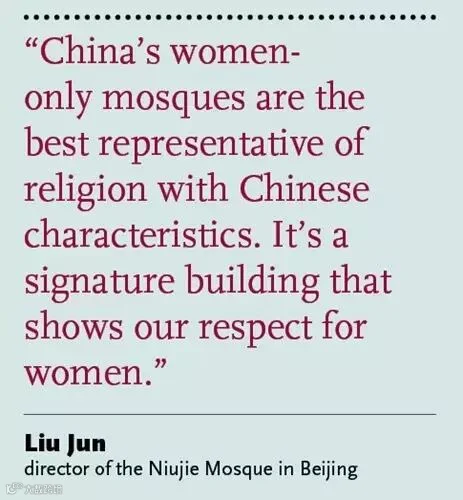
Director of the Niujie Mosque in Beijing said, the wives of ambassadors from Arab countries, including Oman, like to visit the Niujie Women's Mosque during Ramadan.
They show a strong interest in this kind of mosque which doesn't exist in their own country.
But the latest developments also bring new challenges since female imams, most of whom are now elderly, are unable to meet the demands of well-educated young Muslim women.
Traditionally, female imams have focused on the importance of prayers and have taught scripture in Farsi.
But today female Muslims would rather learn scripture in Arabic, a language in which many female imams are not proficient.
While teaching methods used by male imams have changed with the times, female imams have tended to be more conservative, which has posed difficulties to the development of women-only mosques.
Source: GlabalTimes






HACOS,Business Services Solutions Master