

Recently, plenty of WeChat users have received an invitation to experience the WeChat new function.

Actually, domestic Internet giant Tencent has launched a new kind of money-market fund on its WeChat platform, a move may show the company hopes to grab market share from a fund run.
Lingqiantong(零钱通)
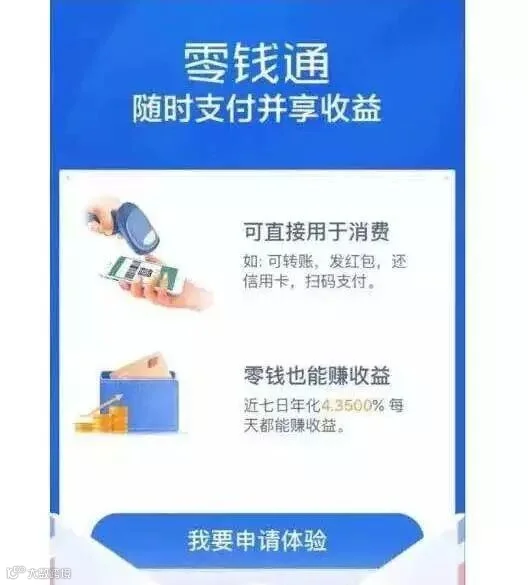
Tencent launched the test of a new function Lingqiantong(零钱通), a kind of money-market fund, on its mobile payment platform WeChat this week.
Invitations to join the test were sent to staff and some external users of our other financial management products on WeChat, and we'll see how the test group likes it.
What’s New?
You can earn interest via the money in your WeChat wallet now!

WeChat users usually put small amounts of money they get from red envelopes or friends' transfers into the WeChat change pocket. Now the money can generate interest automatically with a seven-day annualized return of 4.135 percent via Lingqiantong.
Compared with Yu'E Bao
Yu'E Bao, an Internet money-market fund for individuals owned by Alibaba's financial affiliate Ant Financial Services Group, had attracted more than 1.43 trillion yuan ($211 billion) under management as of the end of June, accounting for about 28 percent of the market.
Ant Financial Services has the advantage of providing various professional financial services, which might be a weakness for Tencent. But this new product proves the latter is taking measures to catch up.
Three Aspects Of This Function

🔸 With people paying for almost everything via mobile phones, Internet companies have built-in advantage in attracting funds.
🔸 Given WeChat's vast user base and stickiness, Lingqiantong is likely to post a rapid increase in personal investment once it is officially launched.
🔸 Lingqiantong is making its debut just as China's regulatory authorities are tightening regulations on money-market funds.
New Rules Issued By CSRC
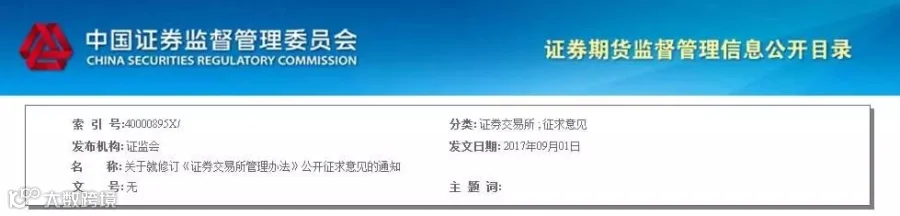
The China Securities Regulatory Commission (CSRC) issued new regulations on Friday tightening management of liquidity. For the first time, it proposed the concept of funds "designated as systemically important." The CSRC and the People's Bank of China, the central bank, will jointly impose new supervisory rules for such funds.
CSRC Vice chairman has indicated that the scale of some money-market funds has exceeded that of large banks, which has been taken as a reference to Yu'E Bao.
Yu'E Bao's 1.43 trillion yuan was not much less than the balance of demand deposit accounts of 1.63 trillion yuan held with Bank of China in 2016, and was more than the 1.3 trillion yuan total of demand and term deposits for China Merchants Bank.
A Bold Move of WeChat
Money-market funds, which mainly invest in liquidity management tools such as interbank deposits and asset-backed securities, have been expanding fast this year.
In this sense, WeChat's Lingqiantong is a bold move, and it also shows the possibility of the platform ... attracting some individual investors from Yu'E Bao.
All the cash on Yu'E Bao is linked with one asset management company, which is also owned by Ant Financial Services. That means a higher possibility of triggering systematic financial risks.
WeChat's Lingqiantong will cooperate with three asset management companies.

"Money market funds are low-return 'commodity products' that are largely interchangeable, so there is little basis for competition," official said, noting that traditional banks are also striving to launch Yu'E Bao-like products.
A source in a State-owned bank told that his bank has two kinds of cash income products with initial volumes ranging from 50,000 yuan to 3 million yuan, and interest rates ranging from 2 percent to 3.5 percent.

Source: globaltimes




HACOS,Business Services Solutions Master