

Back in late 2016, the Chinese government introduced the much-debated grading system for foreigners applying for China work visas. While the average expat turned out to be the less-than-braggable B grade, some mystique still surrounds the inner workings of the grading system.

© Image | Chinabriefing
Basics of the Grading System
Chinese government has been grading foreigners applying for China work visas according to 10 categories, including
Chinese proficiency,
Your university’s world ranking,
Your proposed salary,
How big your employing company is
And etc.
For each category an applicant would receive points, which are then added together to calculate a final grade of A, B or C, in descending order.
# You should notice that, this test is just for reference. Only the government has the final word.
We bet that you have known the basics already, so we won’t belabour too much today. Or you can click the link below to know more.
🔗 Today! New Points System For Work Visa Starts!
Why Class A is much
better than B & C?
The benefits of being an A grade foreigner are yet to be fully tried and tested. Rumour has it, though, that such desirable foreigners will...
Receive a fast-track service when applying for a work permit,
Enjoy more relaxed regulations in regards to proving the authenticity of some of the supporting documents,
And even receive 10-year visas and permanent residency green cards.
On the other side of the spectrum, a C grade foreigner is expected to come across increasingly strict rules when it comes to getting their China work visa. We have introduced last week that the number of C-grade foreigners is to be strictly limited, you can click the link below to learn more if you haven’t read about it.
🔗 Attention! Work Visa Will Be Denied Permanently If...
© Image | Google
There are also some sources indicate that only allowed inside China when unskilled labour is needed if the domestic workforce is either unable or unwilling to do such jobs.
In theory, the grading system makes perfect sense if you considers the future implementation of the Chinese Social Credit System, which will see Chinese nationals rewarded or punished via a points system for their social actions. In practice, however, if you already have a China work visa, the grading system is simply a way to prove to your peers that you’re better than them.
How to improve your grade?
Before Coming to China
#So you want to work in China but you’ve calculated your grade and you’re only a B or a C. How do you improve it?
The obvious answer is to get a job offer at a really big company (one of the top 500 global enterprises) with crazy high pay (450, 000 RMB annually and above) and brush up on your Chinese language skills (take and pass at least the HSK 5 test). Easy, right?

Although this is no small task, if you would currently be ranked as a C grade foreigner, you’re far more likely to get your visa if you can upgrade your ranking to a B.
When Already In China
If you’re adamant that’s you really want to up it to an A like all those pesky expats working at big foreign tech companies in China, however, the quickest way is again to improve your Chinese or move up a pay grade.
But since your grade is directly connected to your work permit, you won’t be able to reach a higher grade until the latter is renewed. That means you’ll be stuck as a B grade foreigner for how long your current work permit is valid for.

© Image | Google
Another solution is to change your employer. However, that will force you to go through the entire visa and work permit application process again. As a lot of people are acutely aware, obtaining a new visa and work permit takes a lot of time,work sweat and tears.
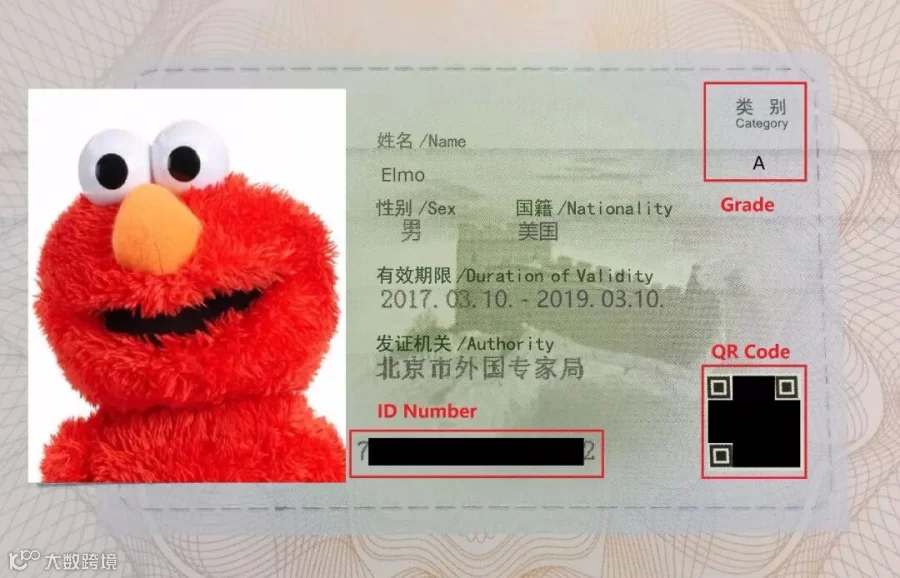
Whether or not it’s worth it for a little in the corner of your ID card is highly debatable.
Share to let your friends know!

Source| echinacities







HACOS,Business Services Solutions Master