
As we all know, there are different payment channels in different regions when doing foreign trade business. But are you truly clear about the common payment channel? What should you pay attention to when choosing these channels?

So, here is the introduction of common payments in foreign trade!
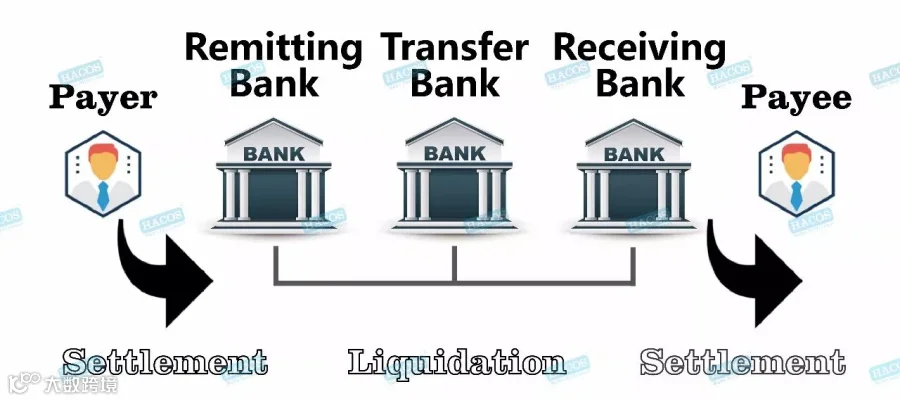
General process of
international payment
Common payment methods
at home and abroad
Modernized payment system of People's Bank of China. The system includes:
High Value Payment System
It deals with cross-bank or trans-regional payment business in real time electronically, and has no limitation for amount of money. But it only operates from 9 am to 5 pm.
Bulk Electronic Payment System
It specializes in handling inter-bank transfer in the same city, debit payment business in paper-base voucher in different places and small-scale credit payment business. The monetary limitation is below RMB50,000 for single business. The processing time is 7 x 24 hours.
If you submit the payment request in opening bank of Hong Kong, you can use:
RTGS
It can help liquidate the payment in real time but the handling charges are expensive which supports USD, HKD and CNY.
ACH
It only costs a little handling charges but it will take one or two workdays to complete which supports HKD and CNY.
If you own a foreign account, you need SWIFT:
SWIFT supports multinational currencies and is regarded as a general-purpose system. However, the charges are high and the efficiency is not stable.
Guide to choose a right way
For T/T, one party will undertake no risks while the other one will bear the greatest risks so it's only adopted for small orders or sample orders. For suppliers, naturally, 100 % by T/T advanced payment is the safest payment method.
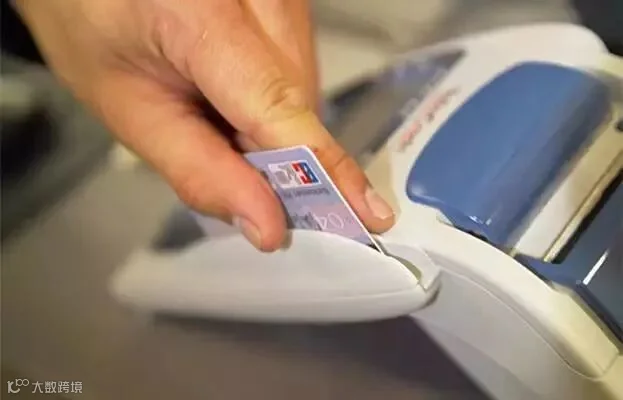
Actually, you can combine the payment methods.
The higher the deposit is, the lower risks suppliers will undertake.
Even though we confront with specific situation that customer abandons cargoes after paying the deposit, we can depreciate the price or resell to the other customers to decrease our risks.
Unlike L/C, its greatest risk is that customer may perform dishonor after discrepancies show, especially for the new customers. That's the reason why we need to ask for deposit T/T. It can make sure that we won't suffer great losses because customers have paid the deposit.
It's the most common payment method in practical foreign trade.
The main risk for this is that passive abandonment of goods caused by objective conditions such as insufficient cash flow, exchange rate depreciation of customers country's currency, delivery of goods without original B/L caused by the collusion between freight forwarders and inferior customers, risks that customers can pick up goods by virtue of duplicate B/L.
How to lower risks?
Above all, you need to pay close attention to international political and economic situation, and countries’ laws. Besides, the exporters can lower the risks in these two ways:
Possess the control right of cargoes so as to lower the risks.
*NOTE This method won't work if you meet customers that ask for telex release of bill of lading.
In consideration of turnover of capital and security, some customers will pay the balance when the goods are going to arrive. Still further, some customers reject to effect payment deliberately.
The delay of balance will do harm to exporters' turnover of capitals and may bring losses caused by fluctuation of exchange rate. So it's very necessary to specify the deadline of paying the balance in the contract.
Share to let your friends know!

For more shipping and logistics information, welcome to follow HACOSLogistics! Thanks for your support!
Source | 外贸连


HACOS,Business Services Solutions Master