According to the current domestic epidemic situation, some Chinese cities and regions has recently adjusted their entry and quarantine measures. Today we are going to tell you the updates on the measures in Guangdong, Hong Kong and Macao Let's check!
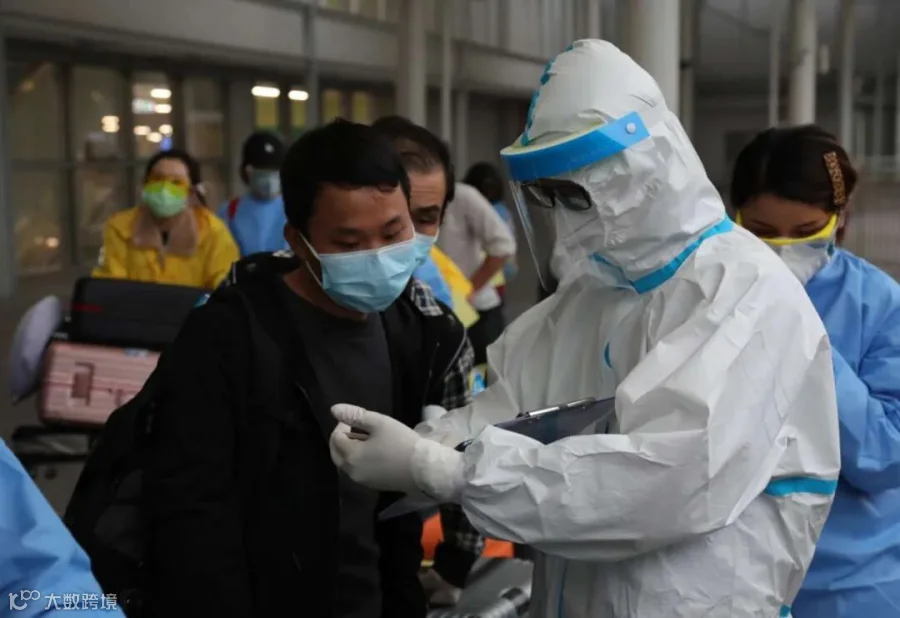
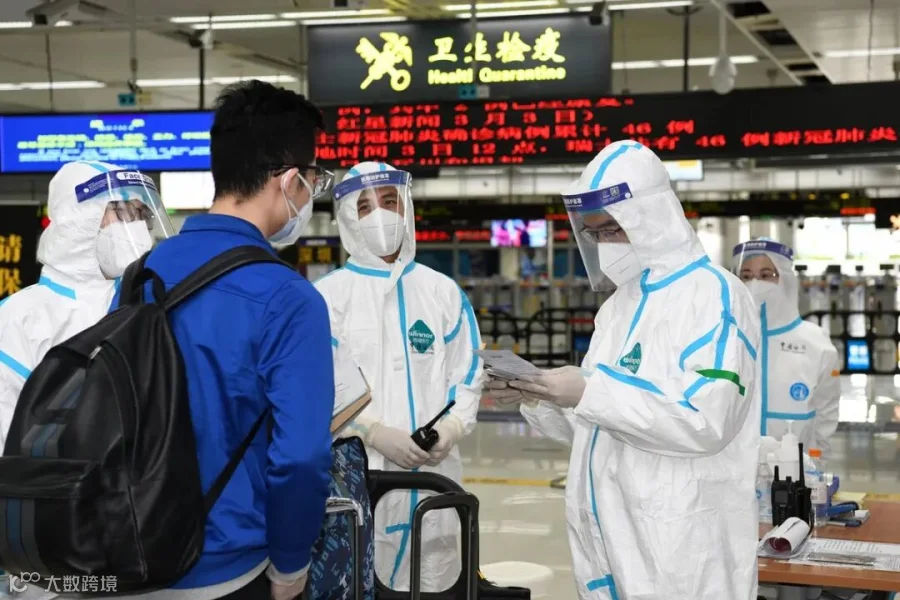
Starting from March 19, all inbound passengers in Guangzhou, both foreigners and Chinese residents, are required to receive coronavirus test when arriving at exit-entry ports.
Guangzhou has also divided passengers into several categories according to where they come from and introduced different quarantine measures for them.
No compulsory quarantine required for this group of arrivals with a body temperature below 37.3℃ and no symptoms of the infection.
A compulsory quarantine required for travelers with a red Suikang code or Yuekang code. (Check here to know how to get a Suikang code.)
A 14-day compulsory quarantine and two nucleic acid tests are required for arrivals with a red or yellow health code of Hubei province, or without claiming a health code in Hubei and Guangdong.
A concentrated quarantine and nucleic acid test are required for all inbound travelers.
Travelers from overseas, including Hong Kong, Macao and Taiwan, as well as those who transfer at the city's checkpoints, will be quarantined in designated venues for 14 days.
Passengers need to bear the quarantine expenses, including accommodation fees and meal fees by themselves.
Starting from April 28, all passengers entering the mainland China via Shenzhen checkpoints need to undergo a compulsory 14-day concentrated quarantine upon arrival.
According to the Office of Port of Entry and Exit of Shenzhen Municipal People's Government, no point-to-point transfer services will be offered to inbound passengers with a destination of other cities in Guangdong.
Meanwhile, the city also will not arrange shuttle buses to pick up those who head for Shenzhen but enter via other cities, including Guangzhou, Zhuhai and Jieyang.
Zhuhai has recently announced that from April 28, inbound passengers via the city's checkpoints need to undergo a 14-day quarantine upon the arrival.
However, specific groups of people can be exempted from the restriction, including:
People engaged in emergency services
Macanese students and teaching staff live or study in Zhuhai or Zhongshan
Employees working in the Zhuhai-Macao Cross-Border Industrial Zone
Drivers with license plates of both Guangdong and Macao
Citizens live in Zhuhai with a mainland residence permit but work or study in Macao
The elderly (aged 70 and above)
The juveniles (aged 14 and below)
Pregnant women
People with disabilities
Patients who need to visit a designated hospital
For those who go to other cities in Guangdong, no more point-to-point transfer services available. Also, as we said above, no more shuttle buses will be sent to Shenzhen and Guangzhou to pick up inbound arrivals with a destination of Zhuhai.
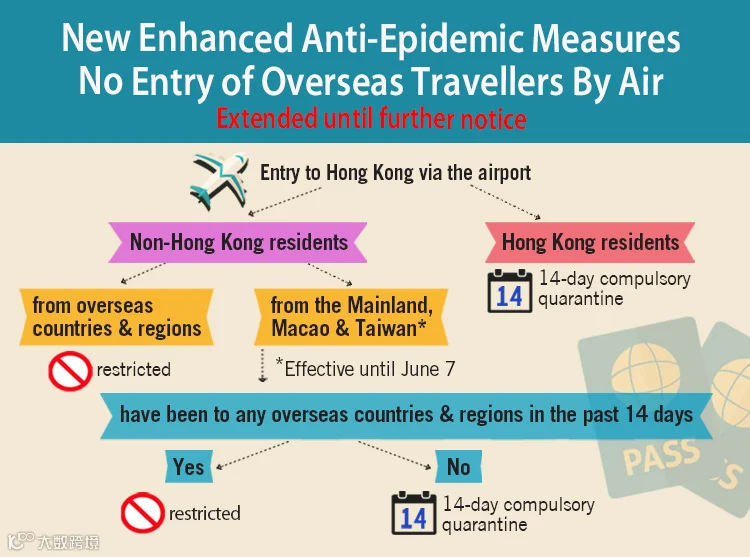
Hong Kong government has extended the compulsory quarantine measures to June 7, which was originally May 7.
HK has also broadened the exemption of person or category of persons from the quarantine measures. Passengers, including all persons arriving from the Mainland, Macao and Taiwan, fulfilling the following criteria will be exempted from compulsory quarantine:
-
Persons who need to enter HK in receiving or providing nursery, kingdergarten, primary or secondary education in HK or for the safe traveling of these persons for the abovementioned purpose, including cross-boundary students and related personnel and service providers.
-
Persons whose traveling is necessary for purposes relating to manufacturing operations, business activities or the provision of professional services in the interest of HK's economic devlopment.
△ Entry restrictions are still effective by now
Macao Customs announced on May 2 that two main border checkpoints will resume normal operating hours, effective from May 3. But the related prevention and control measures are still unchanged.
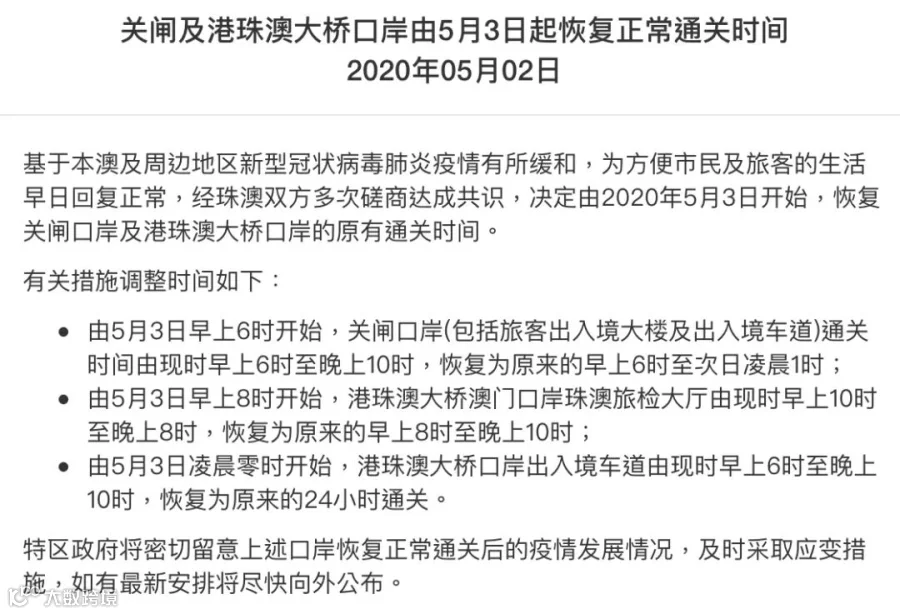
△ Notice from Macao Customs
The Macao's Barrier Gate checkpoint at the Zhuhai land border will operae between 6 a.m. and 1 a.m. daily. It had only operated between 8 a.m. and 10 p.m. since March in response to the epidemic.
The Macao-Zhuhai checkpoint on the Hong Kong-Zhuhai-Macao Bridge will resume 24-hour operation. It had operated between 6 a.m. and 10 p.m. before.

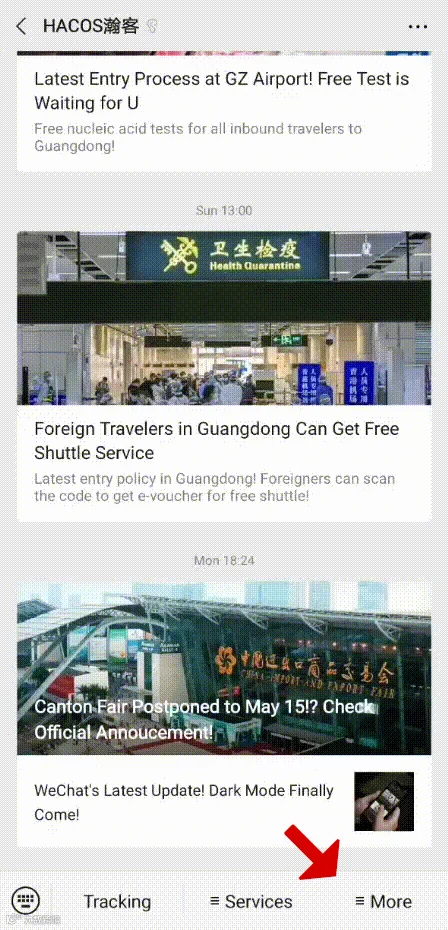
In order to help you reach the latest update on the global pandemic situation, HACOS has set a quick link on the menu of our WeChat page. Follow us, you can check it whenever you want!
Share to let your friends know!

SOURCE | SilkRoadPost / HK Gov / Macau News