

China will continue measures to promote the steady growth of foreign trade, and ensure cross-cyclical adjustments, as the State Council executive meeting chaired by Premier Li Keqiang decided on December 23. The meeting also decided on arrangements for the implementation of the Regional Comprehensive Economic Partnership (RCEP) following its entry into force.
source: www.gov.cn
This year, China's imports and exports have grown rapidly, which makes great contributions to economic stability and recovery. Meanwhile, foreign trade is faced with rising uncertainty, instability and imbalance.
To implement arrangements of the State Council, China will continue to expand opening-up, roll out measures to cope with difficulties and challenges, help enterprises solve problems, especially focusing on supporting smaller ones, and make efforts to secure business orders.
Stable foreign trade is significant to steady economic growth. Government measures must be taken to support the development of foreign trade.
01
Enhance greater policy support for
imports and exports.

China will implement measures to cut taxes and fees. Export tax rebates will be processed faster, and the average time needed for export tax rebates will be shortened to no more than six working days.
China will guide banks to innovate new products according to the needs of foreign trade enterprises, including insurance policy-based financing.
China will keep the RMB exchange rate basically stable. To enhance the ability of foreign trade enterprises to cope with exchange rate risks, banks will be encouraged to provide targeted forward foreign exchange settlement and sales services.

Comment
On the the RMB exchange rate, Zhou Shijian, a senior research from Tsinghua Center for Us-China Relation, pointed out, “Nowadays, the RMB exchange rate presents the rise situation and the continued RMB appreciation will have a great impact on export enterprises. On Jan 4, the RMB exchange rate against the US dollar ended at 6.54, while on December 22, it ended at 6.37, which meant that when exchanging foreign currency, enterprises would lose 0.17 yuan every time they earned one dollars. Therefore, to keep the RMB exchange rate basically stable is truly important. ”
China will improve terms for the underwriting and claim-settlement of export credit insurance. The measures will strengthen safeguards for micro, small and medium-sized enterprises (MSMEs) in foreign trade and help them against the risks of cancellation of orders before shipment.
China will deepen cooperation and joint development between the eastern region and the central, western and northeastern regions. Cross-regional relocation and transfer of processing trade will be supported. The policies will ensure commodity import.
02
Encourage the development of
new forms of foreign trade
such as cross-border e-commerce.

China will established more integrated pilot zones for cross-border e-commerce. The catalogue of retail imports via cross-border e-commerce will be updated and optimized, and the categories of imports will be expanded.
Off-shore trade center cities and regions will also be nurtured. The policies will scale up support for the development and use of overseas warehouses in a market-oriented approach.
03
Strengthen supporting services for enterprises and make efforts to solve their problems.

China will help enterprises to solve problems in ensuring products for domestic sales are produced on the same production lines, meet the same standards, and be of the same quality as products for export. The policies will also help enterprises expand trade channels and improve supply chains.
Good News!
In 2022, interests on the deferred tax payments will be temporarily exempted for the domestic sales of processing trade enterprises.
04
Ease the pressure in international logistics.

China will encourage foreign trade enterprises and shipping companies to sign long-term contracts.
Illegal behaviors such as arbitrary charges and freight gouging will be cracked down in accordance with laws and regulations.
Financial institutions will be supported in providing logistics-related inclusive finance to eligible micro and small foreign trade enterprises.
05
Support local governments in
establishing sound system and
undertaking trade adjustment assistance.
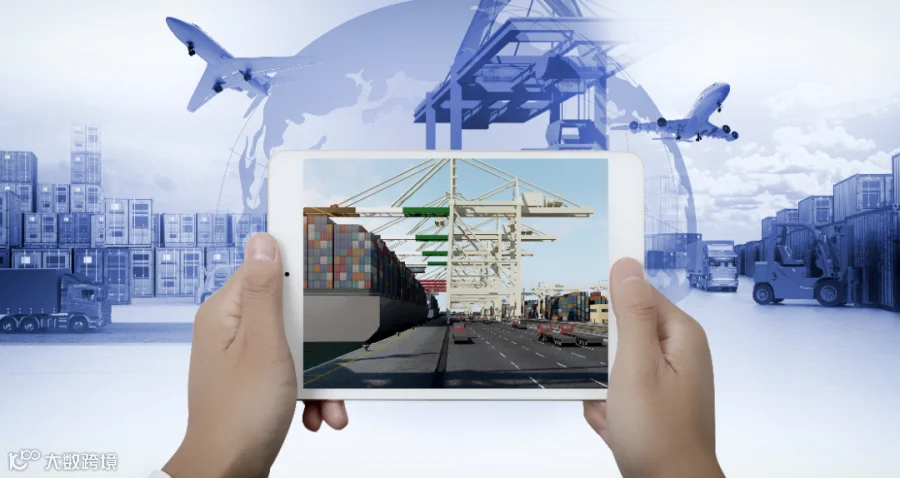
China will help local governments develop and improve systems based on actual conditions, so as to keep stability in industrial and supply chains.
The meeting also noted that the RCEP will take effect and get implemented on Jan 1, 2022.
source: www.gov.cn
China will support enterprises in seizing the opportunity of RCEP implementation, so that enterprises will boost their competitiveness on international markets, and elevate the level of trade and investment, which will also promote upgrading by domestic industries.

01
Enterprises will be encouraged to make good use of tax cuts in participating countries and the regional cumulation provisions on the rules of origin, to export more advantageous products and import more competitive ones.
According to opening-up commitments and rules, China will strengthen cooperation on high-end, green industrial chains and manufacturing projects in the region, and raise the level of openness in the services sector and investment.

02
China will improve the business environment in line with advanced international standards, and will actively attract funding and talents from the region. Greater efforts will be made to participate in the formulation and alignment of international standards.

03
China will build public service platforms and expert teams for implementing the free trade agreement. In order to enhance the ability to understand and apply the rules of the agreement, further training for MSMEs will be strengthened through government procurement of services. To provide convenience for MSMEs, specialized services such as custom clearance and foreign trade documents will also be developed.

04
China will continue to push for the entry into force and implementation of the RCEP in more participating countries, and advance the institutionalization of the agreement. Therefore, a main platform for regional economic and trade cooperation will be jointly built.
The WTO will be supported to play its due role and uphold free trade. China will push forward negotiations on other multilateral and bilateral free trade agreements and promote opening-up at a high level.

HACOS always pays attention to various policies and will update the information for our customers.
If you want more information, please contact our consultants or leave your message.