

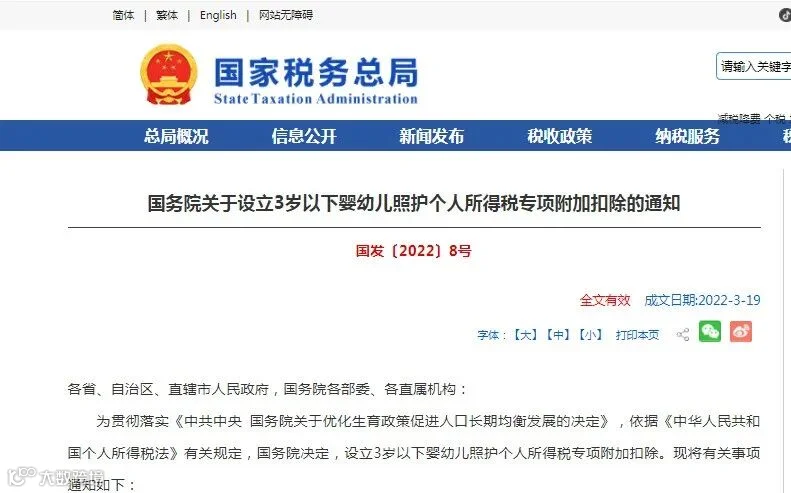
前段时间,国家税务总局发布了一则关于设立3岁以下婴幼儿照护个人所得税专项附加扣除的通知,为不少家庭减轻纳税负担。
Recently, the State Administration of Taxation issued a notice on the tax-relief policies for parents of children under the age of 3, reducing the tax burden for many families. Today we are going to talk about this policy.
Can non-biological parents also enjoy the tax-relief policy for the care of children under 3 years old?
可以,但其必须是担任3岁以下婴幼儿监护人的人员。
Yes, but they must be the guardians of the children under the age of 3.
Is this policy also applicable to foreigners?
凡是在中国依法缴纳个人所得税的纳税人皆可享受此项政策,包括中国公民以及外籍人士。
Yes. All taxpayers who pay individual income tax in China according to law may enjoy this policy, including Chinese citizens and foreigners.
Who are included in infants and children?
婴幼儿子女包括婚生子女、非婚生子女、养子女、继子女等受到本人监护的3岁以下婴幼儿。
Infants and young children include children born in wedlock or out of wedlock, adopted children, stepchildren and other children under the age of 3 who are under a guardianship.
Can parents of children born abroad be entitled to a deduction?
可以。无论婴幼儿在国内还是国外出生,其父母都可以享受扣除。
Yes. Every parent of children under 3 can enjoy the deduction regardless of whether the babies were born in the country or abroad.
5、享受3岁以下婴幼儿照护专项附加扣除的起算时间是什么?
What is the starting time for enjoying the deduction?
从婴幼儿出生的当月至满3周岁的前一个月,纳税人可以享受这项专项附加扣除。
Taxpayers can enjoy deduction from the month the infant is born to the month before the age of 3.
比如2022年5月出生的婴幼儿,一直到2025年4月,其父母都可以按规定享受此项专项附加扣除政策。
For example, for infants born in May 2022, their parents can enjoy this special additional deduction policy as required until April 2025.
6、纳税人如何自2022年1月1日起享受该政策?
How can taxpayers enjoy the benefits from January 1, 2022?
《通知》明确该项政策自2022年1月1日起实施。按照个人所得税法相关规定,专项附加扣除可以在申报当月扣除,也可以在以后月份发工资时补充扣除;平时发工资没有扣除的,或者没有任职受雇单位的,也可以在次年办理汇算清缴时补充扣除。
The notice clarifies that this policy will be implemented from January 1, 2022. The deduction can be conducted in the month when the declaration is made, or it can be supplemented when the salary is paid in the following months; if there is no deduction from the salary or no employer, the deduction may be conducted in the following year when the final settlement is completed.
例如,纳税人的子女在2021年10月出生,自2022年1月1日起纳税人即符合专项附加扣除享受条件。纳税人4月份将婴幼儿信息提供给任职受雇单位,单位在发放4月份工资时即可为纳税人申报1至4月份累计4000元的专项附加扣除。
For example, if the taxpayer's child is born in October 2021, he/she will be eligible for deductions from January 1, 2022. In April, the taxpayer report to the employed unit, and the unit can declare a deduction of 4,000 yuan for the taxpayer from January to April when pay the salary for April.
7、纳税人暂未取得婴幼儿出生医学证明等资料的,如何填报专项附加扣除?
If the taxpayer has not obtained the medical certificate of birth of the child, how to declare the deduction?
纳税人暂未取得婴幼儿的出生医学证明和居民身份证号,可选择“其他个人证件”,并在备注中如实填写相关情况,不影响纳税人享受扣除。后续纳税人取得婴幼儿的出生医学证明或者居民身份证号的,及时补充更新即可。
If the taxpayer has not obtained the birth medical certificate and resident ID number of the infant, he can choose "其他个人证件" (other personal certificate) and demonstrate truthfully in the remarks, and shall supplement and update in time after obtaining relevant certificates.
如果婴幼儿名下是中国护照、外国护照、港澳居民来往内地通行证、台湾居民来往大陆通行证等身份证件信息,也可以作为填报证件。
Identity documents such as Chinese passports, foreign passports, Mainland Travel Permits for Hong Kong and Macao residents, and Mainland Travel Permits for Taiwan residents held by the infants can also be accepted as valid documents.