


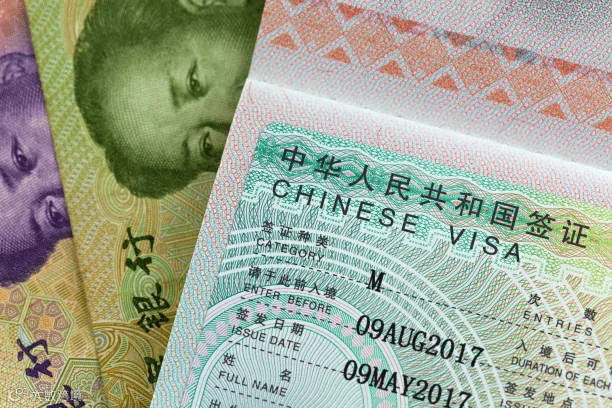
First of all, we need to clearly distinguish the essential differences between the M visa (business visa) and the Z visa (work visa).
The M visa is a short-term visa issued to individuals coming to China for commercial trade activities, with a stay period usually not exceeding 180 days. It is applicable to attending business meetings, exhibitions, negotiating cooperation and other economic activities.
The Z visa is specifically issued to individuals coming to China for work. It allows the holder to reside and work in China for a long term. Within 30 days of entry, the visa needs to be exchanged for a residence permit, which usually has a longer validity period.
The most crucial point is that working in China with an M visa is considered illegal employment. To work legally in China, one must have both a work permit and a work-related residence permit.


The good news is that the conversion of M visas to Z visas is feasible under the policy, but it requires meeting specific conditions.
Conditions for Direct
Conversion within the Country
According to the latest policy, if an individual holding an M visa finds a job within China, they may be able to apply for a work visa directly without leaving the country. This policy applies to various short-term visas, including tourist visas (L type), business visas (M type), and visit visas (F type), among others.
Whether one can directly transfer their visa depends mainly on two factors:
Firstly, the nationality of the applicant: Some cities stipulate that applicants of certain nationalities must enter with a Z visa and cannot directly obtain a work residence permit;
Secondly, the policies of the city where the employer is located: In some cities, regardless of the nationality of the applicant, they must enter with a Z visa.
The specific process of
converting an M visa to a work visa
If the conditions for domestic visa conversion are met, the following three steps are usually required:
Step 1: Apply for the "Foreigner Work Permit Notice"
The employing company submits the application materials through the "Foreigner Entry and Stay Management Service System", including: the applicant's passport, educational qualification certificate, no criminal record certificate (requiring notarization and certification), labor contract, enterprise qualification certificate, and domestic residence proof (such as a rental contract).
Step 2: Apply for a work-related residence permit domestically
After obtaining the "Work Permit Notice", go to the local immigration bureau to apply for the residence permit conversion. You need to submit: a completed "Foreigner Visa and Document Application Form", the original passport, the "Work Permit Notice", a valid health examination report within 6 months, and a recent 2-inch photo.
Step 3: Download the electronic work certificate and collect the physical residence permit
After approval, you can download the "Electronic Social Security Card APP" to apply for the electronic work certificate and collect the physical residence permit card (attached to the visa page of the passport) within 3-5 working days.


Another common question is: Can one obtain work qualifications by registering a company in China?
The answer is: Registering a company does not automatically grant you work qualifications. As the legal person or shareholder of the company, if you want to manage it yourself and work in China, you also need to apply for a work permit and a work residence permit for yourself, following the same process as above.
This means that even if you have invested in starting a company, you cannot work directly with an M visa or based on the company registration documents. You must apply for a legal work document.


Choosing to transfer visa domestically has the following significant advantages:
Time and effort savings: No need to travel in and out of the country, avoiding additional costs such as international flights and quarantine;
Seamless connection: From job hunting to onboarding, the entire process is completed within China, without affecting the work progress;
Policy support: Many regions in China (such as Beijing, Shanghai, Guangzhou, Shenzhen, Chengdu, Hangzhou) have optimized the domestic visa transfer process, improving efficiency.
HACOS always strive to provide our clients with more high-quality, efficient and considerate services, covering China visas, tax-planning, incorporation, financial consulting, global shipping, intellectual property, foreign trade services, legal consultation, etc.