[1] Sato T, Vries RG, Snippert HJ, et al. Single Lgr5 stem cells build crypt-villus structures in vitro without a mesenchymal niche. Nature. 2009;459(7244):262-265. doi:10.1038/nature07935
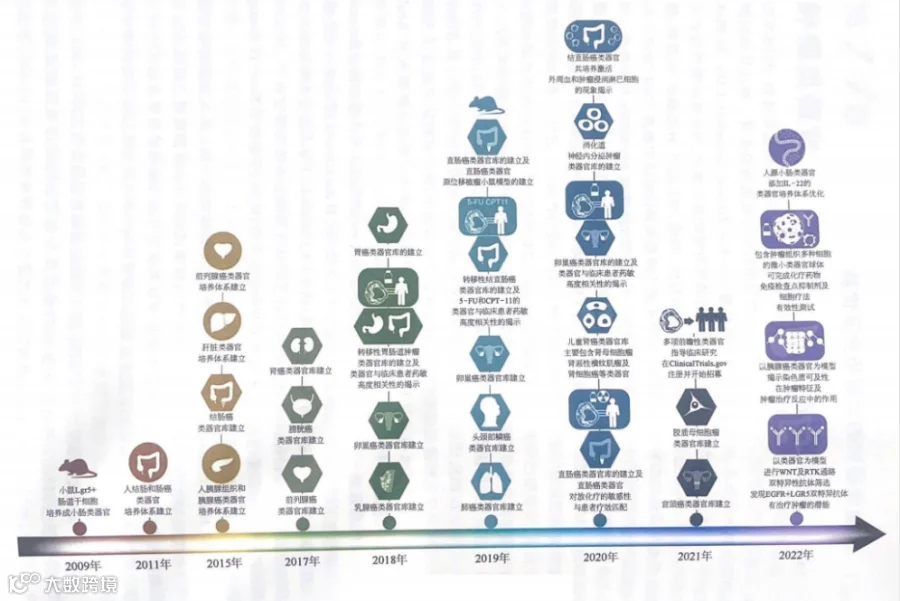
[2] Sato T, Stange DE, Ferrante M, et al. Long-term expansion of epithelial organoids from human colon, adenoma, adenocarcinoma, and Barrett's epithelium. Gastroenterology. 2011;141(5):1762-1772. doi:10.1053/j.gastro.2011.07.050
[3] van de Wetering M, Francies HE, Francis JM, et al. Prospective derivation of a living organoid biobank of colorectal cancer patients. Cell. 2015;161(4):933-945. doi:10.1016/j.cell.2015.03.053
[4] Robinson D, Van Allen EM, Wu YM, et al. Integrative clinical genomics of advanced prostate cancer [published correction appears in Cell. 2015 Jul 16;162(2):454]. Cell. 2015;161(5):1215-1228. doi:10.1016/j.cell.2015.05.001
[5] Pauli C, Moch H, Rubin MA. Etablierung einer Living Biobank : Bessere Steuerung der Präzisionsonkologie durch In-vitro- und In-vivo-Krebsmodelle [Establishment of a living biobank : Improved guidance of precision cancer care with in vitro and in vivo cancer models]. Pathologe. 2017;38(Suppl 2):160-168. doi:10.1007/s00292-017-0346-1
[6] Sachs N, de Ligt J, Kopper O, et al. A Living Biobank of Breast Cancer Organoids Captures Disease Heterogeneity. Cell. 2018;172(1-2):373-386.e10. doi:10.1016/j.cell.2017.11.010
[7] Hill SJ, Decker B, Roberts EA, et al. Prediction of DNA Repair Inhibitor Response in Short-Term Patient-Derived Ovarian Cancer Organoids. Cancer Discov. 2018;8(11):1404-1421. doi:10.1158/2159-8290.CD-18-0474
[8] Vlachogiannis G, Hedayat S, Vatsiou A, et al. Patient-derived organoids model treatment response of metastatic gastrointestinal cancers. Science. 2018;359(6378):920-926. doi:10.1126/science.aao2774
[9] Yan HHN, Siu HC, Law S, et al. A Comprehensive Human Gastric Cancer Organoid Biobank Captures Tumor Subtype Heterogeneity and Enables Therapeutic Screening. Cell Stem Cell. 2018;23(6):882-897.e11. doi:10.1016/j.stem.2018.09.016
[10] Sachs N, Papaspyropoulos A, Zomer-van Ommen DD, et al. Long-term expanding human airway organoids for disease modeling. EMBO J. 2019;38(4):e100300. doi:10.15252/embj.2018100300
[11] Driehuis E, Kolders S, Spelier S, et al. Oral Mucosal Organoids as a Potential Platform for Personalized Cancer Therapy [published correction appears in Cancer Discov. 2020 Mar;10(3):476. doi: 10.1158/2159-8290.CD-20-0129.]. Cancer Discov. 2019;9(7):852-871. doi:10.1158/2159-8290.CD-18-1522
[12] Kopper O, de Witte CJ, Lõhmussaar K, et al. An organoid platform for ovarian cancer captures intra- and interpatient heterogeneity. Nat Med. 2019;25(5):838-849. doi:10.1038/s41591-019-0422-6
[13] Ooft SN, Weeber F, Dijkstra KK, et al. Patient-derived organoids can predict response to chemotherapy in metastatic colorectal cancer patients. Sci Transl Med. 2019;11(513):eaay2574. doi:10.1126/scitranslmed.aay2574
[14] Ganesh K, Wu C, O'Rourke KP, et al. A rectal cancer organoid platform to study individual responses to chemoradiation. Nat Med. 2019;25(10):1607-1614. doi:10.1038/s41591-019-0584-2
[15] Yao Y, Xu X, Yang L, et al. Patient-Derived Organoids Predict Chemoradiation Responses of Locally Advanced Rectal Cancer. Cell Stem Cell. 2020;26(1):17-26.e6. doi:10.1016/j.stem.2019.10.010
[16] Calandrini C, Schutgens F, Oka R, et al. An organoid biobank for childhood kidney cancers that captures disease and tissue heterogeneity. Nat Commun. 2020;11(1):1310. Published 2020 Mar 11. doi:10.1038/s41467-020-15155-6
[17] de Witte CJ, Espejo Valle-Inclan J, Hami N, et al. Patient-Derived Ovarian Cancer Organoids Mimic Clinical Response and Exhibit Heterogeneous Inter- and Intrapatient Drug Responses. Cell Rep. 2020;31(11):107762. doi:10.1016/j.celrep.2020.107762
[18] Kawasaki K, Toshimitsu K, Matano M, et al. An Organoid Biobank of Neuroendocrine Neoplasms Enables Genotype-Phenotype Mapping. Cell. 2020;183(5):1420-1435.e21. doi:10.1016/j.cell.2020.10.023
[19] Chalabi M, Fanchi LF, Dijkstra KK, et al. Neoadjuvant immunotherapy leads to pathological responses in MMR-proficient and MMR-deficient early-stage colon cancers. Nat Med. 2020;26(4):566-576. doi:10.1038/s41591-020-0805-8
[20] Lõhmussaar K, Oka R, Espejo Valle-Inclan J, et al. Patient-derived organoids model cervical tissue dynamics and viral oncogenesis in cervical cancer. Cell Stem Cell. 2021;28(8):1380-1396.e6. doi:10.1016/j.stem.2021.03.012
[21] Jacob F, Salinas RD, Zhang DY, et al. A Patient-Derived Glioblastoma Organoid Model and Biobank Recapitulates Inter- and Intra-tumoral Heterogeneity. Cell. 2020;180(1):188-204.e22. doi:10.1016/j.cell.2019.11.036
[22] Herpers B, Eppink B, James MI, et al. Functional patient-derived organoid screenings identify MCLA-158 as a therapeutic EGFR × LGR5 bispecific antibody with efficacy in epithelial tumors. Nat Cancer. 2022;3(4):418-436. doi:10.1038/s43018-022-00359-0
[23] Shi X, Li Y, Yuan Q, et al. Integrated profiling of human pancreatic cancer organoids reveals chromatin accessibility features associated with drug sensitivity. Nat Commun. 2022;13(1):2169. Published 2022 Apr 21. doi:10.1038/s41467-022-29857-6
[24] Ding S, Hsu C, Wang Z, et al. Patient-derived micro-organospheres enable clinical precision oncology. Cell Stem Cell. 2022;29(6):905-917.e6. doi:10.1016/j.stem.2022.04.006
[25] He GW, Lin L, DeMartino J, et al. Optimized human intestinal organoid model reveals interleukin-22-dependency of paneth cell formation. Cell Stem Cell. 2022;29(12):1718-1720. doi:10.1016/j.stem.2022.11.001
[26] 陈晔光.类器官及其应用[M].上海科学技术出版社,2023.