
宜
家在上周推出新广告,一把火点燃全网。哪怕如今已撤下火源(视频),搬出灭火器(道歉声明),也难以浇灭这场大火。宜家的这把火有何威力,竟能一下引爆舆论?请看本期Quriosity。

广告如何”惹火“?宜家如何”灭火"?

Recently, Ikea has apologized and pulled a controversial television advertisement in China which some said was sexist.
近日,宜家撤回一则在中国地区播出的电视广告并发表致歉声明。有网友认为该广告涉嫌性别歧视。
The commercial by the Swedish furniture chain shows a mother scolding her daughter for not "bringing home a boyfriend" to meet her parents. It attracted accusations of insensitivity towards single women.
在该瑞典家具厂商发布的广告中,一位母亲数落自己的女儿没有“带男朋友回家见父母”。该广告因为没有照顾到单身女性的感受引发广泛谴责。
Unmarried females, colloquially known as
"leftover women" in China, have long faced pressure to wed in a society that prioritises marriage.
在婚姻至上的中国社会中,未婚女性(在中国俗称“剩女”)长期以来在婚嫁方面备感压力。
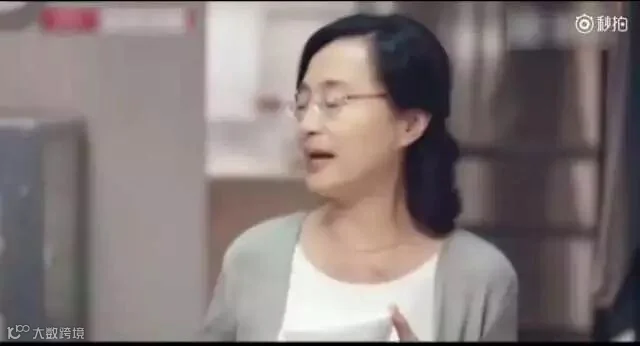
Though Ikea pulled the 25-second advertisement after the uproar, copies can still be viewed online.
尽管宜家在舆论风波兴起后紧急撤回了这则时长25秒的广告,网络上仍然能观看它的复制版。
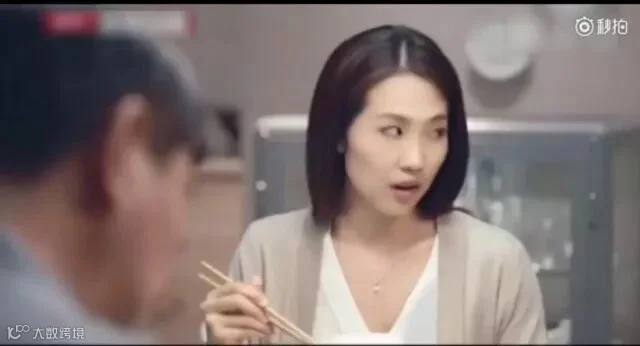
It opens with a tense family dinner scene, where a young woman turns to her mother and says apprehensively, "Mum..."
视频的开场是一个紧张的家庭晚餐场景,一位年轻女性看着她母亲,惴惴不安地说“妈……”
Her mother plonks down her chopsticks and retorts: "If you don't bring home a boyfriend next time, then don't call me Mum!"
母亲把筷子一摔,打断道:“如果你下次还不能带个男朋友回家,你就别叫我妈!”
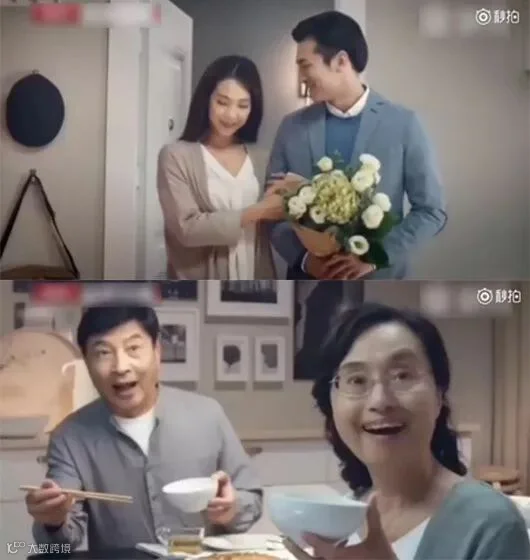
A well-dressed young man then appears at the door with a bouquet. The daughter introduces him as her boyfriend to her beaming parents, who whip out Ikea tableware and home decorations.
紧接着,一位仪表堂堂的年轻男子,手捧花束出现在家门口。女儿把男朋友介绍给父母,夫妻俩立马乐呵呵地拿出宜家的餐具、摆上宜家的饰品。
It ends with the parents happily heaping food into the boyfriend's rice bowl at the dinner table, while their bewildered daughter looks on.
广告的结尾定格在这样一幅画面:餐桌上,这对父母开心地往男生碗里夹菜。而他们的女儿则坐在旁边,一脸困惑。

广告三观不正?

The ad, became an immediate talking point online and in the mainstream media.
这则广告很快就在网络与主流媒体上引发广泛热议。
Many online said it was sexist. "This discriminates against singles and single women. No boyfriend, so your own family members look down on you, what kind of values does this transmit?" said one Weibo user.
许多网友认为这是性别歧视。一位微博用户评论道:“这种歧视是在针对单身狗。没有男朋友,你的家人就看低你,这到底在传递什么样的价值观?”
"Even if this sort of situation does happen in a lot of families, it's not suitable to make advertisements about it, because it's wrong," said another Weibo user.
另一位微博用户说:““虽说这种状况在很多家庭普遍发生,但这毕竟是不对的,所以拍这样的广告真的很不合适。”
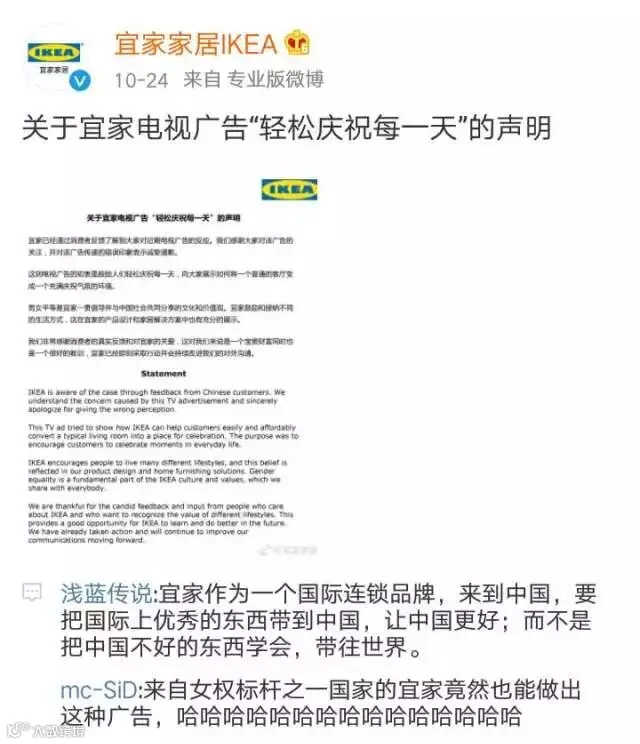
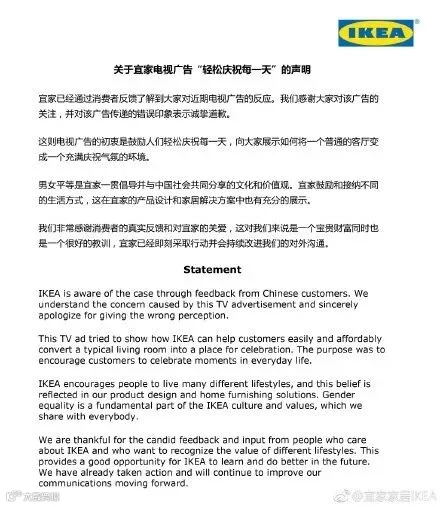
Ikea posted an apology in Chinese and English on its Weibo account on Tuesday, saying it was sorry for "giving the wrong perception".
宜家于周二在官方微博账号上发表了中英双语的道歉声明,为“传递错误观念”而道歉。
"This TV ad tried to show how Ikea can help customers easily and affordably convert a typical living room into a place for celebration. The purpose was to encourage customers to celebrate moments in everyday life," it said.
宜家声称:“这则电视广告是想展示宜家能帮助顾客轻松地将一个普通客厅变身为一个庆贺场所。初衷是鼓励人们欢庆日常生活的点滴时刻。”
It added that the company "encourages people to live many different lifestyles", and that "gender equality is a fundamental part of the Ikea culture and values".
宜家还补充说,他们“鼓励和接纳不同的生活方式”,并且“男女平等是宜家一贯倡导的文化和价值观”。
Its reply however did little to mollify netizens, some of whom found it ironic that the advertisement came from a Swedish brand.
然而,一家店道歉声明并没有平息网民的怒气,有些网民认为这件事很讽刺,因为这则广告出自于一个瑞典品牌。
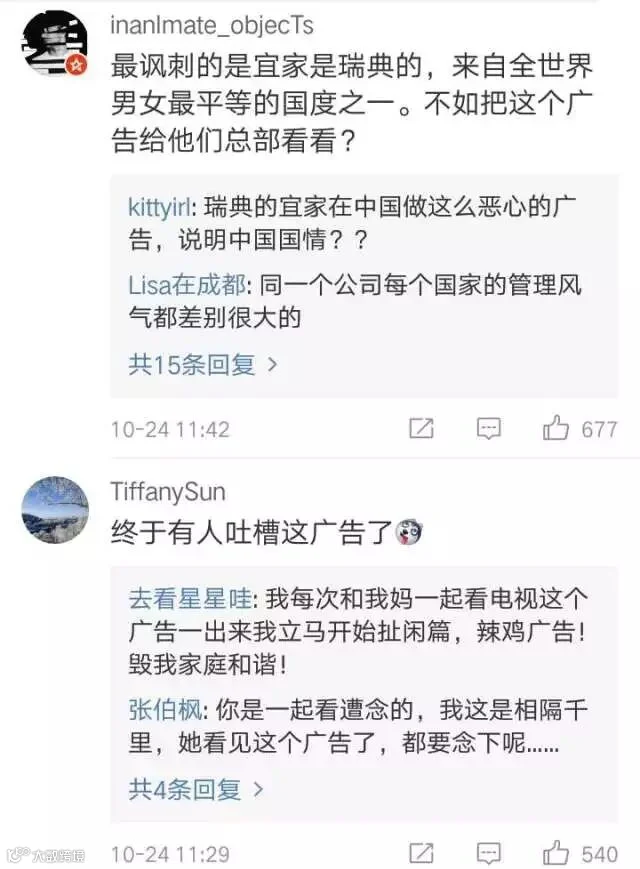
"It comes from a country that values women's rights, yet Ikea can actually come up with such an advertisement," said one commenter.
一位网友评论道:“宜家来自于一个重视女权的国家,然而它却想出了这样一则广告。”
Another said: "As an international brand Ikea should bring us the best things from the world and benefit China. It shouldn't be learning bad things from China and spreading them to the world."
另一位网友评论道:“作为一个国际品牌,宜家应当带给我们世界上最好的东西并惠及中国,而不是学习中国不好的东西,再把它们传递给世界。”
The topic of unmarried women has become more sensitive in recent years, as more Chinese women push back against the traditional notion that they must marry and have children at a young age.
近年来,越来越多的中国女性开始反对女人应该趁早结婚生子的传统观念,关于未婚女性的话题因此变得愈加敏感。
The ruling Chinese Communist Party has urged women to marry early - and a few years ago a government website featured articles about "leftover women" - defined as unmarried females above the age of 27 - until it received several complaints.
中国共产党作为执政党一直呼吁女性早婚,几年前政府网站发表了关于“剩女”——即27岁以上的未婚女性的专题文章,此事遭到一通埋怨。
Last year a Chinese advertisement by the Japanese skincare brand SK-II addressed the issue of "leftover women" in a campaign to end the stigma, which was received positively in China.
去年,日本护肤品牌SK-II在反歧视运动中拍的一支关于“剩女”的广告在中国很受欢迎。
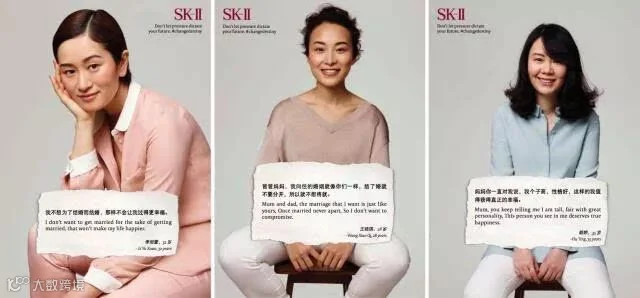
图片来源:网络与微博
文字来源:BBC