The blind women developing tech for the good of others
盲女科学家潜心研究AI科技 致力赋能弱势群体
全文2800字 建议阅读时间8分钟
Brief introduction
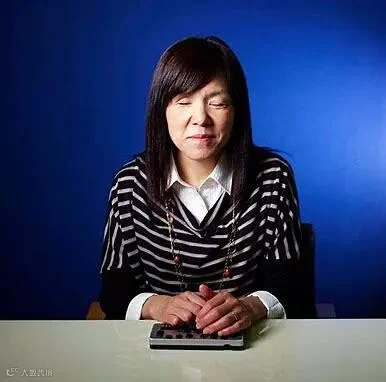
An accident in a swimming pool left Chieko Asakawa blind at the age of 14. For the past three decades she's worked to create technology - now with a big focus on artificial intelligence (AI) - to transform life for the visually impaired.
14岁的时候,Chieko Asakawa因为在游泳池发生了意外而失去了视力。过去的30多年里,她一直致力于用科技改变视障人士的生活。现在她的研究重点是人工智能技术。
"When I started out there was no assistive technology," Japanese-born Dr Asakawa says,"I couldn't read any information by myself. I couldn't go anywhere by myself."
出生于日本的Asakawa博士说:“我开始研究的时候还有没有视障辅助技术。那时候我不能独自阅读任何资料,也不能独自行动。”
Those "painful experiences" set her on a path of learning that began with a computer science course for blind people, and a job at IBM soon followed. She started her pioneering work on accessibility at the firm, while also earning her doctorate.
过去那些“痛苦的经历”让她开始学习。最开始她上了一门专门为盲人开设的计算机课,随后她在IBM获得了一份工作。她开始在公司进行无障碍环境的开创性工作,同时还获得了博士学位。
Dr Asakawa is behind early digital Braille innovations and created the world's first practical web-to-speech browser. Those browsers are commonplace these days, but 20 years ago, she gave blind internet users in Japan access to more information than they'd ever had before.
Asakawa博士参与了早期数字盲文创新工作,并创造了世界上第一个实用的网络语音浏览器。如今这些浏览器很常见,但20年前,她让日本盲人网民接触到了前所未有的海量信息。
Now she and other technologists are looking to use AI to create tools for visually impaired people.
现在她和其他技术人员正在尝试用AI技术为视障人士开发辅助工具。
Micro mapping
微导航
For example, Dr Asakawa has developed NavCog, a voice-controlled smartphone app that helps blind people navigate complicated indoor locations.
比如,Asakawa博士曾开发一款名为NavCog的声控手机软件。该软件可以为盲人提供复杂室内场所的导航。
Low-energy Bluetooth beacons are installed roughly every 10m (33ft) to create an indoor map. Sampling data is collected from those beacons to build "fingerprints" of a specific location.
这种导航需要每隔大约10米(33英尺)安装一个低能量蓝牙信标,以创建室内地图。之后再从那些信标收集采样数据,用以构建特定位置的“指纹”。
"We detect user position by comparing the users' current fingerprint to the server's fingerprint model," she says.
她说:“我们通过将用户的当前指纹与服务器的指纹模型进行比较来检测用户位置。”
Collecting large amounts of data creates a more detailed map than is available in an application like Google Maps, which doesn't work for indoor locations and cannot provide the level of detail blind and visually impaired people need, she says.
收集大量的数据可以构建比谷歌地图等应用程序更为详细的地图。像谷歌地图那类软件不能在室内使用,其详细程度也不能满足盲人或者视障人士的需要。
"It can be very helpful, but it cannot navigate us exactly," says Dr Asakawa, who's now an IBM Fellow, a prestigious group that has produced five Nobel prize winners.
“它(谷歌地图)非常有用,但无法完全为我们导航,”Asakawa博士说,她现在是一名IBM研究员,她所在的团队颇具声望,曾产生五位诺贝尔奖获得者。
NavCog is currently in a pilot stage, available in several sites in the US and one in Tokyo, and IBM says it is close to making the app available to the public.
'It gave me more control'
“这让我更有掌控感”
Pittsburgh residents Christine Hunsinger, 70, and her husband Douglas Hunsinger, 65, both blind, trialled NavCog at a hotel in their city during a conference for blind people.
在一场为盲人举行的集会期间,匹兹堡70岁的居民Christine Hunsinger和她65岁的丈夫Douglas Hunsinger首次尝试在宾馆里使用NavCog。
"I felt more like I was in control of my own situation," says Mrs Hunsinger, now retired after 40 years as a government bureaucrat.
“我觉得现在能更好地掌控自己的位置,”Christine说。她曾当了40年的政府官员,现已退休。
She uses other apps to help her get around, and says while she needed to use her white cane alongside NavCog, it did give her more freedom to move around in unfamiliar areas.
她也尝试用其他的APP来摸清地形,但她表示,在NavCog的帮助下,用自己的白色小拐杖在不熟悉的地方行走时,她觉得更加自如。
Mr Hunsinger agrees, saying the app "took all the guesswork out" of finding places indoors.
Hunsinger先生深表赞同,说这款APP“避免了所有”对室内地形的“胡乱猜测”。
"It was really liberating to travel independently on my own."
“不需要别人的帮助,能自己行走,我感到很自由。”
A lightweight 'suitcase robot'
轻型“手提箱机器人”
Dr Asakawa's next big challenge is the "AI suitcase" - a lightweight navigational robot.
Asakawa博士的另一个大胆尝试就是“AI手提箱”——一个轻型的导航机器人。
It steers a blind person through the complex terrain of an airport, providing directions as well as useful information on flight delays and gate changes, for example.
它能引导盲人在机场复杂的地形里自由穿梭,同时也能提供指南和重要的通知,例如航班的延误,登机口的改动。
The suitcase has a motor embedded so it can move autonomously, an image-recognition camera to detect surroundings, and Lidar - Light Detection And Ranging - for measuring distances to objects.
这款手提箱自带发动机,可以自动地移动;它还有一个可识别图像的摄像头,用以实时监测周围环境;它配有光雷达,可以检测与某物体之间的距离。
When stairs need to be climbed, the suitcase tells the user to pick it up.
需要爬楼梯的时候,手提箱会提示盲人,将它拎起来。
"If we work together with the robot it could be lighter, smaller and lower cost," Dr Asakawa says.
“如果我们继续改进这个机器人,它可以变得更轻,更小,更便宜。”Asakawa博士说。
The current prototype is "pretty heavy", she admits. IBM is pushing to make the next version lighter and hopes it will ultimately be able to contain at least a laptop computer. It aims to pilot the project in Tokyo in 2020.
她说,现在的原型是“非常重”的。IBM正推进第二代手提箱机器人的研发,期望将它变得更轻,要能装得下至少一台膝上型电脑。该手提箱预计在2020年于东京投入试用。
"I want to really enjoy travelling alone. That's why I want to focus on the AI suitcase even if it is going to take a long time."
“我真的很想享受一个人的旅行。所以即使开发AI行李箱需要很长时间,我依然愿意坚持做下去。”Asakawa道。
IBM showed me a video of the prototype, but as it's not ready for release yet the firm was reluctant to release images at this stage.
IBM给我播放了一段关于原型机器人的视频。但是因为它还尚未公开发行,公司还不想在现阶段公布它的形象。
AI for 'social good'
为社会谋福的AI
Despite its ambitions, IBM lags behind Microsoft and Google in what it currently offers the visually impaired.
虽然满怀抱负想为视力障碍者提供服务,但在这方面IBM仍落后于微软和谷歌。
Microsoft has committed $115m (£90m) to its AI for Good programme and $25m to its AI for accessibility initiative. For example, Seeing AI - a talking camera app - is a central part of its accessibility work.
微软宣称已经为其AI for Good项目和自主获知AI项目分别投入了1.15亿美金和2千5百万美金。获知项目中的核心部分是Seeing AI,一个提供智能语音镜头功能的应用。
(译注:用户使用seeing AI APP 用镜头指向某人,手机就会描述出这是一个什么样的人;对产品扫描,手机也会描述产品特征。)
And later this year Google reportedly plans to launch its Lookout app, initially for the Pixel, that will narrate and guide visually impaired people around specific objects.
据报道,今年谷歌计划发行“Lookout”应用程序,它能在具体场景下为视障者做讲解和引导。这款程序将最先应用在Pixel上。
"People with disabilities have been overlooked when it comes to technology development as a whole," says Nick McQuire, head of enterprise and AI research at CCS Insight.
CCS Insight 企业与AI研究主管Nick McQuire说:“在整个科技发展过程中,有特殊需求人群一直被忽视。”
But he says that's been changing in the past year, as big tech firms push hard to invest in AI applications that "improve social wellbeing".
但他也表示,近年来,随着大型科技公司下大力气投资“提高社会幸福感”的AI应用,这样的情况有所好转。
He expects more to come in this space, including from Amazon, which has sizeable investments in AI.
他希望该领域能大获发展,包括已为AI巨额投资的亚马逊的参与。
"But it's really Microsoft and Google... in the last 12 months that have made the big focus in this area," he says.
“但是实际上在过去的12个月里,只有微软和谷歌聚焦这个领域。”
Mr McQuire says the focus on social good and disability is linked to "trying to showcase the benefits [of AI] in light of a lot of negative sentiment" around AI replacing human jobs and even taking over completely.
McQuire说,因为担心AI会让人类失业甚至全面取代人类,很多人对AI持负面态度。而关注提升社会福利和残障人士福祉的AI则有助于展示AI的优势。
But AI in the disability space is far from perfect. A lot of the investment right now is about "proving the accuracy and speed of the applications" around vision, he says.
但是AI在特殊需求领域的表现还远非完美。McQuire表示现在很多投资都是用于在视觉方面“提高应用精准度和速度”。
Dr Asakawa concludes simply: "I've been tackling the difficulties I found when I became blind. I hope these difficulties can be solved."
Asakawa博士简单概括说:“我一直在试图解决失明后遇到的种种困难。我希望这些问题都能得到解决。”
Sources: BBC News
编译 | 刘与晨 邱思怡 常慧
排版 | 常慧
指导老师 | 刘佳