



疫情在全球扩散,人民的恐慌情绪也不断发酵。此时,一些不法分子恰恰利用了人民对病毒的恐惧,从中牟取利益。让我们一起一探究竟。


01
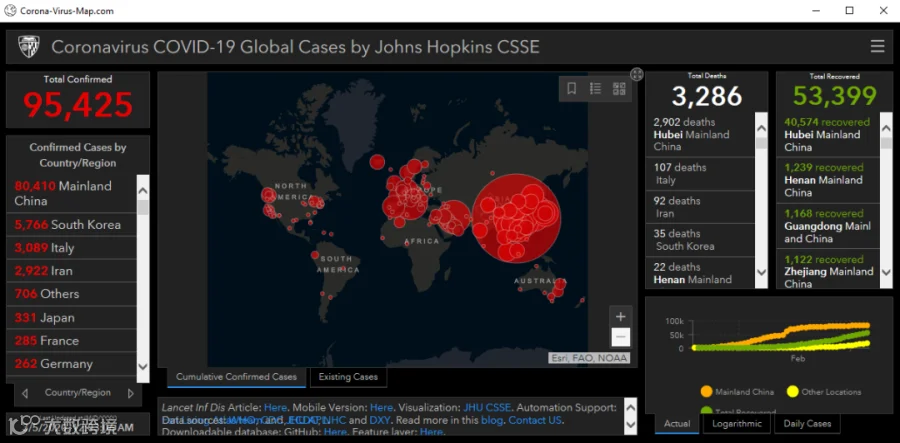
黑客利用新冠地图窃取私人数据
Hackers are targeting the millions of people who are tracking the spread of coronavirus using online maps.
目前有数百万人使用在线地图跟踪新型冠状病毒传播情况,黑客把目光投向了这群人。

图源 blog.reasonsecurity.com

Fears of the deadly virus has led to a surge in demand for information and several organisations have developed dashboards and maps to help keep track of the virus.Security researcher at Reason Labs Shai Alfasi said that hackers were encouraging users to download coronavirus maps and dashboards in order to steal their usernames, passwords, credit cards, and other sensitive information.
对致命病毒的恐惧使得信息需求量激增,一些组织开发了相关线上地图帮助人们跟进了解新型冠状病毒的传播情况。 里森实验室的安全研究员沙伊·阿尔法西表示,黑客诱导用户下载新冠病毒地图,以窃取他们的用户名、密码、信用卡号,以及其他一些敏感信息。
“The attacks usually arrive in the form of an email that looks like the sender is a trusted, official source such as the Centers for Disease Control (CDC) or the World Health Organization,” Mr Alfasi said.
阿尔法西表示:“这些黑客通常利用电子邮件进行攻击,发件人被伪装为一些看起来可靠的信源,如美国疾病控制中心(CDC)和世界卫生组织(WHO)等。
“The subject lines have a message that claims the email has advice on how you can protect yourself from the virus, or offers the latest virus updates or even a coronavirus map, which is supposed to track the spread of the outbreak.”
“邮件的标题上声称其中有如何保护自己不受感染的建议,或者称邮件当中有最新的新冠病毒数据或新冠病毒追踪地图,可以用以跟踪病毒的扩散。"
At which point, Reason Labs said, they are encouraged to install maps and other tools. The cyber security experts said that the attacks were directed at both individuals and businesses.
里森实验室表示,就这样,这些用户被诱导安装地图和其它工具。网络安全专家表示这些攻击既针对个人也针对企业。
“Small businesses tend to be at greater risk than larger enterprises simply because they usually don’t have the resources to defend themselves or labor under the false assumption that hackers aren’t interested in their data,” Reason said.
里森实验室表示:“小公司面临的风险往往比大企业更严峻,因为它们错误的认为黑客对它们的数据不感兴趣而不具备资源来保护自己或者雇员。”
Reason advised people that are “hungry for information about the virus” not to take the bait. It also said that people should pay careful attention to who sens the emails and to check an email address for authenticity before opening the message.
里森实验室建议那些极度渴望了解病毒信息的人不要落入圈套。同时表示人们应当认真关注电子邮件寄信人是谁,并且在打开邮件之前,先核实电子邮件地址的真实性。
“Hackers follow trends in order to exploit the public interest in them, and right now the coronavirus is heavily trending in the press,” Reason said.
里森实验室表示,“当下新型冠状病毒正是媒体热点,黑客正是利用公众对此的关注而钻了空子。”
“And as the real coronavirus continues to loom overhead, hackers continue to exploit it in order to spread malware.”
“随着真正的病毒仍在不断扩散和蔓延,黑客将持续利用它来传播恶意软件。”
02
投机者们匆忙炮制预防和生存手册
As panicked consumers buy up hand sanitizer, masks, and other supplies in the hopes of staving off the fast-spreading coronavirus, a shadowy array of grifters and opportunists are flocking to Amazon.com and other online booksellers to capitalize on public fear, producing a steady stream of books and manuals that claim to hold the secret to surviving the outbreak.
当惊慌失措的消费者大量买入洗手液、口罩和其它物资,以期盼着抵御迅速传播的冠状病毒时,一大群偷偷摸摸的骗子和投机者正蜂拥至亚马逊和其它线上书城,利用公众的恐慌,制作了一系列打着疫情生存秘诀旗号的书籍和手册。

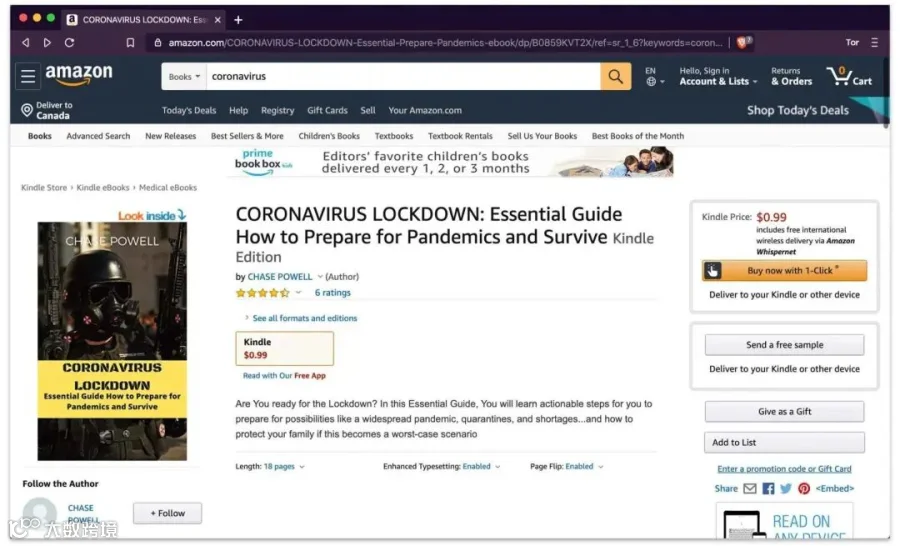
"Are You ready for the Lockdown?" this title asks. It's one of dozens of fresh titles being churned out on Amazon. com's self-publishing platform.
“你为封城做好准备了吗?”一本书的书名如此写道。这只是亚马逊网站个人出版平台上冒出来的几十个新书名之一。

Some of the titles, which often lack proper grammar and formatting, traffic in dark conspiracy theories regarding the origin of the virus, while many others appear to simply repeat information that is already freely available from public health agencies, including the Centers for Disease Control and Prevention and the World Health Organization. And while it's unclear how many of these hastily produced books are being sold, as of Thursday afternoon at least five coronavirus-related titles appeared among the top 100 bestsellers in Amazon's medical e-book category, with a seemingly dashed-off title about face masks and coronavirus taking the number one spot.
其中一些书名常常缺乏符合规矩的语法和格式,贩卖着病毒起源的邪恶阴谋论。而其他许多书名似乎只是简单重复了那些已经可以从疾病防控中心和世卫组织这些公共卫生机构免费获得的信息。虽然目前还不清楚这些仓促生产的书中有多少正在出售,但截至12日下午,至少五本有关冠状病毒的书籍出现在了亚马逊医疗类电子畅销榜的前100中,一本名字草草地扯上了口罩与冠状病毒的书更是冲上了榜首。
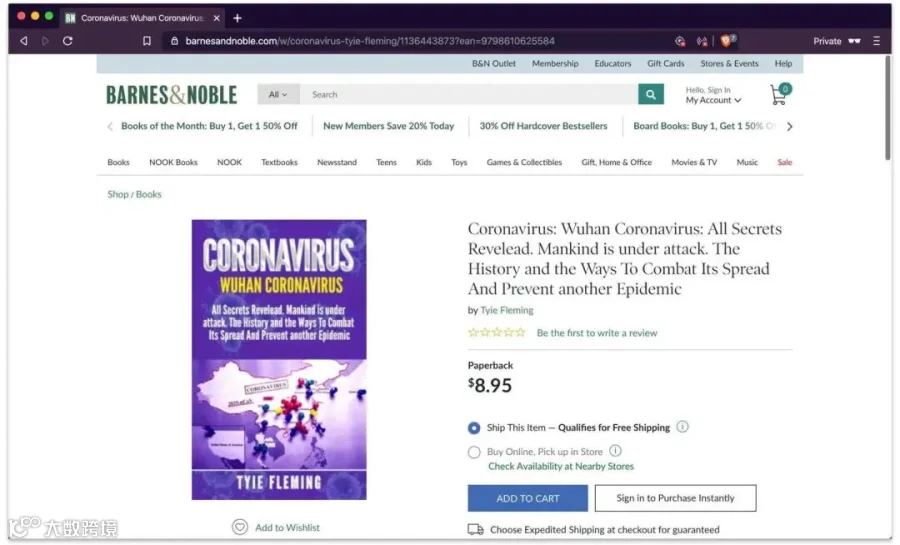
Amazon is by no means alone, and many of the same or similarly dubious titles can be found at Barnes and Noble, Walmart, and other retailers. One elaborately named title available at Barnes and Noble includes misspellings and variant capitalization on its cover: "Coronavirus: Wuhan Coronavirus: All Secrets Revelead [sic]. Mankind is under attack." The tome promises to deliver "The History and the Ways To Combat Its Spread And Prevent another Epidemic."
亚马逊网绝非个例,在巴诺书店(全球第二大网上书店)、沃尔玛和其他零售商那里也能找到许多类似的可疑书籍。巴诺书店网站就在出售一本被“精心”命名为《冠状病毒:武汉冠状病毒》的书,它的封皮上有拼错的单词和骇人的大写字母,写着:“为您揭示病毒背后的秘密,全人类正在遭受袭击“。”这本“巨作”承诺将讲述“阻止新冠病毒传播及预防新一轮瘟疫的历史和方法”。

图源 salon

Journalist and author Maria Konnikova, whose 2017 book "The Confidence Game" sought to shed light on the psychology and motives of hustlers, suggested that exploiting public fear is a common tactic. "We know that con artists absolutely love crises and moments of panic," she wrote in an email. "They thrive on uncertainty and instability, when people are emotional and not quite sure which end is up."
记者兼作家玛丽亚·科尼科娃在2017年出版的《信心游戏》一书中揭示了骗子的心理和动机。她认为利用公众的恐慌是一种常见的策略。“我们知道,骗子热爱危机和恐慌。”她在一封电子邮件中写道。“当人们情绪激动又看不清局势时,他们就靠着动荡的时局发家致富。”
According to David Ropeik, a risk communication consultant, vendors hawking products that capitalize on people's fear is nothing new. After the September 11, 2001 terrorist attacks on the United States, he said, the market was flooded with emergency preparedness equipment, including gas masks to protect against anthrax exposure. Such masks, even if consumers purchased the proper type, are only of use if the wearer receives prior warning of a biological weapon attack, Ropeik noted, adding that these exploits are not without public cost. "Marketing to our fear," Ropeik said, "is a component of social amplification that does real harm."
风险沟通顾问大卫·罗佩克表示,利用人们的恐惧兜售产品并不鲜见。他说,2001年美国遭受“911”恐怖袭击后,市场上涌现了大批应急设备,包括一种可以预防炭疽病毒的防毒面具( 炭疽是一种乙级传染病,牛、羊、骆驼、骡等食草动物是其主要传染源,当人直接或间接地接触病畜和染菌的皮、毛、肉等也会感染炭疽)。罗佩克指出,即使消费者买到的是正确型号的防毒面具,这类面具也只有在佩戴者事先收到生物武器袭击警告的情况下才能使用。他还补充说,这类利用恐慌兜售的产品并非没有公共成本。“利用人们的恐惧进行营销,会造成社会的放大效应,必会破坏社会稳定。”
Allowing opportunists to peddle simple survival guides or hasty compilations of publicly available information would seem to have fewer social consequences, beyond attempting to profit off the ignorance — or desperation — of the unwitting. But Ropeik suggested that whatever the harm, those looking to cash in on coronavirus anxieties are not solely to blame. "Saying it's Facebook's fault, or WhatsApp's fault, or Amazon's fault — and that they should police this better," Ropeik said, "is overlooking the truth that it's us that we're talking about, and our behavior."
纵容机会主义者兜售这些简单的生存指南或仓促编纂的已经公开的信息,除了利用不知情者的无知或绝望去牟取利益之外,似乎不会产生什么社会后果。但是罗佩克认为,不管造成了怎样的危害,设法利用冠状病毒带来的恐慌来牟取利益的人们并非唯一该受到责备的一方。“人们一味指责脸书,WhatsApp,或亚马逊没有监督好市场,这恰恰反映了另一事实,”罗佩克说,“那就是我们忽略了自己就是社会的一部分,我们的行为和言论都会汇集成社会的反应。”
原文链接:
https://www.telegraph.co.uk/technology/2020/03/11/hackers-using-coronavirus-maps-stead-private-data/
https://www.salon.com/2020/03/14/as-coronavirus-spreads-hastily-produced-books-capitalize-on-fear_partner/
编译:韩旭 陈晓 于沛欣 郭诗萌 金殊羽
排版:金殊羽
指导教师:刘佳