


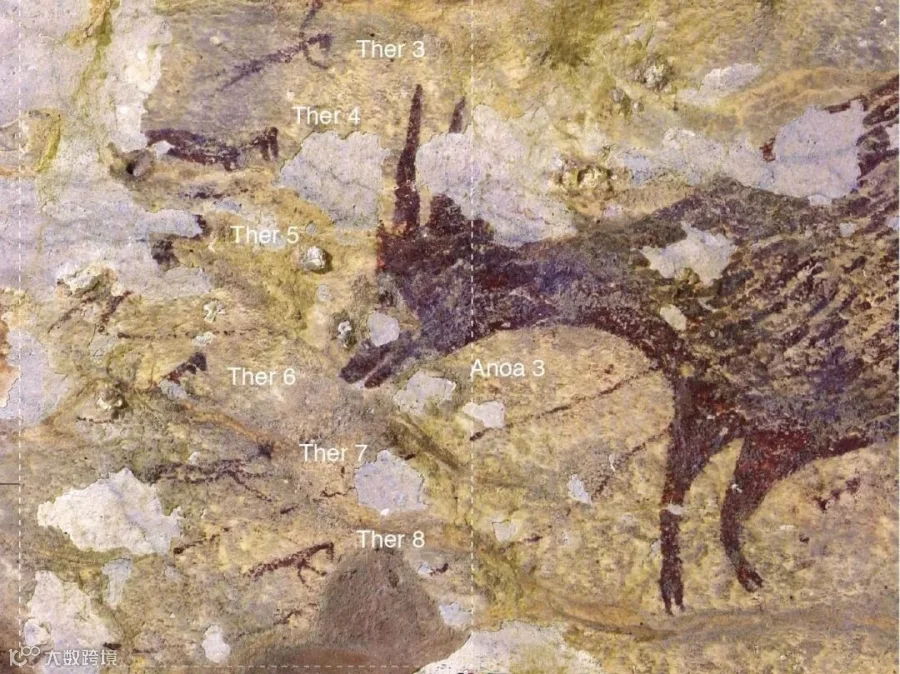
Scientists say they have found the oldest known figurative painting, in a cave in Indonesia. And the stunning scene of a hunting party, painted some 44,000 years ago, is helping to rewrite the history of the origins of art.
科学家们在印尼的一个山洞里发现了已知最古老的具象绘画。画上是令人震惊的狩猎场景,绘制于约四万四千年前,这幅画作正在改写艺术起源的历史。
Until recently, the long-held story was that humans started painting in caves in Europe. For example, art from the Chauvet Cave in France is dated as old as 37,000 years.
此前,人们一直认为,人类最早的绘画起源于欧洲的洞穴之中。例如法国肖维岩洞里的画作就有三万七千年的历史。
But several years ago, a group of scientists started dating cave paintings in Indonesia — and found that they are thousands of years older.
但几年前,科学家们开始对印尼的洞穴绘画进行年代测定,发现它们比肖维岩洞里的还要年长数千年。
"They are at least 40,000 years old, which was a very, very surprising discovery," says Adam Brumm, an archaeologist at Australia's Griffith University. He and his colleagues used a technique called uranium-series analysis to determine the paintings' age. The oldest figurative painting in those analyses was a striking image of a wild cow.
澳大利亚格里菲斯大学的考古学家Adam Brumm说:"它们至少有四万年的历史,这是一个非常非常惊喜的发现。他和他的同事使用一种叫做铀系列分析的技术来确定这些画作的年龄。分析后发现,最古老的具象绘画是一个惊人的野牛形象。
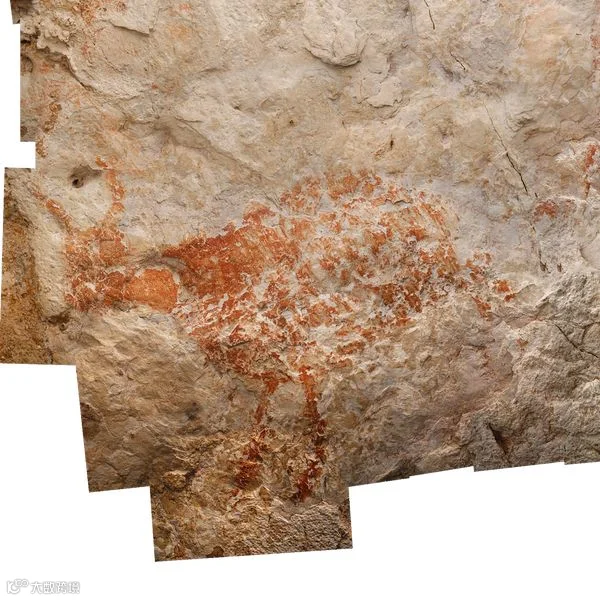
These works had been known for years by locals on the island of Sulawesi — but Brumm adds that "it was assumed they be that old."
苏拉威西岛的当地人久已熟知这些作品,布鲁姆补充说,"但当时人们不知道它们如此古老。“
Since that big reveal, Brumm's team — which he led with archaeologists Maxime Aubert and Adhi Agus Oktaviana — has been searching for more art in these caves. In 2017, they found something breathtaking — the massive hunting scene, stretching across about 16 feet of a cave wall. And after testing it, they say it's the oldest known figurative art attributed to early modern humans. They published their findings in the journal Nature.
有了如此巨大的发现以后,布鲁姆与考古学家 Maxime Aubert 和Adhi Agus Oktaviana一起领导团队在这些洞穴中寻找更多的绘画艺术。2017年,他们发现了一些令人叹为观止的东西——巨大的狩猎场景,绵延了约十六英尺的洞穴墙壁。在对它进行年代检测了以后发现这是已知的早期人类留下的最古老的写实艺术,而后在《自然》杂志上发表了他们的发现。
The painting tells a complicated story. It depicts jungle buffaloes and wild pigs pursued by tiny hunters with spears and ropes.
这幅画展现了一个复杂的故事,“身材娇小”的猎人拿着绳子和长矛追捕丛林中的水牛和野猪。
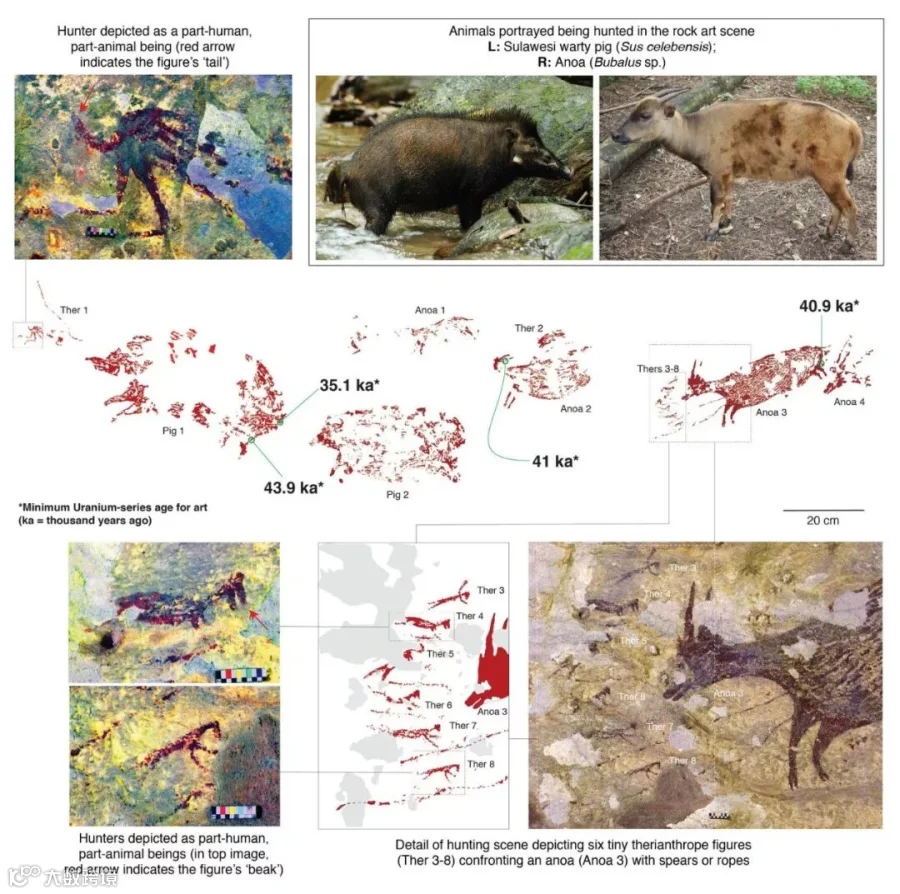
The painting found on the island of Sulawesi depicts a complex scene of a hunting party.
苏拉维西岛上发现的这幅画表现了一个复杂的狩猎场景。
Adam Brumm/Nature
"They appear to be human, but they seem to have some features or characteristics of animals," Brumm says. One appears to have a birdlike head, and another has a tail. He says these part-human, part-animal figures might signal early religious beliefs, because they indicate that ancient humans could imagine things they had never seen.
"它们看起来是人,但它们看起来还长着动物的一些特征,"Brumm说。一个似乎有鸟一样的头,另一个有尾巴。他说,这些半人半兽的形象可能标志着早期的宗教信仰,因为它们代表着古代人类可以想象他们从未见过的形象。
"We can't know if it has anything to do with spirituality, but at least we can say that those artists were capable of the sorts of conceptualizations that we need in order to believe in religion, to believe in the existence of the supernatural," he says.
他说:"我们无从得知这是否与神力有关,但至少,这些艺术家有能力进行多种多样的概念化,这种概念化是我们相信宗教、相信超自然能力所需要的。"
Brumm says discoveries in Asia have complicated what we know about when — and where — humans started to make figurative art. There are some older examples of humans making simpler markings, like zigzags or circles.
"I think the discoveries that have been emerging over the last few years is suggesting that our understanding of the human story, that key part of the human story, is still being revised as we speak and there could be some big changes in store," he adds.
Brumm说我们在亚洲的发现使我们对人类具象绘画起始时间和地点的了解复杂了起来。在一些古老的案例中,人类作出更简单的标记,如锯齿形或圆圈。"在我看来,过去几年涌现的新发现正说明我们对人类故事的理解,对其中核心部分的理解正在不断被修改,就在我们说话的这一会儿,而且可能会有一些巨大的改变。"他补充道。
Genevieve von Petzinger, a paleoanthropologist at the University of Victoria, says the discoveries in her field are happening very quickly, thanks to newer technology such as the technique used to date the hunting scene. "I think the overall theme here really is that we've vastly underestimated the capacity of our ancestors," she says.
维多利亚大学古人类学家维夫·冯·佩辛格(Genevieve von Petzinger)表示,多亏了新的技术,比如用来测定那幅狩猎场景年代的技术,该领域发展日新月异。"总的来说,我认为这件事的主题就是我们大大低估了祖先的能力,"她说。
She says the oldest cave paintings in Europe and Asia have common elements. And she thinks that even older paintings will eventually be found in the place where both groups originated from.
佩辛格告诉我们,欧亚两洲最古老的洞穴绘画是有共同元素的。她认为,最终我们会在两个族群共同起源的地方找到更加古老的画作。
"Personally, I think that our ancestors already knew how to do art before they left Africa," von Petzinger says.
她又补充道:“就我自己而言,我认为我们的祖先在离开非洲之前已经知道如何作画了。”
While not everyone in the field agrees, and no figurative cave art in Africa has been dated older than the Indonesian works, Brumm says he has the same gut feeling.
尽管不是业内所有人都同意佩辛格的想法,至今也没有在非洲发现比印尼的那幅更古老的具象洞穴绘画,但Brumm有相同的直觉。
But even as Indonesia is emerging as an important location for early art, the paintings are rapidly deteriorating and the scientists don't know why. "It is such a huge and important part of the human story. Yet it's literally crumbling away before our eyes," Brumm says.
然而,尽管印尼正成为人类早期艺术的新兴重要地标,但那些画作的情况正急速恶化,而科学家们并不知道为什么。“这是人类历史长河中多么庞大而重要的一个部分,然而就在我们的眼前,岩块碎落,摇摇欲坠。”Brumm说。
Brumm and his colleagues are trying to figure out the cause of the problem. He says one theory is that higher temperatures in the caves due to climate change are harming the art。
布鲁姆和他的同事们正在试图找出问题的原因。他说,有一种理论认为,气候变化导致洞穴温度升高,损害了画作。
Brumm says the deterioration — in one case, by about an inch every two months — is making their work to survey these sites feel particularly urgent. "Who knows what other amazing cave art is out there at some site that can change our understanding of human evolution?"
Brumm说,这个洞穴里的画作每两个月会退化大约一英尺,这种恶化使他们的抢救工作变得非常紧急。“谁知道在某些地方还有多少惊艳的洞穴艺术可以动摇我们对人类进化历程的理解呢?


编译、排版:薛妍
审核:刘佳
原文链接:https://www.npr.org/2019/12/11/786760790/44-000-year-old-indonesian-cave-painting-is-rewriting-the-history-of-art