

/ 编者按/
自从一月份以来,新冠病毒席卷全球已经有九个月。虽然国内疫情已被基本控制,但在我们生活中新冠病毒仍然是定时炸弹一样的存在。到底什么时候才能放心摘下口罩大口呼吸呢?一起来看看历史上的其它大型流行病的消亡史吧,或许从中能够找到答案~

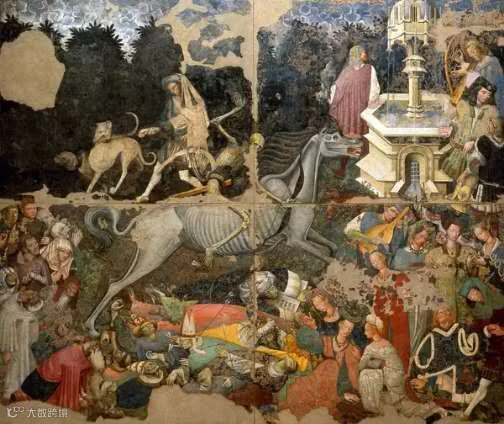
这是一幅西西里岛的壁画,绘制于1455年。在此前一个世纪里,三分之一的欧洲人口因感染黑死病死亡。

新冠疫情将何时结束?又将如何结束?



历史学家称,全球性流行病一般会有两种结束方式:当流行病感染率与死亡率大幅下降时,可称之为医学意义上的结束;当大众对于流行病的恐惧逐渐消退时,可称之为社会意义上的结束。
According to historians, pandemics typically have two types of endings: the medical, which occurs when the incidence and death rates plummet, and the social, when the epidemic of fear about the disease wanes.
约翰·霍普金斯大学药物历史学家杰里米·格林博士表示:“当人们提出‘这场疫情什么时候能结束’这样的问题时,他们指的其实是社会意义上的结束。”
“When people ask, ‘When will this end?’ they are asking about the social ending,” said Dr. Jeremy Greene, a historian of medicine at Johns Hopkins.
换而言之,有时疾病的结束可能并不是因为它已经被消灭,而是因为人们厌倦了恐慌的生活模式,学会了向疾病妥协并与其共存。
In other words, an end can occur not because a disease has been vanquished but because people grow tired of panic mode and learn to live with a disease.
疫情未至,恐惧先行

有时,传染病还没有流行,恐慌便先散播开来。



都柏林皇家外科学院的苏珊·默里博士曾在2014年亲身经历了这种情况,当时她正在爱尔兰乡下的一家医院任职。
当时,非洲西部有将近11,000人因感染埃博拉病毒离世。埃博拉病毒传染性极强,死亡率极高。虽然后来这场流行病势头已经大大减弱,且爱尔兰并没有发现感染病例,但公众对其的恐惧却显而易见。
那时都柏林医院的医护工作者们惊恐万分,担心他们缺乏足够的防护装备。而当一名癌症晚期的年轻人转入医院时,只因他来自爆发埃博拉疫情的国家,没有医护人员愿意靠近他。
几天之后,检测结果显示这名患者并未携带埃博拉病毒。一个小时后,患者因癌症去世。三天之后,世界健康组织宣布埃博拉疫情已经结束。
A few days later, tests confirmed that the man did not have Ebola; he died an hour later. Three days afterward, the World Health Organization declared the Ebola epidemic over.
默里博士写道:“如果我们不像抗击其他病毒那样积极谨慎地对抗恐惧和无知,这种恐惧很有可能会给那些弱势群体带来严重的伤害,哪怕当地可能没有发现任何一例感染病例。而当这其中交杂着种族、特权和语言等因素时,大众恐慌所造成的影响将会更加恶劣。”
Dr. Murray wrote: “If we are not prepared to fight fear and ignorance as actively and as thoughtfully as we fight any other virus, it is possible that fear can do terrible harm to vulnerable people, even in places that never see a single case of infection during an outbreak. And a fear epidemic can have far worse consequences when complicated by issues of race, privilege, and language.”
鼠疫流行,忆及仍恐
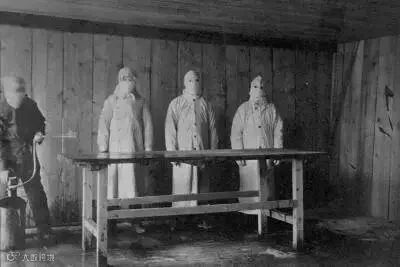
1910年中国爆发由鼠疫杆菌引起的肺炎性鼠疫,图为奉天(现沈阳)传染病医院的医护人员在给解剖台消毒。
在过去的2000多年里,淋巴腺鼠疫多次爆发,改写了历史进程,数百万人因此丧命。
这种疾病由鼠疫杆菌引起,这一菌系通过寄生于跳蚤附着在老鼠身上。然而淋巴腺鼠疫,也就是人们熟知的黑死病,可以通过呼吸道飞沫在人群中传播,因此捕杀老鼠并不能将它彻底根除。
约翰霍普金斯的历史学家玛丽·福塞尔表示,历史学家们普遍认为人类历史上有三次大规模的流行瘟疫:6世纪的查士丁尼瘟疫,14世纪的中世纪瘟疫以及1918年爆发的大流感。
Historians describe three great waves of plague, said Mary Fissell, a historian at Johns Hopkins: the Plague of Justinian, in the sixth century; the medieval epidemic, in the 14th century; and a pandemic that struck in the late 19th and early 20th centuries.
14世纪的史学家阿格诺罗·迪·图拉写道:“感染者的腋窝下和腹股沟都肿起来了,而且说话时很容易跌倒。”不治身亡的人则被成堆地埋在坑里。
在佛罗伦萨,薄伽丘在书中记载:“在疫情时期的弗罗伦萨,逝者所受的尊重只能勉强比得上如今的死山羊,”一些人只敢躲在房子里,另一群人不愿面对疫情的威胁。用薄伽丘的话来说,这些人应对这场流行病的方式就是“喝得酩酊大醉,尽情享受生活,到处寻找乐子,尽可能满足自己所有的欲望,丝毫不在意眼前发生的一切并把它当成一场天大的笑话。”
In Florence, wrote Giovanni Boccaccio, “No more respect was accorded to dead people than would nowadays be accorded to dead goats.” Some hid in their homes. Others refused to accept the threat. Their way of coping, Boccaccio wrote, was to “drink heavily, enjoy life to the full, go round singing and merrymaking, and gratify all of one’s cravings when the opportunity emerged, and shrug the whole thing off as one enormous joke.”
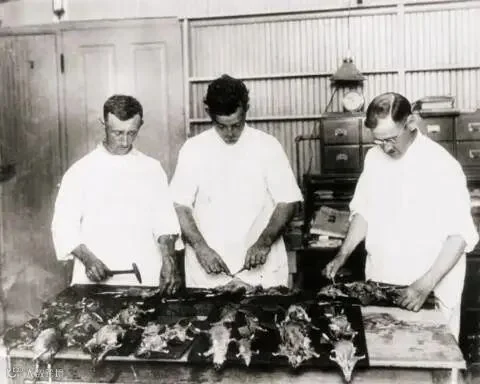
图为工作者于1914年在新奥尔良解剖老鼠,寻找它们可能携带黑死病的迹象
黑死病消失的原因尚不明确。据斯诺登博士记录,一些学者认为寒冷的天气杀死了携带疾病的跳蚤,但这并不会阻断疾病通过呼吸道的传播。
It is not clear what made the bubonic plague die down. Some scholars have argued that cold weather killed the disease-carrying fleas, but that would not have interrupted the spread by the respiratory route, Dr. Snowden noted.
又或许是鼠群发生了某种变化。到19世纪时,这种瘟疫的传递者已经从黑色老鼠变成了棕色老鼠,这类老鼠更为强壮凶残,也更可能生活在远离人类的地方。
Or perhaps it was a change in the rats. By the 19th century, the plague was being carried not by black rats but by brown rats, which are stronger and more vicious and more likely to live apart from humans.
另一种假设是,病毒在进化过程中致死性减弱。也或许是人类的行为,例如火烧村庄,帮助消除了疫情。
Another hypothesis is that the bacterium evolved to be less deadly. Or maybe actions by humans, such as the burning of villages, helped quell the epidemic.
瘟疫永远不会真正消失,在美国,类似的传染病是由西南部草原土拨鼠引发的地方病,它同样可以传染给人类。
但这种几率很小,并且已经可以通过抗生素进行治疗,然而任何一例有关瘟疫的报道还是会引发巨大的恐慌。
天花横行,终还安宁
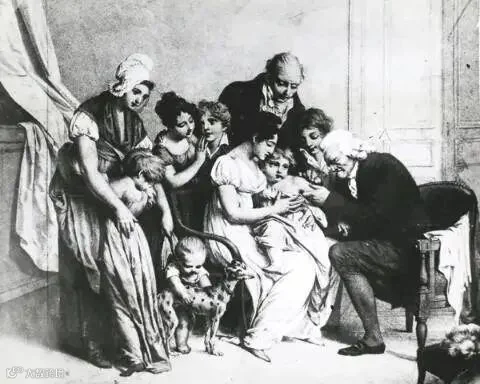
图为1796年天花疫苗最早的发明者之一爱德华·詹那正给一名孩子接种预防疾病的疫苗
在众多的疾病中,一个成功实现从医学意义上结束的案例就是天花。但这种例外有以下几种原因:一方面,我们研制出了能给予人类终生保护的有效疫苗;一方面,水痘病毒没有动物宿主,因此消除了人类身上的天花就意味着完全根除了这种传染病;另一方面,天花症状的罕见性让这种感染变得非常明显,也能更方便地进行人员隔离以及接触追踪。
Among the diseases to have achieved a medical end is smallpox. But it is exceptional for several reasons: There is an effective vaccine, which gives lifelong protection; the virus, Variola major, has no animal host, so eliminating the disease in humans meant total elimination; and its symptoms are so unusual that infection is obvious, allowing for effective quarantines and contact tracing.
然而当天花仍在肆虐时,这个名字是令人毛骨悚然的。天花流行病一场接着一场,席卷全球至少3000年。感染病毒的人一般会经历发烧、出疹、疹子变成脓点、脓点结痂脱落并留疤的过程,而这种伴随着巨大苦痛的疾病更是会夺去三成感染者的生命。
最后一名自然感染天花的人名为阿里·马奥·马林,是索马里某医院的一名厨师。他于1977年感染,随后痊愈,却于2013年死于疟疾。
流感肆虐,沉封忘却
1918年流感如今被视为大流行病肆虐的例子,它也彰显了隔离和保持社交距离的重要性。在流感结束之前,全球范围内有5000万至1亿人感染死亡。它的主要感染人群为青年、中年,导致孩子失去父母,家庭失去顶梁柱,一战参战士兵减少。
The 1918 flu is held up today as the example of the ravages of a pandemic and the value of quarantines and social distancing. Before it ended, the flu killed 50 million to 100 million people worldwide. It preyed on young to middle-aged adults — orphaning children, depriving families of breadwinners, killing troops in the midst of World War I.
维克多·沃恩是一名医术高超的医生,于1918年秋天被派遣至波士顿附近的德文斯军营,并且对当地的一种流感进行研究汇报。他写道:“感染者的面部很快呈现蓝色,伴有剧烈的咳嗽以及带血的痰。早晨,病死者的尸体会像木材一样在停尸间堆成很高一堆。”
他写道:“这种病毒能够轻而易举夺取人类生命,人类多么渺小脆弱啊!”
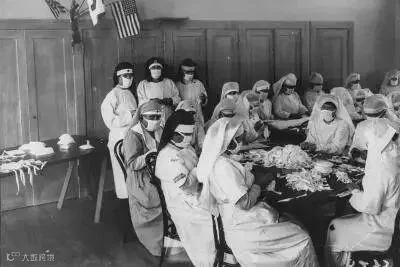
加利福尼亚州皮特蒙得红十字会志愿者正在制作口罩。摄于1918年10月。
在席卷全球之后,这场流感逐渐消退。
斯诺登博士表示:“它就像一场大火,已经烧尽了可接触范围内的可燃物,于是便熄灭了。”
“Maybe it was like a fire that, having burned the available and easily accessible wood, burns down,” Dr. Snowden said.
在社会意义上,它也结束了。一战结束,许多人渴望重新开始一个新的纪元,将噩梦般的疾病与战争抛在身后。直到近期,1918年流感才被重新记起。
It ended socially, too. World War I was over; people were ready for a fresh start, a new era, and eager to put the nightmare of disease and war behind them. Until recently, the 1918 flu was largely forgotten.
新冠疫情,何去何从?
历史学家表示,一种可能是新冠疫情在尚未被医学消灭时就在社会意义上结束。人们可能已经厌倦了疫情期间的种种限制,哪怕病毒还在人群中潜伏,医学界也没有应对病毒的有效疗法与疫苗,大众还是认为疫情已经结束了。
One possibility, historians say, is that the coronavirus pandemic could end socially before it ends medically. People may grow so tired of the restrictions that they declare the pandemic over, even as the virus continues to smolder in the population and before a vaccine or effective treatment is found.
耶鲁大学历史学家娜奥米·罗杰斯说:“我认为大众普遍有疲乏、焦躁的社会心理。我们现在可能面临这样的情况——有人说:‘我受够了。我应该回到我正常的生活中。’“
这种情绪已经开始出现。由于疫情封锁而造成的经济下滑,越来越多的人觉得“我受够了”。
罗杰斯博士表示:“这正是当下的冲突。“公共健康部门以医学意义上的结束为疫情的终结,而部分大众认可社会意义上的结束。
“There is this sort of conflict now,” Dr. Rogers said. Public health officials have a medical end in sight, but some members of the public see a social end.
罗杰斯博士说:“到底谁能够宣布疫情的结束呢?如果你否认疫情的终结,那么你又在否认什么呢?当你说:‘不,疫情还未结束’时,你的判断依据是什么?”
“Who gets to claim the end?” Dr. Rogers said. “If you push back against the notion of its ending, what are you pushing back against? What are you claiming when you say, ‘No, it is not ending.’”
勃兰特博士表示,最大的挑战在于此事不会有突然的胜利。试图确定疫情何时结束“将是一个漫长而艰辛的过程”。

你是否经历过2003年爆发的非典?在你的印象中,它是怎么结束的?你觉得今年的这场疫情又在什么时候能结束呢?欢迎在下方留言和我们一起讨论。

原文链接:
https://www.nytimes.com/2020/05/10/health/coronavirus-plague-pandemic-history.html
编译:祖芃芃 张璐瑶 陈语姝
审核:赵寒旭
排版:张璐瑶
指导教师:刘佳