

编者按
一直以来,我们依赖传统葬礼表达对逝者的哀思。而由于疫情,葬礼无法举办的时候,更多有创造力的方式出现了。他们都有一个共同点,抛去形式的束缚,悼念逝者真正的个性和人生。一直以来,我们依赖传统葬礼表达对逝者的哀思。而由于疫情,葬礼无法举办的时候,更多有创造力的方式出现了。他们都有一个共同点,抛去形式的束缚,悼念逝者真正的个性和人生。
Casual readers of obituaries or listeners to eulogies often instinctively focus on the odder bits. Life, after all, is elemental, quicksilver, strange; it isn’t found in a solemn list of doings and accomplishments, lists of schools attended or prizes won. People like to know about the quirks of the individual who has gone – the jam-jar collection, the clashing clothes, the unwise taste for speed. They want to laugh in the face of death and rejoice in the richness of life. At the same time death, being surrounded by grief, lays on its cold hand and demands respect. How, then, to memorialise the departed?
人们在偶然读到讣告或者听到悼词时往往会本能地关注那些不同寻常的东西。毕竟,生命由元素组成,是变化莫测的,也是奇特的;它不存在于一份严肃的工作和成就榜单中、也不存在于一份曾就读的学校名单或获奖证明中。人们想要了解与世长辞的人有哪些怪癖——他们生前或乐于收集果酱罐,或平日里喜欢混搭服装,或者过度追求高速的刺激。他们想在死亡面前开怀大笑,在生命的丰富多彩中欢欣鼓舞。与此同时,死亡被悲伤笼罩,它伸出冰冷的手,要求人们给予尊重。那么,我们该如何纪念逝者呢?
The more public the forum, the more treacherous the minefield. Those useful mourning-rites of the Victorians – black armbands, black ribbons tied on door-knockers, black-edged announcement cards – have more or less vanished now, together with their shared view of what death was. Yet, in our nervousness, we still fall back on the formulas we know.
对如何纪念逝者的讨论越公开,就越有触到雷区的风险。那些维多利亚时代常见的哀悼仪式——黑臂章、绑在门环上的黑丝带、黑边的公告卡,如今基本上已经伴随着当时人们的死亡观念消逝了。当亲人离世,我们紧张无措时,还是会沿用这种传统的仪式套路。
In particular, we tend to keep a stiff-collar formality in the words we use. No letter is harder to write than one of condolence. Every week my local paper runs a half-page of black-rimmed death notices in which someone from a family has dutifully struggled to write a poem about love and loss. They are awkward, poignant and truly heartfelt; most use similar phrases about the grieving left behind. The loud message of these little boxes is that words must be written, but they fail.
我们在使用词汇时尤其倾向于保持正式和严肃。没有什么文章比一封吊唁信更难写的了。每周,我们当地的报纸都会刊登半页黑边的讣告,在这些讣告中,逝者的家人费尽心力写成一首关于爱与失去的诗。它们会显得笨拙而辛酸,但那是发自内心的情感;大多数人都会用类似的语言来表达他们的悲痛。报纸上这些小块的悼词传达的信息是,悼念的文字是必须的,但它们没有完全起到真正悼念的作用。
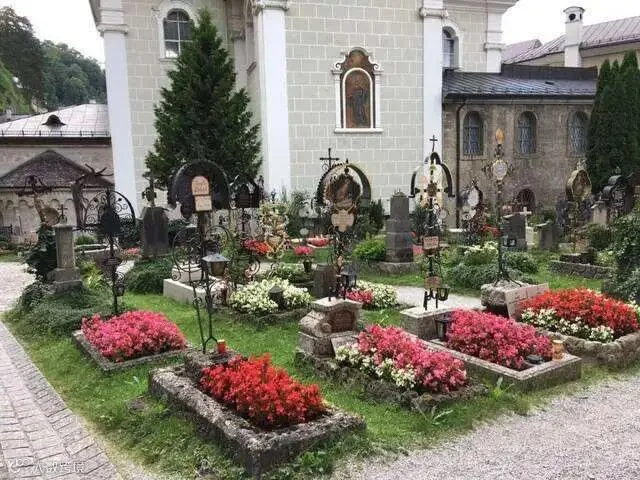
Most obviously, they do not last. And it seems that something should. The physical presence we knew in the world has to be marked with an object that is solid and individual – most simply a stone, like the cairns of achievement on top of hills we have climbed. The powerful had such markers, from the turfed tumuli of ancient warriors, crammed with daggers and warhorses, to the chest-tombs and weeping-angel memorials of the Victorians. Yet for centuries the poor were buried unmarked around their worship-places, higgledy-piggledy and one above the other until the churchyards rose like green cushions. The dead had left the world, but remained in it: part of the community, part of the natural scene.
用语言纪念逝者最为明显的不足是,这些纪念性的语言不会永久存在,而有些东西应该是永恒的才对。我们在这个世界上所知道的物质存在,必须用一个坚固而独立的物体来标记——最简单的就是一块石头,就像是我们登上山顶时用来标记我们成就的石标一样。从装满匕首和战马的古代武士墓碑,到维多利亚时代的棺椁和哭泣天使塑像,有权势的人都有这样的标记。然而,几个世纪以来,穷人被埋在他们向往的安身之所周围,没有标记,杂乱无章,直到墓地荒草丛生。逝者已然离开了这个世界,但也不曾离开,他们仍旧作为社会和自然景观的一部分而存在
To be buried in an unmarked grave was also the fate of those who committed suicide and the imagined destiny of self-perceived failures, such as John Keats, whose headstone in Rome reads: “Here lies one whose name was writ in water”. Throughout history unmarked graves have received the victims of some tragedy or atrocity beyond the scope of ordinary rituals. In modern times markers are often erected to speak for all of them, to keep the ghosts in remembrance. Britain’s Unknown Soldier of the first world war is the spokesman for thousands under his slab of marble in Westminster Abbey. In Friston churchyard in East Sussex unknown sailors, drowned at Beachy Head, lie under a wooden cross with the legend “Washed Ashore”. In my local Sussex churchyard a battered wooden upright is left where it is because for someone, somewhere, it might conjure up a face and a name. To take it away would be an act of obliteration.
葬身无名坟墓里也是那些自认失败而选择自杀者的命运,比如约翰·济慈。他位于罗马的墓碑上面写道:“此地长眠者,声名水上书”。纵观历史,没有标记的坟墓通常也被用于纪念一些受害者和无法用常规仪式进行哀悼的逝者。现在,人们常常竖立标志代表这些逝者,以对他们表示纪念。英国在第一次世界大战中牺牲的一名无名战士被安放于威斯敏斯特大教堂的大理石石板下,他代表了战争中牺牲的数千名战士的生命。在东苏塞克斯的弗里斯顿教堂墓地,淹死在比奇角的无名水手安息于一个木制十字架下,十字架上写着“被冲上岸”的传说。在我当地的苏塞克斯郡教堂墓地里,一根破旧的木头立柱被留在了原处,因为对某处的某个人来说,它可能会让人想起一张面孔和一个名字。拿走它将会是一种毁灭行为。
注:约翰·济慈,19世纪初期英国诗人,浪漫派的主要成员。1815年就读于伦敦国王大学,1817年开始写作。1818年到1820年,先后完成《伊莎贝拉 》《圣艾格尼丝之夜》《海伯利安》《夜莺颂》《希腊古瓮颂》《秋颂》等作品。1821年2月23日因肺结核病逝于意大利罗马,享年25岁。
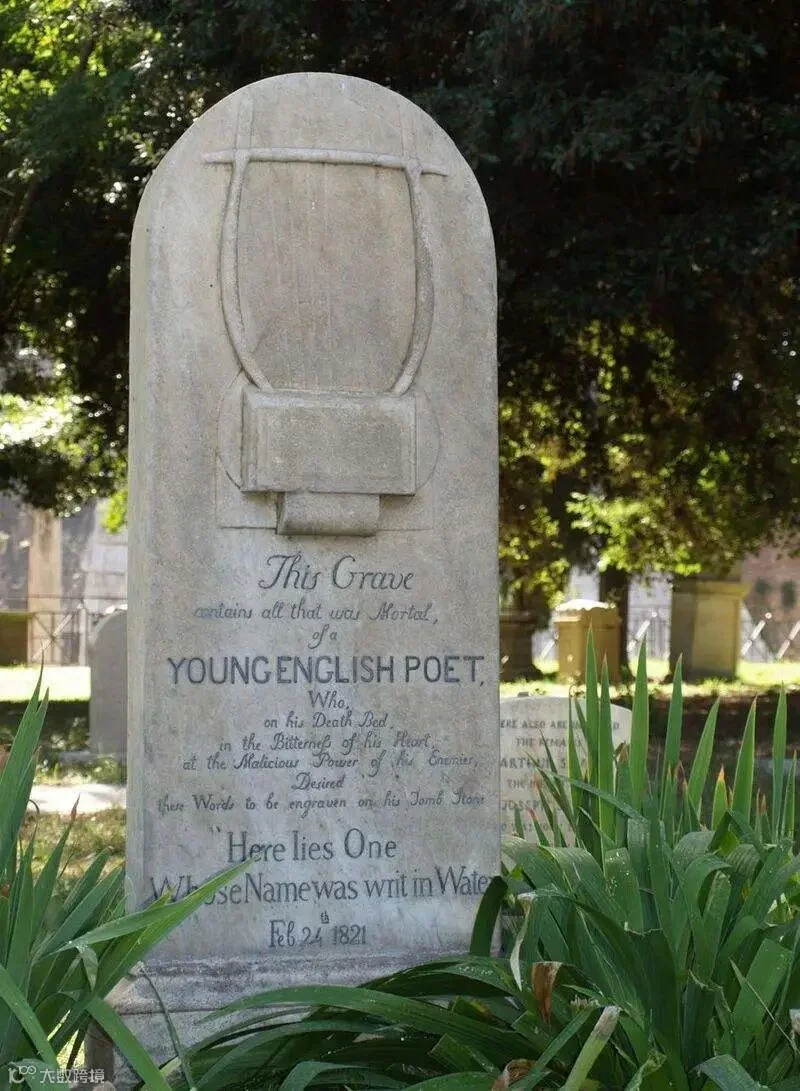
headstone of John Keats
约翰·济慈的墓碑
And so we continually and reverently make memorials. The littlest folk, like two-year-old Prue (“Loved by all”) with her tiny Carerra stone and blowing daffodils, are memorialised as carefully as the greatest, who are given arches through which to drive a coach and horses.
因此,我们不断且虔诚地制造纪念碑,最小的人,像两岁的普鲁(墓碑上刻着“人见人爱”),有小小的卡瑞拉石和盛开的水仙花陪伴,还塑有可通马车的拱门,像是最伟大的人一样被精心纪念。
Necropolises rise up, cities of the dead, as at Highgate in London, where modern left-wingers jostle to lie in the brooding shadow of Karl Marx. At Père Lachaise in Paris long avenues of tombs process under tall, sepulchral trees. And in Kolkata, at South Park Street Cemetery, the imperial casualties of foreign fevers are remembered with Indian domes, steles and lions. Churches fill up with busts and statuary, languishing nymphs, memorial brasses and the wonderful Jacobean tombs on which husband and wife face each other in ruffed and polychrome tranquillity, she with the daughters kneeling behind her and he with the sons.
死亡之城中的墓地拔地而起,在伦敦的海格特,现代左翼分子争先恐后地躺在卡尔·马克思沉思的光影下。在巴黎的帕雷拉查伊斯,长长的林荫道在高大阴森森的树木下蜿蜒而行。而在加尔各答南公园街公墓,人们用印度圆顶、石碑和狮子纪念帝国因外国传入的热病而去世的人。教堂里堆满了半身像和雕像、蒙受苦难的仙女、纪念性黄铜制品和美妙的雅各布式坟墓,在这些坟墓上,丈夫和妻子面朝对方,色彩丰富,宁静祥和,妻子和跪在她身后的女儿们一起,丈夫和儿子们一起。
Again, though, the words often disappoint. Death imposes its levelling hand. Everyone is beloved. Everyone is missed. That vast and undoubted truth squeezes out most hints of personality. Even in the more loquacious 18th century, women are routinely a credit to their sex and men competent and noble. The dead, frozen in their best expressions, lose the sharp light of hindsight and acquire the glow of eternity. How precious are the signs of what these people actually did, whether open books or sextants or carpenter’s tools; the piano that graces a grave in the City of London, Hogarth’s tomb in Chiswick with his palette and brushes. On some tombs, a life’s devotion continues: Richard Beauchamp opening his gauntleted hands to the image of the Virgin in the Collegiate Church of St Mary in Warwick, Fernand Arbelot holding, and gazing on, the stone face of his wife in Père Lachaise.Other memorials give glimpses into private dramas. A floor-stone in Dorchester Abbey records a young woman who killed herself, “who sank and died, a Martyr to Excessive Sensibility”. A grandiloquent memorial in Sherborne, raised to John, Lord Digby by his second wife, records merely that his first wife married and died, whereas the second “possess’d his Affection entire, with whom he lived in perfect friendship and Confidence & to whom he left the utmost proofs of their reality.”
不过,这些话又一次让人失望。死神施展它翻云覆雨之手。每个人都是被爱的。每个人都会被思念。这一浩瀚而毋庸置疑的事实榨取出了大部分的个性暗示。即使是在言论更加多样化的18世纪,女性的荣耀也经常被认为应该归功于性别,而男性则称职且高贵。死去的人,被冻结在他们最好的表情中,失去了后见之明的敏锐光芒,获得了永恒的光辉。这些人所做的一切,无论是公开的书籍、六分仪还是木匠的工具,都是无比珍贵的标志;用钢琴为伦敦城的坟墓增光添彩,用调色板和画笔为奇斯威克的霍加斯墓增光添彩。在一些陵墓上,一种毕生的献身精神仍在继续:理查德·波尚在沃里克圣玛丽学院教堂向圣母像张开他戴着手套的手,费尔南多·阿贝洛特在帕雷·拉查伊斯拥抱并凝视着他妻子的石像。其他的纪念方式则结合了私人戏剧。多尔切斯特修道院的一块地板石记录了一名自杀的年轻女子,“她沉沦而死,是敏感多思的殉道者”。在舍伯恩,宏伟的约翰·迪格比勋爵纪念碑由其第二任妻子建造,上面只记载了他与第一任妻子的婚丧嫁娶,但是第二任妻子才是他深爱的人,他们相濡以沫、患难与共,生活中的点点滴滴就是他们爱的证明。
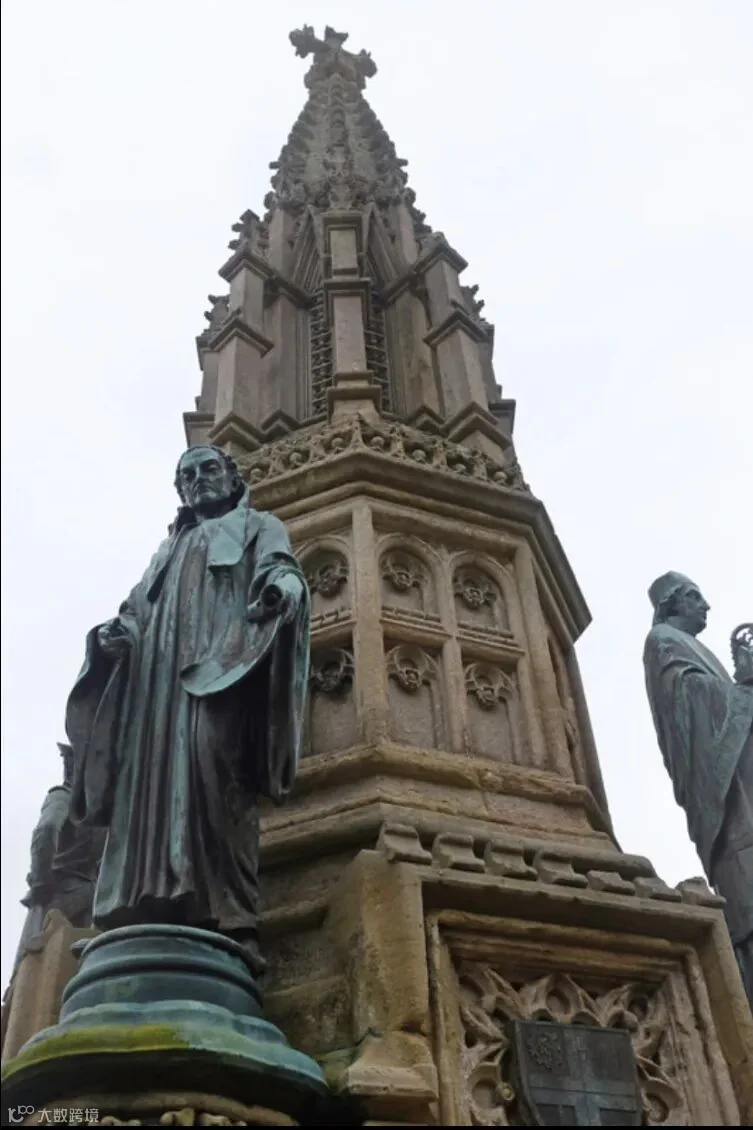
Digby monument
约翰·迪格比勋爵纪念碑
In recent years more individuality has been creeping into public remembrance. Obituaries have been loosening up to show a darker or more shambolic side. Some, often of academics, have provoked furious controversies of the sort the subject would have loved. Headstones, too, are breaking free of religion. They have been reimagined as pool tables, motorbikes, computer monitors, even a mobile phone. Steve Marsh of east London has a complete BMW; Lester Madden in Pittsburgh, a fan of “Jaws”, has the famous gaping shark. Like their medieval ancestors, some of the dead emerge and look about them. In Moscow Yuri Nikulin, one of the biggest stars of the Moscow State Circus, sits on his grave in his clown gear and smokes.
近年来,越来越多的个性化方式融入了公祭。讣告的形式更加宽松,被允许展现更加黑暗或混乱的一面。一些人,通常是学者,就一些本该被喜爱的纪念方式展开了激烈的争论。墓碑也正在打破宗教束缚。它们被重新构想成台球桌、摩托车、电脑显示器,甚至是手机。住在东伦敦的史蒂夫·马什的墓碑是一辆宝马车;匹兹堡的莱斯特·马登是“大白鲨”的粉丝,他有一条出名的张着大嘴的鲨鱼。就像中世纪的祖先的雕像一样,一些死者的雕塑在墓地上四下张望。在莫斯科国家马戏团的明星之一尤里·尼库林的墓碑上,他的雕像穿着小丑服,正坐在坟墓上抽烟。
More naturalness is creeping in too. Lord Digby’s statue, ensconced in Sherborne Abbey, is safe from time’s erosion. Outside, both words and memorials are bound to slowly disappear. In the grand cemeteries, where gardeners and groundsmen keep the avenues swept, the parts visitors favour are often far away from the starker, newer memorials, in odd corners or wooded patches where weeds have been allowed to rampage.
更自然的纪念方式也悄然出现。迪格比勋爵的雕像被安顿在舍伯恩修道院,可以远离岁月的侵蚀。在修道院外,文字和纪念物都注定会慢慢消失。在大公墓里,园丁和地勤人员经常清扫街道,游客喜欢的区域往往远离更显眼、更崭新的纪念馆,而是在奇形怪状的角落或是杂草肆虐的树林地带。
There, ox-eye daisies flourish from portentous box tombs, and the stone is softened by gold lichen; once-grieving cherubs wink from garlands of ivy, and extravagant calligraphy is worn to flourishes and flowers. With luck those names and inscriptions have been recorded somewhere; we mourn briefly for the recognition lost. Then we find a sunny spot among the leaning stones, and sit with them. As in the unmarked times, this is simply a return to death as nature, death as a part of life.
在那里,牛眼雏菊绽放于不祥的箱形坟墓,石头被金色的地衣温柔包裹;曾经面露悲伤的小天使们在常春藤花环中眨着眼睛,华丽的字体装饰着盛开的花朵。幸运的是,这些名字和碑文已被记录在某处;我们简单地为逝者的离去哀悼,然后在倾斜的石块中找到一个阳光充足的空间,和他们坐在一起。在这样一个籍籍无名的时代,简单地回归死亡是如此自然,因为死亡本就是生命的一部分。
Even that may be too formal. Headstones are expensive, and burial less common than it was. Small plaques for cremations are easily and gracefully effaced by rose bushes and grass. Park benches make a fine substitute for anything solemn in a churchyard, carrying hints of past carousing (“Chris, a jolly good fellow”) or past backache (“I always said they should put a bench here”.) The lighter the material, the closer to the flow of life. The best 1918 memorial I saw was one in which paper poppies had been fastened all over a weeping plum tree, whose old branches shimmered in the sunlight. Memorials are made by planting new trees too, their dedication often unknown beyond the family. It doesn’t matter. Here is something green, living and growing; not a slab of stone or marble, inert and dead. “Raise no commemorating stone,” wrote the poet Rilke, thinking of Orpheus. “It’s Orpheus where there’s singing.”
即便是这样也有些太过正式。墓石很昂贵,而埋葬方式也不像过去那样普遍。用于火葬的小牌匾被玫瑰丛和草地轻易而优雅地抹去。公园里的长椅可以很好地替代教堂墓地里任何庄严肃穆的物品,暗示着过往的欢乐,比如一个椅子上就刻着“克里斯,一个快乐的好人”;或是想起背痛,另一处刻着“我总是说他们应该在这里放一条长椅”。物品越简单,就越接近生命的流动。我见过的最好的1918年度纪念物是一棵挂满了罂粟花的梅树,它苍老的枝干在阳光下闪闪发光。纪念物也可以是种植的新树,他们的默默奉献通常不为家人所知。但没关系,这里有生机勃勃的绿色,而不是一块石头或大理石,毫无生气。诗人里尔克想到俄耳甫斯,写道:“不用竖立纪念碑。因为哪里有歌声,哪里就有俄耳甫斯。”
Past the “backache” bench on Hampstead Heath I once saw a straggling party of people walking with paper cups, preparing to scatter the ashes of a friend. They looked at me with embarrassed smiles. But this was what she wanted: nothing churchy, nothing fixed, just the wide view of London, the rioting brambles, friends remembering, the taking air. That was as good a memorial as any.
经过汉普特斯西斯公园的“让人想到背痛”的长椅时,我曾看到一群人拿着纸杯四处走动,准备把朋友的骨灰撒出去。他们看着我,略带尴尬地笑着。但这正是她想要的:没有什么教堂,没有什么要固守的,只有伦敦广阔的视野,喧嚣的荆棘,怀念的朋友,呼吸的空气。这就可以是一种很不错的纪念。
素材来源:
https://www.1843magazine.com/design/stranger-things/can-words-do-the-dead-justice
编译:金殊羽 于沛欣 韩旭 陈晓 郭诗萌
排版:于沛欣
部分图片源自网络
指导老师:刘佳