

编者按
说起LGBTQ群体,我们的第一反应通常是彩虹色。在与夏天一同到来的LGBTQ骄傲月,世界各个角落飘起彩虹旗,庆祝者们欢聚一堂,鲜艳热烈的彩虹色代表着我们在性解放和平权路上所付出的努力。然而,你是否知道,看似温柔、低调的薰衣草色,其实也是酷儿文化中的不可或缺的重要符号。薰衣草色背后的文化和历史,快来和小Q一起学学看吧!


Lavender
Every year, as summer beckons, Pride month arrives in a burst of color. Around the world, rainbow flags fly high and revelers turn their faces proudly towards the sky.
The multicolored flag has united the LGBTQ community for over 40 years, and though it remains a universal symbol of pride, liberation didn't always come in vibrant technicolor.
In fact lavender -- a subtle hue that shifts between light pinkish purples, and gray and blueish tones -- has had, despite its whimsical nature, its own historical significance in representing resistance and power.
每年,随着夏天的来临,人们迎来了色彩绚丽的LGBTQ骄傲月。全世界彩虹旗高飘,庆祝者们骄傲地望向天空。40多年来,这面五彩缤纷的旗帜把LGBTQ人群团结在了一起。现在,它仍是骄傲月的普遍象征,但性别解放并不总是以鲜艳的色彩出现。
事实上,薰衣草色——一种介于浅粉紫色和灰蓝色之间的淡色——尽管古怪难料,却在代表反抗和权力方面具有独特的历史意义。
注:LGBTQ是女同性恋者(lesbians)、男同性恋者(gays)、双性恋者(bisexuals)、跨性别者(transgender)和酷儿(queer)的英文字母缩略词。
艺术家最爱
Like many aspects of queer culture, it's not surprising that lavender's unique color symbolism often skirts under the radar, especially when it comes to mainstream society.
In Western culture it started life as a color of desire, thanks to the lyric genius of 7th century BC poet Sappho, whose papyrus fragments told of her erotic predilections for younger women with "violet tiaras." Fast forward a few centuries, and in the 1920s, violets were still drawing together members of the lesbian community, who gifted the delicate flowers as an expression of sapphic interest.
正如酷儿文化中的很多方面,薰衣草色独特的颜色象征十分低调,尤其是就主流社会而言。
在西方文化中,受到公元前7世纪的天才抒情诗人萨福的影响,薰衣草色最早象征欲望。她的部分莎草纸手稿记录了她对戴着紫罗兰花冠的年轻女性产生的同性之爱。几个世纪过去,直到20世纪20年代,紫罗兰仍然能够凝聚女同性恋群体,并被她们赋予了表达女性间同性之爱的内涵。
注:从19世纪末开始,萨福成为了女同性恋的代名词,“Lesbian”(意为女同性恋者)与形容词“Sapphic”(女子的同性爱)等,均源于萨福。由此,萨福也被近现代女性主义者和女同性恋者奉为始祖。
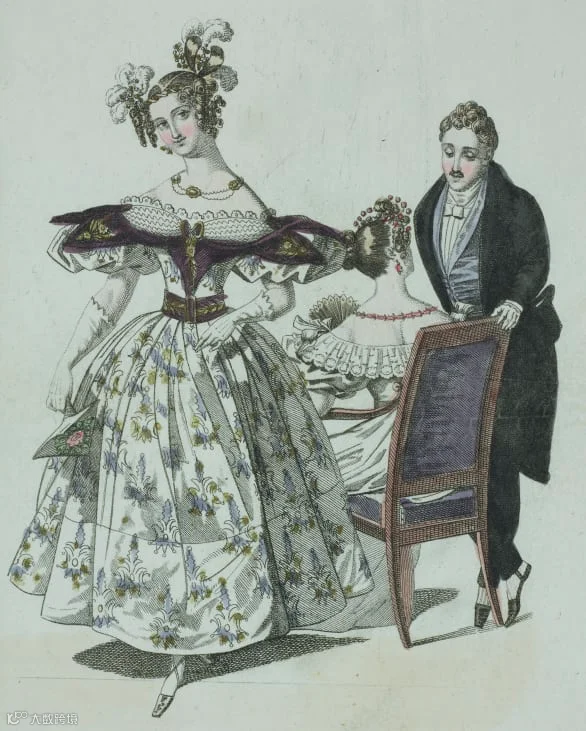
In an illustration from 1833 in France, a woman is pictured wearing a floral dress with purple velvet inserts. A man wears a formal suit, with lavender accents. Credit: De Agostini Editorial/Getty Images
在1833年法国的一幅插画中,一位女士穿着用紫色天鹅绒装饰的碎花连衣裙,旁边的男士穿着正装,并配有薰衣草色的内衬。图源:De Agostini/盖蒂图片社
Lavender
It wasn't until the 19th century -- with the accidental invention of a purple synthetic dye -- that the color would become popular in fashion. "Synthetic dyes ... allowed ordinary people to wear this special color," explained cultural historian and author of "The Secret Lives of Colour" Kassia St Clair.
Towards the end of the 19th century, however, the public began linking lavender with homosexuality. Aestheticism, a European arts movement was founded, eschewing Victorian wholesomeness and the perceived ugliness of the industrial age, in favor of beauty, passion and "art for art's sake."
Newspapers denounced Aesthetes as effeminate, not least one of the prominent leaders of the movement, Oscar Wilde, who frequently reminisced about his "purple hours" spent with rent boys, and provoked a moral scandal with the homoerotic themes in "The Picture of Dorian Gray."
直到19世纪,随着一种紫色合成染料的意外发明,薰衣草色才开始在时尚界流行起来。“合成染料……使普通人也能穿上这种特殊颜色的服装。”《色彩的秘密生活》的作者、文化历史学家卡西亚·圣克莱尔解释道。
然而,到了19世纪末,公众开始将薰衣草色与同性恋联系起来。与维多利亚时代的繁琐装饰和工业时代带给人感官上的丑陋感不同,欧洲唯美主义运动崇尚美、激情和“为艺术而艺术”。
报纸谴责唯美主义者过于女性化,尤其是该运动的杰出领袖之一——奥斯卡·王尔德。他经常回忆和男妓一起度过的“紫色时光”,并因《道林·格雷的画像》中的同性恋主题陷入了道德丑闻。
“薰衣草恐慌”
The 1930s marked the start of a dark period when lavender was cruelly lexicalized. Gay men in America were taunted for possessing a "dash" or "streak" of lavender, thanks in large part to Abraham Lincoln's biographer Carl Sandburg, who described one of the president's early male friendships as containing a "streak of lavender, and spots soft as May violets."
During the McCarthy era, there was state-sanctioned discrimination when president Eisenhower signed Executive Order 10450, which became part of a national witch-hunt to purge homosexual men and women from the federal government. Dubbed "The Lavender Scare" by historian David K. Johnson, the suffocating climate of fear and suspicion subsequently led to around 5,000 federal agency employees losing their jobs on the basis of their sexuality.
20世纪30年代,“薰衣草色”遭到恶意解读,这标志着一段至暗时期的到来。当时,人们奚落美国同性恋男性,说他们身上带有“一抹”薰衣草色,而这很大一部分归咎于亚伯拉罕·林肯的传记作家卡尔·桑德伯格,因为他曾用“带有一抹薰衣草色,如同五月的紫罗兰一样温柔”形容过总统早期的一段男性友谊。
在麦卡锡时代,艾森豪威尔(美国第三十四任总统)签署了第10450号行政令,从国家层面合法化了对同性恋的歧视。这条行政令成为了当时全国性政治迫害的一部分,目的是为了清除联邦政府中的同性恋群体。历史学家戴维·k·约翰逊将这一事件称之为“薰衣草恐慌”,那种人人焦虑、相互猜忌的令人窒息的氛围随后导致了近5000名联邦政府工作人员因性取向问题而失业。
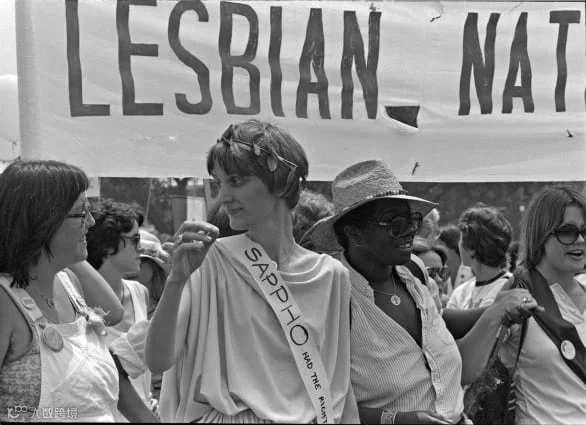
A group of women, one dressed as Greek poet Sappho, gather on the National Mall before the Equal Rights Amendment March. Credit: Ann E. Zelle/Getty Images
在平等权利修宪案大游行之前,一群女人聚集在国家广场上,其中一名女性打扮成了希腊诗人萨福的样子。图源:Ann E. Zelle/盖蒂图片社
Lavender
In 1969, the color came to symbolize empowerment. Lavender sashes and armbands were distributed to a crowd of hundreds in a "gay power" march from Washington Square Park to Stonewall Inn in New York, to commemorate the Stonewall riots that had just taken place a month before.
It was also the year president of the National Organization for Women, Betty Friedan, denounced the lesbian membership she believed would threaten the feminist movement as a "Lavender Menace." This time, there was backlash. At the 1970 Second Congress to Unite Women, a group of radical activists wearing hand-dyed purple T-shirts printed with the words "Lavender Menace" stormed the stage and kickstarted a conversation on the very topic Friedan had struggled to suppress: lesbianism.
1969年,薰衣草色成为了为同性恋群体赋权的标志。在一场从华盛顿广场公园到纽约石墙酒吧的“同志力量”游行中,薰衣草色的肩带和臂章被分发给了数百人。这场游行是为了纪念一个月前刚发生的石墙事件。
注:石墙事件是同性恋维权历史上标志性事件,引发了美国乃至全世界范围的同性恋群体的维权行动。事件起因是石墙酒吧(同性恋酒吧)里同性恋者和警察间的暴力冲突。
同年,全国妇女组织主席贝蒂·弗里丹公然指责女同性恋成员会威胁到女权运动,并将该群体称为“薰衣草威胁”。这一次,她遭到了公众的强烈反抗。在1970年第二届团结妇女大会上,一群激进分子冲上了主席台,她们身穿手工染制薰衣草色T恤,T恤上印有“薰衣草威胁”的字样。该运动引发了一场关于女同性恋的讨论——这是此前弗里丹一直想要封杀的话题。
Lavender, however, can't always be neatly defined in terms of pain or protest.
Throughout history, there are endless references to its subversive possibilities, allowing LGBTQ people to express the full range of their humanity. Take the late actor and writer Quentin Crisp, whose lavender tresses were a way of visually disrupting gender norms, right up until his 90th birthday, when he held a party complete with lavender "napkins, the plates and the frosting on the cake."
不过,薰衣草色并不总是只意味着痛苦和反抗。
纵观历史,“一石激起千层浪”的案例不尽其数,让LGBTQ群体有机会解放自己的天性。如已故演员、作家昆汀·克里斯普,他的薰衣草色长发就从视觉上颠覆了性别规范。在他90岁的生日派对上,“餐巾纸、盘子和蛋糕上的糖霜”也都是薰衣草色的。
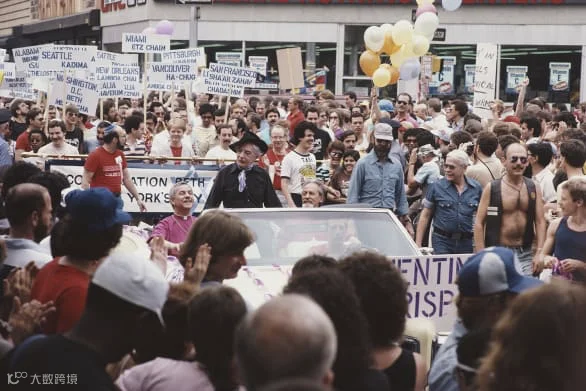
English writer and raconteur Quentin Crisp at New York's Gay Pride parade in June 1982. Credit: Barbara Alper/Getty Images
1982年6月,英国作家昆汀·克里斯普参加纽约同志骄傲大游行。图源:Barbara Alper/盖蒂图片社
时尚圈新宠
Lavender
These days, the color is being worn with confidence, nonchalance and something that feels like defiance; a nod, perhaps, to the radical protest spirit of the '70s. "Most simplistically, fashion tends to be cyclical, so colors that haven't been in the public eye for a while are often picked up and reinterpreted by designers," said St Clair. "The interlude allows the designers to reinvigorate them: they feel fresh all over again."
The color, St Clair said, has been buoyed by the milestones achieved by the LGBTQ community in recent years, including some country's moves to legalize same-sex marriage, and in the US, gay mayor Pete Buttigieg's presidential run and last year's Met Gala theme of "Camp: Notes on Fashion." The "attacks on gay and transgender civil rights by the current administration," she added, has also increased the spotlight on the community, encouraging them "to rally around each other and explore and celebrate identifying symbols that have been important to them in the past."
如今,人们穿着薰衣草色的衣服,满怀自信、淡然,还带有一种反抗的感觉。这或许也是一种对70年代激进抗议精神的致敬。“简单来说,时尚是一种轮回。那些有段时间消失在大众视野内的颜色经常重新获得设计师们青睐,加以重新诠释。设计师们利用这一空白期给它们重新注入活力,让它们焕然一新。”圣克莱尔说。
圣克莱尔说,近年来,LGBTQ群体取得了一些里程碑式的成就:一些国家将同性婚姻合法化,美国同性恋市长皮特·布蒂吉格参与总统竞选,以及去年纽约大都会艺术博物馆慈善晚宴的主题“坎普:时尚札记”。她补充说,现任政府对同性恋和跨性别者公民权利的攻击增加了社会对这个群体的关注,也激励他们“团结一心,去探索,去庆祝那些过去对他们意义深重的符号”。
注:坎普(Camp)是一种浮夸的、颠覆性的、有戏剧性效果的风格。
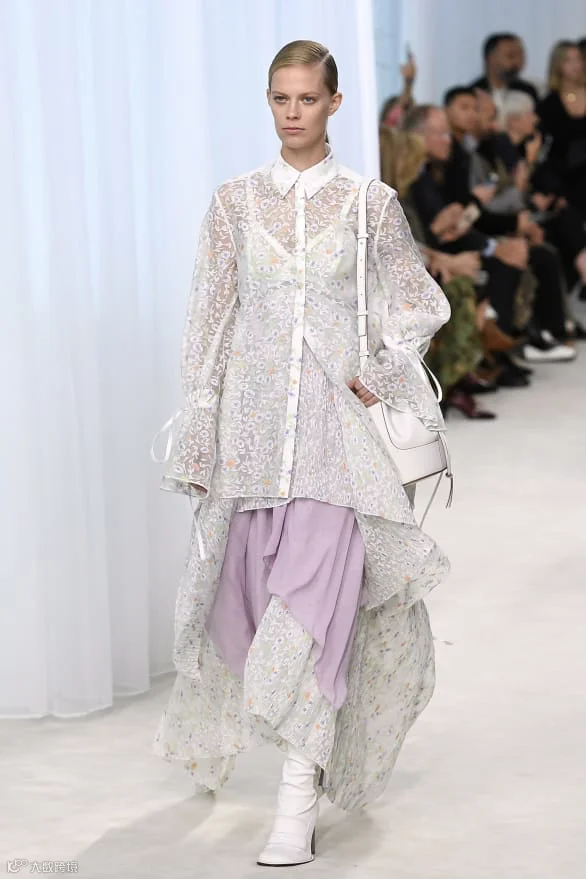
A model presents a creation by Loewe during the Women's Spring-Summer 2020 Ready-to-Wear collection fashion show in Paris on September 27, 2019. Credit: Christophe Archambault/AFP/Getty Images
2019年9月27日,一名模特在巴黎2020年春夏女装成衣秀上展示罗意威的作品。图源:Christophe Archambault/法新社/盖蒂图片社
Perhaps it's why we're seeing the color's resurgence on the spring-summer 2020 catwalks. Or more explicitly celebrated by editor-at-large of American Vogue Hamish Bowles in his flamboyant Maison Margiela Artisanal ensemble at the 2019 Met Gala. If there's one image that shows LGBTQ people that there is a joyous life out there, it's surely Bowles flicking his fringe-lined cape with campish flair.
可能这就是我们再次在2020春夏的秀场上看到薰衣草色的原因。2019年的纽约大都会艺术博物馆慈善舞会上,美版Vogue的特约编辑哈密什·博尔斯身穿艳丽的Maison Margiela套装(Artisanal男装系列),则更直观地诠释了这点。如果说有一个画面能向LGBTQ群体证明他们也能拥有肆意的人生,那一定是博尔斯故作夸张抖动流苏边披肩的画面。
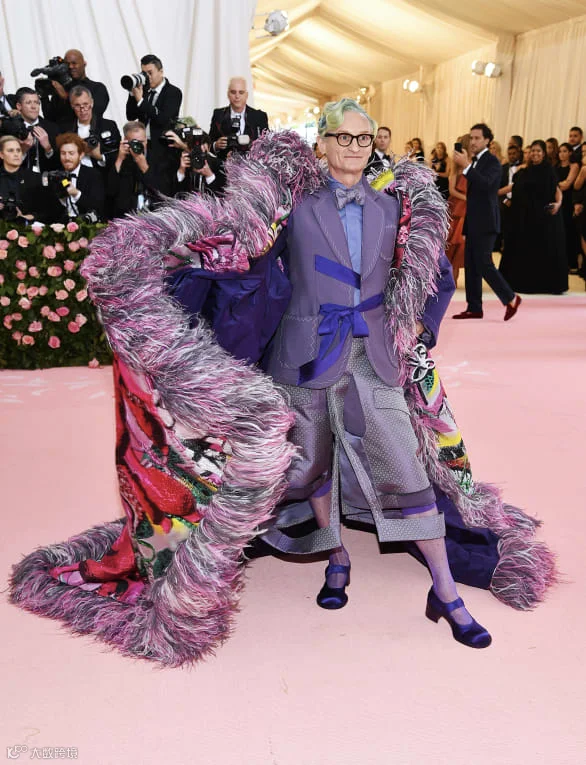
Hamish Bowles attends The 2019 Met Gala Celebrating Camp: Notes on Fashion at Metropolitan Museum of Art on May 6, 2019 in New York. Credit: Dimitrios Kambouris/Getty Images
2019年5月6日,哈密什·博尔斯参加纽约大都会艺术博物馆慈善舞会。图源:Dimitrios Kambouris/盖蒂图片社
Lavender
At that same event, Lena Waithe chose a lavender Pyer Moss suit to make a defiant political statement. Amid the sea of glitter and sequins, Waithe stood proud, the stripes of her ensemble stitched with the lyrics of songs sung by Diana Ross and Sylvester, buttoned with the faces of camp pioneers, and emblazoned across the back, a bold message: "Black Drag Queens Inventend (sic) Camp." Standing on the steps of a powerful institution, Waithe seemed to herald a new era for the LGBTQ community; one in which people can now live their truth in full color.
同样出席活动的丽娜·维特选择了一套Pyer Moss的薰衣草色套装来表达自己挑衅的政治态度。在亮片礼服的海洋中,维特骄傲地站直,她套装上的条纹绣着戴安娜·罗斯和西尔维斯特的歌词,扣子上是坎普风格先驱的面孔,套装背后印着大胆的标语:“黑人变装皇后开创了坎普潮流”。站在博物馆的台阶上,维特仿佛预示了LGBTQ群体新时代的来临:在这个新时代,所有人都能活出自己的本色。
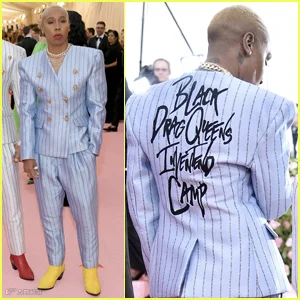
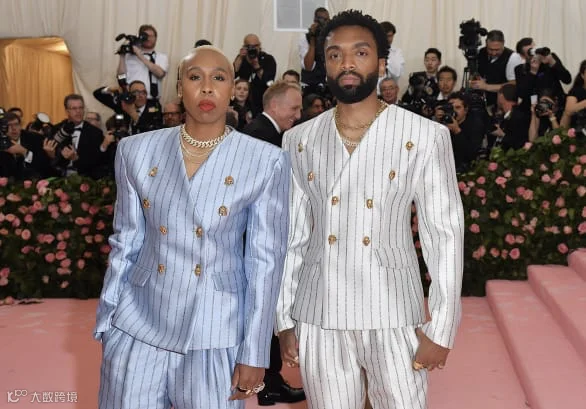
Lena Waithe and Kerby Jean-Raymond arrive for the 2019 Met Gala at the Metropolitan Museum of Art on May 6, 2019 in New York. Credit: Angela Weiss/AFP/Getty Images
2019年5月6日,丽娜·维特和克比·让-雷蒙德参加纽约大都会艺术博物馆慈善舞会。图源:Angela Weiss/法新社/盖蒂图片社
素材来源:https://edition.cnn.com/style/article/lgbtq-lavender-symbolism-pride/index.html
编译:李旻艺 黄思谊 陆风后 刘宇航 周冰倩 马林
排版:陆风后
指导老师:刘佳