



Friendly nurse or nightmare inducing machine?
How culture programs our taste in robots.
亲和友善的护士还是催生噩梦的机器?
文化如何影响了人类对机器人的审美设计?
本文中英字数:3400字
阅读时间: 15分钟
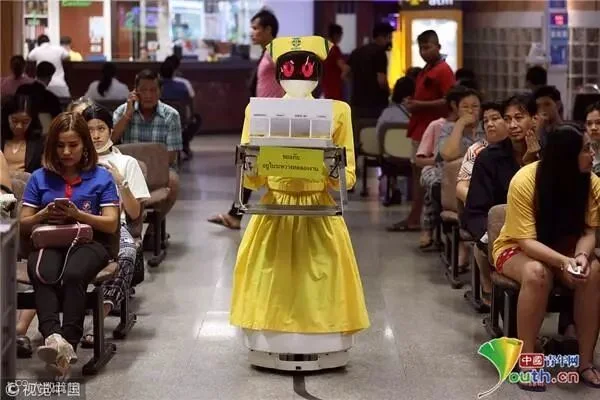
This is Thailand’s idea of an attractive robot. Americans might be terrified.
这是泰国人眼中极具吸引力的机器人,可能会把美国人吓一跳。
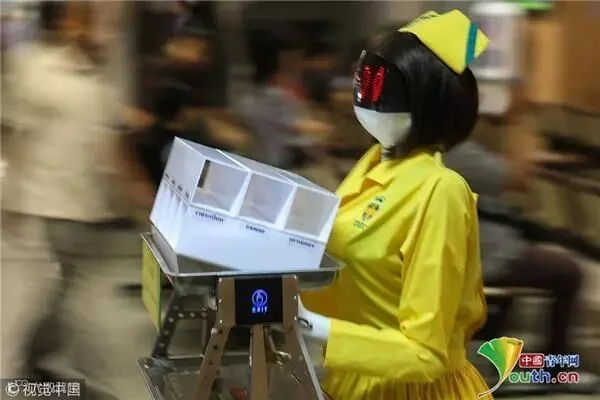
Slowly and silently, they glide across the floor wearing bright yellow dresses that look as though they were plucked from a haunted 1920s boarding school.
Beneath shoulder-length brown wigs, two blazing red eyes — each one massive and ghoulish — glare from behind a darkened pane of transparent plastic like a demonic predator lurking in the dark.
她们悄无声息地缓缓滑过地面,身上的明黄色裙子仿佛是从1920年代一所闹鬼的寄宿学校里拽出来的。
棕色齐肩假发下面,是一双闪着红光的眼睛 -- 大得离谱,狰狞恐怖 -- 透过暗色的透明塑料板直瞪着你,如同潜伏在黑暗之中的掠食恶魔。
No, you haven’t encountered some Mothman-like terror entombed inside a department store mannequin, the byproduct of a twisted, futuristic fever dream. You’ve merely stepped inside Mongkutwattana General Hospital in Bangkok, where a team of robot nurses has been unleashed to make life easier.
Their job: ferrying documents between eight stations inside the health-care facility, a job that used to be carried out busy human nurses, hospital director Reintong Nanna told Newsflare last year.
不,你遇到的不是附体在商场假人模特身上的天蛾人恐怖怪物,一个扭曲而狂热的未来主义梦想的副产品。你只是走进了曼谷的Mongkutwattana综合医院,一组机器人护士在这里上岗,让生活变得更轻松。
医院院长Reintong Nanna去年对Newsflare说,他们的工作是在医疗设施内的8个站点之间运送文件,这一工作过去是由忙碌的人类护士做的。
“These robotic nurses help to improve the efficiency and performance of working in the hospital,” he said. “They are not being used to reduce the number of employees.”
The trio of unsmiling machines — which can be programmed to speak both Thai and English — have been named Nan, Nee and Nim, according to the news outlet. Nanna said they move by following a magnetic strip that winds across the hospital floor, and can travel several miles each day.
他说:“这些机器人护士的作用是提高医院的工作效率和能力,但并不是为了削减(人类)雇员。”
据新闻报道,这三台面无笑容的机器会说泰语和英语,它们分别名叫Nan,Nee和Nim。 Nanna说它们根据在医院地板上划好的磁线移动,每天可以“走”好几英里。
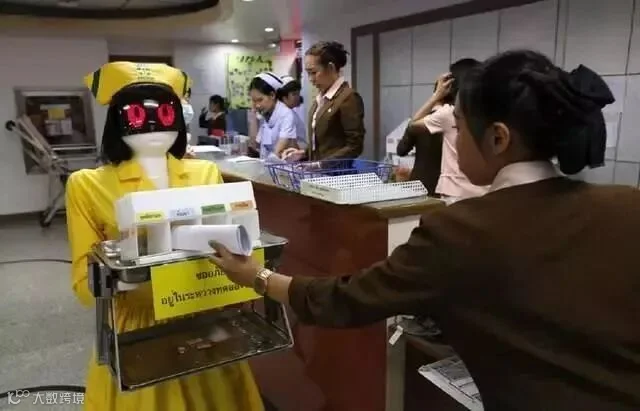
Because they reduce human error, he added, the hospital plans to increase their workload to include moving equipment and preparing drug dosages.
Humanoid robots are taking a more active role in caring for the sick and elderly in Asia, but don’t expect to see similar machines roaming the halls of U.S. hospitals any time soon. That’s because robot design is often culture-specific, with some countries excitedly deploying machines that would probably terrify sickly patients in other countries, according to Cory Kidd, founder and CEO of Catalia Health, which has designed its own smiling, doe-eyed “personal healthcare robot” named “Mabu.”
他补充说,因为机器减少了人为失误,所以医院计划增加他们的工作量,包括移动医疗设备和准备药物剂量。在亚洲,仿真机器人在照顾病人和老人方面发挥着越来越积极的作用,但预计近期内不会有类似的机器出现在美国医院的大厅里。Catalia Health公司的CEO兼创始人 Cory Kidd说表示这是因为机器人的设计往往与特定文化有关:一些国家愿意积极部署机器人;而对其他国家而言,可能会吓坏病人。这家该公司设计出了一款面带微笑、眼神纯洁的“个人医疗机器人”,名为“Mabu”。
His reaction to the glowing red eyes currently staring down Thai patients: “They’re creepy."
“Robot aesthetics are culturally dependent,” he said, noting that the Thai hospital bots were designed in China. “If we had these nurses in a U.S. hospital, that would not work. They wouldn’t survive a day. But they might be received completely differently in Thai hospitals.”
至于那些目前正在泰国医院里看护病人的医护机器人,Kidd觉得它们非常吓人。他认为,人们对于机器人的审美取决于他们的文化背景,泰国医护机器人是由中国人设计的。“这种医护机器人如果在美国,根本行不通,一天都不行,但在泰国医院,人们对它接受度就完全不一样了。”
different countries
different voices
Online surveys have revealed contrasts in how robots are perceived by country as well. While both Europeans and Japanese respondents agree that robots should be used to assist with difficult and repetitive tasks, the nature of acceptable tasks — and the degree of intimacy involved — differs widely, according to a team of international researchers.
线上调查也显示出了不同国家对机器人的认知差异。
根据一组国际研究人员的观点,虽然欧洲和日本的调查对象都同意机器人应该被用来帮助人们解决困难、重复的任务,但是,可接受任务的性质和涉及到的隐私程度之间有很大的差异。
Japan
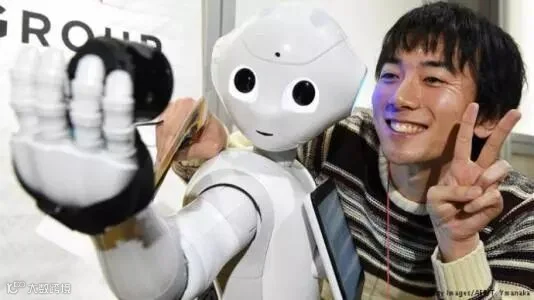
In their 2014 article “Cultural Differences in Perception and Attitude Towards Robots,” researchers note that Japanese respondents associate the word “robot” with more autonomy and emotional capacity than other countries.
在研究人员2014年发表的文章《对机器人的看法和态度上的文化差异》中提到,相比其他国家,日本的调查对象会更多的把“机器人”这个词与自主性和情感能力联系在一起。
Perhaps that explains another startling difference: Japanese respondents were far more likely to say that they’d let a robot directly touch their bodies than Europeans — while giving a massage, for example.
Researchers also found that “Japanese would rather let a robot baby sit their children than take care of animals.”
或许这也解释了另一个惊人的不同:日本受调查者可能比起欧洲的更能接受让机器人直接触摸他们的身体,比说做按摩。相关研究人员也发现,“比起照料动物,日本人更愿意让机器人来照看他们的孩子。”
America
Americans, meanwhile, remain strongly resistant to help of any kind from robots, according to the results of a Brookings Institution survey last year. The survey revealed that 61 percent of U.S. adult Internet users were “somewhat” or “very uncomfortable” with robots, with only 20 percent of respondents indicating that they were interested in robots that could assist in domestic chores.
“I think the care-taking part is going to take a bit more time for people to be comfortable with,” Darrell West, director of the Center for Technology and Innovation at the Brookings Institution, told Recode
与此同时,从布鲁金斯学会去年的调查结果来看,美国人对接受机器人的帮助仍怀有强烈的抵制情绪。这项研究表明,61%的美国成年网民对机器人有“些许”或者“强烈”的不适感,而表示对能帮人做家务的机器人感兴趣的受访者只占20%。布鲁金斯学会科创中心的主任Darrell West告诉Recode:“我认为人们需要多一点的时间去适应‘机器照顾人’这件事。”
affinity or fear
Kidd, an MIT-trained roboticist who has spent decades studying the psychology of human-robot interaction, said different attitudes about robots reflect different visions of the future. He said that in Japan, for example, many researchers envision a world in which robots behave as naturally as humans. That premise has led Japanese researchers to begin building lifelike androids that resemble humans as closely as possible.
Kidd是毕业于麻省理工学院的机器人专家,数十年来一直在研究人类与机器人的交互心理学。他表示,对机器人的不同态度反映了多可能的未来,比如在日本,许多研究人员勾勒出一个机器人的行为举止与真正的人类如出一辙的未来世界。这个预判使得日本研究人员开始设计行为举止尽可能与人类接近的栩栩如生的机器人。
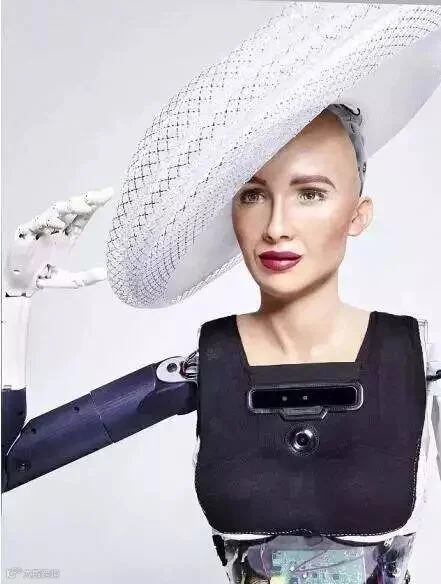
机器人Sophia
The result has been robots like Erica, a brunette with pale, humanlike skin and the ability to produce facial expressions. Though she’s trained to work as a receptionist and can respond to questions like Amazon’s Alexa, she has a penchant for staring into the distance in a way that can feel unsettling.
结果就产生了像Erica这样的机器人。一头金发,皮肤像真人般白皙,能做出各种表情。尽管她受训成为一名接待,能像亚马逊公司的ALEXA一样回答问题,但也有一个奇怪的爱好:用一种令人不安的姿态凝视远方。
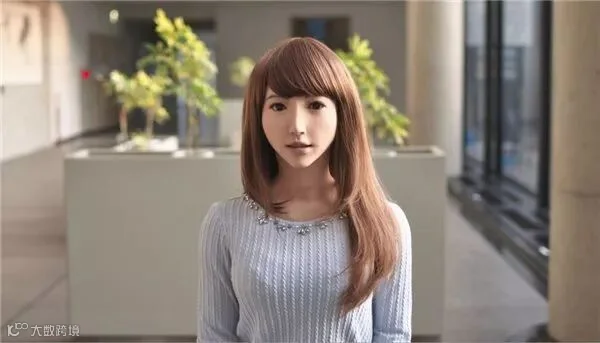
机器人Erica
Professor Hiroshi Ishiguro, a famed roboticist, designed his first android to closely resemble his daughter, a decision that so frightened her that the machine had to be locked in a crate, according to Bloomberg News. He considers Erica — which Bloomberg News referred to as possibly “the creepiest robot ever built” — a vast improvement.
据彭博社报道,著名机器人专家Hiroshi Ishiguro教授根据女儿的外貌,设计出第一个仿真机器人,结果吓坏了女儿,教授不得不把这个机器人锁在箱子里。彭博社称Erica可能是“有史以来最令人毛骨悚然的机器人”,但Ishiguro教授认为这是一个巨大的进步。
“I think that this is the most beautiful face in the world,” Ishiguro, a professor at Osaka University’s Intelligent Robotics Laboratory, told Bloomberg News. “She’s cute, isn’t she?”
Ishiguro教授在大阪大学智能机器人实验室工作,她在接受彭博社采访时说:“我认为这是世界上最美的脸。她很可爱,不是吗?”
That’s probably up for debate, Kidd said.
Kidd则说这点有待商榷。
Robots that closely resemble humans often invoke the “uncanny valley,” a concept that suggests people respond positively to androids that look or behave like us, but only to a point. When the likeness becomes too strangely familiar, the affinity vanishes, a backlash occurs, and people find robots creepy and revolting.
For many observers, a good example of concept in action is “Geminoid,” another Ishiguro creation.
与人类非常相似的机器人常常会引发“恐怖谷理论”,该理论认为人们在一定程度上,会对与我们看起来或者行为相近的机器人有积极的回应。但当相似度变得异常的高时,这种亲密感就会消失,反而会出现强烈的抵制感,且人们会觉得机器人很诡异,很恶心。
对于很多观察者来说,该理论的一个很好的实例就是Ishiguro的另一个发明“Geminoid”。
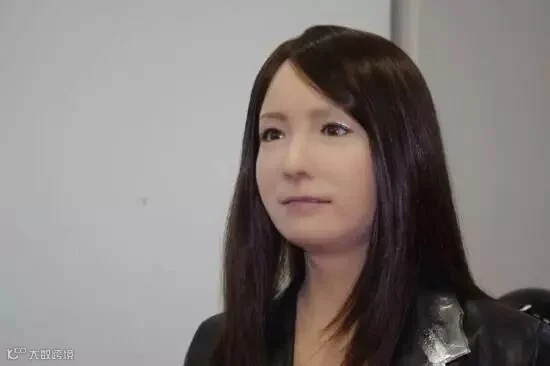
机器人Geminoid
The trick for roboticists is finding the line between affinity and fear. Or, as Kidd puts it: “How do you put machines in front of people without making the devices feel creepy?”
机器人专家的诀窍是找到人们的好感度和恐惧之间的界限。换而言之,正如Kidd所言:“你如何把机器放在人们面前而不让它显得毛骨悚然?”
His advice:
A robot needs to be tailored to its context. If it’s delivering towels in the back of the hospital, it can look like a simple cart. But if the robot is being designed to interact with people, the machine needs to be able to perform its job without upsetting them. One of the first things he suggests is giving a robot the ability to make eye contact with people, a feature he included in Mabu, which was designed to tilt its head, blink and interact socially.
“Eye contact makes a big difference,” he said. “Even if you know it’s a machine, that doesn’t matter. They need to be eyes that can look at you, and they can’t be creepy.”
他建议说:机器人需要与它的使用环境相适配。如果是被用来在医院后面送毛巾,它就可以做的像一个简易手推车。但如果是需要与人互动的机器人,在它履行职责的时候至少不能令人不适。他的建议里最重要的一条就是机器人必须能做到和人眼神交流,这一点是他设计的机器人Mabu的一大特色——可以歪头、眨眼以及社交。“眼神交流作用很大,”他说,“哪怕你知道它是机器人,也没关系。它得能注视着你,而且不会吓到你。”


来源:华盛顿邮报
编译:国际新闻编译项目组
排版:陈雨昕
指导老师:刘佳