
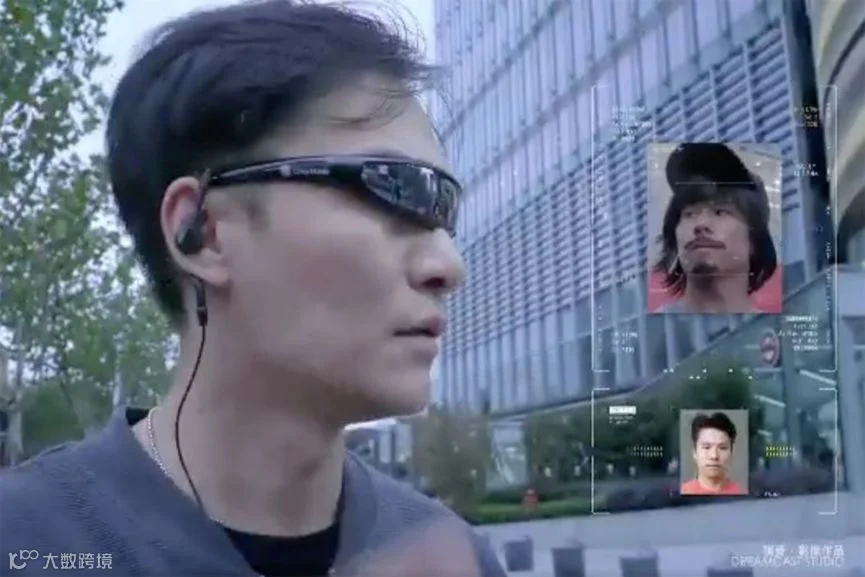
In a scene reminiscent of a Hollywood blockbuster’s trailer, a Chinese policeman dons a pair of futuristic facial recognition–equipped sunglasses. He scans each member of the crowd at Shanghai’s People’s Square subway station. Before long, he pinpoints a crook—whose disguise may have fooled humans, but not technology—and starts chasing him down.
在一个让人联想到好莱坞大片预告的场景中,一名中国警察戴上了一副具有未来感和人脸识别功能的太阳镜。他扫视了上海人民广场地铁站的每一位乘客。很快,他就发现了一个罪犯——他的伪装可能骗过了人类,但骗不了高科技——他开始追捕这个罪犯。
The video is an advertisement for state-owned telecom giant China Mobile’s new 5G network. The voiceover in Mandarin at the end of the clip doesn’t endorse facial recognition outright, but it does boast that 5G is speedy enough to make “smart cities possible.”
这段视频是国有电信巨头中国移动新5G网络的广告。视频最后的普通话画外音并没有直接为人脸识别进行宣扬,但它确实夸口说5G的速度足以让“智慧城市成为可能。”
People around the world are grappling with facial recognition. Earlier this month, it was officially banned in San Francisco. Congress recently held a hearing about the pitfalls of the technology. Meanwhile, a backlash broke out in the U.K. last week after a Welsh man complained that the authorities breached his privacy with facial recognition, prompting police to defend what they call a valuable crime-prevention tool.
世界各地的人们都在努力解决人脸识别的问题。本月初,人脸识别在旧金山被正式禁止。美国国会最近就这项技术的缺陷举行了听证会。与此同时,上周一名来自威尔士男子抱怨称,当局通过人脸识别侵犯了他的隐私,在这之后,英国民众对此表示强烈反对,并要求警方为所谓的预防犯罪的宝贵手段做出解释。
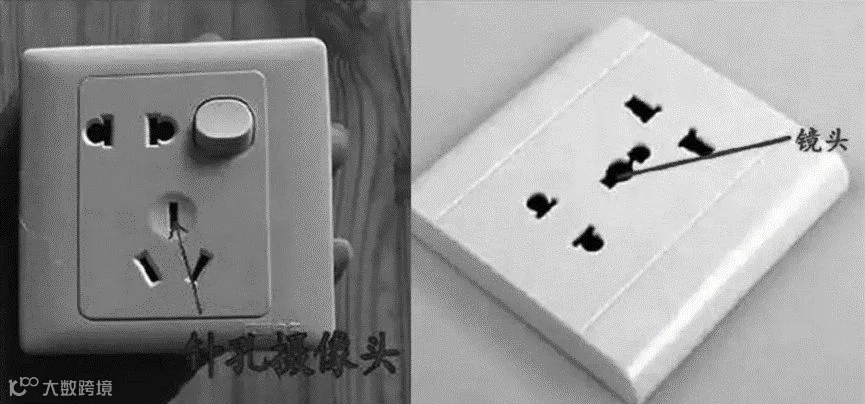
All that pales in comparison with China’s usage of the technology. There are also concerns that facial recognition will be abused nationwide. Cameras equipped with the technology have sprung up alongside most major Chinese city streets, and even in some public bathrooms.
与中国对该技术的运用相比,所有这些都相形见绌。在中国也有人担心,人脸识别将在全国范围内被滥用。配备了该技术的摄像头在中国很多大城市的街道上如雨后春笋般出现,甚至出现在一些公共厕所里。
Alarming as such widespread state surveillance might seem to many Westerners, much of the Chinese population has welcomed its increasing ubiquity. As author Jianan Qian wrote in a New York Times op-ed, “Many people in China seem to be happy about the physical security promised by the surveillance network. Our mind-set, long ago, was wired to see safety and freedom as an either-or choice.”
尽管如此广泛的国家监控在许多西方人看来令人担忧,但是大部分中国人对其日益增长和普及表示欢迎。正如作家钱佳楠在《纽约时报》的一篇社论中所写的那样,“许多中国人似乎对监控网络所承诺的人身安全感到高兴。很久以前,我们的思维定势就是安全和自由只能二选一。”
That sentiment is echoed by Alfred Wu, an associate professor at the National University of Singapore’s Lee Kuan Yew School of Public Policy. He told me, “People care most about efficiency and order in China. They are not really concerned with so-called privacy.”
新加坡国立大学李光耀公共政策学院副教授Alfred Wu也有同感。他告诉我,“在中国,人们最关心效率和秩序。他们其实并不关心所谓的隐私。”
Privacy is certainly not paramount for the policeman in the China Mobile ad, who scans countless faces before zeroing in on his suspect and chasing him through the crowded Shanghai subway. One Chinese viewer of the ad, Fan Popo, said he couldn’t help but be “impressed with how well this video is made.” And while he liked the quality of the ad, he was troubled by the themes behind it, saying, “It’s promoting how facial recognition is supposedly helping to improve society, and if you don’t accept it you will have bad people running away without being caught.”
对于中国移动广告中的警察来说,隐私显然不是最重要的。在锁定嫌疑人并在拥挤的上海地铁中追上他之前,他扫描了无数张脸。一位中国观众Fan Popo在看了这个广告之后说,他没有办法不对“这段视频的制作效果印象深刻”。不过虽然他喜欢这则广告的质量,但他也对广告的主题感到困惑。他说,“这是想证明人脸识别可以如此改善社会,如果你不接受它,罪犯就会逃跑而不会被逮捕。”

However, average citizens might not feel such pressure from on high when they think of facial recognition, which has become part of consumer life too. Cosmopolitan Chinese increasingly turn to face scans for chic conveniences, including paying for the subway and KFC. That trust may be misplaced: A recent survey found the “pay with your face” function on Alipay, a widely used Chinese app, to only be 70 percent accurate, well below the 90 percent accuracy pledge that Alipay made five years ago. But Wu says that such issues haven’t phased many Chinese users, in part because the technology’s potential for convenience and efficiency is high.
然而,当普通市民想到人脸识别时,他们可能不会感受到如此大的压迫感,因为人脸识别已经成为消费者生活的一部分了,全世界的中国人越来越多地开始使用面部扫描以寻求便利,包括人脸识别支付地铁票和肯德基。这种信任可能是错误的(它可能辜负了你的信任):最近的一项调查发现,支付宝——这个中国人广泛使用的应用程序——所拥有的“人脸识别”支付功能只有70%的准确率,远远低于支付宝五年前承诺的90%的准确率。但Wu说,这类问题还没有出现在大多数中国用户的生活中,部分是因为这项技术在便捷性和效率方面有着巨大潜力。

Matthew Brennan, co-host of the China Tech Talk podcast, is hesitant to make blanket statements—pointing out that plenty of cosmopolitan Chinese share values and viewpoints with Westerners—but he does suspect that facial recognition is widely accepted in China for deeply cultural reasons. He calls China a “low-trust society, while Western societies tend to be high-trust.” Brennan chalks that difference up to rampant scams, from street corners to social media feeds, that have long plagued the People’s Republic of China with uncertainty.
China Tech Talk播客的搭档主持人Matthew Brennan,不想对此事一概而论。他指出,虽然许多世界各地的中国人与西方人有着相同的价值观和见解,但是他怀疑,人脸识别在中国被广泛接受的原因可能和深层文化有关。他称中国是一个“低信任度的社会,但是西方社会往往是高度信任的社会”。Brennan将这种差异归因于猖獗的骗局,从街头巷尾到社交媒体推送,这些骗局给中国带来了长期的困扰和不确定性。
“In business, Westerners tend to trust people until they prove themselves untrustworthy, but the opposite is true in China,” Brennan said. “It stems back to the deep tradition of guanxi, or relationships, where friends introduce you to people you can trust for tasks or transactions.” He thinks most domestic viewers of the China Mobile supercop ad would “see it putting forth strength to hunt down bad actors. Meanwhile in Western society, we’d say the state has too much control, and facial recognition is being used for negative purposes. It boils down to perceptions of trust.”
“在商业上,除非有证据证明此人不值得信任,否则西方人都倾向于相信他人。但在中国情况正好相反。 ”Brennan说,“这要追溯到“关系社会”的深厚传统,即朋友把你介绍给你可以信任的人以便完成工作或进行交易。”他认为,中国移动超级警察广告的大多数国内观众会“认为它在打击罪犯方面发挥了力量”。与此同时,在西方社会,我们却会说国家管控太多,人脸识别会被用于不良目的。这些归根结底就是对信任的理解。”
Despite that thoughtful take, Brennan was right to be hesitant about making blanket statements. There was no shortage of nuanced comments made by Chinese viewers of the China Mobile ad on microblogging website Weibo. For instance, one commenter wondered, “What if a bad guy uses this facial recognition technology to cheat you?” Another wrote, “5G is ushering in a scary, naked period, where personal rights mean nothing compared to the rights of the broader public.”
尽管Brennan的观点经过深思熟虑,但他对发表笼统的声明的犹豫是正确的。中国观众在微博上对中国移动的广告发表了很多微妙的评论。例如,一位评论者怀疑道,“如果罪犯通过使用这种人脸识别技术来欺骗你呢?”另一位写道,“5G正在引领一个可怕的隐私赤裸时代,在这个时代,个人权利与更广泛的公众权利相比显得毫无意义。”
来源 | Future Tense
编译 | 周盈 戴乐彤
排版 | 周盈
指导老师 | 刘佳