

我们都知道大师的绘画作品能够体现画家的人生经历,性格特点,甚至时代风貌。但你听说过从这些作品中判断画家所患疾病甚至死因吗?本期Quriosity带你一探究竟。
全文字数:3741
阅读时间:10分钟
The curious subculture of diagnosing dead artists by their work
通过作品来探究死去艺术家的小众偏好

"Doctors love to play at diagnosis," admitted Dr. Michael F. Marmor, a Stanford University ophthalmology professor and author of several books about artists and eyesight. Most physicians reserve their diagnoses for patients, but there is a subculture of medical professionals fascinated by the health problems of famous, dead artists -- and how they affected their work.
“医生们喜欢在诊断上做文章,” 斯坦福大学眼科教授Michael F. Marmor 博士承认道。他还写过几本关于艺术家和视力的书。大多数医生为病人诊断,但也有一些比较小众的医疗人员痴迷于诊断某些去世的大艺术家的健康问题,以及这些健康问题如何影响其作品。
As disciplines, art history and medicine share important similarities: Both fields require close observation and some guesswork, attracting practitioners who love a good puzzle. Recently, the two have become even more intertwined.
作为学科而言,艺术史和医学有着重要的相似之处:两个领域都需要密切观察和猜测,吸引着喜欢解谜的从业者。近年来,两者变得更加密不可分。
Medical schools around the US are increasingly incorporating art classes into their programming, and research shows that looking at artwork can help doctors improve their observation skills. This correlation might explain why some physicians have taken an interest in studying the lives and works of creative masters, aided by their special set of diagnostic skills.
美国各地的医学院越来越多地将艺术课程纳入其课程规划,而且研究表明,观看艺术作品可以帮助医生提高他们的观察力。这种相关性可能可以解释为什么有了特殊的诊断技能,有些医生对研究艺术大师的生活和作品产生了兴趣。
Peer-reviewed medical journals are peppered with studies that posthumously diagnose the illnesses of artists, using data that ranges from medical records to, in rare cases, the artist's physical remains. Most commonly, though, such medical connoisseurs turn to the deceased's body of work for clues.
同行评议的医学期刊上有不少这类研究:使用从医疗记录到艺术家遗体(这种情况很少)的种种数据,对其疾病进行死后诊断。不过,最常见的情况是,这类医学鉴赏家转向死者的作品,从中寻找线索。
Leonardo da Vinci's wandering eye
列奥纳多·达·芬奇恍惚的眼睛
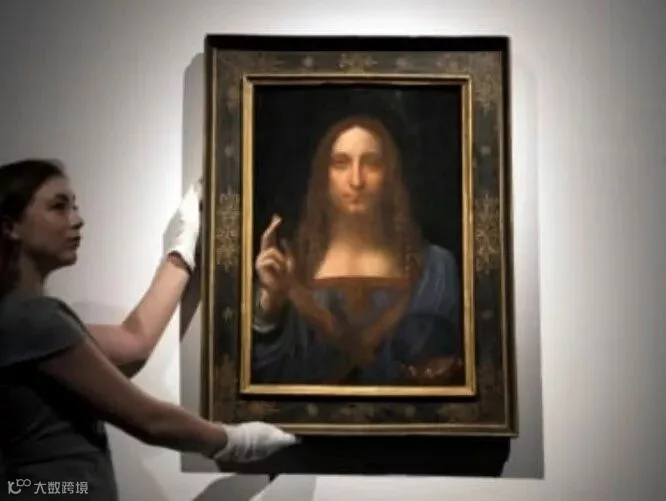
(A study says that Leonardo da Vinci's "Salvator Mundi" offers evidence that the artist had a rare eye condition. Credit: Carl Court/Getty Images Europe/Getty Images)
(一项研究表明,列奥纳多·达·芬奇的画作《救世主》证明这位艺术家患有一种罕见的眼部疾病。)
Artists see the world differently, and some ophthalmologists have attributed their creative vision to their eyes. A 2018 study published in the Journal of the American Medical Association argues that Leonardo da Vinci had strabismus -- a vision disorder in which the eyes are misaligned, resulting in the loss of depth perception -- an affliction that could explain the Renaissance master's extraordinary skill.
艺术家看待世界的方式不同于常人,而他们的视觉创意被一些眼科医生归功于眼睛本身。一项2018年发表在《美国医学会杂志》上的研究认为,列奥纳多·达·芬奇患有斜视,这是一种表现为视线偏移的视觉障碍,可能导致深度知觉丧失。而这种病痛可以解释这位文艺复兴时期大师的非凡才能。
If Leonardo did indeed have strabismus, it might have been "rather convenient for the painter," wrote the study's author, Christopher W. Tyler, "since viewing the world with one eye allows direct comparison with the flat image being drawn or painted."
研究报告的作者Christopher W. Tyler写道,如果达芬奇确实患有斜视, “对这位画家来说可能相当方便,因为用一只眼睛看世界,可以与正在绘制的实物进行直接比较。”
As the basis of his research, Tyler compared six artworks that are thought to portray the artist, citing two sculptures, two oil paintings and two drawings. These include Leonardo's "Salvator Mundi" (c. 1500) and "The Vitruvian Man" (c. 1490), with the justification that the artist believed that all of his works reproduced his own likeness to some degree. Tyler then measured the angular divergence of the pupils in his examples and averaged them; the mean angle for the misaligned eye was consistent with strabismus.
Tyler比较了6幅可能是描绘达芬奇形象的作品,将其作为研究的基础。他找了两件雕塑、两幅油画和两幅素描,其中包括达芬奇的《塞尔瓦托·蒙迪》(约1500年)和《维特鲁威人》(约1490年),理由是这位艺术家认为他的所有作品都在一定程度上再现了自己的肖像。然后Tyler测量了这些作品中人物的瞳孔偏差,并取平均值。这些肖像眼睛偏斜的平均角度符合斜视的判断标准。

Paul Gauguin’s mysterious death
保罗·高更的神秘死亡
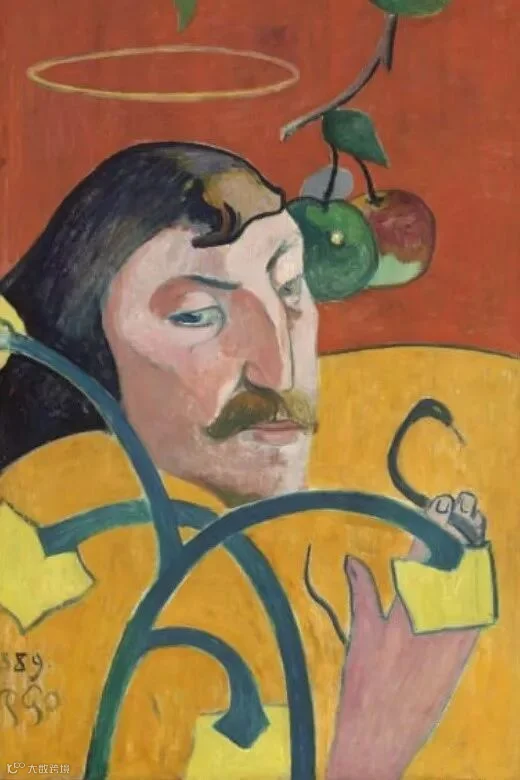
(An 1889 self-portrait by Paul Gauguin who some have speculated died from syphilis. Credit: image courtesy National Gallery of Art)
(根据1889年保罗·高更的自画像,有些人推测他死于梅毒。)
When Post-Impressionist painter Paul Gauguin passed away on the Marquesas Islands in 1903, he left behind four teeth in a glass jar and abundant speculation about whether or not he died from syphilis.
当后印象派画家保罗·高更1903年在马尔科斯群岛去世时,他在一个玻璃罐里留下了四颗牙齿,以及对他是否死于梅毒的大量猜测。
An opportunity to address some of the unanswered questions surrounding his legacy arose in 2000, when those teeth were extracted from a sealed well near Gauguin's former hut.
2000年,一次偶然的机会使得关于他未解之谜的真相浮出水面。在高更生前居住的小屋附近,人们从一口密封的井里取出了他留下的那些牙齿。
Caroline Boyle-Turner, a Gauguin specialist, wanted to first confirm that the cavity-ridden molars did indeed belong to the Frenchman, and then see what could be learned from the remains.
研究高更的专家Caroline Boyle Turner想首先确认这些蛀牙的臼齿确实属于高更,然后看看从这些臼齿残骸中可以得到什么信息。
A chance encounter on a cruise liner treading through the South Pacific put Boyle-Turner in contact with William Mueller, a founding member of the Dental Anthropological Association.
一次偶然的机会,在一艘穿越南太平洋的游轮上,Boyle-Turner与牙科人类学协会的创始成员William Mueller结识。
The two became investigative partners, and their findings were published in Anthropology in 2018. The DNA extracted from the teeth was compared with DNA taken from the interred remains of the artist's father (recently identified in Chile), as well as a sample from Gauguin's living grandson.
两人开始成为调查搭档,他们的研究结果于2018年在《人类学》上发表。人们把从高更的牙齿中提取出来的DNA与他父亲(最近在智利被确认身份)的遗体中的DNA,以及与高更在世的孙子身上提取的DNA进行了比较。
The results were a match. The molars were also tested for traces of cadmium, mercury and arsenic, which were all common treatments for syphilis during Gauguin's time.
结果是匹配的。臼齿也被拿去检测镉、汞和砷的含量,这些都是在当时梅毒的常见治疗方法中所包含的元素。
None were found, which doesn't necessarily conclude that Gauguin wasn't syphilitic, only that he didn't receive those treatments (or at least not in a high enough dosage to leave a residue).
在臼齿中并没有什么被发现,但这并不一定意味着高更不是梅毒患者,只是他没有接受这些治疗(或者至少没有留下足够高剂量的残留物)。
Giorgio de Chirico's metaphysical hallucinations
乔治·德·基里科的超自然幻象
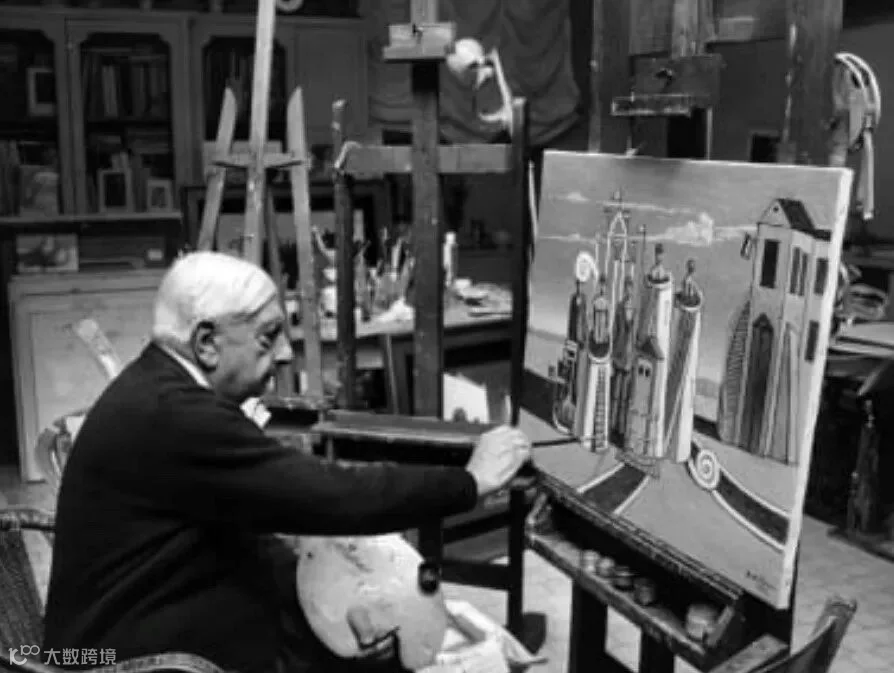
(Italian painter Giorgio De Chirico pictured in his studio in Rome. Credit: Keystone/Hulton Archive/Getty Images)
(意大利画家乔治·德·基里科在罗马的工作室中。)
Did 20th-century Italian painter Giorgio de Chirico have help -- beyond his fantastical imagination -- conjuring the metaphysical images that pervade his eerie canvases?
除了奇妙的想象,还有什么能让20世纪的意大利画家乔治·德·基里科创造出他那诡异的油画中弥漫着的形而上学意象?
An article published in European Neurology in 2003 argues that the answer might be temporal lobe epilepsy, a neurological condition that can produce complex hallucinations.
In his 1929 book "Hebdomeros," De Chirico himself wrote that his paintings recorded his hallucinatory experiences.
一篇2003年发表于《欧洲神经学》杂志的文章认为,答案很有可能是一种能使人产生复杂幻觉的神经疾病:颞叶癫痫。在1929年出版的《希波多罗斯》中,基里科写到他的画作记录了他的幻觉经历。
That disclosure has puzzled doctors who have tried to establish whether the artist's visions came from migraines with aura or temporal lobe epilepsy.Migraines usually cause subjects to have blurred or deformed vision, this article notes, which does not characterize De Chirico's work.
此事令医生们感到困惑,他们试图确定这位艺术家的幻觉是来自先兆偏头痛还是颞叶癫痫。
此文提到,偏头痛通常会引起(画作表现的)主体模糊或视野变形,但这并不是德·基里科画作的典型特征。
His superimposition of several realities, the paper argues, is more in tune with the complex imagery of partial seizures. Nonetheless, the author admits that while neurological case reports on artists can be instructive, "critical clinical data are often lacking so that the final diagnosis may remain controversial."
文章认为,他(作品里)对几个现实物体的叠加更符合部分性癫痫发作时看到的复杂图像。尽管如此,作者承认,虽然关于艺术家的神经学病例报告具有指导意义,“但由于缺乏关键的临床数据,最终的诊断可能仍存在争议。

Claude Monet's abstract outlook
克劳德·莫奈的抽象风景画
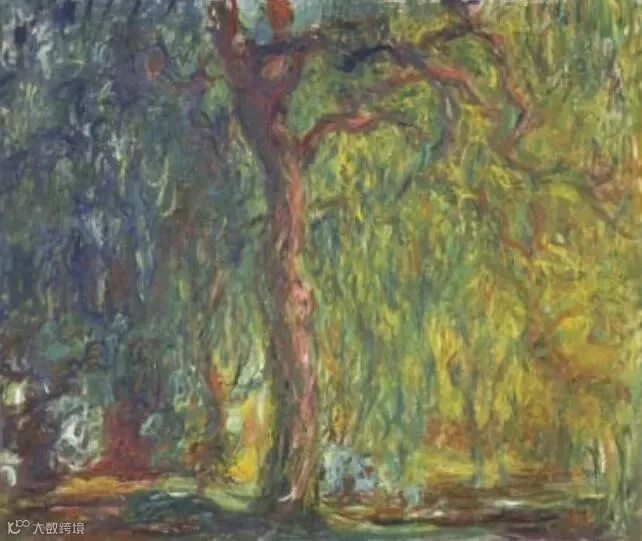
(Monet 's "Weeping Willow" (1918-1919), painted before the artist underwent surgery for cataracts. Credit: Google Art Project/Kimbell Art Museum)
(莫奈的“垂柳”(1918-1919),绘于艺术家接受白内障手术前。)
Impressionist painter Claude Monet produced his most abstract and expressive works toward the end of his career, and a 2015 case study published in the British Journal of General Practice claims that the cause of these innovations was poor eyesight.
印象派画家克劳德·莫奈在他的创作晚期创造出了他最抽象、最富表现力的画作。而在2015年发表于《英国全科医学杂志》上的一项案例研究声称这些创新作品源于视力欠佳。
Monet began developing age-related bilateral cataracts in his sixties, a malady that caused him to see everything darker. In 1913, an ophthalmologist recommended he undergo cataract surgery. The artist refused, frightened by fellow artist Mary Cassatt's failed eye surgery, and made do labeling his paint tubes to avoid using the wrong colors.
莫奈在六十几岁时患上了增龄性双侧白内障,这种病使他看到的东西变得更暗了。在1913年,一位眼科医生推荐他接受白内障手术。由于被同事Mary Cassatt失败的眼科手术吓坏了,莫奈拒绝了,并且通过在他的颜料管上贴标签来避免用错颜色。
But after a decade of dimness, Monet finally agreed, in 1923, to have the surgery, and his renewed eyesight allowed him to see the true colors of his preoperative paintings (many of which he destroyed).
但经过了十年暗淡无光的日子,莫奈在1923终于同意做手术,而恢复了的视力使他看清了他手术前的作品(他毁掉了许多)上真正的颜色。
After recovery, he resumed his original color palette. "Monet's postoperative works are devoid of garish colors or coarse application," notes Anna Gruener, the ophthalmologist who penned the article. "It is therefore unlikely that he had intentionally adopted the broader and more abstract style of his late paintings, reinforcing the argument that Monet's late works were the result of cataracts and not conscious experimentation with a more expressionistic style."
痊愈之后,他用回了原有的色调。“莫奈术后的作品没有花哨的颜色或粗糙的笔触,”写这篇文章的眼科医生Anna Gruener提到,“因此他不太可能在他的晚期作品中故意采用大范围和更抽象的风格,而这强化了一种观点,即莫奈的晚期作品是白内障的结果而非在特意尝试表现派风格。”
'Degenerate' Paul Klee's degenerative health
‘堕落的’保罗•克利逐渐下降的健康
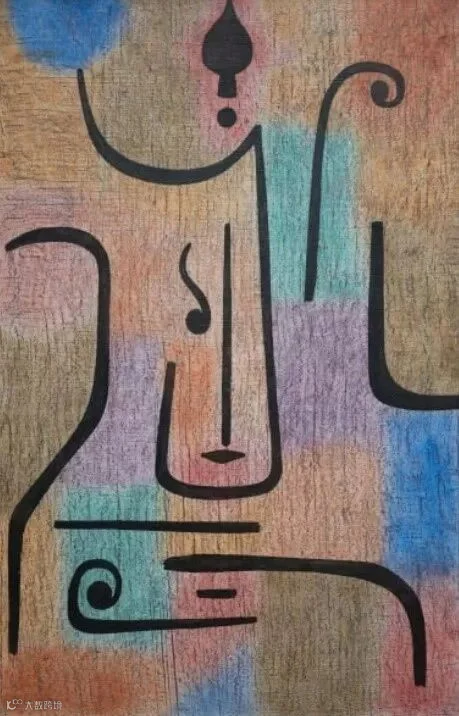
(Paul Klee's 1938 paining "Erzengel" Credit: Lenbachhaus)
(保罗克利1938年油画作品 “Erzengel” (大天使))
The last five years of the Swiss-German artist Paul Klee's life were prolific: He produced almost 2,500 artworks -- a quarter of his entire body of work. But these works were also his most physically grueling, since he suffered from a combination of skin conditions, ulcers, anemia and esophageal swelling that weren't conclusively diagnosed while he was alive.
德国籍瑞士艺术家保罗克利人生中的最后五年是多产的五年:他创作了近2500件艺术作品——其一生作品总量的四分之一。但这些作品同时也给他带来了最多的生理折磨,他那时正经受着皮肤病,溃疡,贫血,食管肿胀等疾病的多重困扰。而这些在他在世时都未被确诊。
Nearly 40 years after Klee's death, the artist's ailments fascinated a young dermatologist-in-training, Hans Suter, who spent decades reconstructing the artist's medical history, interviewing Klee's widow and only son, and poring over unpublished letters describing the artist's symptoms.
距克利去世近40年后,这位艺术家的疾病勾起了Hans Suter的浓厚兴趣,他是一位年轻的皮肤科实习医生,他投入了几十年的精力重建这位艺术家的药物治疗史,采访克利的遗孀和独生子,并仔细钻研那些未出版的描述其症状的信件。
Suter concluded, in a book and an article summarizing his findings (both from 2010), that Klee had diffuse systemic sclerosis -- a rare autoimmune disease. While the disease doesn't seem to have changed Klee's artistic style, Suter attributes the artist's painful outbreaks to stress following certain taxing biographical events: Klee's dismissal as an art professor from the Düsseldorf College of Art; poor reception of his avant-garde work; and his stigmatization as a "degenerate" artist by the Nazis.
Suter在总结其发现的一篇文章和一本书(皆于2010年发布)中给出了结论:克利得了全身性硬化症——一种罕见的自身免疫疾病。虽然这病似乎并没有改变他的艺术风格,但Suter还是将这位艺术家痛苦的爆发归咎于某些劳心伤神的人生经历带来的压力:克利在杜塞尔多夫艺术学院的美术教授的职位被解除,人们对其前卫作品的惨淡回应,还有他被纳粹当作“堕落”艺术家的精神耻辱。
文章来源|CNN
图片来源|CNN
编译|庄怡 陈宇帆 刘与晨 张进宁 刘可圆 张文钰
排版|庄怡
指导老师|刘佳