
编者按:
“双十一”购物狂潮到来之际,你是否想过,人们为什么喜欢“买、买、买”?消费主义,又源自何处?
机器轰鸣的镀金时代
Consumption is now frequently seen as our principal role in the world. The notion of human beings as consumers first took shape before World War One, but became commonplace in America in the 1920s.
如今人们普遍认为,消费者是我们在世界上的主要角色。人类作为消费者的概念首次出现于一战之前,到20世纪20年代,在美国变得常见。
The historian William Leach locates its roots in the United States around the turn of the century.
历史学家威廉·里奇认为,早在世纪之交时,消费主义就已在美国扎根。
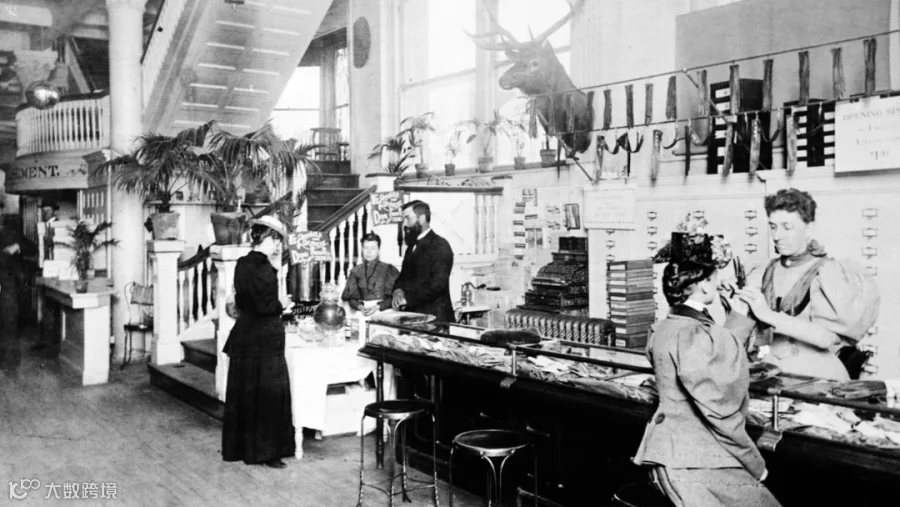
一家早期百货公司的手套区,它改变了人们的购物方式。图源:Getty Images
Release from the perils of famine and premature starvation was in place for most people in the industrialised world soon after WWI ended. US production was more than 12 times greater in 1920 than in 1860, while the population over the same period had increased by only a factor of three, suggesting just how much additional wealth was theoretically available. The labour struggles of the 19th Century had, without jeopardising the burgeoning productivity, gradually eroded the seven-day week of 14- and 16-hour days that was worked at the beginning of the Industrial Revolution in England. In the US in particular, economic growth had succeeded in providing basic security to the great majority of an entire population.
第一次世界大战结束后不久,大多数工业化国家的人已经摆脱了饥荒的威胁。1920 年美国的财政收入是 1860 年的 12 倍多,而同期人口仅增加了 3 倍,可见理论上出现了大量额外财富。在不伤及蓬勃发展的生产力的情况下,19 世纪的工人斗争逐渐侵蚀了英格兰工业革命初期实行的14 小时和 16 小时工作制的 7 天工作周制。尤其在美国,经济增长成功地为绝大多数人口提供了基本的生活保障。
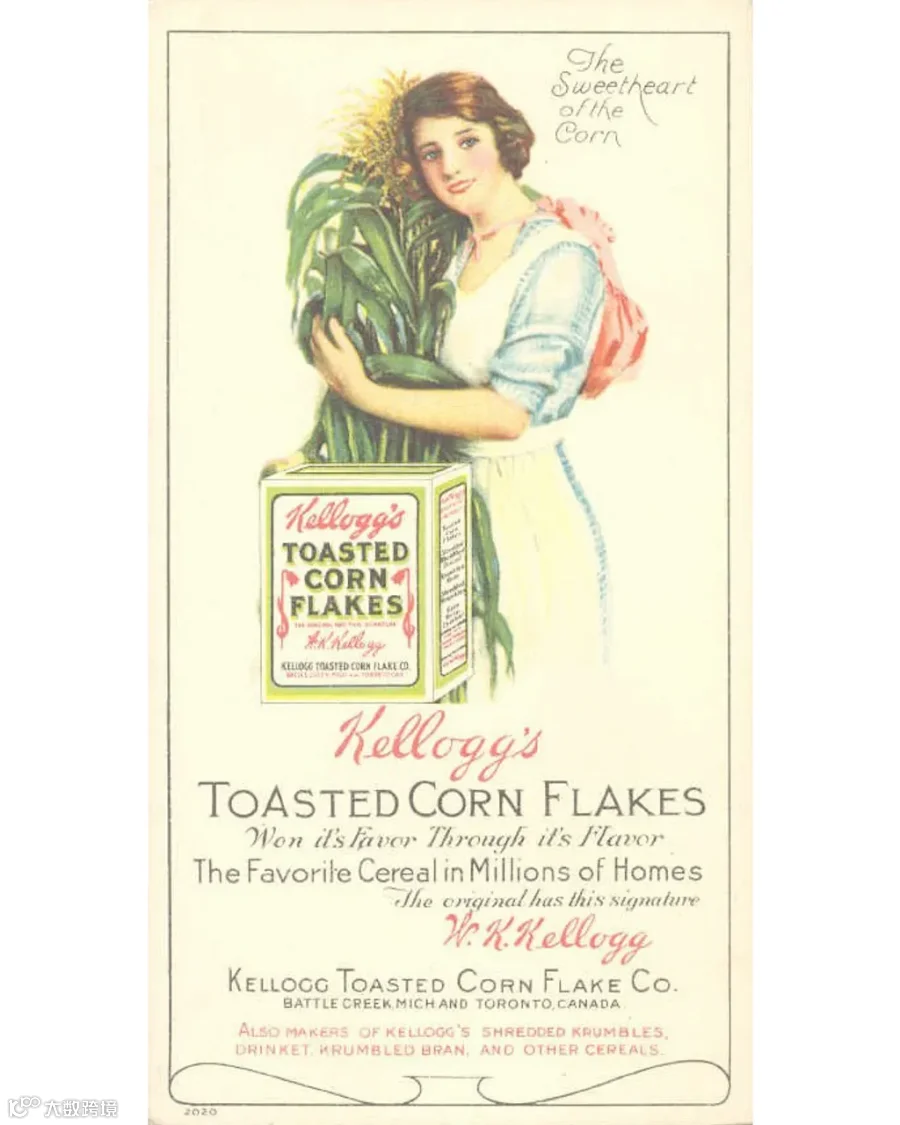
图源:Getty Images
02
大萧条的救星
It was a time when people enjoyed the fruit of industrialization. But the short depression of 1921–1922 led business leaders and economists in the US to fear that the immense productive powers created over the previous century had grown sufficiently to meet the basic needs of the entire population and had probably triggered a permanent crisis of overproduction. Prospects for further economic expansion were thought to look bleak. It would be feasible to reduce hours of work and release workers for the pleasurable activities of free time to generate the consuming power, but business did not support such a trajectory.
那是一个人们享受着工业化硕果的时代。但1921-1922年的短期萧条让美国的商业领袖和经济学家们开始恐慌,上个世纪中高速增长的巨大生产力已能够满足全部人口的基本需求,可能已经引起了产能过剩的永久危机。未来经济拓张的前景一片暗淡。当然,一个可行的解决方案是减少工人们的工时,给予他们可娱乐的休闲时间,从而促进消费。但当时的企业并不支持这一路线。
The historian Benjamin Hunnicutt, found extensive evidence that such fears were widespread in business circles during the 1920s.
历史学家本杰明·亨尼克特发现了大量证据,证明在20世纪20年代间,这种恐慌在商界大范围蔓延。
Victor Cutter, president of the United Fruit Company, exemplified the concern when he wrote in 1927 that the greatest economic problem of the day was the lack of "consuming power" in relation to the prodigious powers of production.
联合果品公司的主席维克多·卡特在 1927年写道,现今时代最大的经济问题是缺少与巨大生产力匹配的“消费力”。
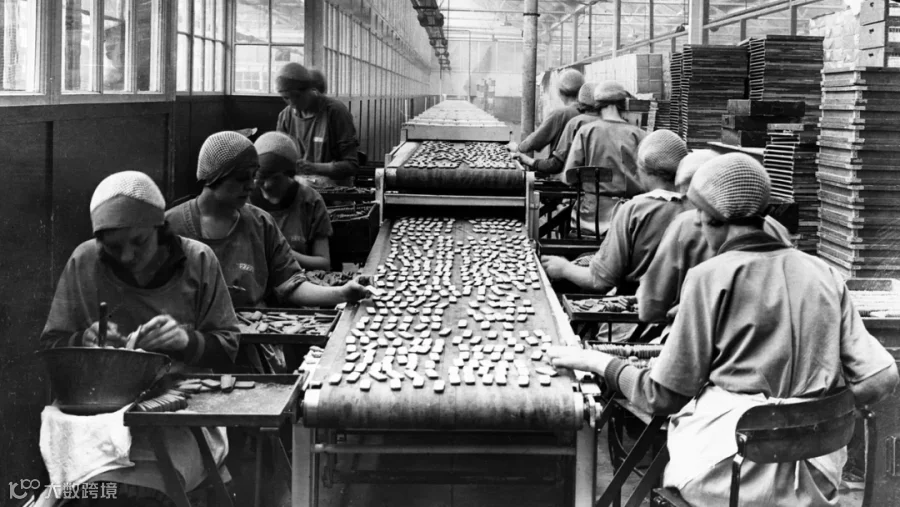
1926年工厂工人正在给稳定供应的饼干打上糖霜。图源: Getty Images
In his classic 1928 book "Propaganda," Edward Bernays, one of the pioneers of the public relations industry, put it this way: "Mass production is profitable only if its rhythm can be maintained." He argued that business must maintain constant touch, through advertising and propaganda… to assure itself the continuous demand which alone will make its costly plant profitable".
公关产业的先驱者之一爱德华·伯奈斯在1928年出版的经典《宣传》中论述道:“只有在生产周期的节奏得以维持的情况下,现代化大批量生产才能产生利润。”他认为企业必须通过广告和宣传保持与消费者的联系,保证他们对自身产品有持续的需求,而这一点就足以让企业价值不菲的生产线得以盈利。”
President Herbert Hoover’s 1929 Committee on Recent Economic Changes hailed an "almost insatiable appetite for goods and services", and envisaged "a boundless field before us … new wants that make way endlessly for newer wants, as fast as they are satisfied".
1929年,赫伯特·胡佛总统的近期经济变化委员会提倡一种“对产品和服务近乎贪得无厌的需求”,他们设想到,“我们正面对着一片无垠的旷野...在永无止境的循环中,每个需求的满足,都在为下一个需求铺路。”
In this paradigm, people are encouraged to board an escalator of desires and progressively ascend to what were once the luxuries of the affluent.
在这种范式中,人们被鼓励着登上了一架不断向上的欲望的扶梯,逐渐上升,触及曾经只属于富裕阶层的奢华享受。
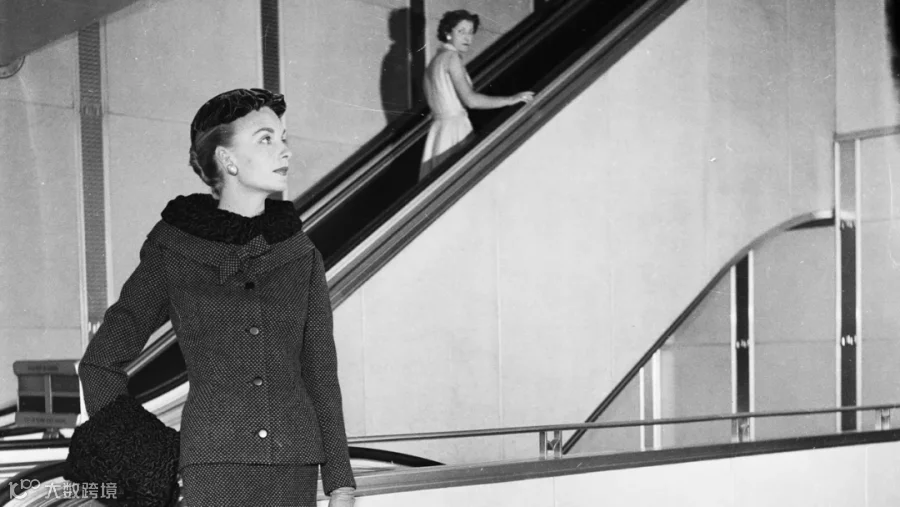
在消费主义的驱动下,人们登上欲望的扶梯。图源:Getty Images
Electrification was crucial for the consumption of the new types of durable items, and the fraction of US households with electricity connected nearly doubled between 1921 and 1929, from 35 to 68%. This was followed by a rapid proliferation of radios, vacuum cleaners, and refrigerators. The introduction of time payment arrangements facilitated the extension of such buying further and further down the economic ladder.
电气化对于新型耐用品的消费来说至关重要,美国有电力供应的家庭的比例在1921到1929年间从35%涨到了68%,几乎翻了一番。紧随其后的是收音机,吸尘器和冰箱的迅速普及。分期付款和超前消费的问世和推广更是不断促进着这些消费的增长,推动着经济登上一个又一个台阶。
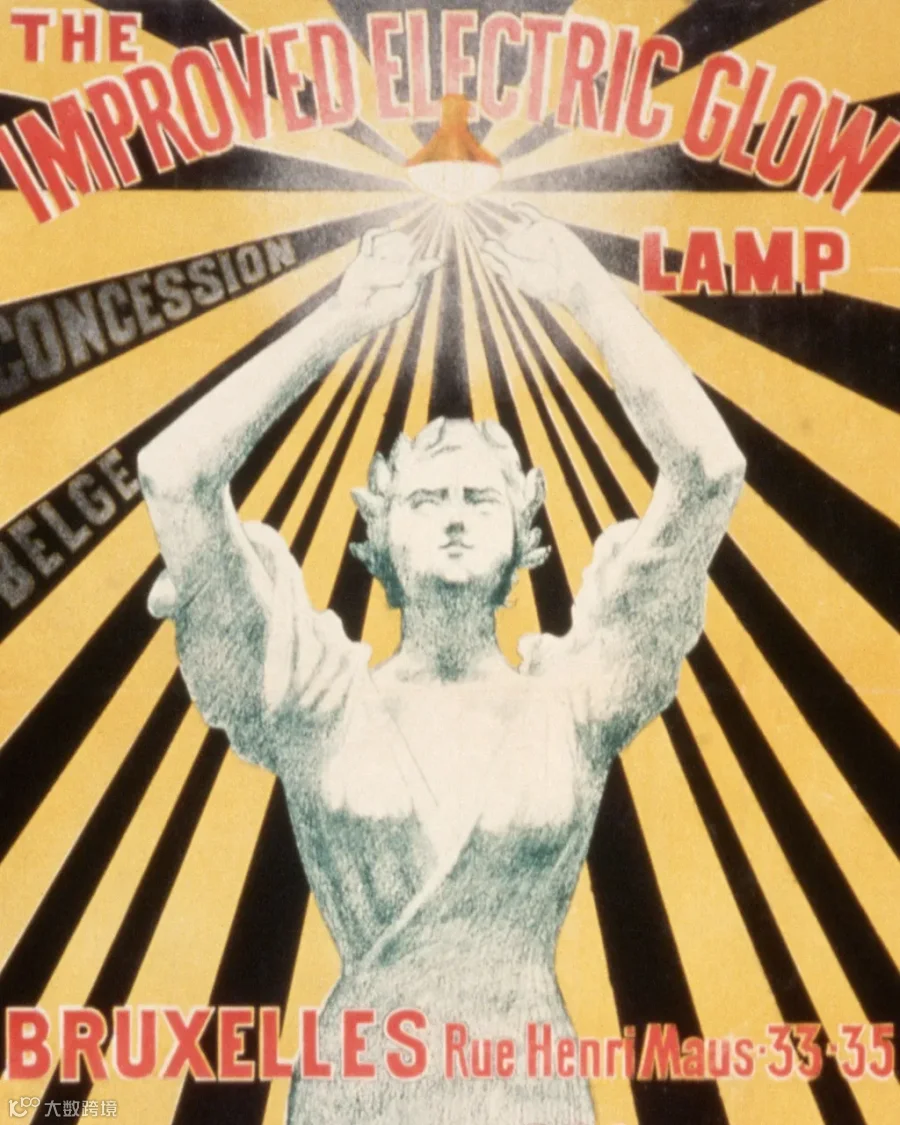
电力技术如星火燎原般导致了消费品种类的火山爆发式增长。图源: Getty Images
03
媒体之风将消费主义吹进千家万户
Once WWII was over, consumer culture took off again throughout the developed world, partly fuelled by the deprivation of the Great Depression and the rationing of the wartime years and incited with renewed zeal by corporate advertisers using debt facilities and the new medium of television.
二战结束后,消费主义在发达国家再次流行,原因包括大萧条和战时定量配给造成人们消费压抑后的消费反弹,以及企业广告商的债务机制以及电视媒体的推动,重新点燃了人们的消费欲望。
"A privately owned utility, pumping information and entertainment into people’s homes," writes Stuart Ewen, a media critic. The advent of television greatly magnified the potential impact of advertisers’ messages, exploiting image and symbol far more adeptly than print and radio had been able to do. The stage was set for the democratisation of luxury on a scale hitherto unimagined.
“(电视)这个私有的工具把信息和娱乐带入千家万户。”媒体批评家斯图尔特•尤恩写道。电视的出现放大了广告信息的潜在影响,利用图像和符号传播的影响力远超印刷和广播。奢侈品平民化达到了前所未有的规模。
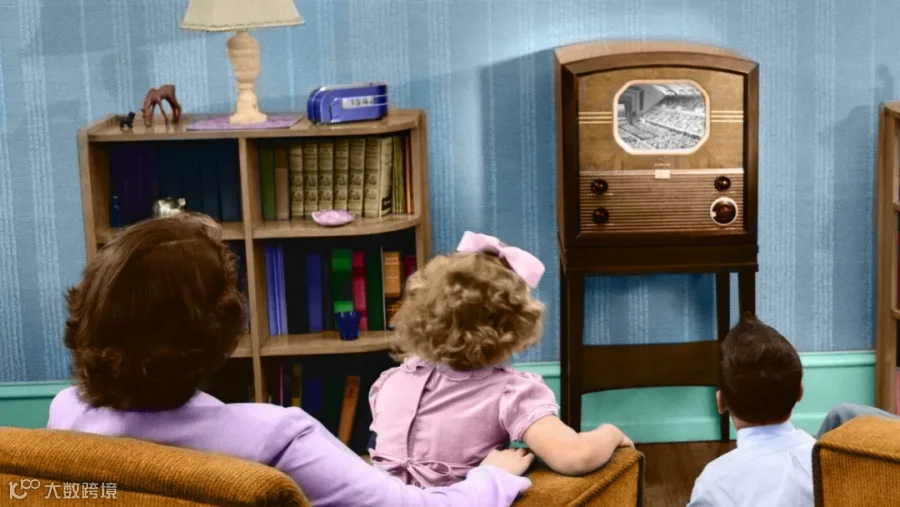
电视和广播收费广告直接进入千家万户。图源: Getty Images
Vance Packard, a American Journalist, described the role of the advertising men of the 1950s "They want to put some sizzle into their messages by stirring up our status consciousness," he wrote. "Many of the products they are trying to sell have been the luxuries of the upper classes. The game is to make them the necessities of all classes… By striving to buy the product,the consumer is made to feel he is upgrading himself socially."
美国记者万斯·帕卡德描述了20世纪50年代的广告业务员。“他们想通过激发我们的消费意识来让广告有更好的效果,”他写道。“广告业务员推销的许多产品一直以来只是上层阶级的奢侈品,而他们想让它们成为所有阶层的必需品……通过努力购买产品,消费者会觉得自己在提升社会地位。”
04
我们满足了欲望,回头却一地鸡毛
As retail analyst Victor Lebow remarked in 1955: "Our enormously productive economy demands that we make consumption our way of life, that we convert the buying and use of goods into rituals, that we seek our spiritual satisfaction, our ego satisfaction, in consumption.… We need things consumed, burned up, replaced and discarded at an ever-accelerating rate."
正如零售业分析师Victor Lebow在1955年所言:"庞大的生产性经济要求我们把消费作为生活方式,要求我们把购买和使用商品当做一种仪式,要求我们在消费中寻求精神满足和自我满足...我们消费、烧毁、替换和丢弃物品的速度越来越快。"

当今的消费主义至少可以追溯到一个世纪前。图源: Getty Images
The commodification of reality and the manufacture of demand have had serious implications for the construction of human beings in the present day, where, to quote philosopher Herbert Marcuse, "people recognise themselves in their commodities".
现实的商业化和制造业的需求对当今人类的建构产生了严重的影响,用哲学家赫伯特·马尔库塞的话来说就是,"人们在商品中认识自己。"
05 为什么我们买的总是比需要的更多?
It is understandable if we feel better after buying a new thing. It is just what our twisted media culture taught us – we do not want the newest smartphone model, we need it.
买到新东西后感到欣悦是人之常情。而扭曲的媒体文化教导我们:我们不是想要最新型号的智能手机,我们是需要它。
Scholars have different answers to this question. Economists just assume that goods and services provide well-being, and people want to maximize their well-being. Psychologists root it in universal dimensions of human nature, which some of them tie back to evolutionary dynamics.
学界对此有不同的答案。经济学家认为,商品和服务能带来幸福感,而人们总想最大化这种幸福感;心理学家则人们这是人类一种普遍的本性,有些人认为这一本性与进化动力学有关。
The key impetus for contemporary consumer society has been the growth of inequality, the existence of unequal social structures, and the role that consumption came to play in establishing people’s position in that unequal hierarchy. For many people, it’s about consuming to their social position, and trying to keep up with their social position.
消费对人们不平等地位的塑造助长了社会结构的不平衡,这便是当代消费社会的主要推动力。对许多人来说,消费行为是彰显社会地位的一种方式,所以需要与他们的社会地位相匹配。
It has been a nice illusion, but it needs to stop.
这是一个美好的幻觉,但该终止了。
Over the years, products have become more and more affordable, variate, and accessible. However, buying items, no matter how small, contributes to climate change, feeds our mountains of waste, and depletes our planet of its resources.
多年以来,商品的价格越来越便宜实惠,种类越来越多,获得方式越来越便利。然而,无论是多么微小的消费,都会加剧气候变化,滋生堆积成山的垃圾,耗尽地球的资源。
Moreover, if you want to focus more on the economic aspect, just remember that buying something you do not actually need is still a waste, be it an 80% less expensive waste.
如果你更关注经济方面,就请记住:购买任何非必需品就是浪费。即使便宜了80%,依然是浪费。
难点表达解释:
premature: n. 早产的婴儿
jeopardise: v. pose a threat to 使陷入危险
例:Why would he jeopardise his future by taking unauthorized drugs?
prospect: n. the chances of being successful 前景,前途
例:At 25 he was an unemployed musician with no prospects.
exemplify: v. to give an example in order to make sth clearer 举例说明,例证
例:She exemplified each of the points she was making with an amusing anecdote.
fraction: n. a small part or amount of sth 小部分
例:Only a small fraction of a bank's total deposits will be withdrawn at any one time.
pump: v. to flow in a particular direction as if it is being forced by a pump 涌出;涌流
例:Blood was pumping out of his wound.
原文链接:
https://www.bbc.com/future/article/20210120-how-the-world-became-consumerist
文案 | 陈瀚 赵巍 肖敏瑜 刘铸 陈宇昕 余梓骞
排版 | 陈瀚