






本文约2000字,预计阅读时间7分钟



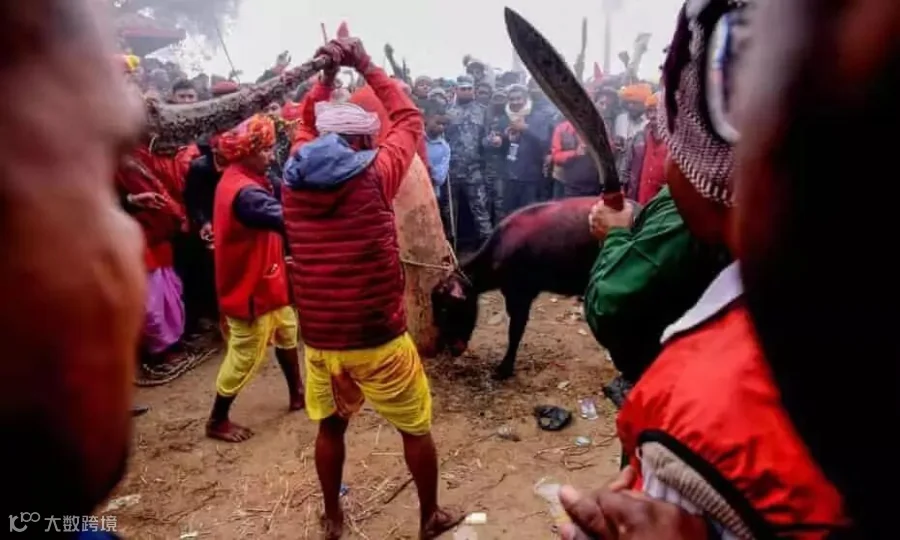
Tightly crushed together in an area about the size of a football field fenced with barbed wire, more than 2,000 buffalo stand waiting for their death. Deprived of adequate water and food, they snort and snuffle in pain.
在被铁丝网围住的约一个足球场大小的区域里,两千多头水牛挤在一起静候死亡。由于缺乏足够的食物和水,它们正痛苦地哼着声。
The animals are just some of the thousands prepared for sacrifice as part of this year’s Gadhimai festival in Nepal, which takes place once every five years and holds the dubious honour of being known as the world’s bloodiest festival.
这些动物只是今年在尼泊尔举行的嘉蒂麦女神节祭祀环节的一部分,嘉蒂麦女神节每五年举办一次,算得上是当今世界最血腥的节日。
For more than two centuries, the festival has drawn millions of Hindu devotees to the Gadhimai temple of Bariyarpur in early December, out of the belief that animal sacrifices to the Hindu goddess Gadhimai will end evil and bring prosperity.
超过两个世纪以来,该节日吸引了上百万的印度教信徒,他们在十二月初来到Bariyarpur的嘉蒂麦神庙,心中怀着向印度教女神嘉蒂麦进行活畜祭祀会驱邪迎福的信念。



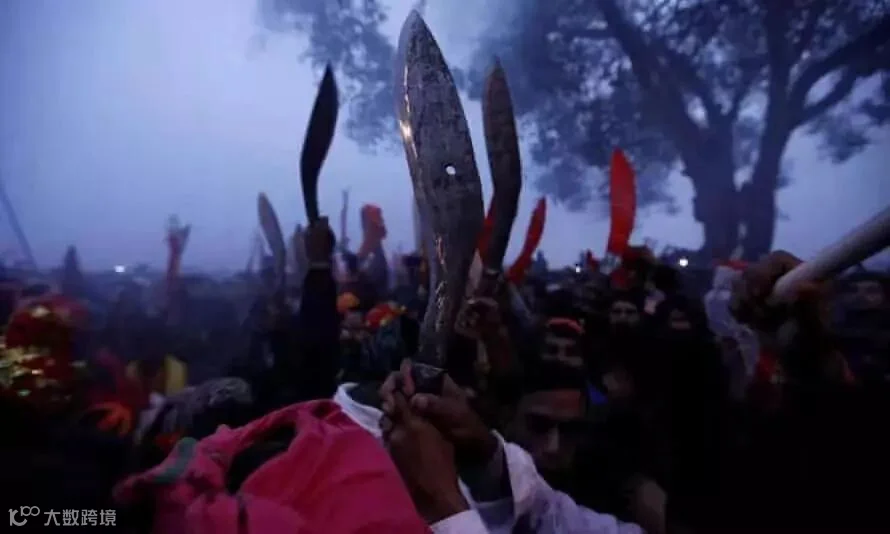



According to legend, the first sacrifices in Bariyarpur were conducted several centuries ago when the goddess Gadhimai appeared to a prisoner in a dream and told him to offer blood and establish her temple. When he awoke, his shackles had fallen open and he was able to leave the prison and build the temple, where he sacrificed animals to give thanks.
据传说,Bariyarpur的第一次祭祀发生在数世纪以前,女神嘉蒂麦出现在一个囚犯的梦境中,命令做梦者为她建庙祭血。当这人醒来时,身上的镣铐已经解开了,他便离开监狱去搭建神庙,并以活畜献祭表达感恩之情。
However, in recent years, it has also become one of the most polarising traditions in Nepal, dividing those who see it as a touchstone traditional Hindu ceremony and those who believe it is an outdated monument to animal cruelty. In 2009, it is estimated around a quarter of a million animals were slaughtered. The figure for 2014 was about 200,000.
然而近几年来,这个节日也成了尼泊尔民众意见分化最严重的传统之一,一部分人认为这是传统印度教仪式的试金石,而剩下的人则觉得这不过是一个残忍而过时的虐杀纪念碑。在2009年,约有25万的动物被屠杀,而在2014年这个数字约是20万。
This year’s event is the first since a supreme court ruling in 2015 that directed the government to discourage bloodshed, but thousands of creatures are still set to be killed over the two days.
2015年最高法院下令政府打压动物杀戮后,今年首次恢复了活动,仍有成千上万的生灵将在这两天惨遭屠杀。
Even if they could not prevent the slaughter, activists were tending to the animals in their final hours in an attempt to minimise suffering.
尽管动物保护者们无法阻止屠戮,但在动物们临死前的几小时,他们会悉心照顾,尽量减轻动物们的痛苦。
Her hands and face smeared with blood and mud, Sneha Shrestha, president of the Federation of Animal Welfare Nepal, spent Monday treating wounded buffalo calves with saline water and medicine, checking their temperatures and trying to bring them food and water.
尼泊尔动物福利协会主席Sneha Shrestha的双手和脸上都沾上了鲜血和泥泞。周一,她用盐水和药物处理受伤的水牛幼仔,测量体温,并设法给它们带去食物和水。
“We are not against traditions and culture but if such practices hurt animals then we must step forward to end them,” said Shrestha.
“我们不反对传统习俗和文化,但如果这种做法伤害了动物,我们就必须站出来制止。”Shrestha说。
At the crack of dawn on Tuesday morning the festival began with the Pancha Bali, the sacrifices of a rat, a goat, a rooster, a pig and a pigeon. By 9am, about 200 butchers began to take their khukuris – a type of Nepalese blade – to the necks of the buffaloes. The air was filled with the cries of the animals. By the end of the day, between 3,000 to 6,500 buffalo had been beheaded.
周二黎明,庆典以the Pancha Bali祭祀形式开始,人们用一只老鼠、一只山羊、一只公鸡、一只猪和一只鸽子作为祭品。上午九时许,约200名屠夫手持他们的库库利斯刀,一种尼泊尔刀具,刺向水牛们的脖子。空气中到处充斥着动物们的哀嚎。当天结束时,已有3000到6500头水牛被斩首。



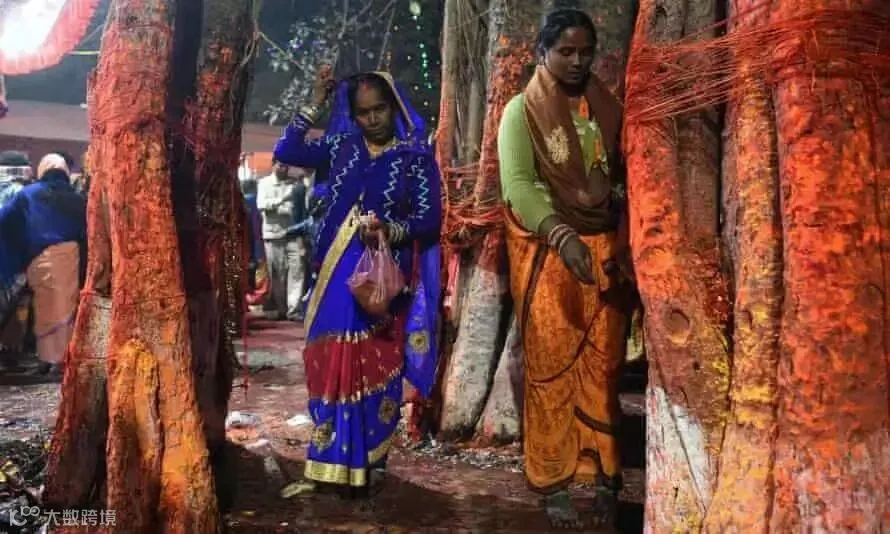



Worshippers who came to the temple defended the festival’s traditions. “Those who are against the festival will continue to protest and those who wish to worship the goddess will do so,” said a woman from Kolhabi. “No one can stop it. Our faith is important and sacrifices validate it.”
前往寺庙的朝圣者们誓死捍卫节日的传统。“那些反对这个节日的反对者们将会继续抗议,而那些想朝拜女神的朝拜者们也还是会继续崇拜。” 一位来自科尔哈比(Kolhabi)的妇女表示,“没有人可以阻止我们的信仰。我们的信仰很重要,祭祀才能使它灵验。”
“Look at these hundreds of people,” she added, pointing to a sea of attendees. “They are here because of their faith.”
“看这成千上万人,”她指着那人山人海,补充道,“他们因为信仰来到了这里。”
Some of those who have voiced opposition to Gadhimai have faced severe backlash and even threats of violence. Manoj Gautam, an animal rights activist who has been campaigning against the festival for 11 years, was attacked a few months ago. He said he felt “saddened and enraged”. Gautam accused local and state institutions of “forsaking their duty by hiding behind an institutional veil”.
一些嘉蒂麦女神节的反对者已遭到了激烈的抵制,甚至是暴力威胁。动物权益保护者Manoj Gautam已经为抗议这个节日努力了11年。几个月前,他还因此受到了攻击。为此,他感到“十分悲愤”。他指责地方和国家机构“躲在制度的面纱后面亵渎自己的职责”。
On Monday, Gautam filed a contempt case in Kathmandu’s supreme court against the Nepalese government and Gadhimai temple committee for disregarding the 2015 supreme court ruling.
周一,Gautam向加德满都最高法院提请了一个蔑视法庭指控,以为尼泊尔政府和嘉蒂麦神庙委员会无视2015年最高法院的裁决。
Bara’s chief district officer, Phanindra Mani Pokharel, said that ending the mass slaughter of animals was not simple, as it was likely to lead to social unrest. He also pointed to the economic significance of the festival to Chamar’s community.
巴拉地区首席执行官,Phanindra Mani Pokharel说,终止对动物的大规模屠杀并不容易,因为这很容易导致社会动荡。他还将原因指向了这个节日对Chamar地区带来的丰厚经济收益。
Motilal Kushwaha, general secretary of Gadhimai Mela Organizing Committee, said: “We have done our best to make this festival a good one in terms of security, health and water sanitation. Also, we are on the side of discouraging sacrifices according to the 2015 supreme court verdict.
嘉蒂麦组委会秘书长,Motilal Kushwaha说:“我们已经尽了最大努力让这个节日在安全、健康和水源卫生方面变得更好。据2015年最高法院的裁决,我们是站在反对献祭这一边的。
“There’s no definite answer as to when this festival will end but it will one day.”
“关于这个节什么时候结束,我们尚无确切的答案,但它终有一天会消失的。”

END



原文链接:https://www.theguardian.com/world/2019/dec/03/nepal-animal-sacrifice-festival-pits-devotees-against-activists?
编译:黄思谊 陈昱涵 余梓骞
排版:余梓骞
指导老师:刘佳