
编者按

浩瀚的宇宙里
人类的生命如同蜉蝣于天地、沧海之一粟
生命短暂,时光飞逝,一切终将化为乌有
而记忆却可以经久不衰
它是我们生命中长明不灭的璀璨烟霞
承载着落日余晖、呢喃细语
唯愿衣襟带花,岁月风平
【注:本文由克劳迪娅·哈蒙德(Claudia Hammond)撰写】
“Time” is the most frequently used noun in the English language. We all know what it feels like as time passes. Although neuroscientists have been unable to locate a single clock in brain that is responsible for detecting time passing, most of us would say that how time functions is fairly obvious: it passes, at a consistent and measurable rate, in a specific direction – from past to future.
“时间”,英语中使用最多的名词。我们都知道时光流逝是怎样一种感受。尽管神经学家还无法找到人脑中如时钟一般负责感受时间流逝的区域,但大多数人都觉得时间流逝的机制浅显易懂:它以一种持续而可量化的速度,从过往,至将来,向这个特定的方向奔流不息。
Of course, the human perspective of time may not be exclusively biological, but rather shaped by our culture and era. The Amondawa tribe in the Amazon, for example, has no word for “time” – which some say means they don’t have a notion of time as a framework in which events occur. (There are debates over whether this is purely a linguistic argument, or whether they really do perceive time differently.) Meanwhile, it’s hard to know with scientific precision how people conceived of time in the past, as experiments in time perception have only been conducted for the last 150 years.
当然,人们对于时间的看法或许不仅能用生物学的角度解释,也可能是受到了我们文化与时代的影响。亚马逊的亚蒙达瓦部落语言中并没有“时间”一词,有些人认为这说明他们没有时间的概念,没有把其当做事件发生的框架。(至于这是否纯粹属于语言学讨论的范畴,还是说他们另有其它感知时间的方式,各色言论莫衷一是)。同时,由于150年前才开始有对于时间观的实验,我们很难用科学手段精确了解古人感受时间的方式。
But physics tells a different story. However much time feels like something that flows in one direction, some scientists beg to differ.
但是,物理学界有不同的看法。不管“时间是朝向一个方向流逝的”这一论断有多合理,一些科学家却持有异议。
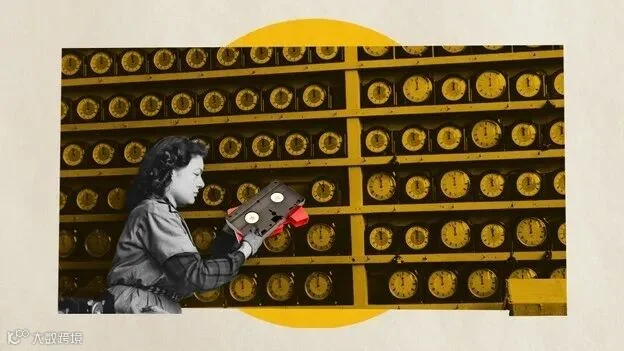
If memories were fixed like videotapes then imagining a new situation would be tricky (Credit: Javier Hirschfeld/Getty Images/Alamy)
要是记忆像录像带的构造一样单向储存,那人们很难想象出全新的场景。(图源:哈维尔·赫希菲尔德/盖蒂图片社)
In the last century, Albert Einstein’s discoveries exploded our concepts of time. He showed us that time is created by things; it wasn’t there waiting for those things to act within it. He demonstrated that time is relative, moving more slowly if an object is moving fast. Events don’t happen in a set order. There isn’t a single universal “now”, in the sense that Newtonian physics would have it.
在上个世纪,阿尔伯特·爱因斯坦的发现颠覆了我们对时间的认知。他告诉世人:时间由物而生,而不会空待事件发生。他证明了时间是相对的:当物体运动足够快时,时间的流逝就会变慢;事件并不会按照既定的顺序渐次发生。与牛顿的经典物理相悖,爱因斯坦的相对论中不存在普遍的“现在”。
It is true that many events in the Universe can be put into sequential order – but time is not always segmented neatly into the past, the present and the future. Some physical equations work in either direction.
的确,宇宙间很多事情都是循序发生的,但是时间不总是被整整齐齐地划分给过去、当下和将来的所谓“时段”。一些物理公式是双向成立的。
Of course, although some physicists propose that time does not exist, time perception – our sense of time – does. This is why the evidence from physics is at odds with how life feels. Our shared idea of what the concept of “future” or “past” mean may not apply to everything everywhere in the Universe, but it does reflect the reality of our lives here on Earth.
当然,即便一些物理学家提出时间并不存在,但我们对时间的感知却是真实存在的。这就是为什么物理学的证明与我们主观感受相悖的原因。我们对“未来”与“过往”的共同理解可能不适用于宇宙间任何地方的所有事物,但它反映了我们的生命在这颗星球上真实的生活。
>>>
记忆也会欺骗我吗?
<<<
One aspect of time perception many of us share is how we think of our own past: as a kind of giant video library, an archive we can dip into to retrieve records of events in our lives.
很多人对时间的感知有一个共同点,那就是对于“过去”的理解:我们把它看作一个庞大的影像资料库或档案馆,可以从中检索出过去发生事件的记录。
But psychologists have demonstrated that autobiographical memory is not like that at all. Most of us forget far more than we remember, sometimes forgetting events happened at all, despite others’ insistence that we were there. On occasion even the reminder does nothing to jog our memories.
但心理学家已经证实,自传式的记忆并不像档案那样精确。大多数人忘掉的事情要远远多于记住的。有时哪怕他人坚称我们做过某些事,但我们就是忘得一干二净,甚至连别人的提醒都无法唤起当时的记忆。

People can be peruaded to "remember" events that never happened to them (Credit: Javier Hirschfeld/ Getty Images)
有时人们会被忽悠到“想起”根本没有发生过的事情。(图源:哈维尔·赫希菲尔德/盖蒂图片社)
Another mistake we make is to assume that imagining the future is completely different from thinking about the past. In fact, the two processes are linked. We recruit similar parts of the brain to reminisce or to picture our lives in years to come. It is the possession of our memories that permits us to imagine a future, remixing scenes to preview future events in a window in the mind. This skill allows us to make plans and to try out different hypothetical possibilities before we commit.
我们常常错误地认为,畅想未来和追忆过去完全是两码事。但实际上,这两个环节紧密相连,会动用我们大脑中相似的脑区。正是因为拥有过去记忆,我们才能展望未来,通过在脑海中重组已有景象来预测未来事件。这样,我们就可以做好规划,并在实施之前预演不同的可能性。
The experience of time is actively created by our minds. Various factors are crucial to this construction of the perception of time – memory, concentration, emotion and the sense we have that time is somehow located in space. Our time perception roots us in our mental reality. Time is not only at the heart of the way we organise life, but the way we experience it.
我们的大脑主动创造了时间流逝的体验。很多因素都对建立时间感受至关重要——记忆、注意力、情绪以及时间某种意义上基于空间这一认知。对时间的感知巩固了我们的精神现实。时间的精髓不仅在于我们如何安排生活,更在于我们如何体验生活。

If someone asked you to imagine floating to work on a lilo, most of us would have no problem imagining it (Credit: Javier Hirschfeld / Getty Images)
如果有人让你想象自己在气垫床上漂浮着去上班,大部分人都能轻松想到那幅场景。(图源:哈维尔·赫希菲尔德/盖蒂图片社)
Likewise, our perception of time is not something we can choose to ignore. However much you learn about four-dimensional space-time, waiting for that delayed train is still going to feel longer than having lunch with your friend.
同样,我们无法忽视自己对时间的认知。无论你多么熟悉四维时空理论,你还是会觉得,和与朋友吃午饭比起来,等晚点火车的时间会显得更漫长。
But even if we can’t change our perceptions of time, we can change the way we think about it – and perhaps feel better about its passing, and ourselves, as a result.
但就算我们无法改变自己对时间的感知,我们还是可以改变对它的看法——或许我们可以不再悲叹时光易逝,年华老去。
>>>
未来就是记忆?
记忆就是未来?
<<<
Instead of considering the past, present and future to be in a straight line, we can look on our memories as a resource to allow us to think of the future.
我们不必认为过去、现在与未来处于同一条直线上,我们可以通过调取自己的记忆资源来展望未来。
This is crucial. Humans’ ability to time travel mentally, forward and back, is why we’re able to do so many of the things that set us apart – such as plan for the future or create a work of art. And the important role that memory has to play within that isn’t a new idea: Aristotle, for example, described memories not as archives of our lives, but as tools for imagining the future.
这一点至关重要。人类是能够在精神上进行时间旅行的,这也正是为什么我们能完成许多是我们区别于其他动物的事情,比如规划未来和创作艺术品。人们自古以来就认识到了记忆在其中起到的重要作业,比如亚里士多德就将记忆描述为想象未来的工具,而不是记录我们生活的档案。
This means that what may have seemed like a flaw before – our difficulty to recollect the past accurately – is actually an advantage.
我们无法准确回忆过去,这看起来是人类的一种缺陷,但实际上这是一种优势。
Your memory is so flexible that in an instant you can summon up your personally-recorded memories.You not only locate all these memories which might be decades apart, but you then splice them together to invent a scene you have never witnessed or even heard of before.
你的记忆非常灵活,你可以在一瞬间回忆起你的独家记忆。你不仅能回忆起那些可能过去了十年的记忆,你还能把它们拼接起来,编织成一个你从未见过甚至从未听说过的场景。
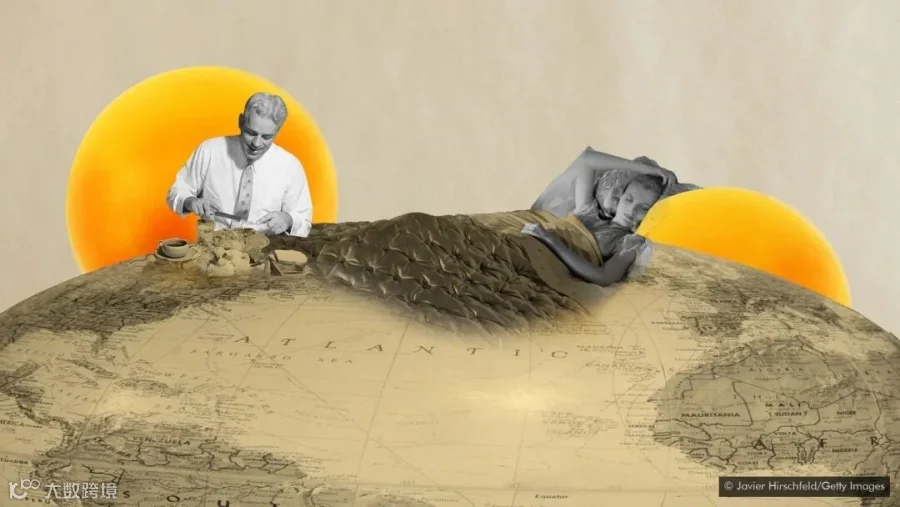
We still talk of the Sun rising in the morning and setting in the evening, even though we know it is the Earth moving (Credit: Javier Hirschfeld/Getty Images)
尽管我们知道是地球在自转,但我们依旧有“太阳东升西落”这种说法。(图源:哈维尔·赫希菲尔德/盖蒂图片社)
Cognitively, it sounds like hard work. In fact, the flexibility of our memories makes it fairly easy to do.
从认知上来说,这听起来很困难。但实际上,记忆的灵活性让我们拼接记忆时易如反掌。
So we shouldn’t curse our memories when they let us down. They’re made to be changeable, in order that we can take millions of fragments of memories from different times of our lives and recombine them to give us endless imaginative possibilities for the future.
所以,当我们因记忆不准确而难过时,我们不该责备记忆。记忆本就是多变的,这样我们才能承载人生中不同时间段数以百万计的记忆碎片,并将它们拼接起来,为我们的未来提供无限想象的空间。
>>>
怎么让时间慢下来?
<<<
There’s one other thing we can do. The single question I have been most often asked after writing a book on time perception is, how can we slow time down?
还有一个问题值得我们探讨。每当我写完一本关于时间观念的书后,人们提问最多的问题就是:怎么让时间慢下来?
But I wonder whether we should be careful what we wish for.If life feels as though it’s going fast, this could be a sign of a life that is full. Meanwhile, time does feel as though it’s going more slowly if you are bored or depressed or feeling lonely or feeling rejected, none of which we would want to seek out. As Pliny the Younger wrote in 105, “The happier the time, the shorter it seems.”
但是我在想我们是否有必要在意这个问题。如果你觉得时间过得很快,那么就是在说明你活得很充实。但是如果你感到无聊、沮丧、孤独或被拒绝,时间就会过得很慢,而我们都不想陷于这些情绪中。就像小普林尼于105年所写:时光越快乐,感觉越短暂。
But if you do want to shed that unsettling feeling on a Sunday evening that the weekend has whizzed by, there is something you can do: constantly seek out new experiences. The more memories you can create for yourself in everyday life, the longer your life will feel when you look back.
但如果你真的想在周日晚上摆脱那种不安的感觉,你可以尝试着去体验一些新事物。在日常生活中,你为自己创造的记忆越多,回首往事时,你就会觉得人生更加绵长而充实。
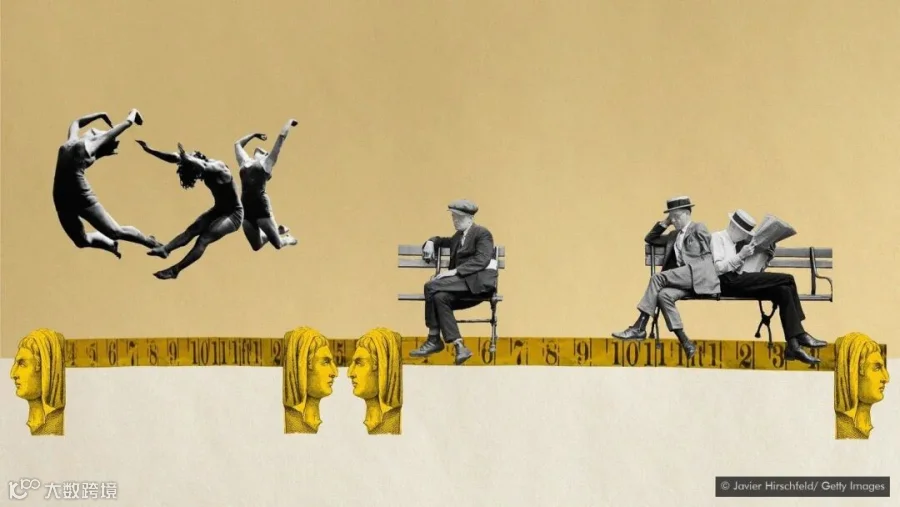
As Pliny the Younger wrote in AD 105, “the happier the time, the shorter it seems” (Credit: Javier Hirschfeld/ Getty Images)
正如小普林尼在公元105年所写的那样:“时光越快乐,感觉越短暂。”(图源:哈维尔·赫希菲尔德/盖蒂图片社)
The way we experience time in our minds is never going to match up with the latest discoveries in physics. We all know what the passing of time feels like. Although we can’t change the way our brains perceive time, there are better ways we can start to think about it. But even then, the way it warps in certain situations will continue to surprise and unsettle us. In the end, perhaps, St Augustine put it best when he asked: “What then is time? If no one asks me, then I know. If I wish to explain it to someone who asks, I know it not.”
我们在大脑中体验时间的方式永远赶不上物理学的最新发现。我们每个人都明白时间流逝的感觉。虽然我们不能改变大脑感知时间的方式,但我们可以用更好的方式来思考时间。而即便如此,它在某种情况下出现的扭曲仍会让我们惊讶和不知所措。最后,以圣奥古斯丁恰到好处的诠释作结:“时间是什么?没人询问我时,我自己可以意会;如果我想给别人解释它时,我便发现它不可言传。”
原文链接:https://www.bbc.com/future/article/20191203-what-we-get-wrong-about-time
编译:戴怡安 王夏雯 王姝 吕适言 祖芃芃
排版:王夏雯
审核:周雨旸
指导老师:刘佳