




吸血鬼,狼人,南瓜,糖果·····如今的万圣节已经成为大家能够尽情享受“奇装异服”的节日,而你是否会好奇,数千年之前这一天人们的庆祝装扮呢?
为庆祝万圣节的来临,小孩会装扮成各种可爱的鬼怪向逐家逐户地敲门,要求获得糖果,否则就会捣蛋。而同时传说这一晚,各种鬼怪也会装扮成小孩混入群众之中一起庆祝万圣节的来临,而人类为了让鬼怪更融洽才装扮成各种鬼怪。
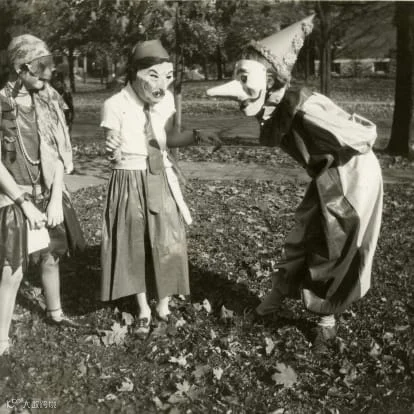
上图为1900年代初的一张黑白照片,一位美国农村妇女脸上戴着邪恶的白色面具。另一张1930年的照片上,一个高个子站在一块看起来像是由白色床单和黑色胶带紧紧缠绕的区域里。而1938年的图像照片则显示了三个人戴着令人毛骨悚然的骷髅面具开车去参加聚会。
20世纪上半叶的万圣节服装令人恐惧。根据 Lesley Bannatyne(一位撰写了大量有关万圣节历史的文章的作者)的说法,受万圣节的异教和基督教根源影响,人们通常将这个夜晚视为驱除邪恶或是与死者交流的机会,于是常常选择更病态和古板的服装,而不是当今受流行文化影响的服饰。
Halloween costumes from the first half of the 20th century were terrifying. Drawing on the holiday's pagan and Christian roots -- as a night to ward off evil spirits or reconcile with death, respectively -- people often opted for more morbid, serious costumes than the pop culture-inspired ones of today, according to Lesley Bannatyne, an author who has written extensively about the history of Halloween.
Bannatyne在电话采访中说:“在10月31日演变成我们所知的友好的家庭聚会之前,人们认为这一天与鬼魂和迷信息息相关。它被视为'不正常的一天',在这一天,你可以离经叛道。“穿着可怕的服装——当然不是今天的恐怖风格,而是单纯恐怖的服装——是节日的重要组成部分。”
"Before it evolved into the family-friendly, party occasion we know it as, October 31 was deeply linked to ghosts and superstitions," she said in a phone interview. "It was seen as a day 'outside of normal,' when you act outside of society's norms. "Wearing ghoulish costumes -- not horror-inspired like today's, but plain frightful -- was an essential part of it."
Ancient roots
万圣节服装的起源
万圣节服装的起源可以追溯到2000年前。历史学家认为,Samhain的凯尔特异教节日是万圣节的前身,它标志着标志着夏天的结束和不列颠诸岛“较黑暗”的半年的开始。
The genesis of Halloween costumes may date back over 2,000 years. Historians consider the Celtic pagan festival of Samhain, which marked summer's end and the beginning of the year's "darker" half in the British Isles, to be the holiday's precursor.
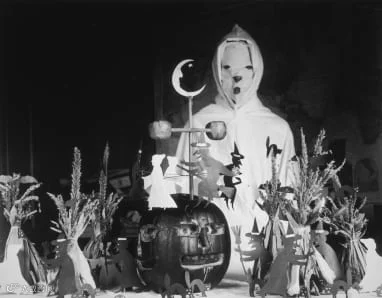
Photo taken in 1905 of a person wearing a ghost costume in a rural schoolhouse.
1905年在农村校舍里扮鬼的人的照片。
人们认为,在节日期间,神明的世界对人类是可见的,这导致了人们做出因此会出现一些“灵异”的恶作剧。有些人向神明提供食物,而另一些人则乔装戴上兽皮和兽首,以使漫游的神灵误以为他们是自己的一员。
It was believed that, during the festival, the world of the gods became visible to humans, resulting in supernatural mischief. Some people offered treats and food to the gods, while other wore disguises -- such as animal skins and heads -- so that wandering spirits might mistake them for one of their own.
班纳汀说,躲在服装之后的村民经常互相恶作剧,但同时却归咎于神灵。面具和乔装被视为逃避追咎的手段。在万圣节的整个演变过程中,这种想法一直持续着。”
"Hiding behind their costumes, villagers often played pranks on one another, but blamed the spirits," Bannatyne said. "Masks and cover-ups came to be seen as means to get away with things. That's continued throughout Halloween's evolution."
基督教在11世纪将10月31日定为节日,以此作为重组异教徒庆典的一部分。的确,“Halloween”这个名称源自“All Hallows Eve”,即“All Saints' Day”(万圣节)的前一天(11月1日)。不过,萨姆海因的许多民俗都得到了融合和延续-包括服饰。
'Darkitecture': The art and psychology of haunted house design
“深色建筑”:鬼屋设计的艺术学和心理学
在中世纪的英格兰和爱尔兰,人们会穿上象征死灵的装束,挨家挨户收集点心或是代表着死灵的洒满香料的“灵魂蛋糕”(一种称为“souling”的基督教习俗)。从15世纪后期开始,人们开始穿扮成冬季幽灵或恶魔的服装,并通过朗诵经文歌曲和表演民俗戏剧来换取食物(这种作法称为“mumming”)。
In medieval England and Ireland, people would dress up in outfits symbolizing the souls of the dead, going from house to house to gather treats or spice-filled "soul cakes" on their behalf (a Christian custom known as "souling"). From the late 15th century, people started wearing spooky outfits to personify winter spirits or demons, and would recite verses, songs and folk plays in exchange for food (a practice known as "mumming")
American influence
美国的影响力
18世纪,随着第一波爱尔兰和苏格兰移民开始抵达美国,万圣节的迷信、传统和服装也随之迁移。据时尚历史学家、纽约大学服装研究硕士项目主任Nancy Deihl说,万圣节融入美国文化之后,就很快流行起来了。她在一次电话采访中说:“美国农村地区的人们接受了它的异教根源,认为万圣节是一个以死亡为中心的黑暗时刻。他们用床单、化妆品、面具这样手边的东西把自己打扮成可怕的样子。她补充道:“服装主要是来隐匿身份,打扮的目的是完全伪装。”
"People in rural America really embraced its pagan roots, and the idea of it as a dark occasion, centered around death," she said in a phone interview. "They wore scary, frightening get-ups, which were made at home with whatever was on hand: sheets, makeup, improvised masks.
"Anonymity was a big part of the costumes," she added. "The whole point of dressing up was to be completely in disguise."
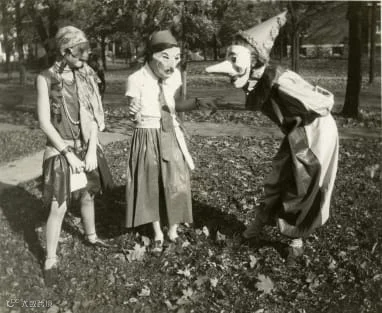
Three girls prepare for Halloween festivities,Ohio, 1929.
1929年,俄亥俄州,三个女孩在准备庆祝万圣节。
到了20世纪20年代和30年代,人们每年都在租用的沙龙或家庭住宅举行万圣节化妆舞会,成年人和儿童都会庆祝。据Bannatyne说,有的时候,大家从8月就开始准备服装了。从夏天到圣诞节,庆祝活动似乎也得益于日历上的时间安排。“这是在换季前聚在一起的一个机会,”Deihl说, “随着万圣节变得更加商业化,营销工作人员在这方面发挥了巨大作用。“
在这几十年里,随着第一批大型服装制造公司的出现,服装也受到流行文化的影响。据Bannatyne说,宾夕法尼亚州匹兹堡的J.Halpern公司(Halco这个名字更有名)在这段时间里开始对像大力水手、奥利芙·奥伊尔、小孤儿安妮和米老鼠这样的虚构人物进行商标注册。她说:“人们对在社会边缘扮演角色也很着迷,”她补充说,“海盗、吉普赛人甚至无家可归的人都成了常见的服装选择。”
Those same decades also saw the emergence of costumes influenced by pop culture, alongside the first major costume manufacturing companies. The J. Halpern Company (better known as Halco) of Pittsburgh, Pennsylvania, began licensing images of fictional characters like Popeye, Olive Oyl, Little Orphan Annie and Mickey Mouse around this time, according to Bannatyne.
"People also became fascinated with impersonating characters at the fringe of society," she said, adding that pirates, gypsies and even homeless people became common outfit choices.
在北美,万圣节恶作剧一直延续着古老的做法,有时甚至会造成破坏和骚乱。 到了20世纪40年代中期,媒体将这一晚的无政府管理状态(要么至少是窗户和栅栏的受损问题)称为“万圣节问题”,而服装可能“部分促成了这种行为”,Bannatyne说。
By the mid-1940s, the press had dubbed the night's anarchy (or its broken fences and smashed windows, at least) the "Halloween problem" -- and costumes may have "partly enabled that behavior," Bannatyne said.
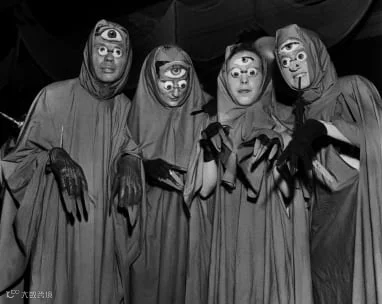
Portrait of party goers at the Chicago Art Institute's Halloween Ball, Chicago, Illinois, 1949.
1949年,芝加哥,伊利诺伊州,芝加哥艺术学院万圣节舞会上的派对人物肖像。
为了防止犯罪损害,地方和国家官员试图将万圣节改日,并把它包装成为“一项针对年幼儿童的活动”。 芝加哥市议会甚至在1942年投票废除万圣节,并在10月31日设立“保护日”。
伦敦时尚学院的社会学研究员Anna-Mari Almila在电话中说:“万圣节的历史经历了所有权的变化,它与死亡的原始联系变得越来越脆弱,这为完全不同种类的(服装)创造了空间。”
"Throughout its history, Halloween has gone through changes of ownership," said Anna-Mari Almila, a sociology research fellow at the London College of Fashion, over the phone. "Its original connection to death became more and more tenuous, which made space for altogether different kinds of (costumes)."
第二次世界大战后,随着电视流行文化进入千家万户,越来越多的美国万圣节服装开始模仿超级英雄、漫画人物和娱乐人物。同时,也有更多人愿意去商店里购买这些服装:根据板岩杂志,到1960年,制造公司Ben Cooper占据了70%-80%的万圣节服装市场,推动了万圣节的流行。
Dropping the mask
摘下面具
Deihl表示,也正是大约在这个时候,成年人们开始再次为万圣节装扮。和孩子们的服装一样,这些装扮的趣味性大于恐怖性,比起恶魔和幽灵,“星球大战”或是印第安纳·琼斯更常是它们的灵感来源。
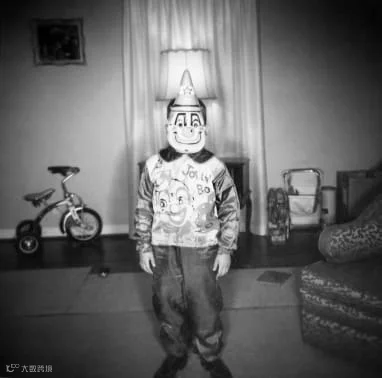
A school age boy stands in his living room for a portrait of him wearing a clown costume.
一个穿着小丑服装的男孩在他卧室里的照片
“一般来说,我们将60年代视为万圣节服装发展的转折点,”Deihl补充道,“尤其是成年人们,他们开始摘下面具露出脸,也不再严严实实地遮住全身。人们用万圣节服装展示一个更轻松、特别的自我:像是神奇女侠、卢克·天行者,或是任何你想成为的对象。”
"Generally speaking, the '60s marked a shift in the way we dress up for Halloween," Deihl added. "Grown-ups, in particular, started ditching masks and full-on coverage, opting to show their faces. Costumes became a way to play a lighter, special version of oneself: showing the world you 'were' Wonder Woman, or Luke Skywalker, or what have you."
不过惊悚服装依然没有退出舞台,1970-80年代涌现的一系列恐怖电影,从 John Carpenter的《万圣节》到Wes Craven的《半夜鬼上床》都给了这些服装灵感。近几十年来,在美国各州都有同志团体将这个节日视作一个能够穿奇装异服和举行游行的场合,这也促进了万圣节派对的繁荣和侵略性服装的流行。Deihl表示,这种流行在近几十年里常常显得过分性感和野性。
But there was still a place for scary outfits, encouraged by a slew of splatter-horror movies that started emerging in the 1970s and 80s, from John Carpenter's "Halloween" to Wes Craven's "A Nightmare on Elm Street." These decades also saw gay communities across the States adopt the holiday as an occasion to wear outrageous outfits and hold parades, contributing to a boom in Halloween parties and the popularization of provocative costumes that "in recent decades," Deihl, said, "have oftentimes leaned towards the overtly sexy and campy."
“万圣节服装已经从一种伪装变成了彻底的自我展示,”Almila说,“如今万圣节已经成为一个大型的商品性节日,彻底脱离了任何基督教或是异教的联系,更关注于展示人们的幻想,这也是它在全球如此成功的原因。”
"Halloween costumes have gone from disguises to full-on exhibitionist," Almila said. "Today, it's one big capitalist celebration completely detached from any vestige of Christianity or paganism, and more centered around expressing people's fantasies -- which also explains its success globally."
“我认为它们无疑变得更能反映我们生活的这个时代了,”Deihl补充道,“但是和过去相比,现在自己制作万圣节服装的人已经很少了,这些服装里的个人创造力也大大减少。”
"I think they've certainly become more reflective of the times we live in," Deihl added. "But there are also far fewer people making their own Halloween outfits now, and a lot less personal creativity going into what you wear, compared to the early days.
“我们往往都被可供购买的同一系列服装中所吸引,也因此造成了巨大的浪费。我认为如果人们像以前那样制作自己的服装,就可以更独立地表达自我。”
"We're all drawing from the same range of costumes available for purchase. And creating immense waste because of it. I think people would express themselves much more individually if they crafted their own costumes like they used to."
原文链接:
https://edition.cnn.com/style/article/history-of-halloween-costumes/index.htm
编译 | 高嘉怡 陈雨昕 靳晓乐
排版 | 靳晓乐
审核 | 赵寒旭 刘佳