




The current pandemic is forcing much of the world’s population to stay at home and take it easy. But we may not be wired that way.
目前的疫情迫使世界上大部分人口呆在家里,放松自己。但我们可能并非想象中轻松。
You may be among the more than three million people who’ve seen a short film issued by the Governor of California’s office. It’s all over social media. In the video, the comedian Larry David, in his trademark sardonic style, urges people to follow the official advice and stay at home to stop the spread of Covid-19. ;;What’s the matter with you ";;idiots", he says, you’re passing up a fantastic opportunity to sit in an armchair and watch TV all day!
你可能是看过加州州长办公室所发行短片的三百多万人中的一员,它在社交媒体上流传得到处都是。在视频中,喜剧演员拉里·大卫以他标志性的讽刺风格,敦促人们听从官方的建议,呆在家里以阻止Covid-19的传播。他说,你们这些“白痴”怎么了,你们错过了一个坐在扶手椅上看一整天电视的绝好机会!
We’re used to health warnings that urge us to do things that we don’t really have a great urge to do: to exercise more, to eat five or eight or even 10 portions of fruit and vegetables a day. But for once the official advice sounds easy; loaf on the sofa, binge-watch box sets, stay at home. This all sounds as though it should appeal to our lazier sides.
我们习惯了健康警告,这些警告敦促我们去做一些我们并不很想做的事情:多锻炼,每天吃五份、八份甚至十份水果和蔬菜。但这一次,官方的建议听起来很简单:呆在家里,躺在沙发上啃面包,沉迷于刷剧。这一切听起来似乎应该吸引我们懒惰的一面。
In fact, it is not as simple as that, as you’ve probably already found out, after a few weeks of lockdown. It turns out we are not biologically programmed to do as little as possible. Indeed, we thrive on activity. Or at least, a good balance between being busy and being able to rest.
事实上,经过数周的居家隔离,你可能已经发现事情没有那么简单。事实证明,我们的生理特性注定了我们不是做越少的事越好。与之相反,我们会因为更多的运动而更健康。或者至少在忙碌和休息间找到一个平衡。
It’s true that we often look for the easy option, the path of least resistance, the shortcut to success. If you have a remote control, why get up and switch channels on the TV itself? If you have a car why cycle to the supermarket? If you can get away with doing half as much work than a colleague, then why not?
的确,我们常常寻找让自己轻松的选择,最不崎岖坎坷的道路,走向成功的捷径。如果你有一个遥控器,何必要自己爬起来去更换电视频道呢?如果你有一台车,何必要蹬着自行车去超市呢?如果你可以比同事少做一半的工作,那为什么不呢?
Any sort of work or effort involves mental and physical strain, so it makes sense to avoid it where possible. And sometimes we do just that. This is sometimes known as the principle of least effort or Zipf’s Law, a law you might think no one is ever tempted to break. Except that we break it all the time.
任何一种工作或努力都涉及精神和身体上的双重压力,因此尽可能避免这种压力是可以理解的。我们有时就会这样做,而这被称为“最小努力原则”或“齐普夫定律”。你可能会想,应该没有人会试图打破这一定律。但是其实我们一直都在在打破它。
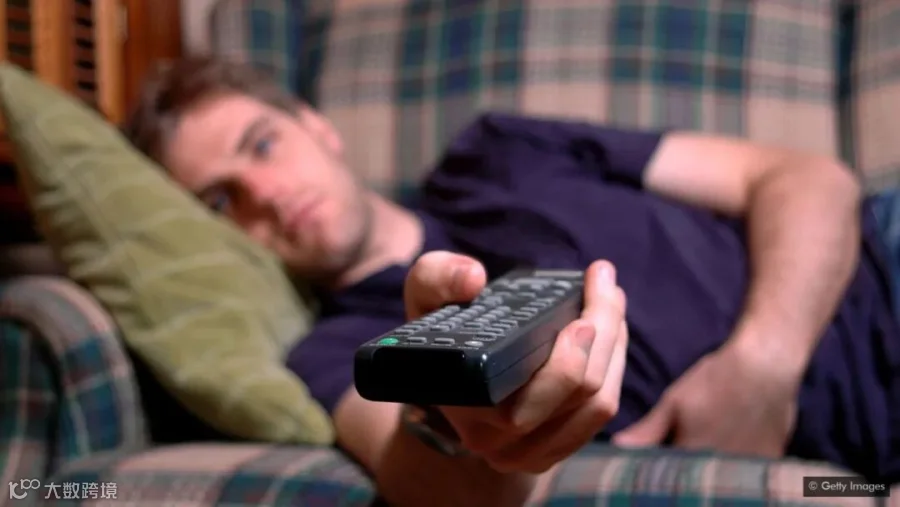 这段隔离的时间已经说明,我们在生理上的天性并不是饱食终日。(图源:Getty Images)
Do you ever dream of doing absolutely nothing? Lying in a hammock for a whole afternoon. Just staring at the ceiling, listening to the silence. It may sound like a lovely idea, but in fact we can find doing nothing at all – and take sleep out of the equation – very hard to do. In a famous study conducted a few years ago at the University of Virginia, participants were led one at a time into a completely bare room with all distractions removed. They had no phone, no books, no screens – and they weren’t allowed to take a nap. Electrodes were fitted to their ankles and they were left alone for 15 minutes. It was an opportunity to kick back and relax for a short while.
你有没有幻想过什么都不用做,躺在吊床上整整一个下午,只是盯着天花板,感受着寂静发呆。这听起来可能是个不错的主意,但事实上,我们会发现什么也不做——不包括睡觉——其实很难做到。几年前在弗吉尼亚大学进行的一项著名研究中,参与者被轮番带到一个空荡荡的房间里,所有的干扰物都被移除,他们没有电话,没有书,没有电脑电视,也不被允许小憩。研究者将电极安装在他们的脚踝上,让他们独自呆上15分钟。这是一个放松的好机会。
So, how did it go? Well, before being left alone, participants were shown how to press a computer key which was wired up to a machine that delivered an electric shock. You might suppose that having tried it once no one would want to do it again. Wrong. In fact, 71% of the men and 25% of the women gave themselves at least one electric shock during their time in solitary – and one man shocked himself a shocking 190 times. It turns out that having nothing to do was so excruciating, that many of the participants preferred to, in effect, torture themselves rather than put up with no distractions whatsoever.
那么,实际进展又如何呢?其实,在被单独留在房间之前,研究人员向参与者展示了如何按下连接到电击机器上的电脑按键。你可能会认为,只要尝试过一次,就没有人愿意再按一次。那你就错了。事实上,71%的男性和25%的女性在独处期间至少电击自己一次,而一名男性总共电了自己190下。实验证明,无事可做的感觉是糟糕透顶的,以至于许多参与者宁愿折磨自己,也不愿忍受无所事事。
Sometimes we take the easy route and do as little as we can get away with, but at other times we value situations more if we have to expend considerable effort
很多时候我们会选择走捷径,尽可能少做一些事情,但在其他情况下,如果我们必须花很大力气做一件事,我们反而会更加珍惜这种全力以赴的感觉。
This experiment is an extreme example, but we know from everyday life that people constantly choose to do things they don’t need to do and which are sometimes painful. Think of all of your friends who run marathons or have punishing regimes at the gym. They go way beyond what is required for health and fitness. And what about the people who trek across the ice to reach the poles of the Earth or sail around the world?
实验中的例子非常极端,但是我们从日常生活中也能发现,人们总是选择去做那些不必要甚至是痛苦的事情。想想你那些跑马拉松或者在健身房惩罚性锻炼的朋友们,他们所做的远远超出了健康和健身所需要的程度。更不用说那些为了去往极地而破冰跋涉,或航行环游世界的人了。
Michael Inzlicht from the University of Toronto calls this the paradox of effort. Sometimes we take the easy route and do as little as we can get away with, but at other times we value situations more if we have to expend considerable effort. The intrinsic joy of the effort gives us so much pleasure that we don’t take the short cut. We might spend hours puzzling over a cryptic crossword instead of using a search engine to find the solution.
多伦多大学的麦克·因兹利奇称这种行为是"努力悖论"。很多时候我们会选择走捷径,尽可能逃避来少做一些事情,但在其他情况下,如果我们必须花很大力气做一件事时,我们反而会更加珍惜这种全力以赴的感觉。努力做一件事所含的乐趣给予我们如此多的快乐,让我们不想走捷径。我们可能会花好几个小时做一道晦涩的填字游戏,而不是上网找答案。
We learn this early in life. As children we are taught through experience and persuasion that effort leads to reward and over time this conditions us to enjoy effort for its own sake.This is known as learned industriousness. While backpacking, more than 20 years ago, I visited the stunning coloured lakes of Kelimutu on the island of Flores in Indonesia. The lakes change colour every few years, making them a mysterious and spectacular sight.
我们在儿时就学会了这种获取乐趣的方法。当我们还是孩子的时候,我们从自己的经验和别人的教导中形成了"努力就会有回报"的观念,随着时间的推移,我们开始享受努力本身的快感。这就是习得性"勤勉"。20多年前,我在背包旅行的途中游览到了色彩绚丽的克利马图湖,它位于印度尼西亚的弗洛雷斯岛。这些湖泊每隔几年就会改变颜色,有着神秘而壮观的景象。
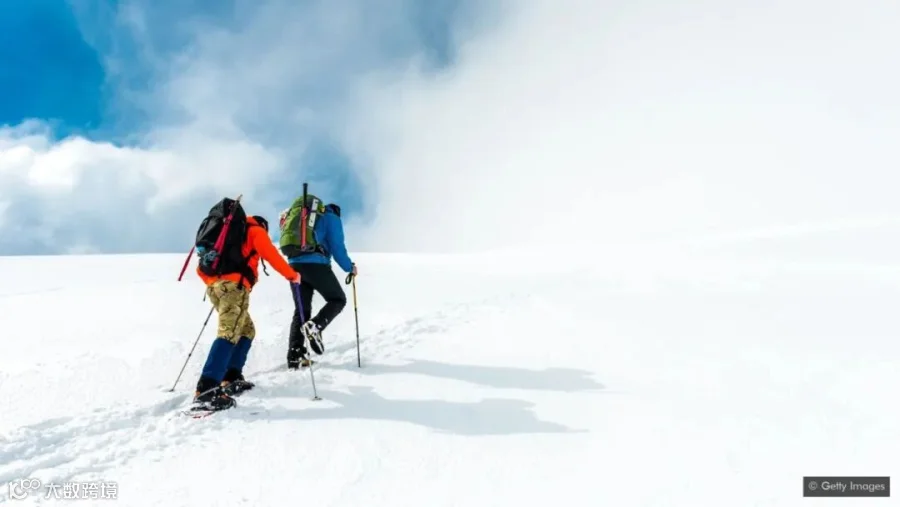 如今,人们可以轻而易举地登上许多山峰的顶峰,但许多人仍将这种努力所带来的快感视为回报的一部分。(图源:Getty Images)
But at least part of the reason why this trip sticks in my memory is the effort that my partner and I had to expend to get there. We had travelled by boat and bus for days, including one journey of several hours in a small van, a journey so windy and bumpy that a man was employed to hand out sick bags which he then gathered up and threw out of the door. This was followed by a night in a sweaty, fetid hostel with bumpy mattresses and cockroaches, and a 4am start in another minibus to make the final trip up to the lakes. We suffered to get to Kelimutu – but that was all part of the experience.
然而,这次旅行之所以让我记忆犹新,部分原因正是我和我的伙伴为到达那里所付出了巨大努力。我们坐了好几天的船和公共汽车,有一段还坐了好几个小时的小货车,一路上风很大,颠簸得很厉害,我们中还专门有个人负责把呕吐袋扔出去。之后,我们在闷热恶臭的旅馆度过了一晚,那里的床垫凹凸不平,蟑螂随处可见。凌晨4点,我们又坐上了另一辆小巴,踏上了前往湖区的最后一趟旅程。我们在到达克利马图之前经历了很大的痛苦,但那正是整个经历不可或缺的一部分。
Not far from the viewing area was a helicopter pad, where the richer tourists presumably landed. But we didn’t envy them. Did they appreciate the lakes as much as we did? Probably not.
离观景区不远有一个直升机停机坪,富裕的游客大概就是在那里降落的。但我们并不羡慕他们。他们看到的湖泊能像我们看到的一样美吗?我想不会。
The summits of many mountains in the world can be reached by cable car or chair lift. But of course, mountaineers would much rather bivvy overnight on the side of a sheer rock face, suspended in freezing conditions, risking frost bite, than take the tourist route.The behavioural economist George Loewenstein called his paper on this syndrome "Because it is there" after George Mallory’s ;;famous quote.He explains that humans just can’t resist the chance to achieve goals and master situations, even when they don’t need to.
乘坐缆车可以到达世界上许多山峰的顶峰。但毫无疑问,登山者宁肯冒着冻伤的危险在陡峭的岩石表面上过夜,也不愿走旅游路线。行为经济学家乔治•洛温斯坦有一篇关于这种综合症的论文以乔治•马洛里的一句名言命名,叫作“因为它就在那儿”。他解释说,人类就是无法抗拒实现目标和掌控局面的机会,即使他们并不需要这样做。
译注:乔治·马洛里(1886年6月18日-1924年6月8日)是一位伟大的英国探险家,在尝试攀登珠穆朗玛峰途中丧生。生前他在被问及为何想要攀登珠穆朗玛峰时回答说,“因为它就在那儿。”(“Because it’s there!”)成为人们至今经常引用的名言。
While we stay home and self-isolate, lying on the sofa and watching TV will form only a part of how we pass the time
当我们呆在家里,自我隔离时,躺在沙发上看电视只能打发一小部分时间
And even if you don’t personally identify with the mountaineers getting such a thrill from the exertions and dangers of climbing, most of us can identify with the “Ikea effect”, the finding that people value household items more if they’ve built them themselves.
即使你个人并不认同登山运动员从爬山的劳累和危险中获得的兴奋感,我们大多数人也会认同“宜家效应”,即人们会更加珍视自己动手做的家居用品。
All of this means, that while we stay home and self-isolate, lying on the sofa and watching TV will form only a part of how we pass the time. ;;We might think it is fun to laze around for a few weeks, but in fact it will drive us to distraction. Enforced and extended rest, unless we are ill and our bodies demand it, leads not to feelings of being relaxed but of restlessness and irritability. We need to find ways during lockdown to replicate as far as we can the rhythms and sense of balance we achieve, at our best, in ordinary life.
所有这一切都意味着,当我们待在家里自我隔离时,躺在沙发上看电视只能用来打发一小部分时间。我们可能认为度过几周的闲散时光很有趣,但事实上它会让我们分心。除非生病或身体需要休息,强制性不断延长的休息不会使我们感到放松,相反,会使我们感到不安和烦躁。我们需要找到一种方法,在隔离期间尽可能地维持我们日常生活中的最佳状态的节奏和平衡感。
 在正常时期,我们中的许多人都没有把休息当回事。(图源:Getty Images)
So, taking exercise, setting ourselves tasks, doing things that are effortful and difficult are important. And we should all be looking for activities or experiences that promote what the ;;psychologist Mihaly Csikszentmihalyi calls flow, in his book Flow: The Psychology of Optimal Experience. These are tasks, such as painting or gardening or doing jigsaws, which so absorb us that we don’t notice time passing and we stop worrying about everything else.
所以主动锻炼身体,给自己设定任务,做那些费力且困难的事情是很重要的。正如心理学家Mihaly Csikszentmihalyi在他的书《心流:最佳体验的心理学》中所说,我们应该寻找能够促进心流的活动或体验。诸如绘画、园艺或做拼图这样一些活动能够吸引我们,使我们很难注意到时间的流逝,也暂时放下了对其他事情的担心。
In normal times, most of us don’t take rest seriously enough. So during this exceptional period, we should embrace the opportunity to rest more if we can – and indeed take those more balanced rhythms of rest and busyness into our lives post shutdown. But during this difficult time, we will find that we are not instinctively lazy creatures. Indeed in a weird way we might find that doing less, and resting more, initially requires quite a lot of effort.
在正常时期,我们大多数人对休息不够重视。因此,在这段特殊的时期,我们应该抓住机会尽可能多休息,将这种劳逸结合的平衡节奏带入我们当下的生活。但是在这个难熬的时期,我们会发现我们不是本能懒惰的生物。事实上,我们可能会以一种奇怪的方式发现,做事更少而休息更多需要付出很大的努力。

原文链接:https://www.bbc.com/future/article/20200602-are-human-beings-naturally-lazy
编译:金殊羽 于沛欣 韩旭 陈晓 郭诗萌
排版:韩旭