
随着乌克兰的战火燃起,世界各国都在增加军事预算,这种现象在欧洲最为显著。由于俄罗斯的侵略威胁在欧洲最为突出,德国、意大利和挪威等国已经决定增加国防开支。世界上最大的两个军费开支国美国和中国也在增加军费拨款。
这种趋势的经济后果是什么?

本文共1775字,阅读需要6分钟

国防开支增加利好经济?

A common assumption, therefore, is that extra spending on armies is harmful to growth and development. But the relationship is not so straightforward. In some cases bigger defence budgets may in fact yield substantial economic benefits.
一个普遍的假设是,军队的额外开支对经济增长和发展有害。但这种关系并不是那么简单。在某些情况下,更高的国防预算实际上可能会产生可观的经济利益。
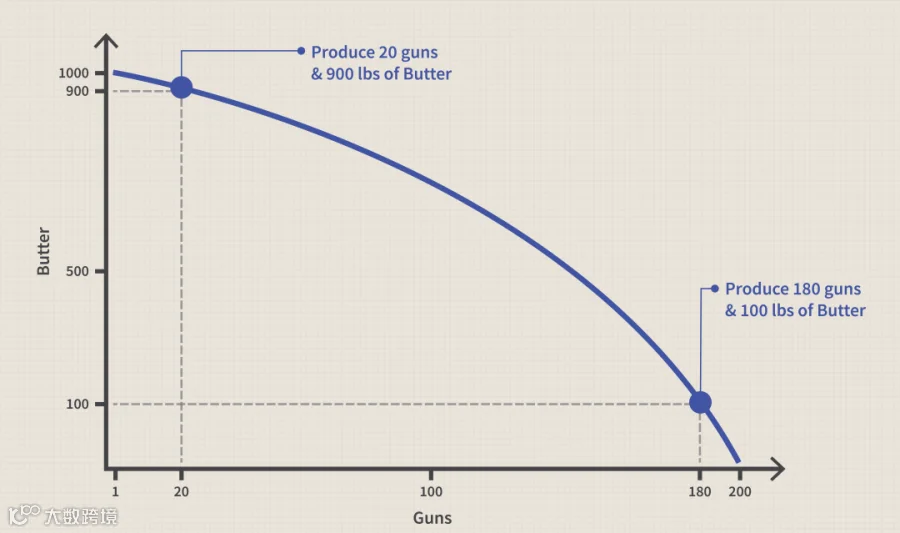
The classic model for illustrating the concept of opportunity costs is guns versus butter: the more you produce of one, the less you can of the other. In any given year, that simple model holds true. Governments have finite budgets, which can only be pulled in so many different directions.
说明机会成本概念的经典模型是枪支与黄油:你生产一种产品越多,你能生产的另一种产品就越少。在任何时候,这个简单的模型都适用。政府的预算有限,只能向诸多不同方向拉动。

It is thus easy to see how spending on defence, taken to an extreme, could be corrosive for an economy. If a government shortchanges the education system in order to buy shiny new weapons, the long-run impact on productivity and, ultimately, growth would be baleful.
因此,不难看出,国防开支如果走到极端,会对经济产生腐蚀作用。如果一个政府为了购买锃亮的新武器而牺牲了教育系统,那么对生产力的长期影响,以及最终对经济增长都是有害的。

穷国富国机会成本有何不同?

大量的研究得出了类似的结论。在2014年莫纳什大学的一篇讨论稿中,Sefa Awaworyi Churchill 和 Siew Ling Yew 审阅了42项相关研究。
Effects are generally quite small, but they found two distinct categories: military expenditure in poorer countries is often detrimental to growth, whereas in wealthier countries it is more likely to be beneficial. One possible reason, they suggest, is weaker governance in developing countries; a big military budget is a juicy target for corrupt officials.
军费开支影响通常很小,但他们发现了两种不同的走向:较贫穷国家的军费开支往往不利于经济增长,而在较富裕国家则更有可能有利。他们认为,一个可能的原因是发展中国家的治理较弱。巨额军事预算是腐败官员的一个利润丰厚的目标。

Another possibility relates to the gun-versus-butter framework. The potential returns on civilian investments, from health care to education, are so great in poor countries that military spending has a particularly high opportunity cost. In rich countries with good schools and hospitals, the opportunity costs ought to be lower.
另一种可能性与军事和经济之间的关系有关。在贫穷国家,从医疗保健到教育的民用投资的潜在回报巨大,所以军费开支具有特别高的机会成本。在拥有良好学校和医院的富裕国家,机会成本应该更低。

增加军费开支的好处

One way in which defence spending might be said to boost the economy is as a jobs programme. If the armed forces were a corporation, they would be America’s largest employer with 2m workers (counting active-duty personnel and civilians), beating Walmart and Amazon.
可以说国防开支促进经济的一种方式是作为一项就业计划。如果武装部队是一家公司,他们将成为美国最大的雇主,拥有200万工人(包括现役军人和文职人员),击败沃尔玛和亚马逊。

Defence spending may deliver better returns as an undeclared form of industrial policy. In a paper last year Enrico Moretti of the University of California, Berkeley, and two colleagues looked at government funding for research and development (r& d), with a focus on defence spending, in oecd countries.
作为一种未公开形式的产业政策,国防开支可能会带来更好的回报。在去年的一篇论文中,加州大学伯克利分校的Enrico Moretti和两位同事研究了经合组织国家政府对研发(r&d)的资助,重点是国防开支。
On average, they found that a 10% increase in government-financed r& d leads to a 5% increase in privately financed r& d in the targeted firm or industry. Moreover, there are knock-on benefits for productivity.
平均而言,他们发现政府资助的研发资金增加10%,会导致目标公司或行业中私人资助的研发资金增加5%。此外,国防开支也会连带促进生产力的发展。

An obvious objection is that the government could achieve the same results by supporting r& d in general, without pumping money into the armed forces. In an economic sense that may be true. But there is a political constraint—namely, how to marshal support for experimentation that may fail.
一个明显的反对意见是,政府可以通过支持一般的研发来达到同样的效果,而无需向武装部队注入资金。从经济意义上说,这可能是正确的。但是有一个政治限制——即如何为可能失败的实验争取支持。

Public support for defence is less susceptible to mood swings. Without having to worry about its next grant application, the American military system has been free to churn out innovations, from duct tape to the internet, without which modern life would be scarcely imaginable.
公众对国防的支持不太容易受到情绪波动的影响。美国军事系统可以自由地进行创新,不必担心下一次拨款申请,从胶带到互联网,如果没有这些创新,现代生活几乎是不可想象的。

Important as it is to trace the impact of military spending on growth or innovation, such exercises risk missing the wider context as demonstrated by Russia’s war in Ukraine. A foundational element for any successful economy is peace and stability, giving firms the confidence to invest and people the space to flourish. Textbooks may talk of guns or butter. But in a world unsettled by revanchist powers, the truth is that it is both guns and butter. A strong defence is, regrettably, a necessity for a strong economy.
尽管追踪军费开支对增长或创新带来的影响很重要,正如俄罗斯在乌克兰的战争所证明的那样,此类举措可能会忽略更广泛的背景。任何成功经济的基本要素是和平与稳定,让企业有信心投资,让人们有蓬勃发展的空间。教科书可能会谈到枪支或黄油。但在一个被反叛主义势力扰乱的世界中,国防开支既是枪支又是黄油。令人遗憾的是,强大的国防是强劲经济的保障。

-END-

【重点词汇】
corrosive: a. tending to damage sth gradually 损害性的;逐渐起破坏作用的
例: Unemployment is having a corrosive effect on our economy. 失业对我国的经济起着破坏作用。
shiny: a. smooth and bright; reflecting the light 光亮的;锃亮的;反光的;有光泽的
例: shiny black hair 有光泽的黑发
knock-on: a secondary, indirect, or cumulative effect 附带效果,间接影响,积累效果
例:movements in oil price have konck-on effects on the other fuels. 石油价格变动对其它燃料有间接影响。
原文地址:
https://www.economist.com/finance-and- economics/2022/04/16/what-bigger-military-budgets-mean-for-the- economy
文案 | 周之瑞
排版 | 周之瑞