

Giphy

There’s a difference between
getting dressed and getting dressed.
全文字数:2580字 / 阅读时间:8分钟
There’s a difference between getting dressed and getting dressed. Assess what you're really upset about before you start throwing stuff away.
“穿上衣服“和“穿好衣服”是有区别的。 在断舍离之前,先评估一下让你真正心烦的是什么吧。
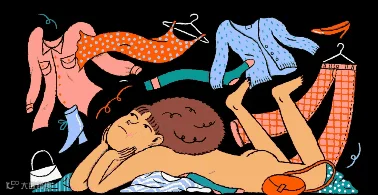
Illustration by Min Heo
According to Pei-Han Cheng, a New York–based therapist who specializes in body image concerns, it’s completely understandable to have anxiety about your appearance in this moment. First, the pandemic has been incredibly stressful, and took away our everyday routines as well as many of the activities that typically make us feel good about ourselves, including spending time with loved ones.
一名常驻纽约的身体形象治疗师Pei-Han Cheng表示,在疫情时代对自己的外表感到焦虑是完全可以理解的。首先,疫情给我们带来了前所未有的压力,剥夺了我们的日常例行活动,以及许多让我们身心愉悦的活动,包括与所爱之人共度时光。
“When we don't have access to our typical coping or self-care practice, it can really increase our vulnerability to anxiety, negative body image, and self talk,” Cheng said.
Cheng表示:“当我们无法启动熟悉的应对机制和自我保护机制时,在焦虑情绪、负面形象和自怨自艾面前就更加脆弱无力。”

Gifimage.net
It turns out there are a few different factors, most of which have nothing to do with what your actual clothes look like. Instead, it’s all about how what you’re wearing makes you feel. Daniel Benkendorf, an associate professor of psychology at the Fashion Institute of Technology, said. The link between clothing and emotions is reciprocal - how we feel impacts what we think about our clothing, and it guides our decisions about what to wear. But what we wear also impacts how we feel and what we think.”
事实证明,突然看自己的衣服“不顺眼”多半与衣服本身无关。相反,重要的是你的穿着给自己带来的感受。时尚技术学院心理学副教授Daniel Benkendorf表示:“衣服和情绪之间的联系是相互的——我们的感受影响着我们对服装的看法,左右我们的穿着,而我们的穿着也会影响我们的感受和想法。”
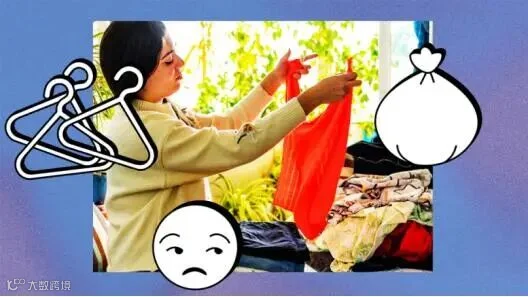
COLLAGE BY VICE STAFF
People have long used clothing for self-expression, but doing so got easier after the Industrial Revolution made cheap, mass-produced garments widely available. “The fashion impulse is universally present,” Justine De Young, an art historian at the Fashion Institute of Technology, said. “It’s a question of attainability.”
长期以来,人们一直通过穿搭来展现自我。工业革命后,大规模生产带来的廉价服饰进入了人们的日常生活,自我表达变得更容易了。“时尚冲动一直普遍存在。”时装技术学院的艺术历史学家Justine De Young说,“关键在于人们能否有选择服饰的机会。”

Hopetocope.com
Today, the expressive urge is even stronger - not because textiles are serving as texts, but because cultural and economic forces encourage us to broadcast our identity at all times. Supplemental “texts” in other words, are everywhere: favorite television shows, preferred fonts, the neighborhood bar you suggest when a new friend wants to meet up.
如今人们的穿搭表达欲愈发强烈,并非因为服饰本身正在作为一种自我表达的文本媒介,而是因为文化和经济因素都鼓励人们时时处处去展现自我。也就是说,"补充性表达文本”无处不在:最喜欢的电视节目,喜欢的字体以及与新朋友碰面时更偏好的酒吧。
At times, it can feel as though anything you do will be turned into data -essentialized, fastened to your “brand,” and, probably, sold.
有时你会觉得,自己的一举一动都会转化为某种数据,提炼精华,牢牢捆绑,成为你的“个人品牌”,然后很可能被售卖出去。

“Wardrobe dissatisfaction and body dissatisfaction go hand in hand - body dissatisfaction is often at the root of displeasure with the way we see ourselves in the mirror,” Ashley McHan, a therapist who specializes in anxiety, trauma, and eating disorders, told VICE.
专门研究焦虑、创伤和饮食失调的治疗师Ashley McHan认为:“对衣橱不满与对身材不满是密切相关的——我们看镜中的自己不顺眼通常是源于对自己身材的不满意。
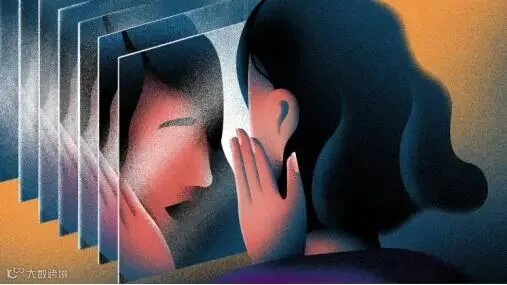
ILLUSTRATION BY JORDAN MOSS
Whether body dissatisfaction is something you’ve struggled with long term, or something that’s arisen more recently thanks to body changes over the course of COVID quarantine, McHan said it all stems from equating the way you look to what your worth is as a person.
McHan称,无论是长期困扰你的身材焦虑,还是近日因为新冠疫情期间身体变化而产生的问题,根本原因在于人们把外貌与个人价值等同了起来。
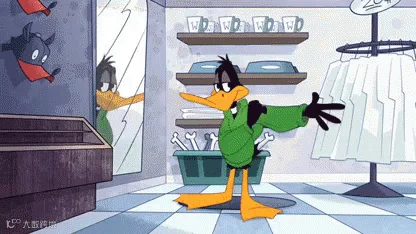
“When someone uses the way they look to assess their worth, they can easily appraise themself as not good enough if their clothes don't fit just right, aren't the newest or coolest - all of which is in the eye of the beholder.”
“当一个人用外表来评价自己的价值时,其后果是假使他们的衣服不合身、不是最新或最酷的时候,他们很容易就会认为是自己不够好,这些都是旁观者的视角。”
Gifimage.net
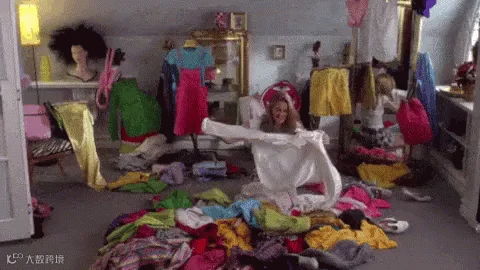
McHan recommends bearing in mind that a new wardrobe won’t change the way you feel about your body and - most importantly - that you should step away from the mirror if the way you look is making you upset. “The closet and its contents are a resource. They aren't the solution,” she said.
一个新的衣橱不会改变你对自己身材的看法,最重要的是如果你不满于镜中的自己,你应该少照镜子。“衣橱和里面的衣服是一种资源。它们不是解决我们穿衣焦虑的‘灵丹妙药’。”McHan表示。
Tenor
“What we wear will not solve issues of self-esteem and challenges with body dissatisfaction and if we aren't aware, we are more likely to allow the way we see ourselves in our clothes to dictate our mood, state of mind and relationship with ourselves.”
此外,衣服并不能帮我们建立自尊或是解决我们的身材焦虑,如果我们没有意识到这一点, 我们的情绪、身体状态和自我认知就很容易被我们的穿着所左右。
Odds are pretty good that your desire to trash your clothes isn’t coming out of thin air—and if it doesn’t stem from body feelings, larger emotional or life changes might be the culprit.
你很可能不是由于头脑一热而想扔掉衣服,如果不是因为身体变化,那多半是你经历了剧烈的情感或生活变化。
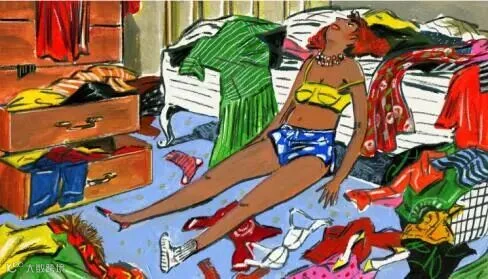
Illustration by Mokshini
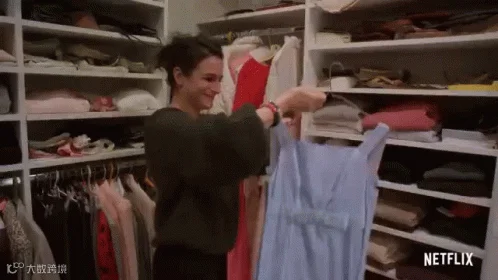
Casting off “old” clothes might also stem from the impulse to cast aside the memories you associate with them. “Closets tend to hold a lot of history for people. If [your closet is] feeling out of resonance in any way, take a deeper look at what you are storing in it,” Lili Pettit, co-founder of holistic home organizing service Clutter Healing, told VICE.
想丢弃“旧”衣服的冲动也可能源于你想摆脱与之相关的记忆。“衣柜往往‘堆积’着很多有关过去的记忆。如果你怎样都无法与你衣柜中的物品产生共鸣,你最好仔细看看柜子里都储藏了什么(是时候清理了)。”全面家政服务组织Clutter Healing的创始人之一Lili Pettit称。
Tenor
“Oftentimes we forget about the divorce papers, a dress that reminds us of a dark time, or [other] things that simply don't belong in your closet.” Pettit said not to be afraid to purge items that straight-up give you bad vibes .
“一份离婚协议书,一件裙子,或者其他根本不属于自己衣柜的物品都会使我们想起过去低谷时期的种种经历,而人们常常忘了这点。”她表示对直接影响你心情的物品,果断地进行“断舍离”。
Comparison is the thief of joy, but after more than a year of mostly living through our phone screens, it’s all too possible to get sucked into TikTok dresses and the online sale cycle. All that window-shopping, whether it’s on your friend’s feeds or your favorite retailer’s website, can make the things you already own feel inadequate, fast.
攀比是觊觎快乐的小偷。但在经历了一年多不离开手机屏幕的生活后,人们更可能被抖音上展示的裙子及线上周期促销所吸引。所有的这些橱窗购物——无论是由你的朋友安利还是来自你最爱的零售网站,都会加重你的物欲。
“If a person looks at an image on social media and believes it to represent happiness or belonging, they may subconsciously assess that to mimic it will lead to their own happiness and sense of belonging,” McHan said.
“如果一个人认为在社交媒体上看到的某张图片上的物品传达了幸福感和归属感,他们会下意识地认为拥有同款穿搭就能有相同的感受。”McHan坦言道。
Dribbble
And when it comes to shopping at fast fashion retailers specifically, Benkendorf said there are psychological and practical factors in play. “In the era of fast fashion and social media influencers, trends shift rapidly, leaving the fashion-conscious consumer with a lingering anxiety that their wardrobe is out-of-date because there is always something new,” he said.
Benkendorf称,当我们在快时尚零售店购物时,心理因素和现实因素都在影响我们。“在快时尚和网红踊跃出现的时代,潮流转变迅速,追求时髦的消费者因担心其衣柜中服饰过时而持续焦虑,毕竟时尚界总是推陈出新。

Word list
textiles.[n].artifact made by weaving or felting or knitting or crocheting natural or synthetic fibers纺织品,织物
· Historically, textile dyes were made from such natural sources as plants and animal excretions. 在历史上,纺织染料是由植物和动物排泄物等天然资源制成的。
vulnerability.[n].susceptibility to injury or attack脆弱性,易损性,弱点
· A baby is the embodiment of vulnerability. 婴儿是脆弱的化身。
culprit.[n]. a person or thing responsible for causing a problem 肇事者;引起问题的事物
· The main culprit in the current crisis seems to be modern farming techniques. 当前这场危机的罪魁祸首好像是现代农业技术。
subconsciously.[adv].from the subconscious mind潜意识地,下意识地
· Subconsciously I had known that I would not be in personal danger. 下意识地,我已经知道了我将不会有人身危险。
resonance.[n].the ability to evoke or suggest images, memories, and emotions < 喻· >启发或唤醒( 影像、回忆、情感等) 的能力;感染力;引发共鸣的能力
· The concepts lose their emotional resonance. 这些概念失去了诗人在感情上产生共鸣的活力。
原文链接
https://www.vice.com/en/article/g5gwb7/why-do-isuddenly-hate-all-my-clothing
https://www.newyorker.com/culture/dept-of-returns/the-dread-of-getting-dressed
https://www.vice.com/en/article/k788ge/pandemic-body-image
https://www.newyorker.com/culture/2020-in-review/a-year-without-clothes
编译 | 索朗央宗 宋嘉硕 鲍宇鑫 李艳阳
排版 | 李艳阳