
Millions of tonnes of dead animals:
the growing scandal of fish waste







全文共1783字,阅读需约6分钟
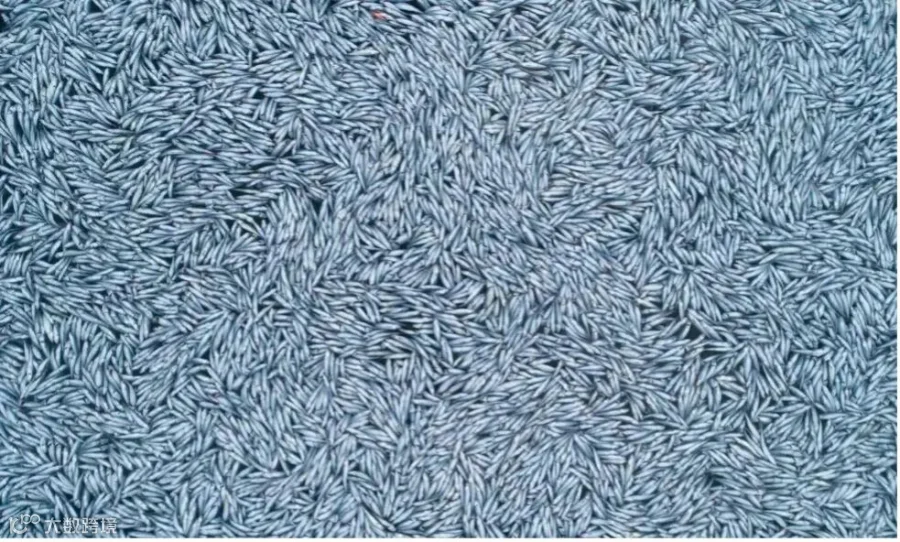
Some of the 100,000 dead fish that were thrown into the sea off the coast of La Rochelle, France, by a factory ship in February.
今年2月,一艘工厂船将10万条死鱼扔进了法国拉罗谢尔海岸。
In February 2022, a Dutch-owned fishing trawler released a silvery stream of 100,000 dead fish, which carpeted several thousand square metres of ocean off the coast of France. The vessel’s owners blamed the discharge on a faulty net. Environmental groups alleged that the fish were intentionally dumped.
2022年2月,荷兰的一艘拖网渔船在法国海岸线附近倾倒了10万条死鱼,仿佛为数千平方米的海洋铺上了一张地毯。该船的船东借口称渔网上有许多破洞而导致了死鱼的泄漏,而环保组织宣称这些鱼是被故意倾倒的。
Whatever the truth, that spectacle of squandered sea life was the tip of the iceberg: figures from WWF show that in 2019, at least 230,000 tonnes of fish were dumped in EU waters. Most of the waste – 92% – is related to bottom-trawling, a fishing method that scrapes the seafloor, indiscriminately scooping up everything in its path.
无论真相如何,这种挥霍海洋生物的景象只是冰山一角:世界自然基金会的数据显示,2019年,至少有23万吨鱼被倾倒在欧盟水域。这些浪费大部分(92%)与底拖网捕捞有关,这是一种刮擦海底的捕鱼方法,即不分青红皂白地铲起沿途的所有东西。
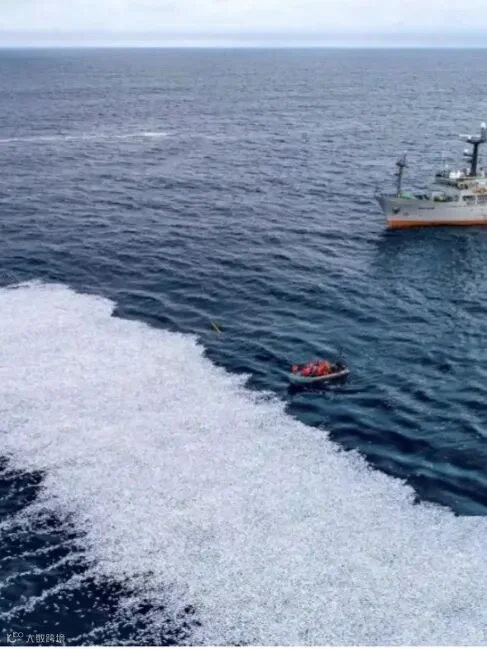

Roughly 100,000 dead fish dumped
by a factory ship in February 2022
off La Rochelle, France.
2022年2月,一艘工厂船在法国拉罗谢
尔附近海域倾倒了大约10万条死鱼。
Fish populations are already threatened by overfishing, pollution, and the climate crisis. With current rates of fish consumption projected to double by 2050, waste is increasingly on the radar of regulators.
鱼类种群早就开始遭受过度捕捞、水污染和气候变化的威胁。预计到2050年,目前的鱼类消费率将翻一番,因此鱼类的浪费也越来越受到监管机构的关注。
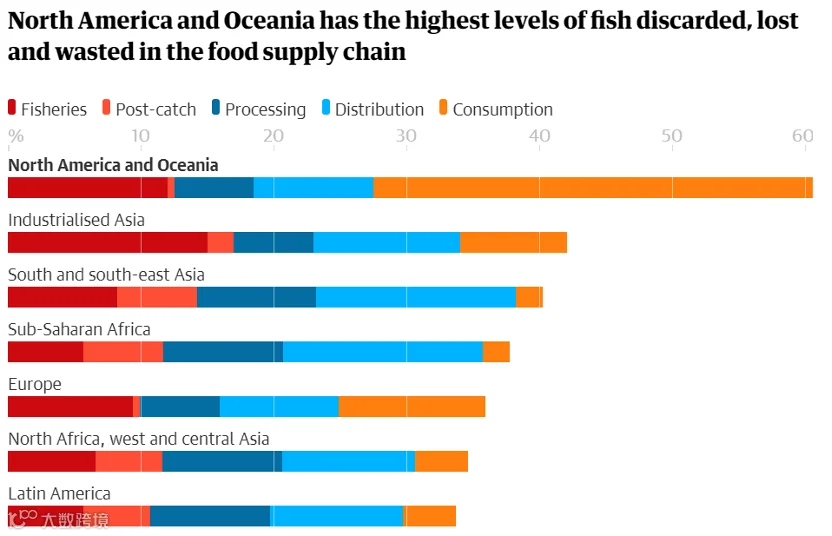
Guardian graphic. Source: Food and Agriculture Organization of the United Nations
图片来源:《卫报》。资料来源:联合国粮食及农业组织。

What caused the dramatic waste?
Bycatch (unintentionally caught, unwanted fish) is a growing problem, too: roughly 10% of wild-caught fish are discarded worldwide each year, representing 8.6m tonnes of animals. The main culprits are imprecise fishing gear and policies that allow fishers to discard non-target species.
副渔获物(无意捕获的、不需要的鱼)是一个日益严重的问题:全世界每年约有10%(约860万吨)的野生捕捞鱼类被丢弃。导致这一切的罪魁祸首是粗放式的渔具和允许渔民丢弃非需要生物的政策。
There’s an economic driver, too. Today 80% of $35.4bn in annual fishing subsidies goes to a handful of industrial fleets. These include gargantuan bottom trawlers leading to discards on an industrial scale.
经济效益也是导致这一现象的动因。如今,每年354亿美元的渔业补贴中有80%流向了少数工业船队。其中就包括那些导致了大规模的鱼类丢弃的巨大的底拖网渔船。
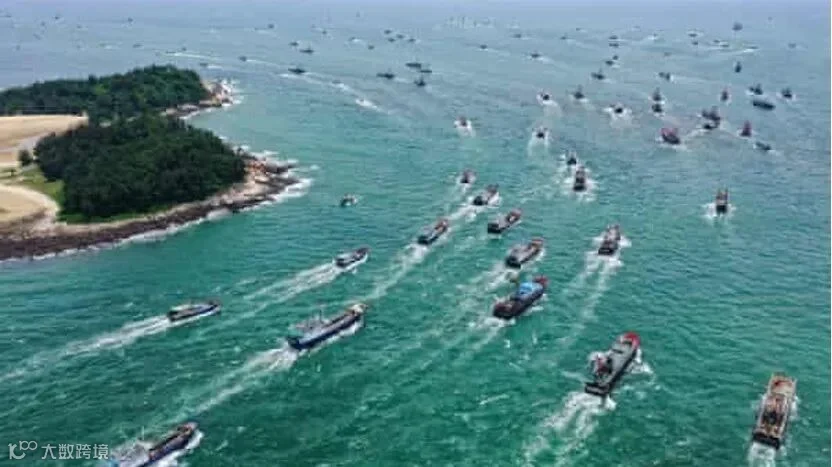

Fishing boats setting sail in Yangjiang,
Guangdong province of China.
渔船在中国广东省阳江市起航。
Fish Waste in Different Regions
Fish waste is about more than just the physical loss of fish: for the 3 billion people whose diets depend on fish, it is a lost nutritional opportunity.
鱼类浪费不仅仅是鱼类的损失:对于喜饮食鱼类的30亿人来说,这将导致其面临营养流失的危机。
The FAO estimates that 27% of all fish globally is lost or wasted after landing, but in low-income countries the fish is more likely to be unintentionally lost than wasted, says Peñarubia.
Peñarubia说,据粮农组织估计,全球27%的鱼类在上岸后被丢弃或浪费,但在低收入国家,鱼类更有可能在无意中被浪费而不是被刻意丢弃。
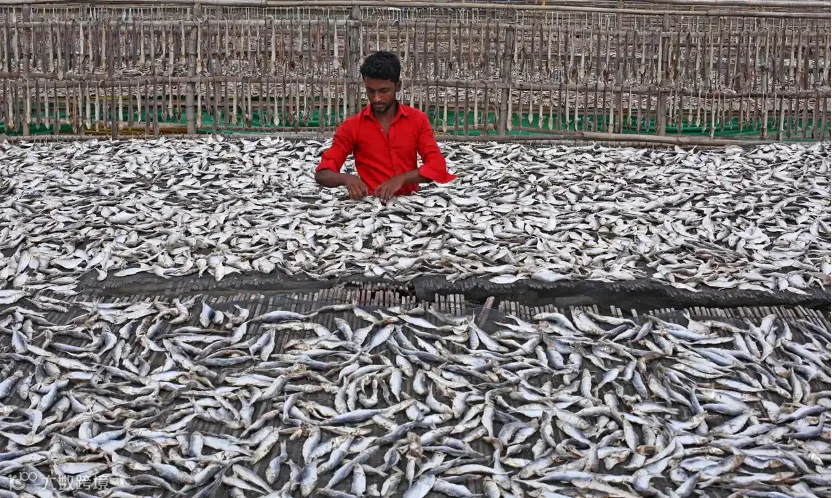
A fish-drying plant in Bangladesh. Much fresh fish waste is caused by poor handling and a lack of storage and cooling facilities on vessels.
孟加拉国的一家鱼类干燥厂。许多新鲜的鱼被浪费是由于处理不当以及船上缺乏储存和冷却设施造成的。
Fish disappear after distribution, too, but here the culprits are retailers and consumers, almost exclusively in middle-and high-income countries. In North America, Oceania and Europe, fish waste at consumption far outstrips that of any other region in the world.
鱼类在分销后仍然面临被浪费的境况。在中高收入国家,罪魁祸首是零售商和消费者。在北美洲、大洋洲和欧洲,鱼类的浪费量远远超过世界上任何其他地区。
Pearson thinks retailers in the US partly contribute to the problem by prioritising large, fresh fish to sell at a premium, which quickly spoil.
Pearson认为,美国的零售商优先考虑将大型新鲜易变质鱼类溢价出售也是问题之一。

How could we improve this situation?
Increasing access to cold-chain technologies in low-income countries, along with methods such as solar-powered drying tents, could extend the shelf life of fish. Fishers and processors also need training on better fish handling and storage to limit loss, Peñarubia says.
在低收入国家普及冷链技术的应用,以及太阳能干燥帐篷等方法,以延长鱼类的保质期。Peñarubia说,渔民和加工商还需要接受更好的鱼类处理和储存培训,以减少损失。
At the consumer end, Pearson and Love argue that we should encourage more people to opt for frozen fish, which could reduce demand for fresh fish in grocery stores, and limit the amount that is lost in retail and people’s homes.
对于消费者而言,Pearson和Love认为,我们应该鼓励更多的人选择冷冻鱼,进而减少杂货店对鲜鱼的需求,从而减少零售和人们家中浪费的鱼。
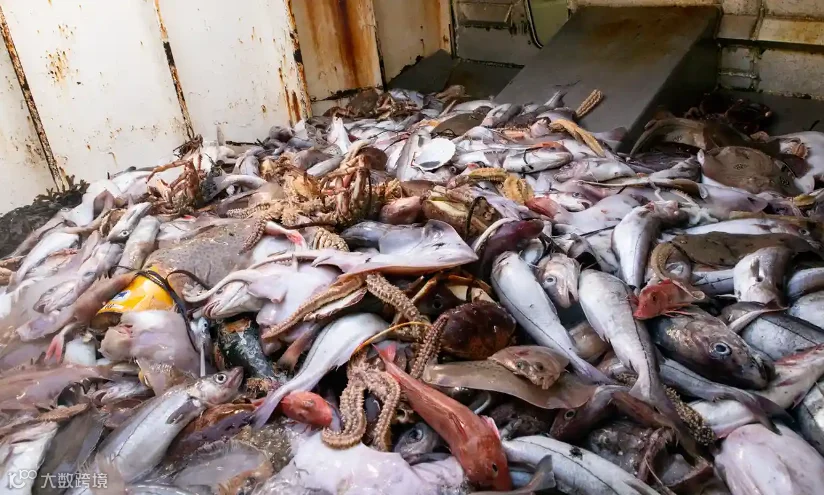
The fishing trawler Crystal Sea, which operates out of Newlyn, Cornwall. The catch includes all types of sea life.
拖网渔船水晶海(Crystal Sea),在康沃尔郡的纽林(Newlyn)运营。渔获物包括所有类型的海洋生物。
Thilsted suggests diversifying our appetites beyond the ubiquitous fish fillet to smaller fish and bivalves, which can be consumed whole to reduce waste.
Thilsted建议我们将饮食习惯从丰富多样的鱼片转到较小的鱼和双壳类海洋生物,因为它们整体都可以被食用,从而减少浪费。
Ultimately, prevention is the best solution, starting at sea, where this problem begins, Pearson says. For generations we’ve believed “the ocean is huge, and we can just take whatever we want,” says Pearson. “Now we’re coming to see the limits of that. And when you have limits, it requires you to become more efficient.”
Pearson说,预防才是最好的解决方案,从海上——这个问题的源头开始。几代人以来,我们一直相信“海洋是巨大的,我们可以随心所欲地索取一切,然而现在我们看到了它的资源的有限性。当你受到限制时,就应当提高效率。”

词汇
Vocabulary
1.trawler n.拖网渔船
Eg. The trawler was fishing off the coast of Iceland. 拖网渔船在冰岛沿海捕鱼。
2.crustaceans n.甲壳纲动物
Eg. Some kinds of penguins eat a small
shrimplike crustacean called krill. 一些种类的企鹅吃小的甲壳类的类虾——磷虾。
3.mollusc n.软体动物
Eg. The mollusc phylum includes all soft
-bodied animals without backbones. 软体动物门包括所有无脊椎的软体动物。

原文链接:
https://www.theguardian.com/environment/2022/may/09/millions-of-tonnes-of-dead-animals-the-growing-scandal-of-fish-waste?CMP=Share_iOSApp_Other
编译 | 张馨 丁哲宇 吴奕辰
排版 | 吴奕辰