突发新闻 丨 全文字数:1216 丨 阅读时间:4分钟
周五上午11时过后,两个人走进伦敦国家美术馆的43号展厅,打开两罐亨氏奶油番茄汤,并将其泼向文森特·梵高的 《向日葵》:这是博物馆的收藏珍品,是梵高在1888年和1889年创作的六幅幸存传世的《向日葵》之一。
As the gloppy orange liquid dripped down the glazing that was protecting the painting, the pair smeared their hands with glue and stuck themselves to the wall beneath the work. In videos of the incident posted online, gallery visitors can be heard saying “Oh, my gosh!” and calling for security; one of the activists delivers a speech in which they ask visitors whether they “are more concerned about the protection of a painting, or the protection of our planet and people?”
粘稠的橙色液体顺着保护画作的釉面滴下时,两人用胶水涂抹双手,把自己粘在作品下面的墙上。在网上发布的事件视频中,可以听到有参观者说:"哦,我的天哪!"并呼叫了保卫人员;两人中有人则问参观者 "是更关心保护一幅画,还是更关心保护我们的地球和人类?"
Within minutes, the stunt grabbed attention worldwide, and many social media users expressed concern for the painting’s condition. Yet the National Gallery said in an email statement that the work was unharmed aside from “some minor damage to the frame.” The activists had been arrested, the statement added.
此举即刻吸引了全世界的关注,许多社交媒体用户对这幅画的状况表示担忧。稍后,国家美术馆在一份声明中说,除了 "画框有些轻微损坏 "之外,作品没有受损,活动家已经被逮捕。
The two activists are members of Just Stop Oil, a group that seeks to stop oil and gas extraction in Britain.
两名抗议人士是Just Stop Oil组织成员,该组织旨在阻止英国石油和天然气的开采。
Mel Carrington, a spokeswoman for Just Stop Oil, said in a telephone interview that the group’s intention had been to generate publicity and to create debate around the climate crisis and the actions needed to stop it.
Just Stop Oil的女发言人Mel Carrington在电话采访中说,该组织希望吸引公众关注,并围绕气候危机和阻止危机所需的行动展开辩论。
Carrington said the activists had checked in advance that the work was glazed, so the soupy splattering would cause no damage and could simply be wiped away.
Carrington说,二人事先检查了画作的釉面,发现泼出的汤汁不会造成任何损害,可以直接擦掉。
Van Gogh’s “Sunflowers” had nothing to do with climate change, she said. It was simply “an iconic painting, by an iconic painter” and an attack on it would generate headlines. But the choice of soup was more symbolic, Carrington said: In Britain, many householders were struggling to pay fuel and food bills because of soaring inflation, and some could not even afford to heat up a can of soup. The government should be helping ordinary people deal with “the cost of living crisis,” rather than enabling fossil fuel extraction, she added.
她说,梵高的《向日葵》本身与气候变化毫无关系。它只是 "由一位大师级画家创作的一幅大师级的画",而对它的“袭击”会上头条新闻引发关注。其实,选择一听番茄罐头更具有象征意义。在英国,由于通货膨胀飙升,许多家庭难以支付燃料和食品费用,有些人甚至连一听罐头汤都没钱加热。她补充说,政府应该帮助普通人应对 "生活成本危机",而不是扶持化石燃料开采。
Climate protesters across Europe have for months been gluing themselves to the frames of famous paintings in a series of attention-grabbing stunts.
几个月以来,欧洲各地的气候抗议者一直在尝试用一种方式吸引人们的注意力:用胶水把自己粘在名画的画框上。
In Britain, activists have attached themselves to about half-a-dozen masterpieces including John Constable’s “The Hay Wain.” In Germany, protesters have stuck themselves to works including Rubens’s “Massacre of the Innocents,” which hangs in the Alte Pinakothek, in Munich. In Italy, works in the Uffizi, in Florence, and at the Vatican Museums have been targeted.
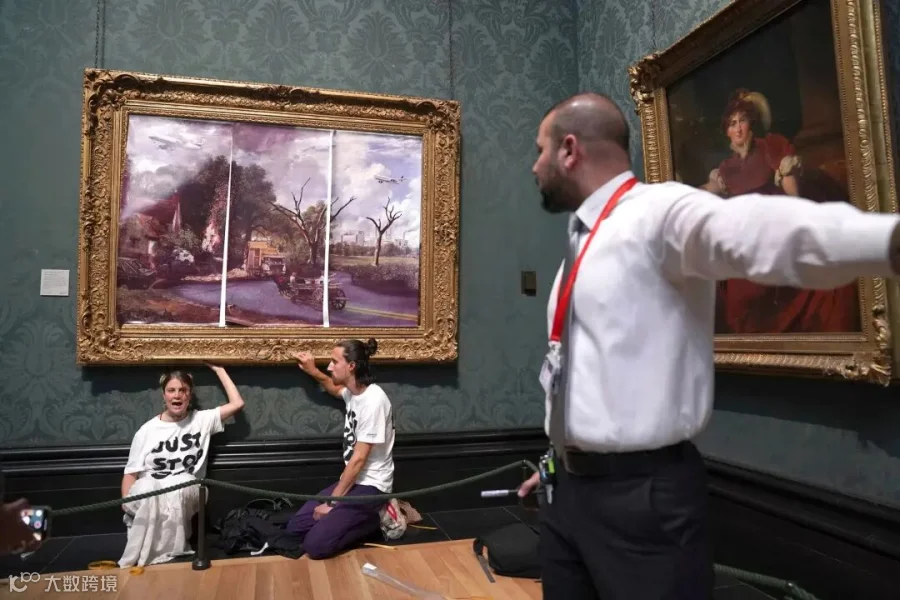
在英国,活动人士们把自己同六幅名画的画框粘在了一起,包括John Constable的《干草车》。德国的抗议者们则选择了包含《无辜者的屠杀》在内的一些名画作为目标。在意大利,佛罗伦萨的乌菲兹美术馆和梵蒂冈博物馆的作品也成为了抗议对象。
Now, protesters in London have found a new way to focus attention on their cause: throwing cans of tomato soup at a masterpiece.
现在,伦敦的抗议者们又找到了新点子来吸引注意力以表达他们的关切:向名画上泼一听番茄汤罐头。
原文链接:
https://www.nytimes.com/2022/10/14/arts/design/soup-van-gogh-sunflowers-climate.html
编译丨高语阳
排版丨高语阳