


EMOJI
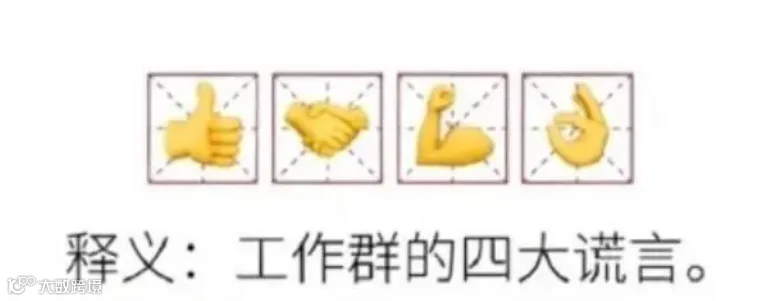
图源:www.baijiahao.baidu.com
☀️ 🍚🥢?
(中午吃什么?)
🍱 ?
(寿司?)
🙋 😋 🍔!
(我要汉堡!)
全文字数:2268字 / 阅读时间:7分钟
Question
提问:
Which emoji best signifies approval, and represents ideas such as " yes," "like," or "that's great" ?
用什么表情符号表达“支持”、“肯定”、“喜欢”或“很棒”最恰当呢?
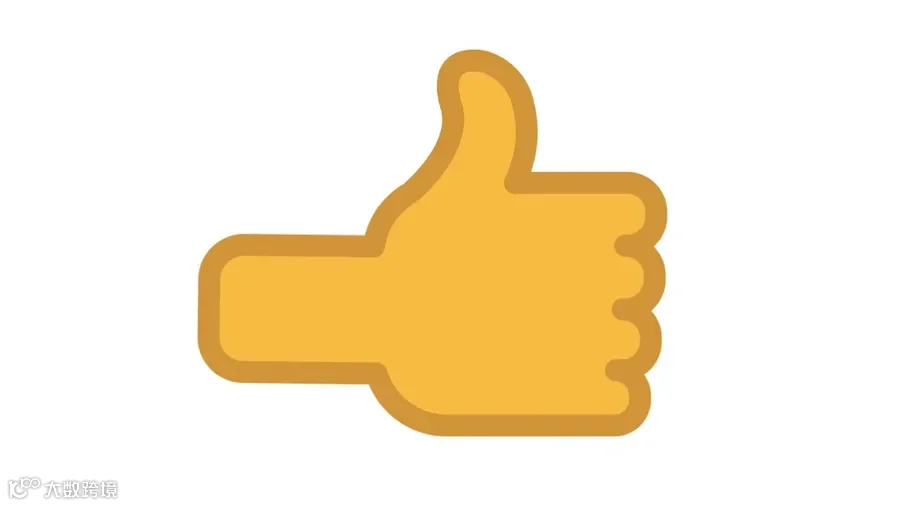
图源:www.tampabay.com
If you were born before the mid-1990s, the answer is likely to be the good old thumbs-up emoji. But for Generation Z, or "zoomers*," the thumbs-up emoji is increasingly viewed as signaling sarcasm or being downright hostile.
如果你生于90年代中期之前 ,那么你可能会用经典的竖大拇指的表情符号。然而Z世代青年*,或是习惯于使用线上会议的人,却越来越觉得竖着大拇指的表情是在阴阳怪气,或明摆着在表达恶意。
译注:Z世代青年:即在上世纪90年代中期之后到2010年出生的人;zoomers:指代使用视频会议zoom的人。
NO.01

你经历过表情符号的错误解读吗?
A survey from Duolingo and Slack found that 74% of respondents have experienced a misunderstanding with an emoji. The kissy face emoji is versatile and thus confusing: Some say it stands for general affection, others say platonic love, and still others say romantic love. It' s easy to see how this could go terribly awry in a work context.
多邻国*和Slack*的一项调查显示,74%的受访者曾误解过表情符号。亲脸表情具有多重表达含义,因此让人迷惑:有人说它代表了普通的喜爱,也有人说它代表了柏拉图式的爱情,还有人说它代表浪漫的爱情。由此可见,亲脸表情特别容易在工作场合中引发误解。
译注:多邻国(Duolingo)是一款语言学习工具软件;Slack 是聊天群组 + 大规模工具集成 + 文件整合 + 统一搜索软件。
Certain emojis generate particularly strong feelings, like the "corporate smiley face", particularly the one on Microsoft Teams: a lipless, wide-eyed smile that one TikTok user said "stares into your soul."
某些表情符号会给人带来强烈的刺激,尤其像是微软公司制作的那一款“企业微笑”*——一位TikTok用户觉得这个没有嘴唇、目光直愣愣的表情像是“灵魂凝视”。
译注:“企业微笑”,指“微笑”这一表情曾一度被用作企业logo。


NO.02

为什么表情符号的交流会存在壁障?
Emoji use exploded in the 2010s, and much like language itself, emojis have different meanings depending on who is using them.
2010年开始,表情符号突然流行起来。就像语言一样,表情符号因为使用者的不同,而呈现不同的解读含义。
Ella Glikson is an assistant professor at Bar Ilan University who has studied how emojis impact perceptions of leaders. She said that industry and gender play large roles in what emojis are deemed acceptable at work. For instance, Glikson says IT workers might be more comfortable using emojis at work than finance workers, and women might prefer to keep communication more formal with male managers.
巴伊兰大学的助理教授埃拉·格里克森研究了表情符号的使用如何影响领导对员工的看法。她谈道,表情符号在工作环境中被接受的程度,会因行业和性别的差异而迥然不同。例如,IT工作者可能比金融工作者更喜欢在工作中使用表情符号,而女性员工可能更喜欢用更正式的风格与男性经理交流。
图源:www.psychologytoday.com
A person' s age strongly impacts what meaning they attach to certain emojis, says Anne Framroze, a lecturer at the University of Southern California. "Each generation has their own norms and styles of expression, ones that fit and reflect their values and belief systems. " Framroze says.
南加州大学讲师安妮·弗雷姆罗兹称,一个人的年龄很大程度上影响了他对某些表情符号的理解。“每一代人都有自己的表达方式,这和他们的价值观和信仰体系相符合。”
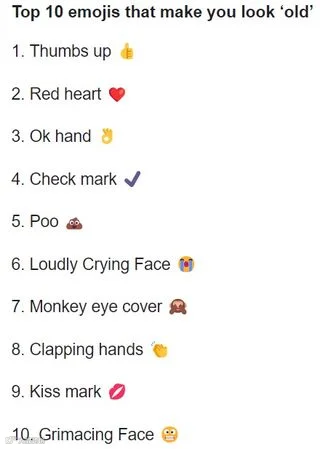
And there are reports that some of the most frequently-used emojis among younger users are considered old-fashioned and to be avoided. According to one report, the thumbs up emoji is the number-one emoji that makes you look old.
一些被认为最常使用的表情符号其实在年轻人看来已经过时了,他们会尽量避免使用这些表情。一项研究报告显示,“竖大拇指”是头号“老年人表情”。
👍👍👍👍👍👍👍👍👍👍👍👍👍
NO.03

“我们用的对吗?”:年轻人的使用困扰
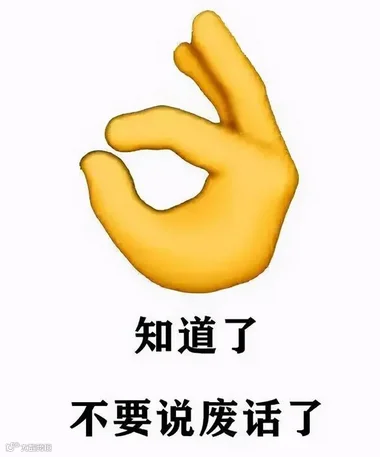
For younger employees, these nuances seem to carry particular weight. Jonathan Sweeney, 23, remembers in his former roles, when older coworkers have written "Okay" with a period, sans emoji or any effusive punctuation.
对于年轻员工来说,这些细微的差别似乎特别重要。23岁的乔纳森·斯威尼记得,在他前一份工作中,年长的同事在写“ok”时,会加个句号,且不使用其他表现友好和热情的表情符号。
图源:www.baijiahao.baidu.com
"I'm thinking, 'Are they mad at me? Are they having a bad day?' Then I'll see them and they'll be like, 'Hi Jonathan' in the most upbeat tone,” Sweeney says. “I feel like Gen Z and younger millennials have kind of adapted that just to make sure that they’re everything they want to in the same tone that they would speak in.”
“这时候我会想,‘他们生我气了吗?他们今天心情不好吗?’ 但等我们随后见面时,他们会兴致很高地跟我打招呼:‘嗨,乔纳森。’我觉得Z世代和年轻的千禧一代已经养成了习惯——他们心直口快,言行一致。”斯威尼说。
These varying communication styles and differing interpretations can lead to miscommunication and even faux pas.
这些不同的沟通方式和不同的理解会导致沟通不畅甚至失礼。
NO.04

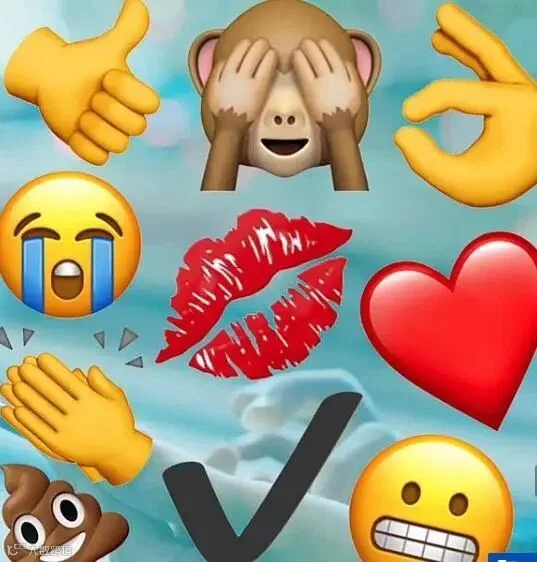
END
原文链接:
https://www.psychologytoday.com/us/blog/language-in-the-mind/202211/what-happened-the-thumbs-emoji
https://www.tampabay.com/opinion/2022/10/28/gen-z-thumbs-up-emoji-passive-aggressive-red-heart-laugh-cry-canceled/
https://www.fastcompany.com/90806826/this-is-what-gen-z-thinks-about-their-coworkers-emoji-use
编译 | 虞佳盟 玛迪娜 吾丽巴丽亚 张若楠
排版 | 张若楠
EMOJI