




全文字数:1886字 / 阅读时间:6分钟
01

有趣的创意


Spiderwebs can pick up vibrations in air flow caused by sound waves, and researchers say microphones designed this way could become more sensitive and compact.
蜘蛛网可以吸收由声波引起的气流振动。按照这种原理设计麦克风,可以使其更加灵敏和便携。
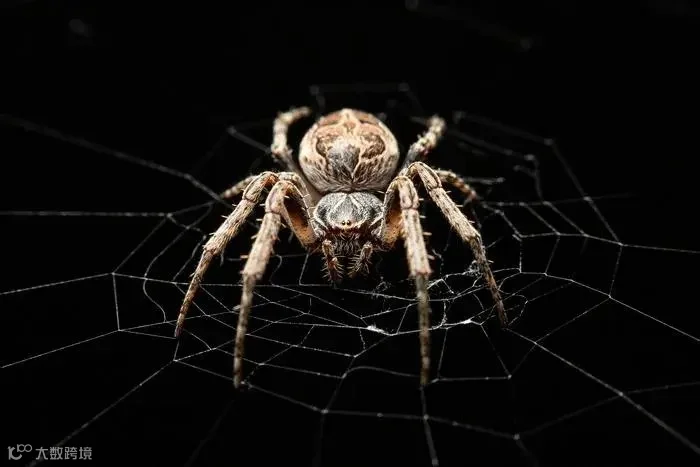
Larinioides sclopetarius,通常被称为桥蛛,是通过它们的网倾听环境的编织者。
Humans aren’t very good listeners. Not compared to some spiders, anyway.
人类其实不是很好的倾听者,至少不能和一些蜘蛛相比。
Orb-weaver spiders don’t have ears, but in 2022, researchers found the arachnids use their webs as external eardrums. The spider silk acts as a super-sensitive listening device, capable of detecting noises from up to ten feet away, according to the research led by Ron Miles, a mechanical engineer at Binghamton University.
圆织蜘蛛没有耳朵,但在 2022 年,研究人员发现这种动物把它们的网用作外部鼓膜。根据研究,蜘蛛丝充当了一种超灵敏的监听装置,能够探测到 10 英尺外的噪音。
当它们听到噪音,就会变得非常活泼。
At meetings of the Acoustical Society of America last week, Miles said this knowledge of spiders presents a big opportunity for humans to revolutionize our own sound engineering.
其中一名科研人员迈尔斯说,对蜘蛛的了解为人类提供了一个巨大的机会,能够彻底改变我们自己的声音工程。
The human experience of hearing is dictated by air pressure in our ears. In response to pressure changes, our eardrums vibrate at different frequencies that send electrical signals to our brains, which distinguish and register the sounds. Microphones were built to mimic human eardrums, similarly vibrating in response to pressure changes.
人类的听觉体验是由耳朵里的气压决定的。随着压力的变化,我们的耳膜会以不同的频率振动,并向大脑发送电信号,大脑会区分并记录这些声音。麦克风模仿人类的耳膜,同样会随着压力的变化而振动。

02

从概念变成现实


But to make microphones more powerful and sensitive, they need to be larger — a reality that’s incompatible with the general desire for smaller and more transportable technology.
但是,为了使麦克风更强大、更灵敏,它们需要体积更大——这与人们对更小、更便携技术的普遍愿望是不相容的。
“Humans, being arrogant animals, fashioned the microphone after their own ears—but that’s not necessarily the best way to do it,” Miles tells Scientific American’s Elizabeth Anne Brown. “If you want to make something small, you should think about how small animals do it.”
迈尔斯告诉《科学美国人》杂志的伊丽莎白:“人类是傲慢的动物,他们按照自己的耳朵设计了麦克风——但这不一定是最好的方法。如果你想把东西变小,你应该想想小动物是怎么做的。”
Spiderwebs are less affected by changes in air pressure. Instead, they vibrate in the airflow created by a sound wave, allowing the arachnids to “hear” by feeling that motion—and even pinpoint the direction of the noise.
蜘蛛网受气压变化的影响较小。相反,它们在声波产生的气流中振动,让蛛类动物通过感觉运动来“听到”——甚至精确定位噪音的方向。
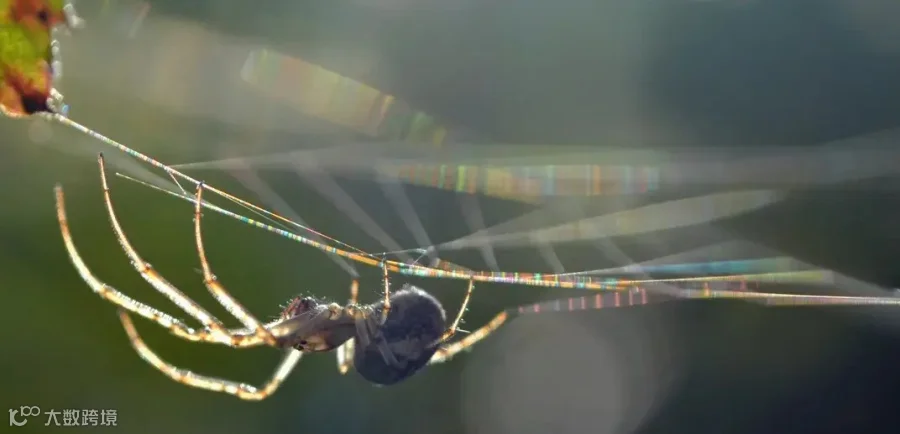
一些蜘蛛,比如这只圆织蜘蛛,利用它们的网作为外部鼓膜来更好地“听到”世界。
Using the orb webs of bridge spiders on the Binghamton University campus, Miles and Jian Zhou, who is also a mechanical engineer at the university, led tests of their sensitivities. They measured how the webs moved with a laser vibrometer and found that spider silk registered sounds between 1 hertz and 50 kilohertz — a much wider range than the 20 hertz to 20 kilohertz that humans can hear.
迈尔斯造访了宾厄姆顿大学,协同该校的机械工程师周,针对校内蜘蛛的圆球网展开了对其灵敏度的测试。他们用激光测振仪测量了蜘蛛网的运动方式,发现蜘蛛丝记录的声音范围在 1 赫兹到 50 千赫(即 5 万赫兹)之间——比人类能听到的 20 赫兹到 20 千赫(即 2 万赫兹)要宽得多。
By applying this sort of acoustic system to a microphone, “you can make it quite a bit smaller without paying a price,” Miles tells the New York Times’ Jordan Pearson.
迈尔斯告诉《纽约时报》的乔丹,通过将这种声学系统应用到麦克风上,“可以无成本让它变得更小”。

03

拭目以待



Miles has developed and tested a microphone based on spiderweb acoustics, which he built with Zhou and Junpeng Lai, a postdoctoral researcher at the university. Rather than using actual spider silk, the tool uses silicon to detect changes in air flow. While still in its early stages, the device’s patent has already been commercialized by a Canadian company called Soundskrit, which is working with Miles.
迈尔斯和周,以及另一名研究人员赖俊鹏已经共同开发、测试了一种基于蜘蛛网声学的麦克风。这种工具使用硅来代替蜘蛛丝的作用,以检测气流的变化。虽然还处于早期阶段,但该设备的专利已经由一家名为 Soundskrit 的加拿大公司商业化,该公司正在与迈尔斯合作。
“Because spider silk is, of course, created by spiders, it isn’t practical to incorporate it into the billions of microphones that are made each year,” Miles says in an Acoustical Society of America statement. “It does, however, teach us a lot about what mechanical properties are desirable in a microphone and may inspire entirely new designs.”
迈尔斯在美国声学学会的一份声明中说:“蜘蛛丝当然是由蜘蛛制造的,所以要将真正的蛛丝纳入每年生产的数十亿个麦克风中,显然是不切实际的。然而,蛛丝确实教会了我们很多关于麦克风所需的机械性能的知识,也可能激发全新的设计灵感。”
The research presents a jumping-off point for a variety of advances in sound technology. Miles and others are working to develop new instruments that can register extremely quiet sounds emitted by the human ear, which might help detect and treat hearing problems in infants, reports the New York Times. And spider silk-inspired acoustic systems may enable researchers to pick up on other sounds outside the human ear’s range—such as low-frequency noises that precede the formation of tornadoes, which scientists can use to predict and track the storms.
这项研究为声音技术的各种进步提供了一个起点。据《纽约时报》报道,迈尔斯和其他人正在努力开发一种新的仪器,可以记录人类耳朵发出的极其细微的声音,这可能有助于发现和治疗婴儿的听力问题。受蜘蛛丝启发的声学系统可能使研究人员能够捕捉到人耳听不到的其他声音,比如龙卷风形成前的低频噪音,科学家可以用它来预测和跟踪风暴。
Spider silk’s chemistry and strength have already helped spark developments in body armor and shown promise for promoting nerve regeneration when implanted in animals.
而早在此前,蜘蛛丝的化学成分和强度已经推动了防弹衣的发展,也在经过植入动物体内的实验后,显示出促进神经再生的希望。
“We’re so used to this marvel in day-to-day life that we don’t question it,” Fritz Vollrath, an evolutionary biologist at the University of Oxford in England who was not involved with the new research, tells Scientific American. “When you start studying it, you begin to realize how amazingly sophisticated the web really is.”
英国牛津大学的进化生物学家弗里茨在《科学美国人》中说道:“我们在日常生活中已经习惯了某个奇迹,所以我们不会质疑它。但当你真正开始研究蜘蛛网时,你就会意识到这种存在的复杂程度是多么惊人。”


THE END


原文链接: https://www.smithsonianmag.com/smart-news/how-spider-silk-could-inspire-microphones-of-the-future-and-revolutionize-sound-design-180984379/
编译 | 徐城铭
排版 | 徐城铭

点击关注,携手成长👇