


全文字数:2751字 / 阅读时长:9分钟
图源:Getty Images/BBC
01
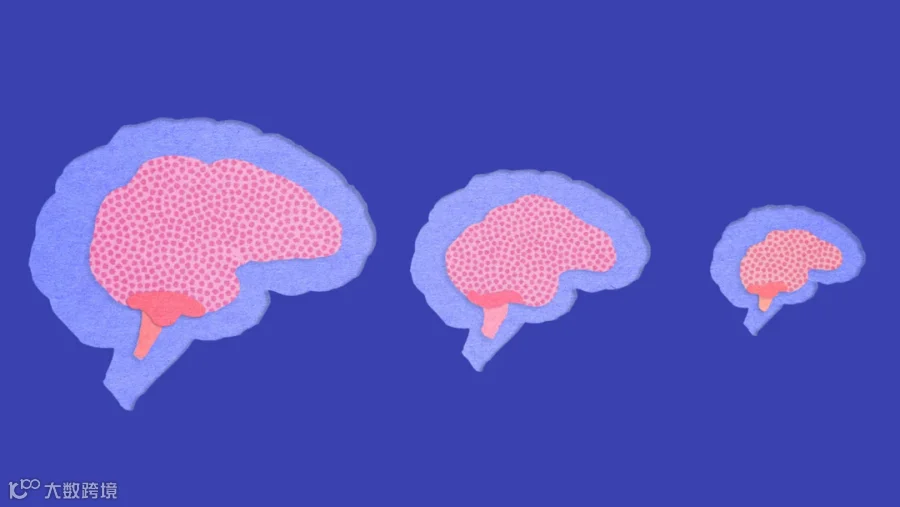
我们的大脑竟越变越小?
Traditionally our "big brain" is thought to be what sets our species apart from other animals. Our capacity for thought and innovation allowed us to create the first art, invent the wheel, and even land on the Moon.
我们历来认为,“大容量大脑”是将我们人类与其他动物区分开来的关键。我们有思维能力和创新能力,才能创造出原创艺术品、发明轮胎甚至登上月球。
Certainly, when compared with other animals of a similar size, our brains are gigantic. The human brain has nearly quadrupled in size in the six million years since our species last shared a common ancestor with chimpanzees.
确实,与其他体型相似的动物相比,我们的大脑是巨大的。自从我们的物种在六百万年前与大猩猩的最后一个共同祖先分离以来,人类的大脑几乎增大了四倍。
However, studies show this trend toward larger brains has reversed in Homo sapiens. In our species, average brain sizes have shrunk over the course of the last 100,000 years.
然而研究表明,这种大脑变大的趋势在智人身上发生了逆转。在过去 10 万年里,我们大脑的平均容量有所缩小。
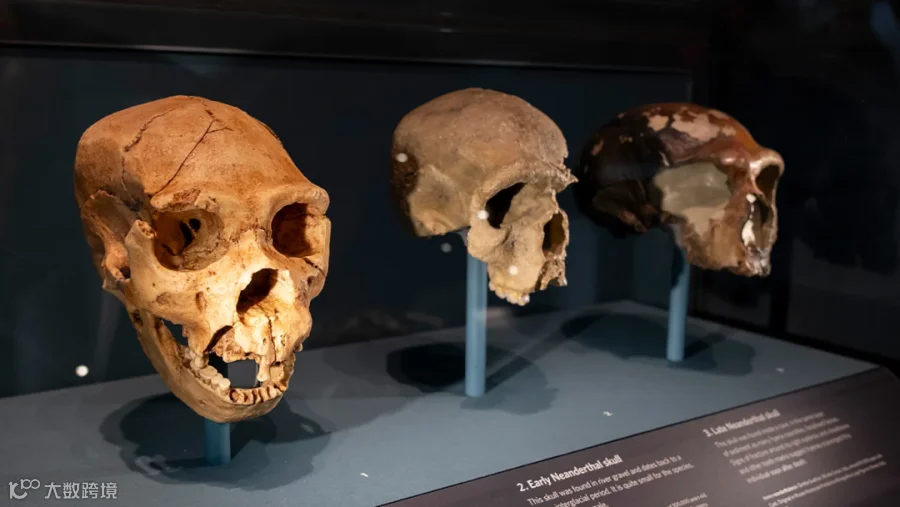
在 2023 年的一篇最新研究中,纽约市美国自然历史博物馆的古人类学家兼名誉馆长伊恩·塔特索尔(Ian Tattersall)追踪了古代人类头骨的脑容量变化。他从已知最古老的物种开始,一直追踪到现代人类。
他发现,不同的古人类物种在不同的时间和地点(包括亚洲、欧洲和非洲)都各自独立地经历了大脑的快速扩展。脑容量随着时间增长的物种包括南方古猿、直立人、海德堡人和尼安德特人。
图源:Getty Images
However, the trend for brain enlargement over time was turned on its head with the arrival of modern humans. The skulls of men and women today are on average 12.7% smaller than that of Homo sapiens who lived during the last ice age.
然而,随着现代人类的出现,大脑增大的趋势发生了逆转。如今,男性和女性的头骨都比生活在上一个冰河时期的智人平均缩小了 12.7%。
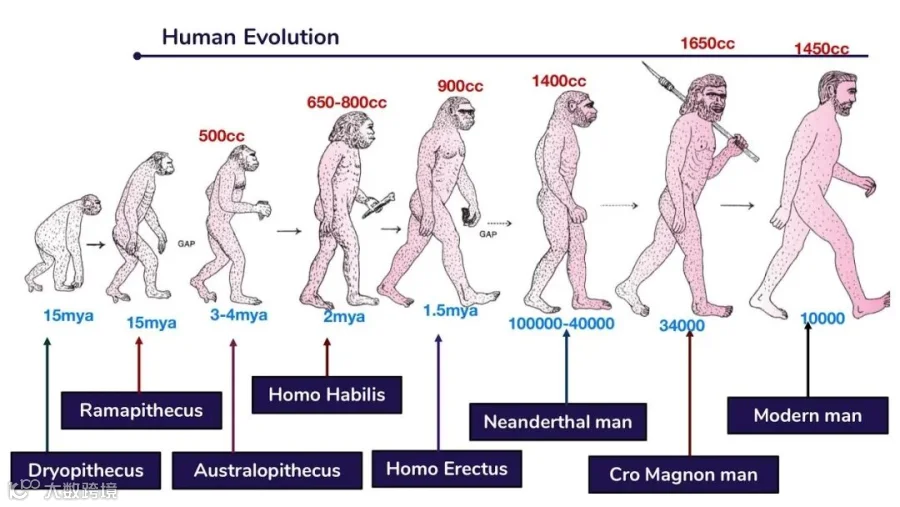
现代人类大约出现于一万年前
02
更抽象、更高效、更小

那我们该如何解释
这种明显的大脑缩小现象呢?
Tattersall suggests that the shrinkage in brain size began around 100,000 years ago, which corresponds to a period of time in which humans switched from a more intuitive style of thinking to what he terms "symbolic information processing" – or thinking in a more abstract way to better understand your surroundings.
塔特索尔认为,大脑体积的缩小大约始于 10 万年前,这与人类思维模式转变的时间节点契合。他认为,人类从直觉型思考模式转变为所谓“符号信息处理模式”,即以更抽象的方式思考,从而更好地理解周围环境。
"This was the time when humans began producing symbolic artefacts and engravings with meaningful geometric images," says Tattersall.
塔特索尔说:“这一时期,人类开始制作具有象征意义的工艺品和刻有意义的几何图形雕刻品。”
Tattersall believes that the catalyst that caused this change in thinking style was the spontaneous invention of language. This led to the neural pathways of the brain being reorganised in a more metabolically efficient way, allowing humans to get more "bang for their buck".
塔特索尔认为,语言的自发发明是这种思维方式转变出现的催化剂。这使大脑神经通路以一种更有效的方式进行重组,让人类能用更少的大脑能耗而“物超所值”。
In other words, as smaller and better organised brains were able to perform more complex computations, metabolically expensive larger brains simply became unnecessary.
换句话来说,更小且组织得更好的大脑能执行更复杂的计算,而代谢成本高的“大”大脑便不再必要了。

图源:Getty Images
"It seems to me that probably our predecessors processed information in a sort of a brute-force way, and intelligence in this context scaled with brain size. So, the bigger your brain, the more you got out of it," says Tattersall.
“在我看来,我们的祖先可能是以一种简单粗暴的方式处理信息的,在这种情况下,智力与大脑大小成比例。所以大脑越大,得到的信息越多。”
"But our way of thinking is different. We deconstruct the world around us into a vocabulary of abstract symbols, and reassemble those symbols to ask questions like 'What if?'"
“但如今我们思考的方式不再如此。我们将周围的世界解构成抽象的符号词汇,然后重组这些符号,提出‘如果...会怎么样?’的问题。”
This sort of symbolic thinking must have required a much more complex set of connections inside the brain than was present earlier. My suggestion is that having these extra connections allowed the brain to function in a much more energy-efficient way."
“这种符号思维肯定需要比以前更复杂的大脑连接。我认为,拥有这些额外的连接才能使大脑更高效地运作。”
03
天太热,更小的大脑散热快
然而其他古生物学家认为,从化石的记录来看,大脑开始缩小的时间比塔特索尔认为的时间更晚,这意味着这一改变可能与语言无关。塔特索尔提出的语言产生时间(10 万年前)也遭到质疑。
"But we haven't seen the data to show that there was a decline as far back as 100,000 years ago that didn't result at some point in a reversal where brain size began increasing again. There were declines back then. But then brain size started growing again, so the data doesn't yet match that hypothesis."
加利福尼亚州自然历史博物馆的认知科学家杰夫·摩根·斯蒂伯尔(Jeff Morgan Stibel)说:“我们没有看到数据显示,大脑容量在 10 万年前下降之后再没有发生反弹性增长。那个时期大脑容量确实有所下降,但随后又开始增长,因此这样的数据不能支持塔特索尔的假设。”
Stibel believes that a changing climate, and not language, could explain our smaller brains.
斯蒂伯尔认为,相比于语言,气候变化更能解释我们的大脑为什么变得更小。
在 2023 年的一项研究中,他分析了过去 5 万年间 298 名智人的头骨。他发现自上一个冰河时期结束以来,人类的大脑在过去大约 1.7 万年里一直在缩小。当他仔细研究气候记录时,发现大脑体积的缩小与气候变暖时期相关。
What we saw was, the warmer the climate, the smaller the brain size in humans, and the cooler the climate, the bigger the brain," says Stibel.
斯蒂伯尔说:"我们观察到,气候越暖,人类的大脑体积越小;气候越冷,大脑体积越大。”
Smaller brains could have allowed humans to cool down quickly. It's well known that humans in hot climates have evolved leaner and taller bodies to maximise heat loss. It's possible that our brains could have evolved in a similar fashion.
较小的大脑可以让人类迅速降温。众所周知,在炎热的气候条件下,人类进化出更瘦更高的身体,以最大限度地散热。我们的大脑也有可能以类似的方式进化。

图源:Getty Images
"The brain is the largest energy hog of all the organs, as it weighs about 2% of our body mass but consumes over 20% of our resting metabolic energy. So, if the brain is a huge consumer of energy and heat, then it should likely adapt to climate as well. Our theory is that smaller brains dissipate heat better, and have a reduced heat output too."
“大脑是所有器官中的能量消耗大头,它只占我们身体重量的 2%,却消耗了我们人体静息代谢率*的 20% 以上。因此,如果大脑大量消耗能量与热量,那么它也很可能会适应气候。我们的理论是:较小的大脑能更好散热,也能减少热量的输出。”
译注:静息代谢率,人在安静休息状态下身体维持正常生理功能所需的最低能量消耗量。
04
难道人类越来越笨?

如果人类大脑正在缩小,
这对人类智力意味着什么呢?
It's true that brain size isn't everything. Men's brains are around 11% larger than women's brains due to their bigger body size. Yet research has shown that women and men have similar cognitive abilities.
实际上大脑的大小并不能决定一切。由于男性体格更大,他们的大脑也比女性大脑大 11%,然而研究表明,女性和男性有相似的认知能力。
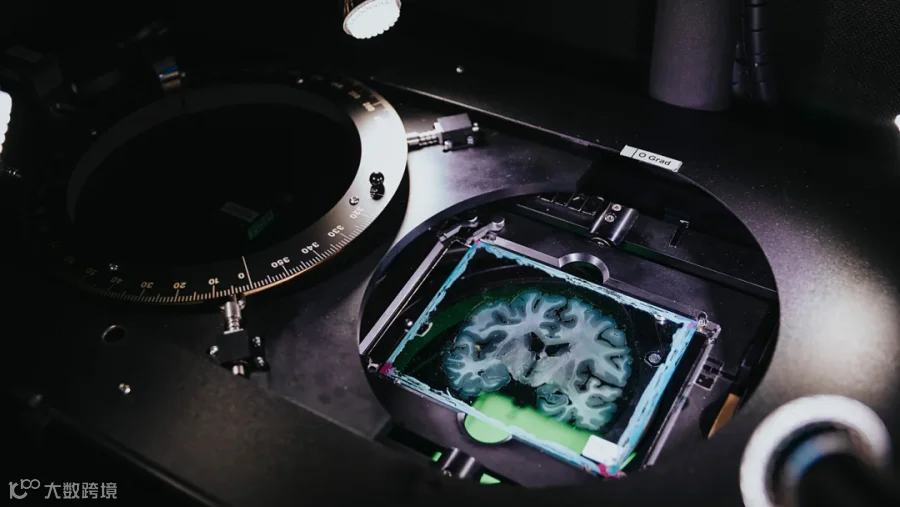
有研究发现,大脑的连接方式才是影响智力的关键因素。
图源:Mareen Fischinger/Forschungszentrum Jülich
The human brain contains around 86 billion specialised cells called neurons, which connect to each other and send signals back and forth. Many neuroscientists suspect that changes to the pattern of connections are more important for the development of human cognition than anything as crude as the brain's volume.
人脑包含约 860 亿个被称为神经元的专门细胞,它们相互连接并来回发送信号。许多神经科学家推测,对于人类认知能力的发展来说,比起大脑容量这样的粗略因素,神经元连接模式的变化对人类认知能力发展的影响更大。
"Even small changes in connectivity, especially in long range connectivity, it really leads to profound cognitive and behavioural changes," says neuroscientist Nenad Sestan at Yale University in New Haven, Connecticut.
耶鲁大学的神经科学家内纳德·塞斯坦(Nenad Sestan)说:“即使连接中产生微小的变化,尤其是长距离连接性,也会导致认知和行为的深刻变化。”
荷兰阿姆斯特丹自由大学的神经科学家马丁·范·登·霍威尔(Martijn van den Heuvel)在 23 年 5 月发表的一项研究中发现,人类和黑猩猩的大脑共享许多连接模式,但人类大脑中涉及语言的区域之间的连接性更强。
However, in general, having a bigger brain relative to your body size does correlate with intelligence.
不过,一般来说,相对个人体型而言,更大的大脑确实与智力有正相关性。
"The fact that our brain size is decreasing significantly right now yields the logical conclusion that our capacity for greater intelligence is either shrinking, or at least not growing," says Stibel.
斯蒂伯尔说:“我们大脑的体积正在显著缩小,这个事实可以合理推断出这样的结论:我们的智力正在衰退,或至少没有增长。”
"However, what we have done over the last 10,000 years is created tools and technologies that allow us to offload cognition onto artefacts. We're able to store information in computers, and use machines to calculate things for us. So our brains might be delivering less capacity for intelligence and brainpower, but that doesn't mean that we as a species collectively are growing less smart."
“然而,在过去的一万年里,我们创造了各种工具和技术,让我们能够把思维任务转移到机器上。我们在计算机中储存信息,并使用机器进行计算。因此,虽然我们的大脑所能提供的智力和脑力可能会减少,但这并不意味着我们这个物种的集体智慧在降低。”
END
原文链接:
https://www.bbc.com/future/article/20240517-the-human-brain-has-been-shrinking-and-no-one-quite-knows-why
https://www.bbc.com/future/article/20231204-human-intelligence-its-how-your-brain-is-wired-rather-than-size-that-matters
编译 | 曹蕾
排版 | 曹蕾
点击关注,携手成长👇