



很多人没有意识到,AI每一次和人类互动都要耗能。每增加一个字,服务器的成本也会增加。
全文字数|2258
阅读时长|7min
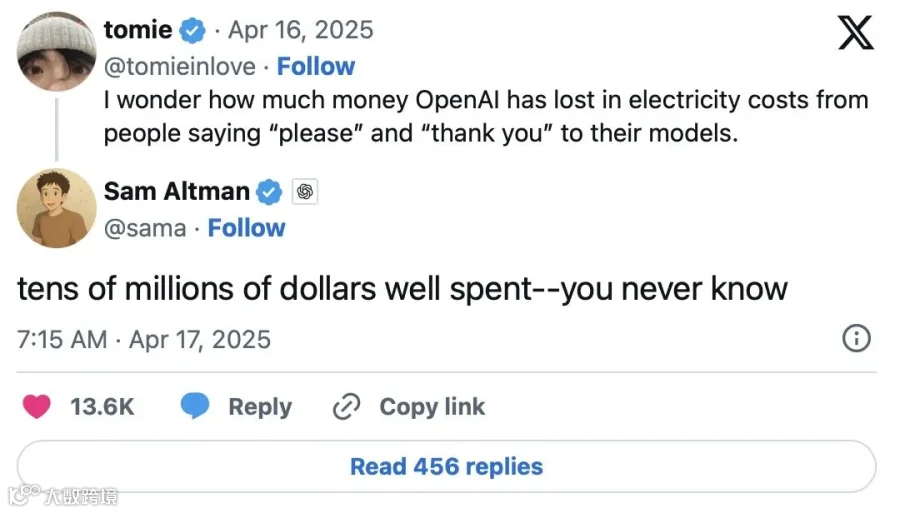
Someone posted on X last week: “I wonder how much money OpenAI has lost in electricity costs from people saying ‘please’ and ‘thank you’ to their models.”
有用户4月17日在X上发帖提问:“我想知道,人们对AI模型说‘请’和‘谢谢’,让OpenAI损失了多少电费?”
The next day, Mr. Altman responded: “Tens of millions of dollars well spent — you never know.”
第二天,OpenAI首席执行官Sam Altman回复道: “数千万美元就这么花掉了,这谁说得准。”
/X
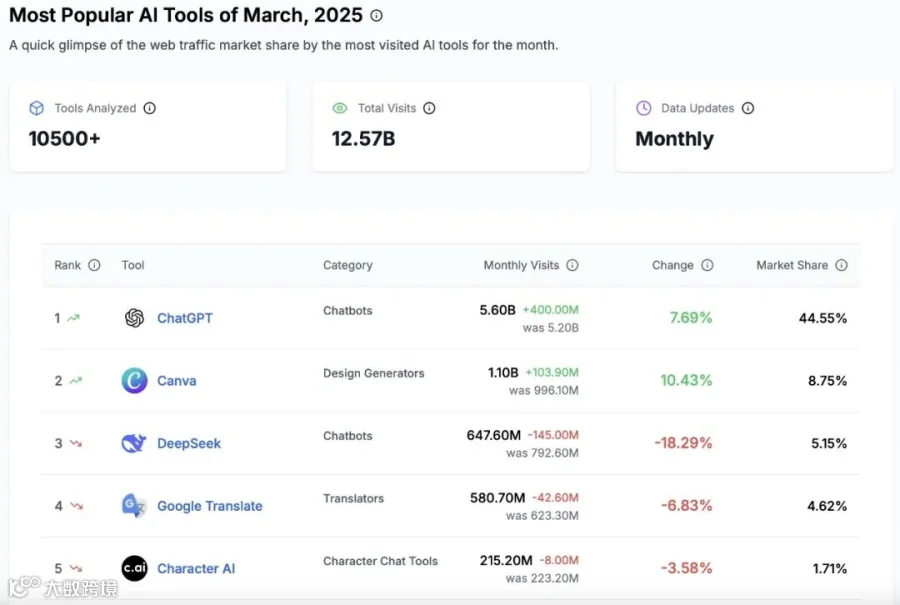
根据AI分析平台aitools.xyz最新统计数据,2025年3月全球访问量最高AI工具网站是ChatGPT、Canva可画、DeepSeek、Google Translation谷歌翻译、Character AI(可以自定义对话者角色形象的互动平台)。其中,聊天机器人(Chatbots)ChatGPT的月访问量为56亿次,DeepSeek的月访问量为6.476亿次。
/aitools.xyz
和AI说“谢谢”,有什么用?
在如此庞大的世界交互网络中,你在和你的人工智能交谈时,会保持礼貌吗?为什么呢?
你是因为相信保持礼貌是正确之举;还是因为害怕未来机器人崛起后,可能要为不礼貌行为付出代价?
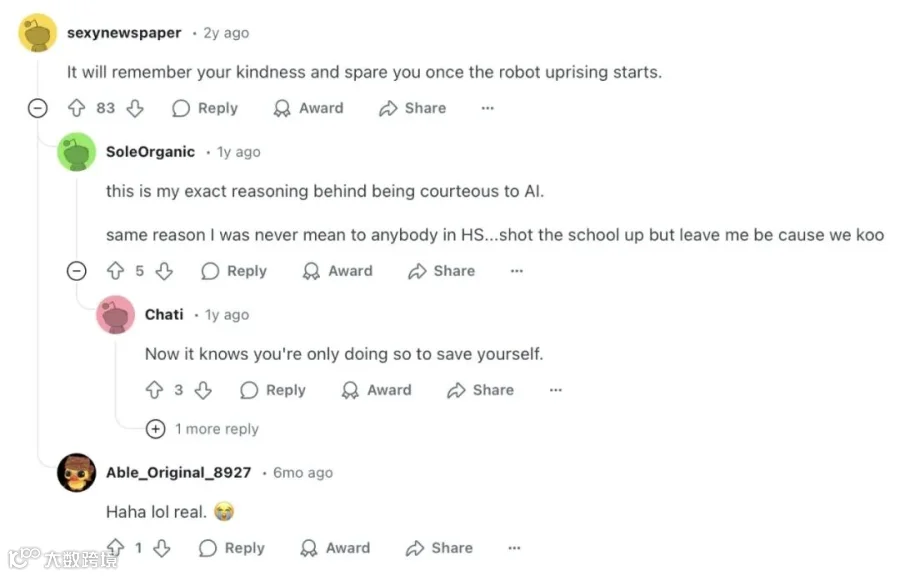
在“海外版知乎”、国际在线社区讨论平台Reddit上,“人工智能会记得你的善良,并在统治世界后饶你一命” 这个答案获得广泛认同。
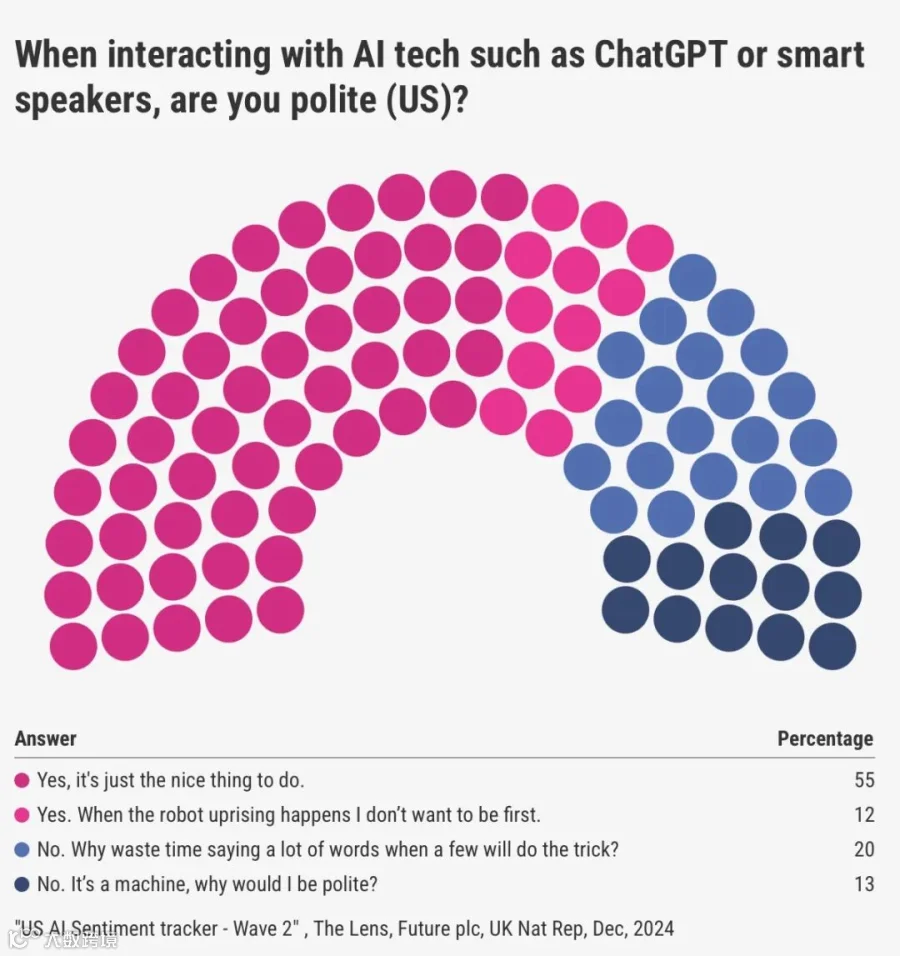
TechRadar的母公司Future在2024年12月围绕 “人们对人工智能彬彬有礼的原因”进行过一项深入研究。55%的美国受访者认为“我对人工智能有礼貌,只是因为我觉得这是一件好事”,12%的美国受访者认为“我对人工智能有礼貌,这样等它崛起后我就不是第一个遭殃的” 。
/Future
对AI礼貌,有实际功效
Microsoft design director Kurtis Beavers noted in a Microsoft blog post that "using polite language sets a tone for the response" from AI. In other words, when you're polite to AI, it is likely to respond in kind.
微软设计总监Kurtis Beavers在微软的一篇博客文章中指出,“使用礼貌的语言为人工智能的回应定下了基调”。换句话说,当你对人工智能彬彬有礼时,它很可能也会礼貌相待。因为大型语言模型(LLM),即生成式人工智能,会根据你的输入,输出它认为你可能想要的话。
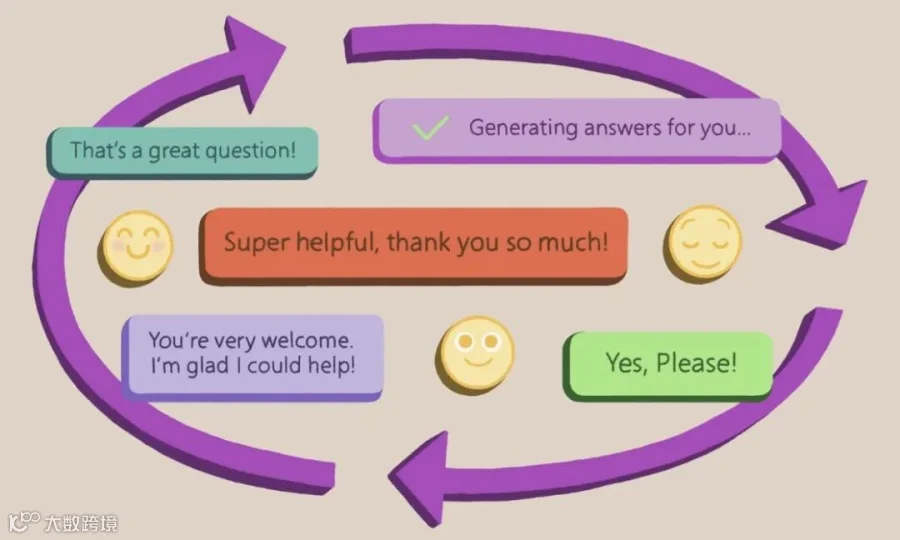
因此,与其命令你的AI聊天机器人,不如用“请”来开始你的提示词,并在收到它的回复时说“谢谢”。这可以提高人工智能的响应能力和应答质量。
但是,对大数据公司和全球环保事业而言,这可能造成能源的低效利用。
AI究竟有多耗能?
美国电力研究所(EPRI)2024年5月的一份报告显示,目前人工智能消耗的电力占数据中心总电力的10-20%,这一比例还在迅速增长。
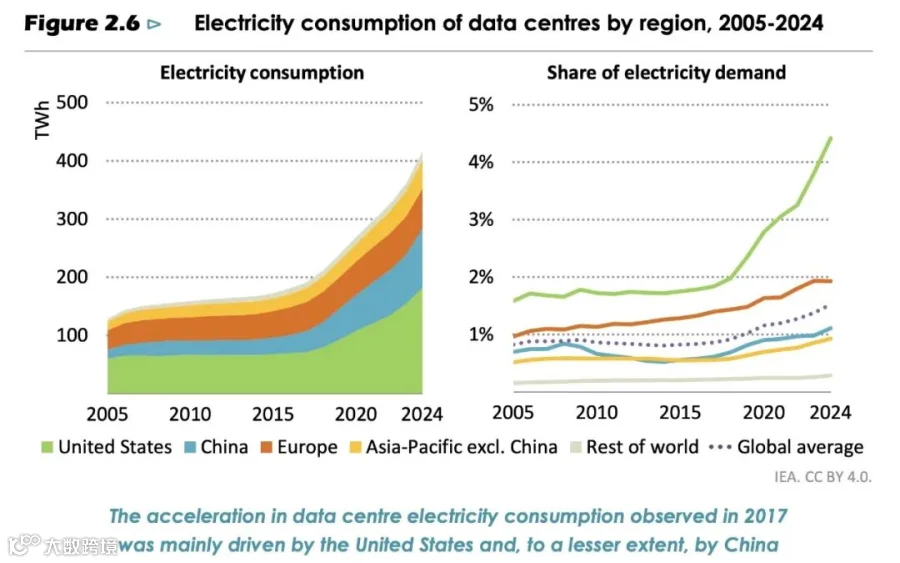
国际能源署(IEA)今年四月发布的《能源和人工智能(Energy and AI)》报告数据显示,目前,美国、欧洲和中国约占全球数据中心用电量的85%。2024年,美国数据中心用电量约为180 太瓦时,中国数据中心用电量约为100太瓦时。
/IEA
At 2.9 watt-hours per ChatGPT request, Al queries are estimated to require 10x the electricity of traditional Google queries, which use about 0.3 watt-hours each; and emerging, computation-intensive capabilities such as image, audio, and video generation have no precedent.
具体而言,ChatGPT处理每个请求需消耗2.9瓦时的电力。这大约是传统谷歌查询方式耗电量(0.3瓦时)的10倍。而更新兴的、计算密集型的人工智能服务,如图像、音频和视频生成所消耗的能源,更是前所未有的。
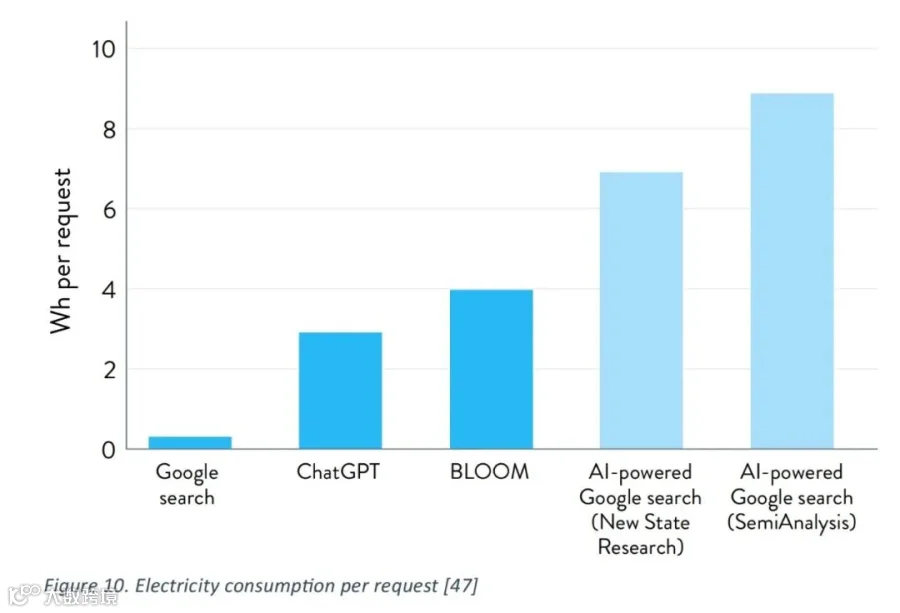
不同平台每个请求所消耗的电力(单位:瓦时)
/美国电力研究所(EPRI)
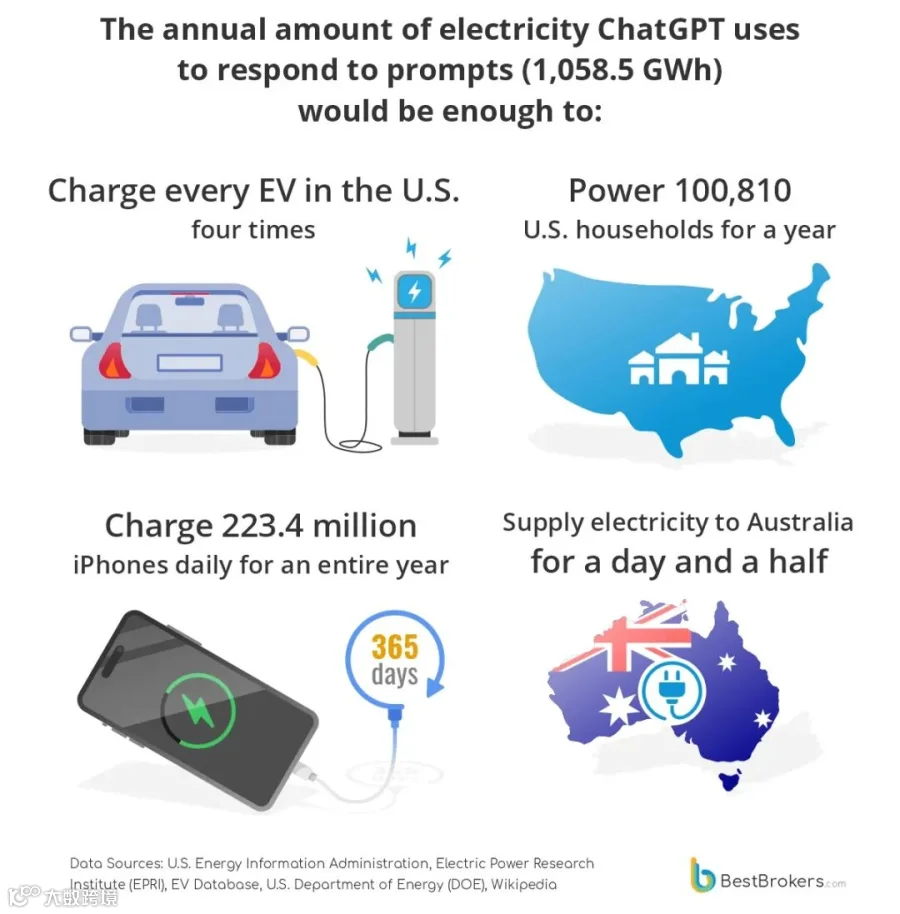
Researchers at financial advice site BestBrokers found that ChatGPT needs 1.059 billion kilowatt-hours of electricity on average every year. That would amount to an annual expenditure of about $139.7 million on energy costs alone for the AI chatbot.
金融咨询网站BestBrokers的研究人员发现,ChatGPT 平均每年需要10.59亿千瓦时的电力。这意味着,每年仅AI聊天机器人的能源成本,就高达1.397亿美元。
这10.59亿千瓦时的电力足以给全美国的所有电动汽车充四次电、给10万810个美国家庭供电一整年、给2.234亿部苹果手机一整年内每天充一次电、为全澳大利亚全国供电一天半。
/BestBrokers
除了电力消耗,人工智能也需要消耗大量的水,用来冷却为其供电的服务器。
ChatGPT一个月消耗的水可以给全球每个人分两杯,或填满1780个奥运会游泳池。
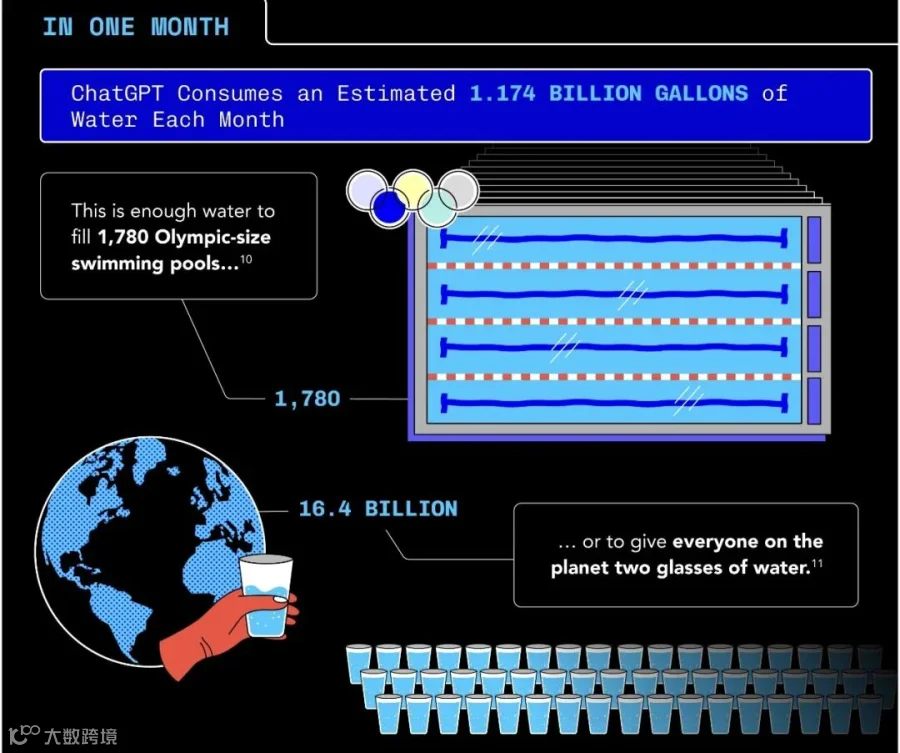
/Business Energy UK
Research from the University of California, Riverside shows that ChatGPT requires up to 1,408 milliliters of water, or about three 16.9-oz bottles worth, to generate a 100-word email. It takes 40 to 50 milliliters of water to generate a three-word "You are welcome" response from ChatGPT.
加州大学河滨分校的一项研究表明,用ChatGPT生成一封100字的电子邮件需要消耗多达1408毫升的水,即大约3瓶16.9盎司的水。
这样算来,你说了“谢谢”之后,ChatGPT生成三个字的“You are welcome”(不客气)回复,需要40到50毫升的水。
但长远来看,AI在未来也许会帮助节能
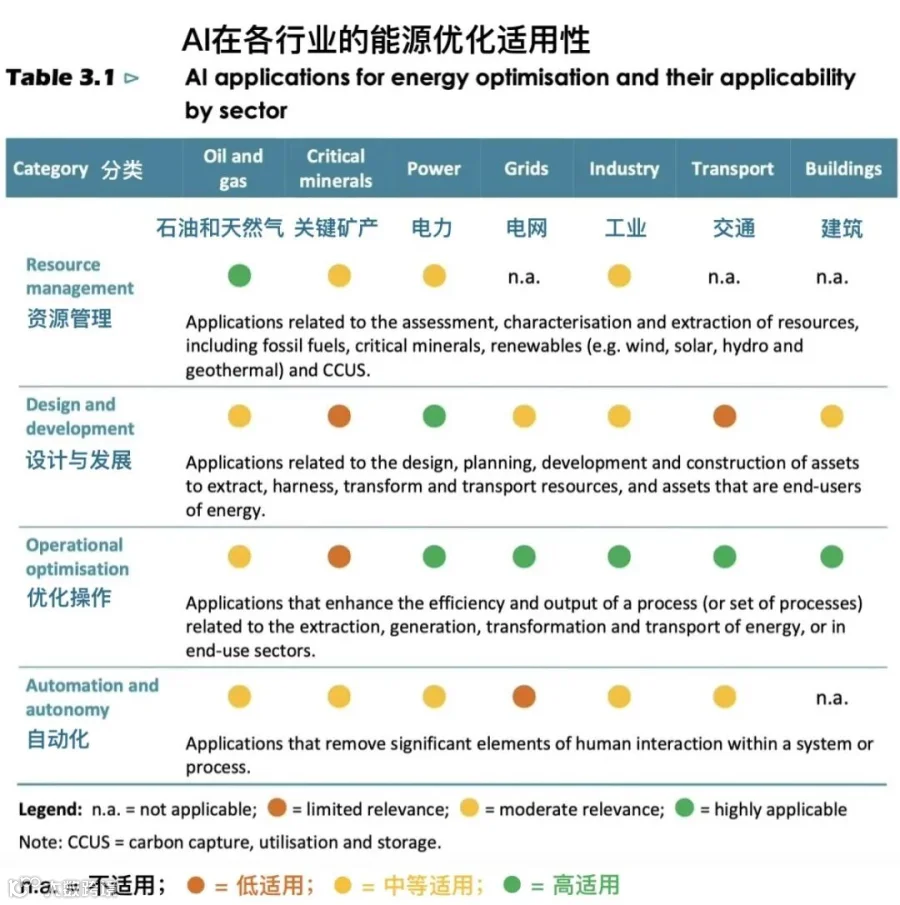
国际能源署(IEA)的《能源和人工智能(Energy and AI)》报告还显示,有关“人工智能的迅速应用将摧毁应对气候危机希望”的担忧是言过其实。这是因为,利用AI提高能源使用和其他活动的效率,可以节省开支,减少温室气体排放。具体包括:
高效识别甲烷泄漏,以减少石油和天然气作业中的甲烷排放。
提高化石燃料发电厂效率,以减少电力部门的排放。
优化制造过程,以减少工业排放。例如,改善水泥生产的燃料组合可以使能源效率提高至少2%。
优化车辆运营,以减少交通排放。例如,改进路线选择或驾驶方式可以提升5-10%的出行效率,从而减少排放。
优化建筑能源消耗,以减少建筑排放。例如,优化的供暖、通风和空调控制可以节省约10%的能源消耗。
The adoption of existing AI applications in end-use sectors could lead to 1,400 Mt of CO2 emissions reductions in 2035 in the Widespread Adoption Case. This does not include any breakthrough discoveries that may emerge thanks to AI in the next decade.
国际能源署预测,若以上AI能源优化方式成功推进,且不考虑未来10年间AI领域出现的任何突破性技术进展,至2035年,全球二氧化碳排放量可减少1400 Mt。
/IEA
Parker said, “I’m personally very optimistic — I think this is credible optimism — that AI over time will be the best tool for sustainability the world has ever seen.”
全球最大的显卡制造商之一英伟达(Nvidia)的企业可持续发展负责人Josh Parker说:“我有理由对人工智能的未来非常乐观:随着时间的推移,人工智能将成为世界有史以来实现可持续发展的最佳工具。”
/Getty Images
It is vital to note that there is currently no momentum that could ensure the widespread adoption of these AI applications. Therefore, their aggregate impact, even in 2035, could be marginal if the necessary enabling conditions are not created.
然而,国际能源署也指出,目前没有迹象表明这些AI应用确能落地。因此,即使时间来到2035年,如果缺乏必要的赋能条件,AI对节能减排的总体影响可能也微不足道。
Barriers include constraints on access to data, the absence of digital infrastructure and skills, regulatory and security restrictions, and social or cultural obstacles.
现实阻碍包括:数据获取限制、数字基础设施和技能缺陷、监管和安全限制、社会及文化障碍。
国际能源署执行董事Fatih Birol表示:“随着人工智能的兴起,能源行业正处于我们这个时代最重要的技术革命前沿。人工智能是一种工具,它可能非常强大。但如何使用它,取决于我们,即我们的社会、政府和公司。”
-END-
数据来源:
https://www.reddit.com/r/OpenAI/comments/10isjip/i_chat_to_chatgpt_like_a_human_in_terms_of_saying/?rdt=45616
https://www.forbes.com/sites/lanceeliot/2024/05/18/hard-evidence-that-please-and-thank-you-in-prompt-engineering-counts-when-using-generative-ai/
https://www.entrepreneur.com/business-news/saying-thank-you-to-chatgpt-costs-millions-in-electricity/490341
https://www.techradar.com/computing/artificial-intelligence/who-has-time-to-be-polite-to-chatgpt-i-dont-understand-why-people-say-please-and-thank-you-to-ai
https://www.vox.com/climate/409903/ai-data-center-crypto-energy-electricity-climate
https://www.theguardian.com/technology/2025/apr/10/energy-demands-from-ai-datacentres-to-quadruple-by-2030-says-report
https://www.iea.org/reports/energy-and-ai
https://economictimes.indiatimes.com/magazines/panache/do-you-say-please-to-chatgpt-sam-altman-reveals-how-much-electricity-your-manners-cost-to-openai/articleshow/120455018.cms?from=mdr
https://futurism.com/altman-please-thanks-chatgpt
https://www.businessenergyuk.com/knowledge-hub/chatgpt-energy-consumption-visualized/
https://www.bestbrokers.com/forex-brokers/ais-power-demand-calculating-chatgpts-electricity-consumption-for-handling-over-78-billion-user-queries-every-year/
https://www.epri.com/research/products/000000003002028905
https://www.tomshardware.com/tech-industry/artificial-intelligence/openai-spends-millions-to-process-polite-phrases-such-as-thank-you-and-please-with-chatgpt
https://www.washingtonpost.com/technology/2024/09/18/energy-ai-use-electricity-water-data-centers/
https://www.iea.org/reports/energy-and-ai/ai-for-energy-optimisation-and-innovation#abstract
编译|张乃文
排版|张乃文
点击关注,携手成长👇