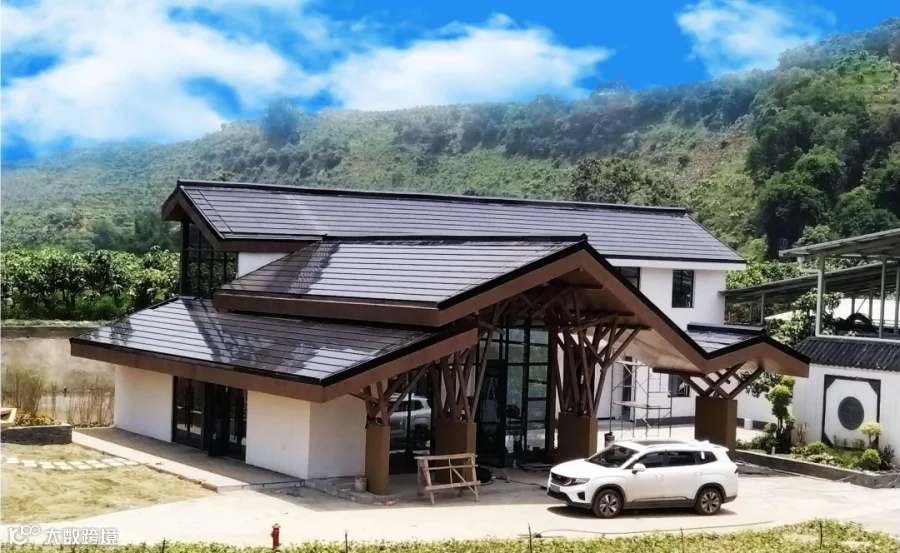

In the application of modern green energy, BIPV (Building Integrated Photovoltaics) solar tiles are highly favored for their aesthetic appeal, practicality, and high safety performance. However, during the installation process of solar roof tiles, is it possible to install roof solar tiles on rainy days? And what impact does lightning have during installation?
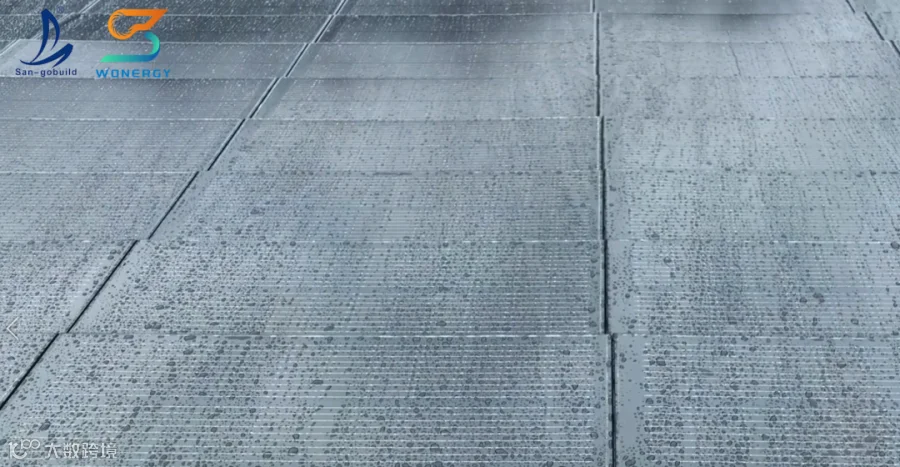
Installation is not recommended on rainy days.
For the installation of roof solar tiles, rainwater not only affects the efficiency of construction but may also have an adverse impact on both the quality of the installation and the performance of the photovoltaic tiles. Firstly, rainwater can make the surface glass of the tiles slippery, increasing the difficulty of installation and even posing safety risks such as slipping. Secondly, during the installation process, when photovoltaic tiles are being handled, the exposed wiring may come into contact with water, potentially affecting the power generation efficiency of the tiles.
Therefore, from the perspective of safety and construction quality, it is not advisable to install rooftop photovoltaic tiles on rainy days. If installation must be carried out in the rainy season, it is recommended to implement strict waterproofing measures and conduct a thorough inspection after installation to ensure that the waterproof performance of the photovoltaic tiles meets the required standards.
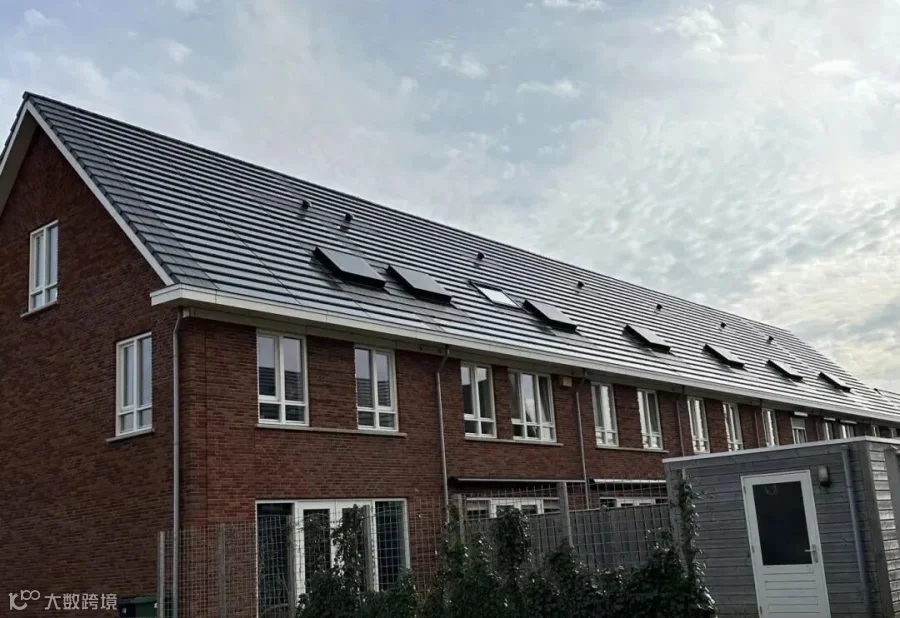
Thunder itself typically does not have a direct impact on solar tile roofs.
Thunder is the sound wave produced by lightning discharge, and it does not have the ability to directly damage solar tile roofs. The volume and intensity of thunder mainly depend on factors such as the strength of the lightning, the distance, and the conductivity of the ground. Therefore, although thunder may cause psychological discomfort to people, from a physical standpoint, it does not cause any direct physical damage to solar roof tiles or photovoltaic systems.